
The autonomous Khanate of Sibir forms in…
1396 CE to 1539 CE
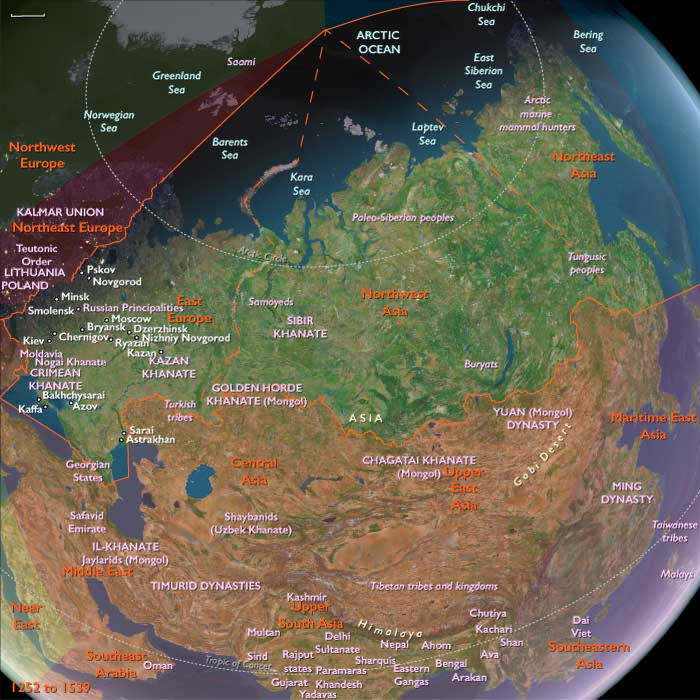
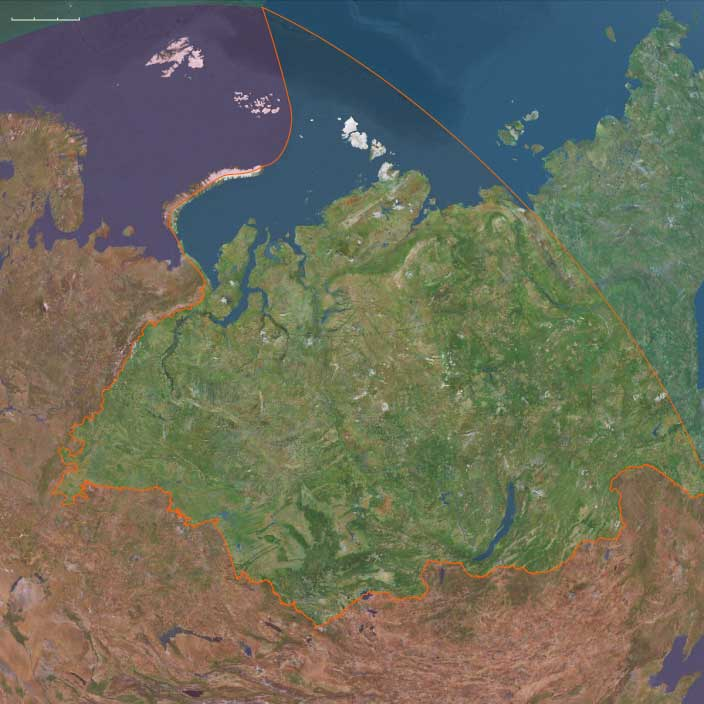
The autonomous Khanate of Sibir forms in the late-fifteenth century after the breakup of the Golden Horde.
Locations
Subjects
Regions
Northeastern Eurasia
View →Subregions
Northwest Asia
View →Related Events
Active Filters
Refine Results
Showing 7 events out of 7 total
Arnold's small fleet is at the northern end of the lake by May 17.
Seeking intelligence, Arnold sends a man to reconnoiter the situation at Fort Saint-Jean.
The scout returns later that day, reporting that the British are aware of the fall of Ticonderoga and Crown Point, and that troops are apparently on the move toward Saint-Jean.
Arnold decides to act immediately.
Seeking intelligence, Arnold sends a man to reconnoiter the situation at Fort Saint-Jean.
The scout returns later that day, reporting that the British are aware of the fall of Ticonderoga and Crown Point, and that troops are apparently on the move toward Saint-Jean.
Arnold decides to act immediately.
Arnold's fleet had met Allen's, which was still heading north, fifteen miles out on the lake,.
After an exchange of celebratory gunfire, Arnold had opened his stores to feed Allen's men, who had rowed one hundred miles (one hundred and sixty kilometers) in open boats without provisions.
Allen, believing he can seize and hold Fort Saint-Jean, had continued north, while Arnold sailed south.
Allen had arrived at Saint-Jean on May 19, where he was warned that British troops were approaching by a sympathetic Montreal merchant who had raced ahead of those troops on horseback.
Allen, after penning a message for the merchant to deliver to the citizens of Montreal, returns to Ticonderoga on May 21, leaving Saint-Jean just as the British forces arrived.
In their haste to escape the British, three men are left behind; one is captured, but the other two eventually return south by land.
After an exchange of celebratory gunfire, Arnold had opened his stores to feed Allen's men, who had rowed one hundred miles (one hundred and sixty kilometers) in open boats without provisions.
Allen, believing he can seize and hold Fort Saint-Jean, had continued north, while Arnold sailed south.
Allen had arrived at Saint-Jean on May 19, where he was warned that British troops were approaching by a sympathetic Montreal merchant who had raced ahead of those troops on horseback.
Allen, after penning a message for the merchant to deliver to the citizens of Montreal, returns to Ticonderoga on May 21, leaving Saint-Jean just as the British forces arrived.
In their haste to escape the British, three men are left behind; one is captured, but the other two eventually return south by land.
General Schuyler becomes too ill to continue following this first skirmish, so he turns command over to Montgomery.
Schuyler leaves for Fort Ticonderoga several days later.
After another false start, and the arrival of another eight hundred to one thousand men from Connecticut, New Hampshire, and New York, as well as some of the Green Mountain Boys, Montgomery finally begins besieging Fort Saint-Jean on September 17, cutting off its communications with Montreal and capturing supplies intended for the fort.
Schuyler leaves for Fort Ticonderoga several days later.
After another false start, and the arrival of another eight hundred to one thousand men from Connecticut, New Hampshire, and New York, as well as some of the Green Mountain Boys, Montgomery finally begins besieging Fort Saint-Jean on September 17, cutting off its communications with Montreal and capturing supplies intended for the fort.
Fort Saint-Jean, after an attempt by General Carleton to relieve the siege fails on October 30, finally surrenders on November 3.
Arnold's troops catch up with the main army near Fort St. Jean on the 17th.
Sullivan's army is in no condition to fight, and after a brief council, the decision is made to retreat to Crown Point.
The army reportedly gets away from St. Jean almost literally moments before the vanguard of Burgoyne's army arrives on the scene.
Sullivan's army is in no condition to fight, and after a brief council, the decision is made to retreat to Crown Point.
The army reportedly gets away from St. Jean almost literally moments before the vanguard of Burgoyne's army arrives on the scene.
Burgoyne and Carleton review the assembled forces at St. John's on the Richelieu River, just north of Lake Champlain, on June 13, 1777, and Burgoyne is ceremonially given command.
In addition to five sailing ships built the previous year, a sixth has been built and three had been captured after the Battle of Valcour Island.
These will provide some transport as well as military cover for the large fleet of transport boats that moves the army south on the lake.
In addition to five sailing ships built the previous year, a sixth has been built and three had been captured after the Battle of Valcour Island.
These will provide some transport as well as military cover for the large fleet of transport boats that moves the army south on the lake.
The army that Burgoyne launches on June 14 has about seven thousand regulars and over one hundred and thirty artillery pieces ranging from light mortars to twenty-four pound (eleven kilogram) pieces.
His regulars are organized into an advance force under Brigadier General Simon Fraser, and two divisions.
Major General William Phillips leads the thirty-nine hundred British regulars on the right, while Baron Riedesel's thirty-one hundred Brunswickers and Hanauers hold the left.
His regular troops start out in good condition but some, notably some of the German dragoons, are poorly equipped for wilderness fighting.
His regulars are organized into an advance force under Brigadier General Simon Fraser, and two divisions.
Major General William Phillips leads the thirty-nine hundred British regulars on the right, while Baron Riedesel's thirty-one hundred Brunswickers and Hanauers hold the left.
His regular troops start out in good condition but some, notably some of the German dragoons, are poorly equipped for wilderness fighting.