South Asia (7,821 – 6,094 BCE): Early…
7821 BCE to 6094 BCE
South Asia (7,821 – 6,094 BCE): Early Holocene — Monsoon Rivers, Littoral Rounds, and Villages-in-the-Making
Geographic & Environmental Context
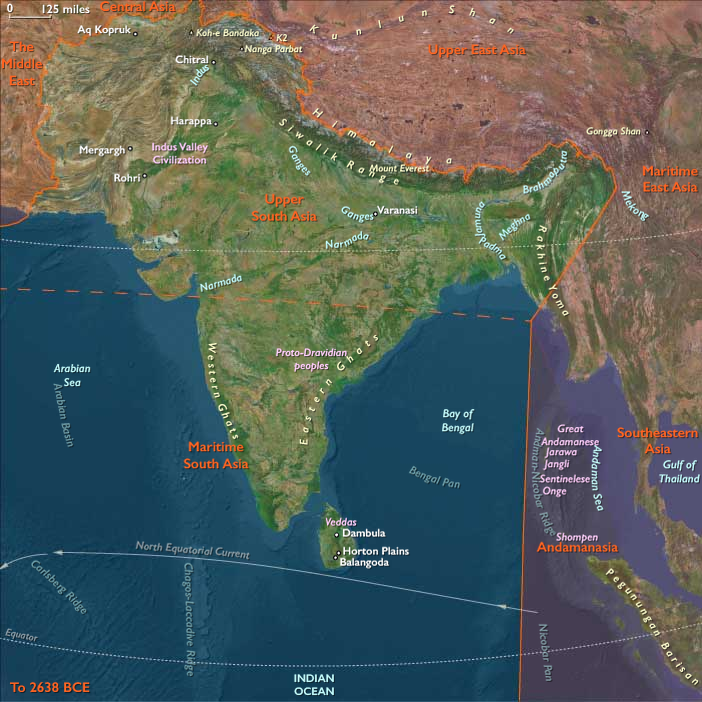
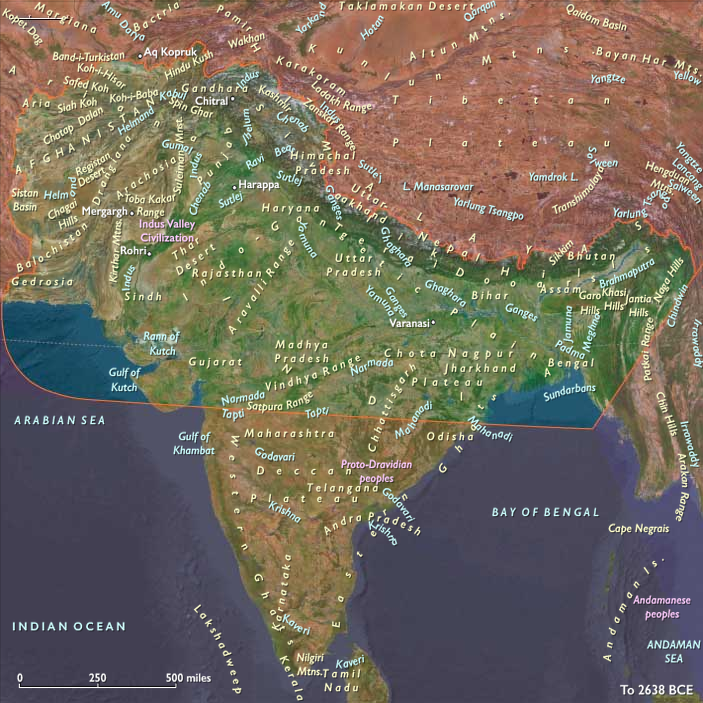
During the Early Holocene, South Asia cohered as a monsoon-shaped continuum from the Hindu Kush–Karakoram gates and Indus–Ganga–Brahmaputra plains to the Deccan basins, Ghats coasts, and Sri Lanka’s wet/dry zones.
Postglacial sea rise neared modern shorelines, turning drowned valleys into estuaries and lagoons, while inland levee lakes, oxbows, and marshes multiplied across the Doab and deltaic lowlands. Together, Upper South Asia (Indus–Ganga–Brahmaputra–Chindwin arcs) and Maritime South Asia (Deccan–Sri Lanka–atolls) formed one hydrological engine—rivers feeding coasts, coasts cycling fish and salt inland.
Climate & Environmental Shifts
The Holocene thermal optimum intensified the summer monsoon, sustaining perennial rivers, broad wetlands (e.g., Sundarbans precursors), and fertile floodplains in the Doab and Punjab. Across the Deccan, stronger monsoon pulses filled lee-basin “tank” depressions and backswamps; on the coasts, stable sea level fixed lagoon and bar-built estuary systems. Predictable wet–dry seasonality underwrote semi-sedentary lifeways in both interior and littoral zones.
Subsistence & Settlement
A continent-wide broad-spectrum, semi-sedentary mosaic took hold:
-
Upper South Asia (Indus–Ganga–Brahmaputra–Chindwin):
Lake- and levee-edge hamlets with pits and storage rose in the Middle Ganga and Thar–Ghaggar margins; delta foragers spread across eastern Bengal’s creeks. Diets combined deer/boar, river fish and mollusks, wild rice stands, and tubers. Wintering in sheltered terraces alternated with warm-season river and wetland rounds. -
Maritime South Asia (Deccan–Sri Lanka–littorals):
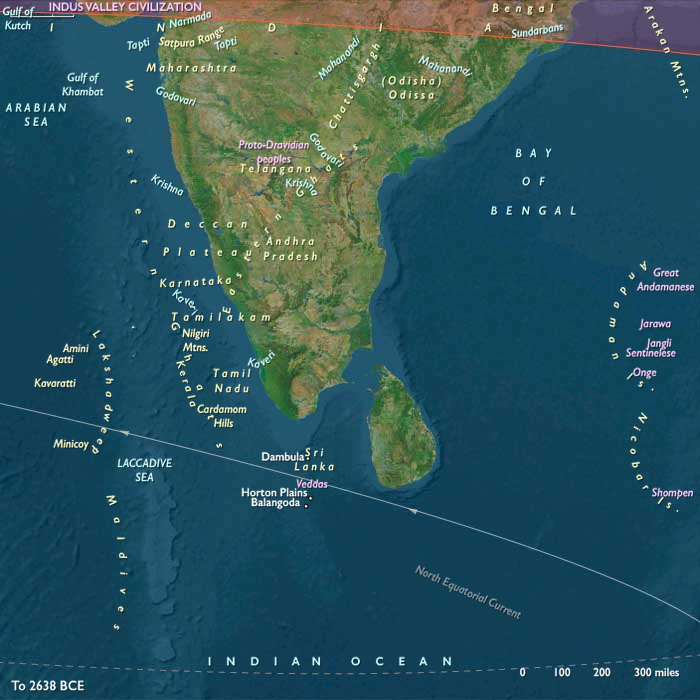
Estuary and lagoon villages ringed by tank-bed wetlands paired fish/shellfish/turtle with yams, fruits, wild rice in backwaters, and deer/boar from scrub forests. Sri Lanka continued Balangoda traditions while intensifying lakeshore foraging. Inland camps traced the Godavari–Krishna–Tungabhadra–Kaveri corridors.
Across both spheres, repeated return to favored nodes (springs, levees, dune ridges, caves) fostered place memory, early soil enrichment, and grove-tending.
Technology & Material Culture
Toolkits were light, durable, and water-savvy: ground-stone adzes, querns, and microlithic inserts; net sinkers, weirs, and basketry for mass-capture fisheries; dugout canoes on quiet channels and lagoons. Early pottery appears at northern and eastern fringes late in the epoch (diffusing from adjacent ceramic spheres), first for boiling, fermenting, and storage. Ornaments—shell, stone beads—and ochre occur in both domestic and mortuary contexts.
Movement & Interaction Corridors
South Asia functioned as braided logistics:
-
River spines (Indus distributaries; Ganga–Yamuna confluences; Brahmaputra–Meghna creeks) concentrated settlement and movement.
-
Foothill passes tied Nepal–Terai–Doab; Bagor–Thar tracks linked semi-arid margins to river larders.
-
Konkan–Malabar–Coromandel cabotage and Palk Strait crossings moved salt, shells, fish, and hardwoods between lagoons and the Deccan interior.
These routes created redundancy: when floods or local shortfalls struck, another corridor supplied starch, protein, or materials.
Cultural & Symbolic Expressions
Ritual life anchored rights to water and hearth: house-hearth rites, shell-heap feasts, and cave/terrace burials with beads and microliths. Ochre and curated fire places marked lineage continuity. In both north and south, ancestral cemeteries near water margins and ritualized cooking/feasting zones signaled tenure over fishing stations, groves, and foraging grounds.
Environmental Adaptation & Resilience
Resilience rested on wetland anchoring + multi-niche rounds + storage:
-
Drying/smoking fish and game, seed and tuber caching, and tank-bed wetlands buffered lean months.
-
Arboriculture tending (wild stands of palm, fruiting trees) and gathered wild rice added dependable starches.
-
Seasonal mobility across river–marsh–scrub–shore spread risk, while exchange obligations along rivers and coasts redistributed food after flood failure or cyclone years.
Long-Term Significance
By 6,094 BCE, South Asia had stabilized as a monsoon-fed, semi-sedentary heartland: Mesolithic river villages on levees and lake edges in the north; littoral hamlets at lagoons and tank beds in the south. The habits formed—node fidelity, wetland management, grove curation, storage, and river–sea exchange—were the operating code from which later rice–millet agriculture, Deccan arboriculture, and Indus–Ganga urban lineages would grow.
Topics
Commodities
Subjects
Regions