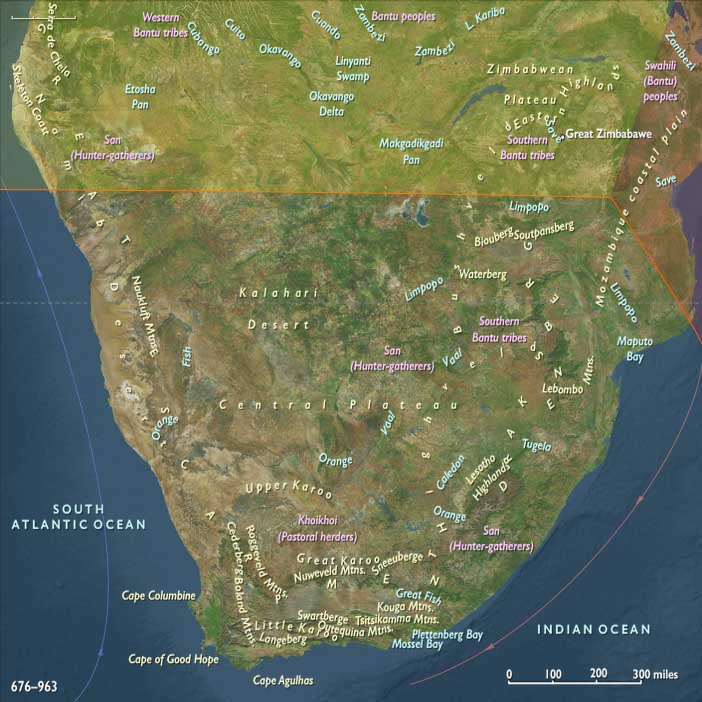
Temperate Southern Africa (909 BCE – 819…
909 BCE to 819 CE
Temperate Southern Africa (909 BCE – 819 CE) Antiquity — Iron Farming, Chiefdom Seeds, and Great Zimbabwe Precursors
Geographic and Environmental Context:
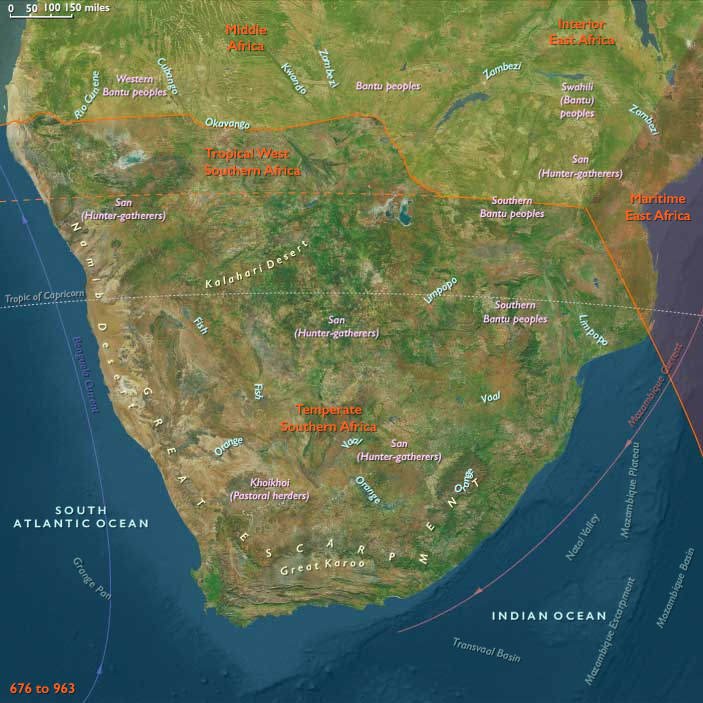
Temperate Southern Africa includes:-
South Africa (Cape littoral, Highveld, Drakensberg, Karoo, Namaqualand).
-
Lesotho and Eswatini.
-
Most of Namibia and Botswana, except the far northern sectors (Caprivi, Etosha, Okavango, Skeleton Coast — those are in Tropical Southern Africa).
-
Southern Zimbabwe and southwestern Mozambique (Maputo–Limpopo region).
Anchors: Cape littoral & fynbos, Drakensberg–Lesotho massif, Highveld grasslands (Witwatersrand, Free State), Namaqualand semi-desert, Kalahari southern margins, Great Karoo, Maputo–Limpopo basins, southern Zimbabwe plateau (Great Zimbabwe heartland).
-
Southern Zimbabwe plateau, Limpopo basin, Highveld, Cape, Drakensberg.
Climate & Environmental Shifts
-
Monsoon fluctuations; droughts episodic but buffered by mixed economies.
Societies & Political Developments
-
Iron Age agro-pastoral villages spread across Highveld and Limpopo.
-
Plateau sites in southern Zimbabwe became nuclei for later Great Zimbabwe.
-
Forager–pastoral minorities persisted in Cape/Drakensberg.
Economy & Trade
-
Sorghum, millet, cattle, goats, sheep; iron hoes, pottery.
-
Regional exchange of beads, shells, livestock.
Technology & Material Culture
-
Iron smelting widespread; decorated pottery; hut villages.
Belief & Symbolism
-
Rock art now showed ritual herding scenes.
-
Ancestor veneration central in farming villages.
Environmental Adaptation & Resilience
-
Iron tools and crop diversity ensured resilience.
Transition
By 819 CE, temperate southern Africa sustained iron-farming chiefdoms, ancestral to Mapungubwe and Great Zimbabwe, while coast and Drakensberg preserved enduring San symbolic traditions.
Topics
Commodities
Subjects
Regions
Southern Africa
View →Subregions