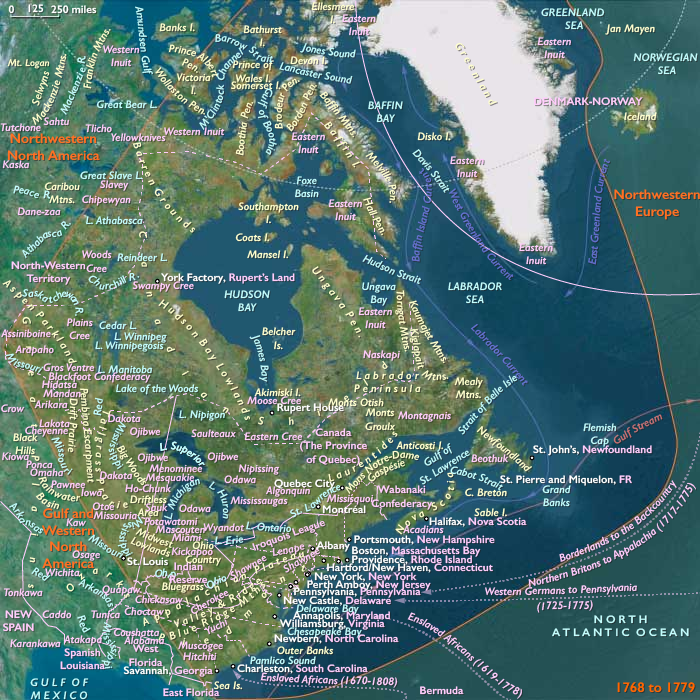
George Washington begins drawing up plans in…
September 1775 CE
Washington feels that he can afford to send some troops to Quebec, as he has received intelligence from British deserters and American spies that the British have no intention of launching an attack from Boston until they are reinforced.
On September 11, about eleven hundred troops under the command of Benedict Arnold leave for Quebec.
Washington summons a council of war, and makes a case for an all out amphibious assault on Boston, by sending troops across Back Bay in flat-bottomed boats that could hold fifty men each.
Washington believes it will be extremely difficult to keep the men together when winter comes.
In a war council, the plan is unanimously rejected, and the decision is not to attack "for the present at least."
In early September Washington authorizes the appropriation and outfitting of local fishing vessels for intelligence-gathering and interdiction of supplies to the British.
This activity is a precursor to the Continental Navy, which will be established in the aftermath of the British Burning of Falmouth (present-day Portland, Maine).
The provincial assemblies of Connecticut and Rhode Island have by this time also begun arming ships and authorized privateering.
Groups
Connecticut (English Crown Colony)
View →
New York, Province of (English Colony)
View →
New Hampshire, English royal Province of
View →
Massachusetts, Province of (English Crown Colony)
View →
Britain, Kingdom of Great
View →
Georgia, Province of (British Colony)
View →
Quebec (British Province)
View →
Topics
Regions
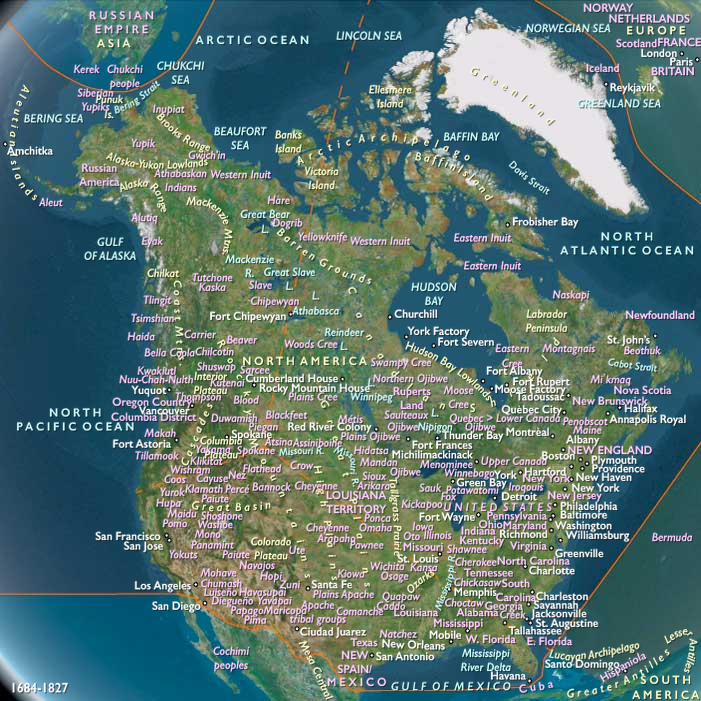
Northern North America
View →Subregions