
West Africa (820 – 963 CE): Ghana’s …
Years: 820 - 963
West Africa (820 – 963 CE): Ghana’s Rise, Sahel–Forest Gateways, and River Towns
Geographic and Environmental Context
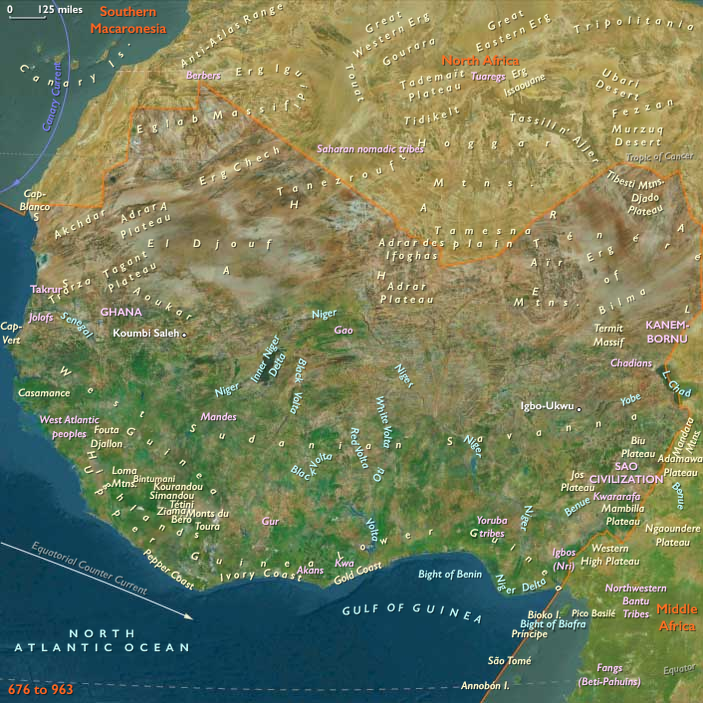
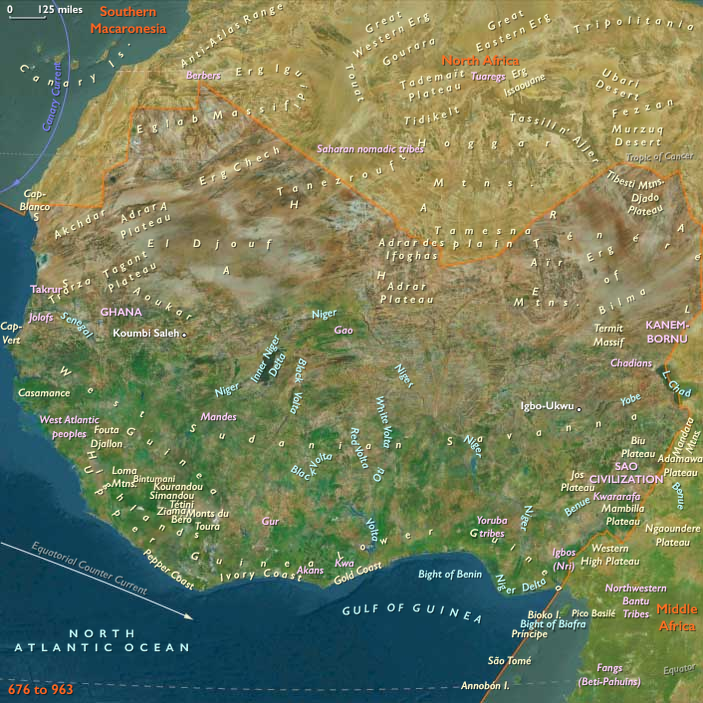
West Africa includes Senegal, Mauritania, Mali, Burkina Faso, Niger, Guinea, Sierra Leone, Liberia, Côte d’Ivoire, Ghana, Togo, Benin, and western–central Nigeria (Hausaland).
-
Anchors: the Senegal–Gambia valleys, the Niger Bend and Inland Delta, the Volta and Benue corridors, and forest margins from Guinea to Ghana–Benin.
Climate and Environmental Shifts
-
The Medieval Warm Period brought generally favorable rains to the Sahel and Sudan belts.
-
Flood-recession farming in the Inland Niger Delta and lower Senegal supported cereals, fish, and pastures.
Societies and Political Developments
-
Ghana (Wagadu) consolidated between the Senegal and upper Niger, taxing caravans at nodes around Koumbi Saleh.
-
Takrur formed in the lower Senegal valley as an early riverine state.
-
Towns at Gao on the Niger Bend grew into a commercial polity (Songhay ancestors).
-
Forest–savanna margins (Mande and early Akan ancestors) supplied gold, kola, and ivory to Sahelian markets.
-
In Hausaland (northwest–central Nigeria), early urban kernels (e.g., Kano, Katsina) emerged as walled towns within a mosaic of farming chieftaincies.
Economy and Trade
-
Trans-Saharan caravans linked Ghana to Sijilmassa and Awdaghust (gold for salt, copper, cloth).
-
Savanna agriculture (millet, sorghum) and floodplain gardens fueled surplus; cattle herds grazed Sahel pastures.
-
Forest exports—gold (Bambuk, Buré), kola, ivory—moved through Mande brokers northward.
Subsistence and Technology
-
Dryland grains with iron hoes and ard ploughs; river fisheries and flood-recession plots in the Inland Delta.
-
Iron smelting furnished tools and weapons; donkeys and oxen moved farm goods; camels dominated the desert legs.
Movement and Interaction Corridors
-
Sahara–Sahel axes: Sijilmassa ⇄ Awdaghust ⇄ Ghana; Air–Azawad ⇄ Gao.
-
Niger River tied Gao to Inland Delta fisheries and pasture markets; Senegal River sustained Takrur.
Belief and Symbolism
-
Indigenous religions centered on earth shrines, ancestor veneration, and river spirits.
-
Early Islamic presence (merchants, scholars) clustered in caravan towns and separate quarters, without displacing local cults.
Adaptation and Resilience
-
Ecological complementarity—Sahel grains, river fish, forest gold and kola—buffered shocks.
-
Toll-taking states (Ghana, Takrur) maintained caravan security; when one route faltered, traffic shifted to alternatives.
Long-Term Significance
By 963, West Africa was a Sahelian–riverine commonwealth: Ghana dominated gold–salt corridors; Gao and Takrur anchored the Niger and Senegal; forest margins fed northbound trade that would power later state formation.

West Africa (with civilization) ©2024-25 Electric Prism, Inc. All rights reserved.
Groups
- Hausa Kingdoms, the
- Hausa people
- Islam
- Soninke people
- Ghana (Wagadou) Empire
- Takrur, state of
- Yoruba people
Topics
Commodoties
- Fish and game
- Weapons
- Gem materials
- Domestic animals
- Grains and produce
- Textiles
- Ceramics
- Strategic metals
- Slaves
- Salt
- Manufactured goods
Subjects
Regions
Subregions
Related Events
Showing 10 events out of 54 total
Years: 820 - 963
West Africa (with civilization) ©2024-25 Electric Prism, Inc. All rights reserved.
Groups
- Hausa Kingdoms, the
- Hausa people
- Islam
- Soninke people
- Ghana (Wagadou) Empire
- Takrur, state of
- Yoruba people
Topics
Commodoties
- Fish and game
- Weapons
- Gem materials
- Domestic animals
- Grains and produce
- Textiles
- Ceramics
- Strategic metals
- Slaves
- Salt
- Manufactured goods
Subjects
Regions
Subregions