West Central Europe (4,365 – 2,638 BCE):…
4365 BCE to 2638 BCE
West Central Europe (4,365 – 2,638 BCE): Later Neolithic Cultures and Megalithic Traditions
Geographic and Environmental Context
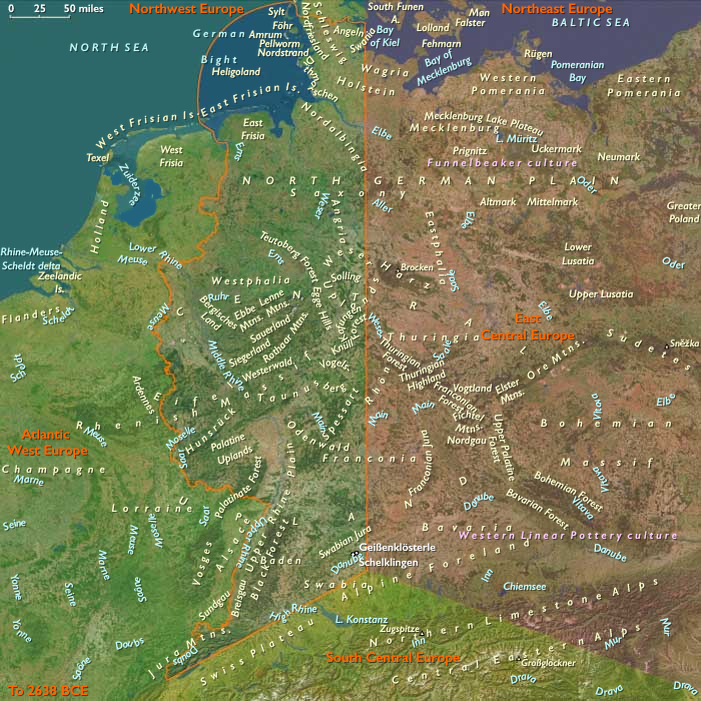
West Central Europe includes modern Germany west of 10°E and the Rhine-adjacent far northwest of Switzerland, including Basel and the eastern Jura Mountains.
-
Dense farming settlements spread across the Rhine plains, Moselle basin, and Jura foothills.
-
Hilltop sites and enclosed villages increased in frequency.
Climate and Environmental Shifts
-
The Holocene Climatic Optimum continued; warm, wet conditions favored agriculture.
-
Population growth expanded deforestation and soil use.
Societies and Political Developments
-
Post-LBK cultures (Michelsberg, Rössen, Funnelbeaker) developed hilltop enclosures and ceremonial centers.
-
By the late Neolithic, Corded Ware and Bell Beaker cultures introduced new burial customs, metallurgy, and individual elite display.
-
Social stratification increased, visible in rich burials and monumental constructions.
Economy and Trade
-
Farming diversified with cereals, legumes, and orchard crops.
-
Metallurgy (copper and gold ornaments) appeared, marking elite power.
-
Exchange networks expanded: amber, copper, jadeite, and obsidian circulated widely.
Subsistence and Technology
-
Improved ploughs, stone querns, and early metallurgy.
-
Megalithic tombs and causewayed enclosures reflected communal labor.
-
Pottery and weaving advanced, supporting surplus storage and textile trade.
Movement and Interaction Corridors
-
Rhine trade routes moved salt, metals, and exotic prestige goods.
-
Jura passes tied the region to Mediterranean and Alpine cultures.
Belief and Symbolism
-
Megalithic monuments emphasized ancestor veneration and territorial claims.
-
Burial customs shifted toward individualism in Corded Ware and Beaker contexts.
-
Figurines, decorated ceramics, and solar symbols expressed ritual cosmologies.
Long-Term Significance
By 2638 BCE, West Central Europe was a densely populated Neolithic heartland, where megalithic traditions, metallurgy, and stratified societies laid the groundwork for the Bronze Age Celtic cultures that followed.
Topics
Commodities
Subjects
Regions
Central Europe
View →Subregions