Filters:
The Swift Development of Printing, Typography, and …
Years: 1492 - 1503
The Swift Development of Printing, Typography, and Mathematical Symbols in Renaissance Europe
By the late 15th and early 16th centuries, European printing and typography advanced rapidly, revolutionizing literacy, knowledge dissemination, and scientific progress. At the same time, standardized mathematical notation, including the + (plus) and – (minus) symbols, was introduced, streamlining arithmetic and algebraic calculations.
The Growth of Book Printing and Typography
- Johannes Gutenberg’s invention of the printing press (c. 1440) with movable type transformed European communication.
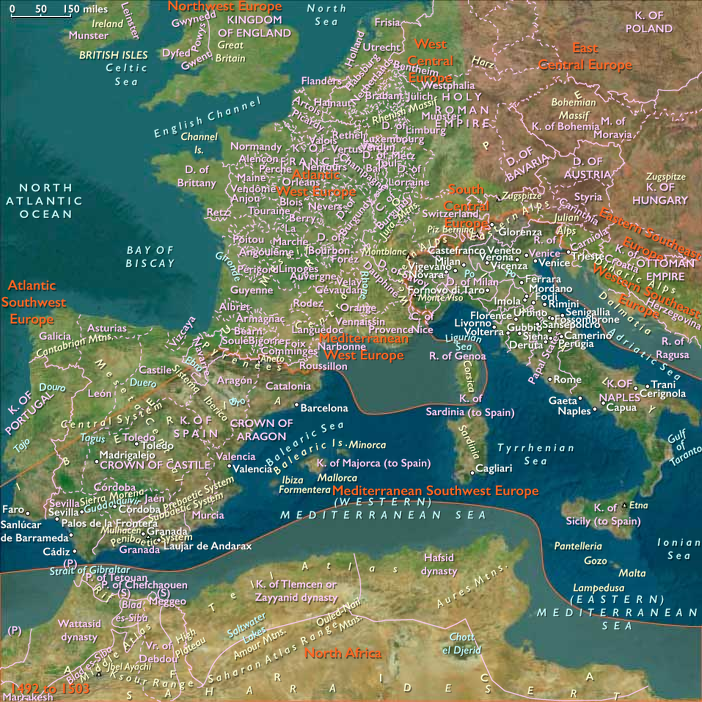
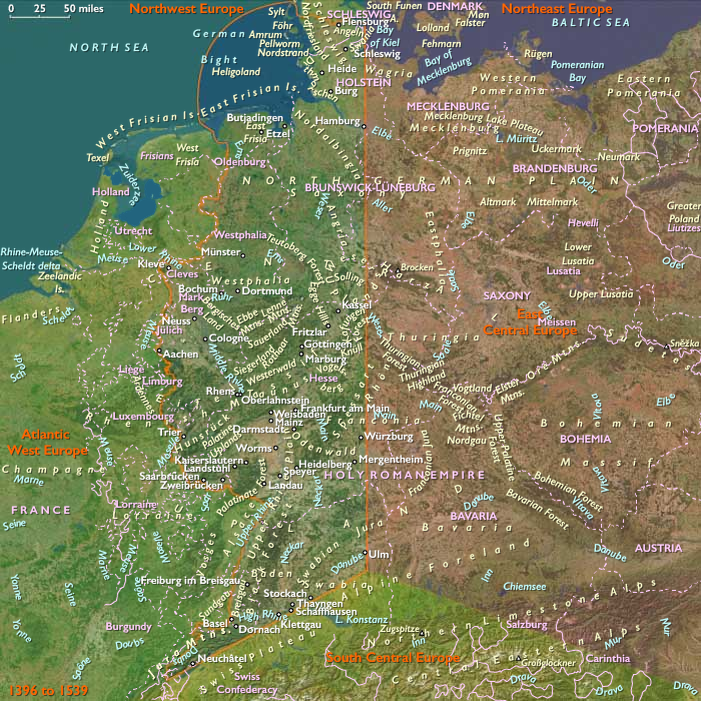
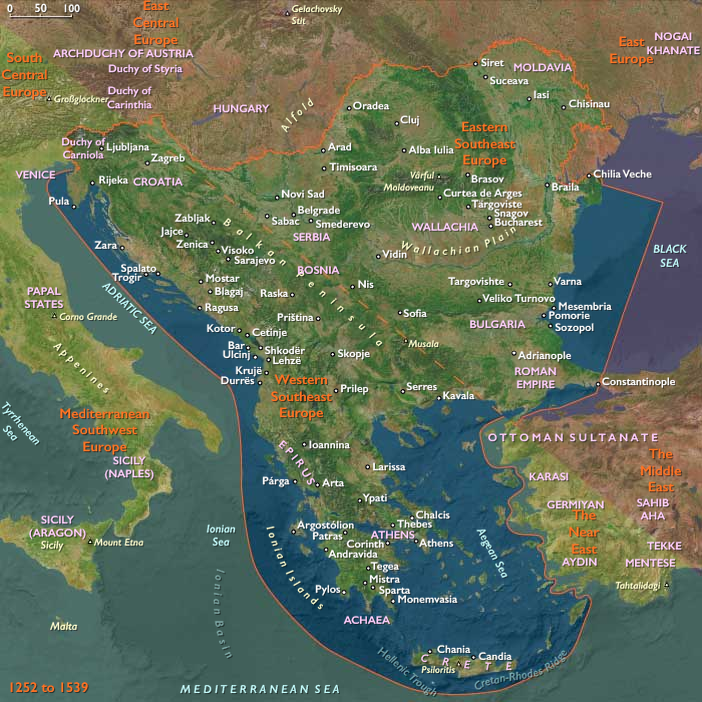
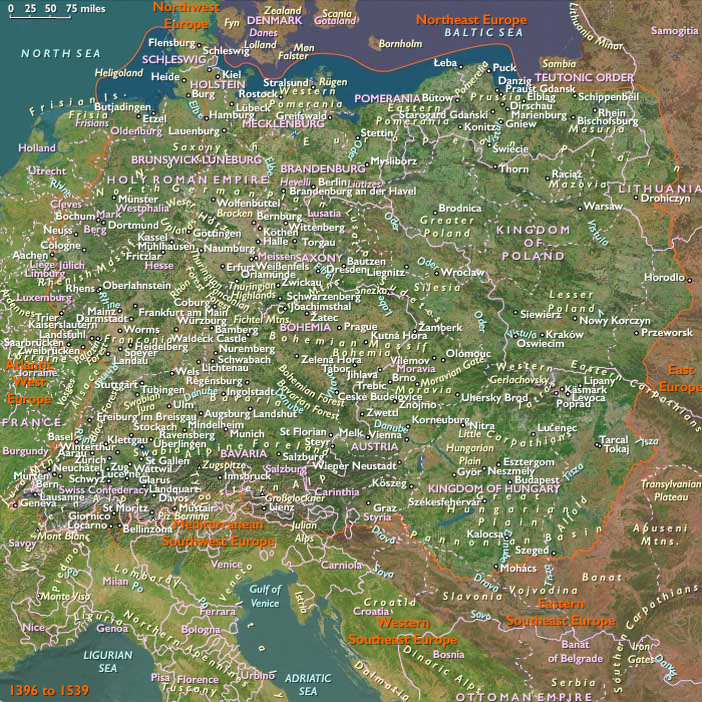
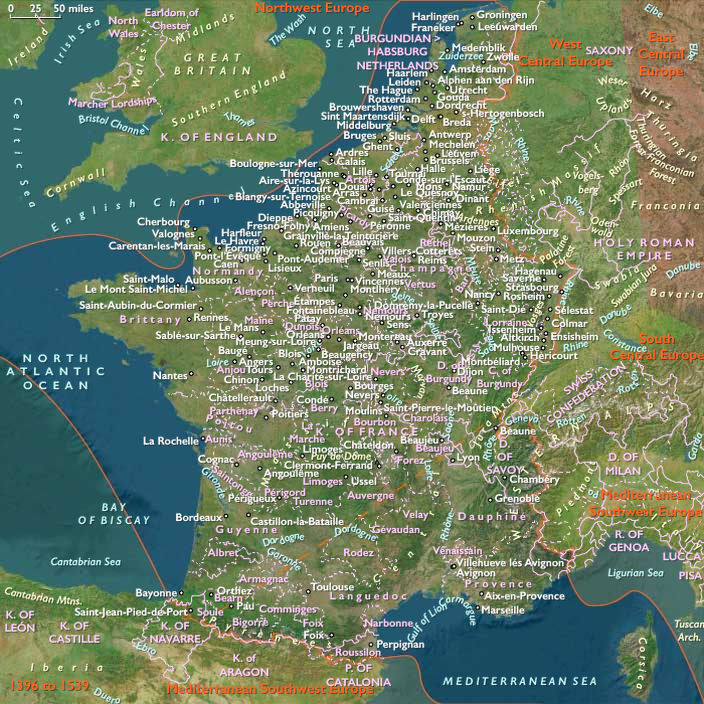
- By 1500, printing presses were operating in more than 200 European cities, with major centers in Germany, Italy, France, and the Low Countries.
- This explosion of printed books (incunabula) facilitated:
- The spread of Renaissance humanism through easily accessible texts.
- The standardization of typefaces and fonts, leading to early typographic designs such as Roman type (Antiqua) and Italic type (developed by Aldus Manutius in 1501).
- The proliferation of scientific and mathematical works, advancing European knowledge.
The Introduction of + and − Symbols in Mathematics
- Before the 15th century, arithmetic operations were described in words rather than symbols.
- The plus (+) and minus (−) signs were introduced in printed European mathematical texts by:
- Johannes Widmann (1489) – A German mathematician who first used "+" and "−" in commercial arithmetic.
- Luca Pacioli (1494) – The Italian mathematician, in his Summa de Arithmetica, helped popularize the notation.
- Robert Recorde (1557) – A Welsh mathematician who later introduced the "=" (equals) symbol, further improving algebraic notation.
Impact on Science, Commerce, and Education
- Printing enabled the mass production of mathematical texts, ensuring the rapid spread of algebra, arithmetic, and bookkeeping methods across Europe.
- The use of + and − simplified calculations, benefiting merchants, bankers, and scientists.
- The combination of typography advancements and mathematical symbols laid the foundation for the Scientific Revolution, making knowledge more accessible, standardized, and widely used.
Thus, the parallel growth of printing technology and mathematical notation in the Renaissance marked a critical turning point in European intellectual history, influencing education, commerce, and scientific inquiry for centuries to come.
Years: 1492 - 1503
Subjects
Regions
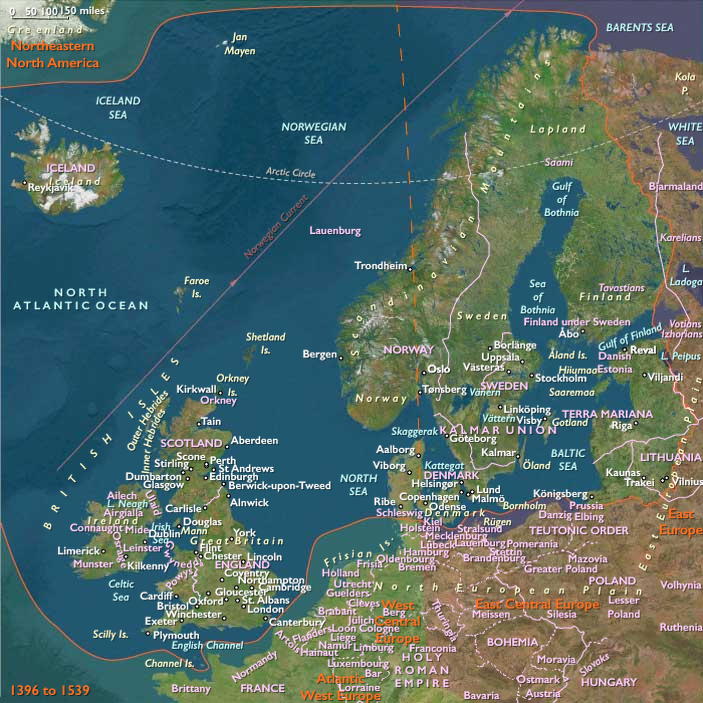

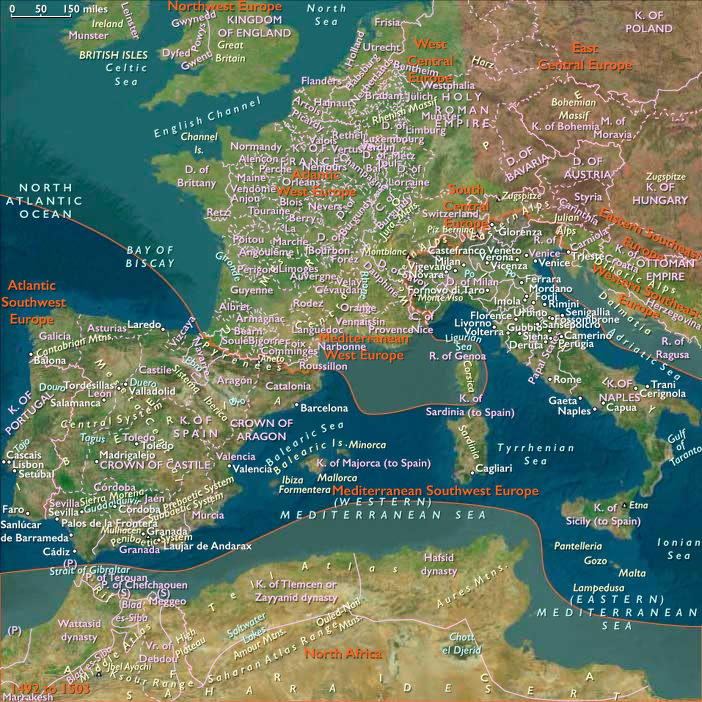
Subregions
- East Europe
- Northeast Europe
- East Central Europe
- Eastern Southeast Europe
- Western Southeast Europe
- South Central Europe
- Mediterranean West Europe
- Mediterranean Southwest Europe
- Atlantic Southwest Europe
- Atlantic West Europe
- West Central Europe
- Northwest Europe