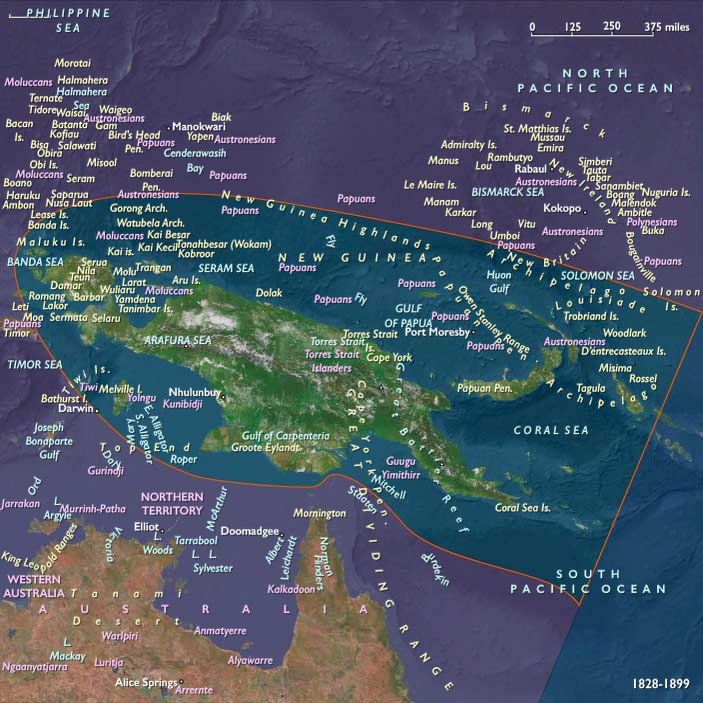
West Melanesia (1828–1971 CE): Resource Frontiers, War…
1828 CE to 1971 CE
West Melanesia (1828–1971 CE): Resource Frontiers, War Theaters, and Struggles for Independence
Geography & Environmental Context
West Melanesia includes New Guinea’s western half (Dutch New Guinea, later West Papua), Papua New Guinea’s northern and island regions, Bougainville, and the northern Solomon Islands (including Buka). Anchors include the central New Guinea highlands, the Sepik and Ramu river basins, the volcanic Bismarck Archipelago (New Britain, New Ireland), and Bougainville. Tropical rainforest, highland valleys, coral coasts, and volcanic chains defined this diverse region.
Climate & Environmental Shifts
A humid equatorial climate with heavy rains supported rainforest and fertile volcanic soils. Highlands sustained dense populations in terraced valleys. Coastal and island communities faced cyclones, tsunamis, and volcanic eruptions (Rabaul eruptions, 1937 and 1950s). After WWII, population growth and mining expanded pressure on forests and rivers.
Subsistence & Settlement
-
Highlands: Sweet potatoes, taro, yams, and pigs supported intensive farming and dense villages; elaborate exchange systems (moka feasts, shell money).
-
Coastal/island: Fishing, gardening, sago processing, and inter-island trade.
-
Colonial economy: Dutch, German, British, and later Australian administrations promoted copra, cocoa, and rubber. Mission stations grew into service hubs.
-
Mid-20th century: Bougainville copper and New Guinea oil exploration marked new resource frontiers.
Technology & Material Culture
-
Traditional: Stone tools persisted in highlands into the 20th century; canoe building, shell ornaments, bark cloth, and ritual carvings flourished.
-
Colonial: Plantations, schools, and churches spread; airstrips and patrol posts opened highlands to outsiders by the 1930s.
-
Postwar: Allied bases (Port Moresby, Rabaul, Bougainville) left infrastructure; missions expanded literacy; modern tools and radios penetrated villages.
Movement & Interaction Corridors
-
Colonial carve-up: Dutch in West New Guinea; Germans in northern PNG and Bismarcks; British/Australians in southern PNG.
-
World War II: Japanese occupation (Rabaul hub) and Allied counteroffensives (Kokoda, Bougainville) devastated landscapes and populations.
-
Postwar: Australian trusteeship (UN mandate) administered PNG; Dutch held West Papua until transfer to Indonesia (1963).
-
Migration: Mission schools and plantations drew labor; Bougainville copper mine (1960s) began attracting internal migrants.
Cultural & Symbolic Expressions
-
Traditional systems: Exchange networks (shell valuables, pigs, moka feasts) and ancestral cults persisted.
-
Colonial Christianity: Missionization brought literacy and hymn-singing, blending with local traditions.
-
Political identity: Emerging nationalist movements in PNG and West Papua drew on cultural pride; West Papuan Morning Star flag (1961) symbolized autonomy.
-
Arts: Sepik carvings, bark paintings, and highland rituals gained global attention through anthropologists.
Environmental Adaptation & Resilience
-
Highlands intensification: Terracing, irrigation, and pig husbandry sustained dense populations.
-
Coastal strategies: Fishing, inter-island exchange, and sago processing hedged risks.
-
Colonial shocks: Plantations and mines disrupted ecologies, but local gardens remained central.
-
War resilience: Villagers coped with occupation and bombing by dispersing gardens, shifting settlements, and relying on kinship reciprocity.
Political & Military Shocks
-
Colonial rivalries: Dutch, German, and British divided New Guinea and northern Solomons in the 19th century.
-
WWII: Intense fighting from 1942 to 1945 devastated Rabaul, Bougainville, and highland approaches.
-
Postwar trusteeship: Australia governed PNG under UN mandate; Dutch ceded West Papua to Indonesia (1963), sparking resistance.
-
Nationalism: Papua New Guinea began a path toward independence (achieved 1975); West Papua saw suppressed independence movements.
Transition
Between 1828 and 1971, West Melanesia was transformed from an isolated world of highland terraces and shell money to a colonial and Cold War frontier. German and Dutch colonization, WWII devastation, and postwar trusteeships reshaped life. Yet subsistence gardens, moka feasts, and carved ancestral poles endured. By 1971, mining ventures, nationalist movements, and missionary education foreshadowed the independence of Papua New Guinea and the contested future of West Papua, making West Melanesia a landscape where ancient traditions and modern geopolitics collided.
Topics
Commodities
Subjects
Regions
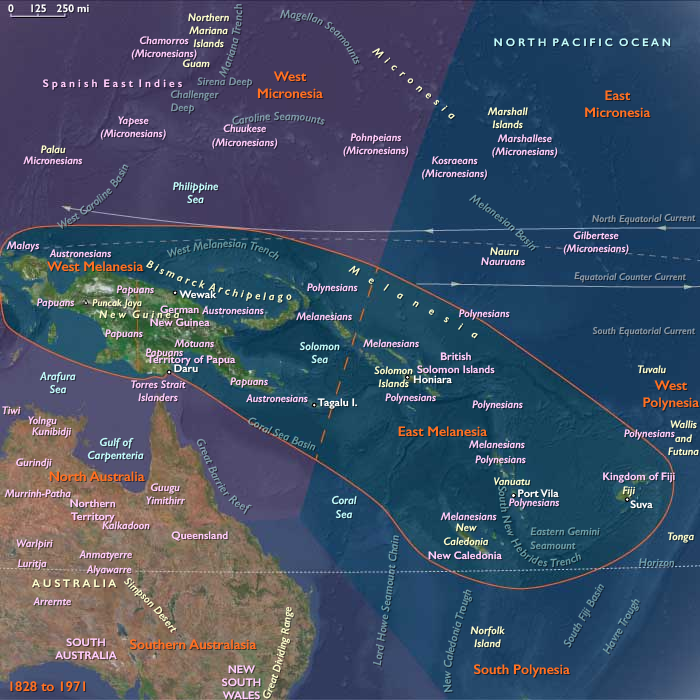
Melanesia
View →Subregions