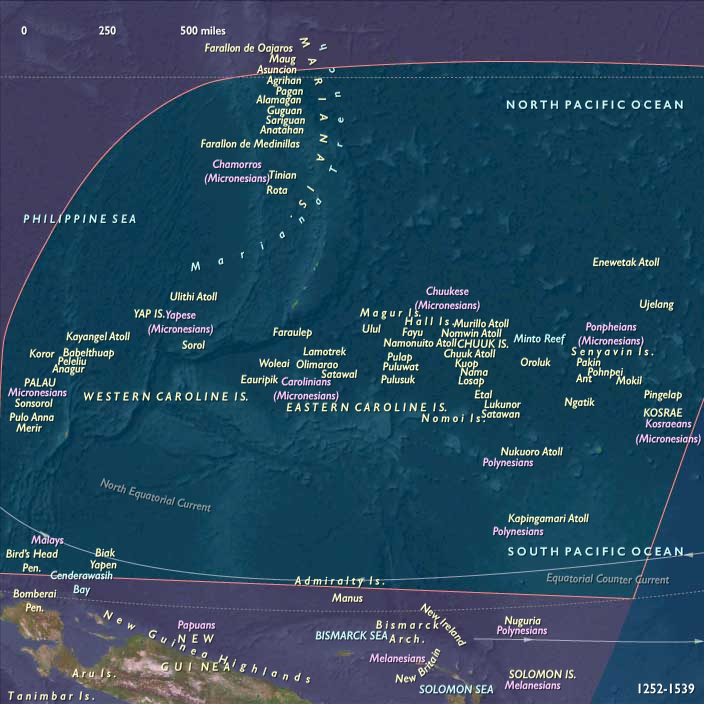
West Micronesia (1252 – 1395 CE): Yapese…
1252 CE to 1395 CE
West Micronesia (1252 – 1395 CE):
Yapese Tribute Spheres, Palauan Stone Monuments, and Caravan Routes
Geographic and Environmental Context
West Micronesia includes the Mariana Islands (Guam, Saipan, Rota, Tinian, etc.), Palau, and Yap—high volcanic and limestone islands with reef-lagoon systems and scarce but managed freshwater.
-
Yap: fertile high island with lagoon reefs and quarries for rai (stone money).
-
Palau: volcanic and limestone archipelago with taro swamps, fertile valleys, and coral lagoons.
-
Marianas: chain of volcanic highs and limestone plateaus; rich fisheries, limited water on northern islets.
Climate and Environmental Shifts
The early Little Ice Age (~1300 CE) increased rainfall variability and typhoons.
-
Yap & Palau: high islands buffered drought; irrigation and swamps sustained taro and (distinctively) rice in Palau.
-
Northern Marianas: reliance on cisterns and breadfruit groves intensified.
Societies and Political Developments
-
Yap: center of the sawei system—outer Caroline atolls sent tribute (breadfruit paste, shells, fiber) for protection, navigational knowledge, and prestige goods. Chiefs consolidated authority via rai quarries, tribute flows, and canoe exchanges.
-
Palau: clan-based chiefdoms built stone terraces and shrines; village councils coordinated taro irrigation and warfare. Great men’s houses (bai), with carved, narrative gables, anchored ritual and politics.
-
Mariana Islands: latte stone architecture expanded as foundations for chiefly houses and communal buildings; matrilineal clans and hereditary chiefs governed villages; warfare over land and reef tenure rose with population.
Economy and Trade
-
Staples: taro, breadfruit, yam, coconut; Palau maintained rare Oceanian rice plots in wetland swamps.
-
Marine resources: reef fish, turtles, shellfish, and pelagic tuna; preserved foods bridged dry spells.
-
Prestige exchange:
-
Yap: rai stone disks (quarried largely in Palau, shipped by canoe) symbolized wealth, history, and alliance.
-
Palau: fine mats, shell valuables, and taro surpluses provisioned feasts.
-
Marianas: latte labor embodied prestige; shell ornaments circulated locally.
-
-
Inter-island exchange: the sawei network redistributed goods, ritual, and knowledge across hundreds of miles.
Subsistence and Technology
-
Irrigation: taro pondfields in Palau; swamp drainage and embankments in Yap.
-
Architecture: latte stones (Marianas), bai houses (Palau), stone-money banks (Yap).
-
Navigation: outrigger craft with crab-claw sails; formal navigator training in stars, swells, and landfall signs.
-
Crafts: shell adzes, fiber nets, fish traps, carved gables and ritual figures.
Movement and Interaction Corridors
-
Sawei routes: radiating from Yap, sustaining tribute circuits, navigation schools, and shared ritual calendars.
-
Palau–Yap corridor: transport of stone money, fine mats, and specialty goods.
-
Mariana chain: canoe routes bound northern and southern islands; Guam served as a central hub.
Belief and Symbolism
-
Yap: rai carried spiritual as well as economic value; myths tied stones to heroic voyages and ancestral sanction.
-
Palau: creation myths and clan totems inscribed on bai; ancestor shrines reinforced lineage power.
-
Marianas: latte stones symbolized chiefly strength and clan continuity; rituals aligned sea spirits, agriculture, and warfare.
-
Across West Micronesia: navigation was sacralized; deities of sea and stars were invoked for safe passage and success.
Adaptation and Resilience
-
Portfolio subsistence: tree crops, irrigated taro (and rice in Palau), diversified fishing, and preserved breadfruit buffered cyclones and drought.
-
Redistribution: sawei tribute and feast economies spread risk over distance.
-
Monumentality: latte, bai, and rai reinforced cohesion and chiefly legitimacy.
-
Knowledge systems: navigation schools preserved expertise to meet environmental shifts.
Long-Term Significance
By 1395 CE, West Micronesia was a maritime hub of exchange and monumentality:
Yap projected prestige through the sawei tribute sphere; Palau thrived on irrigated taro, rice swamps, and carved men’s houses; the Marianas consolidated latte-stone villages that embedded megalithic labor in social identity.
Groups
Topics
Subjects
Regions
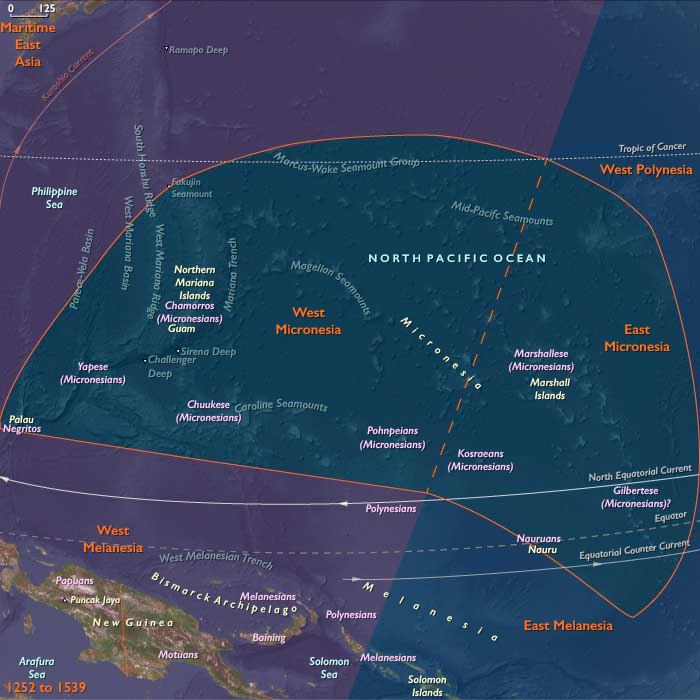
Micronesia
View →Subregions