West Micronesia (820 – 963 CE): Yapese…
964 CE to 1107 CE
West Micronesia (820 – 963 CE): Yapese Prestige, Mariana Latte Beginnings, and Outer-Island Tribute
Geographic and Environmental Context
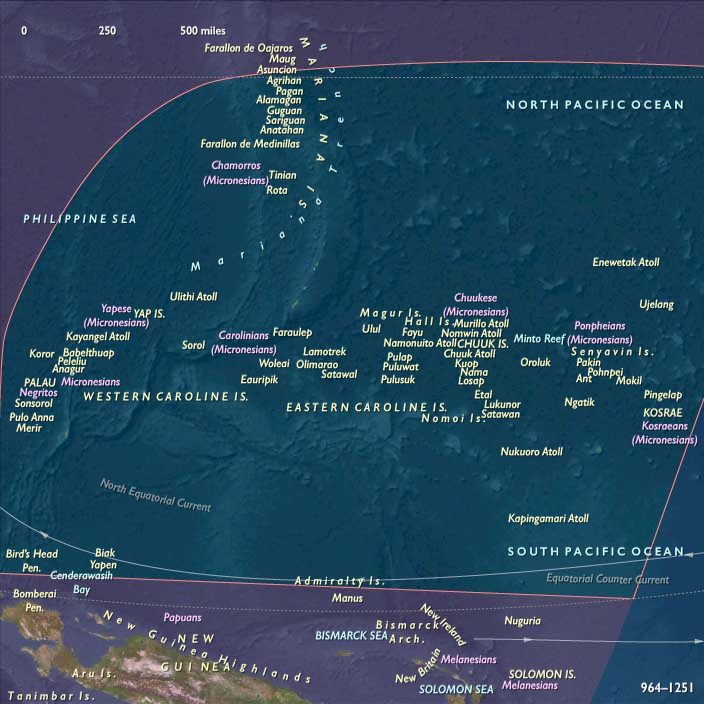
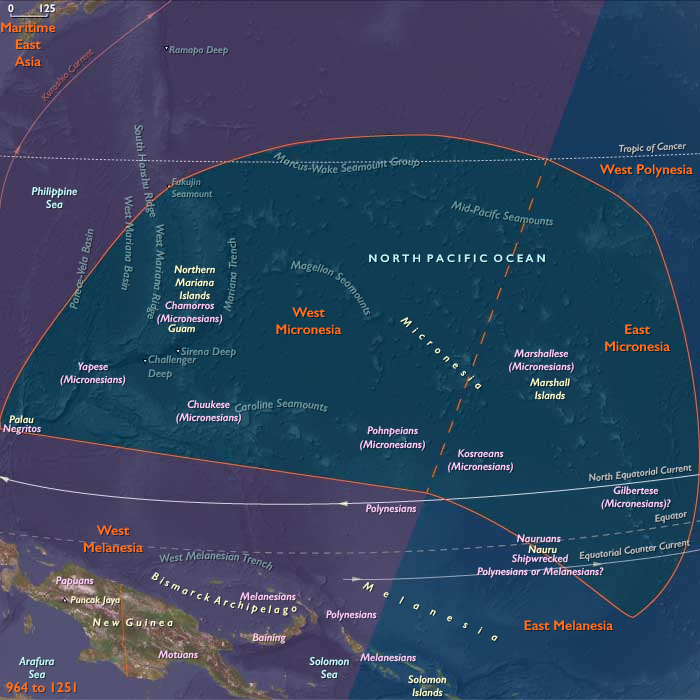
West Micronesia includes the Mariana Islands and the Caroline Islands (notably Yap, Chuuk, and Palau, together with surrounding atolls).
-
Marianas: high volcanic islands in the north, limestone plateaus in the south, fringed by lagoons and rich fisheries.
-
Yap: a high island with fertile soils, lagoons, and reef passes; surrounded by numerous outer atolls.
-
Chuuk: a cluster of high volcanic islands with central lagoon, sustaining dense settlements.
-
Palau: volcanic and limestone islands with deep lagoons, known for abundant reef fisheries.
-
Outer atolls (Ulithi, Woleai, Lamotrek, Satawal, etc.) formed the scattered seafaring arc that tied Yap to distant Micronesian worlds.
Climate and Environmental Shifts
-
Equatorial trade winds brought a warm, humid climate.
-
Typhoons periodically disrupted atoll groves and lagoon systems, but resilient arboriculture (coconut, breadfruit, pandanus) and stored foods buffered shocks.
-
ENSO variability (El Niño droughts, La Niña storms) demanded flexible mobility and reciprocal aid.
Societies and Political Developments
-
Yap: emerged as a prestige center, with its chiefs (later known as gatchaper) forging alliances with outer atoll leaders. Early forms of the sawei system—tribute-like exchanges of preserved breadfruit, mats, and shells from outer islands in return for protection and prestige goods from Yap—took root in this age.
-
Chuuk: organized into lagoon-centered chiefdoms, with strong clan-based leadership and fortified hilltop refuges in times of conflict.
-
Palau: chiefdoms managed access to lagoon and taro swamp agriculture; councils of chiefs negotiated inter-village rivalries through warfare and ritual.
-
Marianas: early latte stone architecture (megalithic stone pillars and capstones for house foundations) began appearing in the southern islands, signaling the rise of hierarchical chiefs (maga’låhi) and lineages.
-
Outer atolls: small-scale chiefdoms maintained autonomy but oriented prestige ties toward Yap, integrating voyaging and ritual exchange.
Economy and Trade
-
Staples: breadfruit, taro (wet and dry varieties), yam, coconut, and bananas in high islands; pandanus and swamp taro on atolls.
-
Fishing and reef harvesting: reef nets, trolling hooks, and fish weirs provided abundant protein; deep-sea voyages targeted tuna and bonito.
-
Exchange networks:
-
Yap ⇄ outer islands: preserved breadfruit paste, fiber mats, and shells flowed inward; Yap provided canoe timber, ironwood, turmeric, and prestige stones.
-
Marianas: inter-island exchanges moved pottery, fishing gear, and ornaments.
-
Palau and Chuuk: exchanged specialized shell valuables, taro, and canoe components.
-
-
Stone money: While the full rai system of Yap was later, quarried limestone and shell valuables already functioned as durable prestige items.
Subsistence and Technology
-
Horticulture: irrigation ditches for wet taro in Palau and Yap; arboriculture of breadfruit, coconut, and pandanus structured seasonal cycles.
-
Food preservation: fermented breadfruit paste and smoked fish provided famine reserves.
-
Canoe technology: outrigger and double-hulled voyaging canoes, crab-claw sails, and sennit lashings supported long-distance voyaging.
-
Navigation: Micronesian wayfinders read stars, swells, seabirds, and cloud patterns; in the Marshalls, “stick charts” were perfected, though in West Micronesia knowledge was transmitted orally and ritually through master navigators.
Movement and Interaction Corridors
-
Sawei routes radiated from Yap to Ulithi, Woleai, Lamotrek, and Satawal, binding outer islands into a shared ceremonial sphere.
-
Chuuk Lagoon: internal voyaging tied reef islets to volcanic high islands.
-
Palau: voyaging reached as far as Yap and the Philippines, linking West Micronesia to broader exchange webs.
-
Marianas: voyaging between northern and southern islands maintained social cohesion and resource sharing.
Belief and Symbolism
-
Ancestor worship structured clan and chiefly authority; shrines honored spirits of navigation, fertility, and warfare.
-
Yapese stone shrines anchored chiefly ritual and prestige.
-
Palauan cults emphasized fertility of taro swamps and reef abundance, expressed in monumental meeting houses (bai).
-
Marianas: latte stones symbolized the permanence of chiefly houses and ancestral legitimacy.
-
Ritual chants, navigation schools, and canoe consecrations sacralized voyaging knowledge.
Adaptation and Resilience
-
Multi-island portfolios allowed resilience: high islands exported taro and timber, atolls contributed breadfruit, coconuts, and fish.
-
Preservation of breadfruit paste and dried fish cushioned famine years.
-
Reciprocal voyaging obligations spread risk across dispersed islands, ensuring survival during droughts or cyclones.
-
Chiefly redistribution through feasts and tribute integrated ecology with political authority.
Long-Term Significance
By 963 CE, West Micronesia had become a mature voyaging and tribute system, anchored in:
-
Yap’s emergent prestige sphere, with the sawei system taking form.
-
Chuuk’s lagoon chiefdoms, balancing rivalry with clan solidarity.
-
Palau’s taro and reef chiefdoms, monumentalized in bai.
-
Marianas’ latte stone foundations, signaling increasing hierarchy.
The region was firmly integrated into the greater Pacific voyaging commons, with its blend of horticulture, reef fishing, and navigational mastery ensuring resilience and cultural vitality.
Groups
Subjects
Regions
Micronesia
View →Subregions