Western West Indies (1396–1539 CE): Taíno Heartlands…
1396 CE to 1539 CE
Western West Indies (1396–1539 CE): Taíno Heartlands and Spanish Conquest
Geographic & Environmental Context
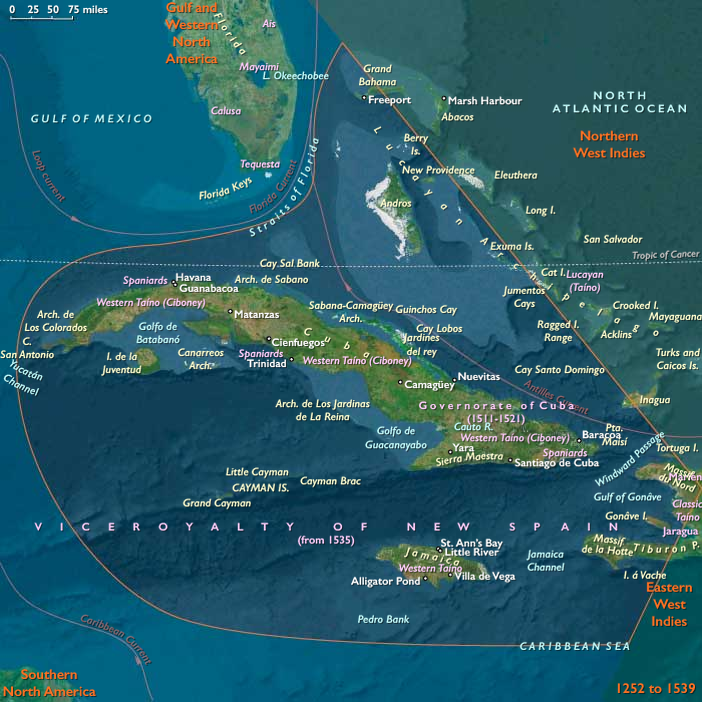
The subregion of Western West Indies includes Cuba, Jamaica, the Cayman Islands, and the Inner Bahamas (including Andros, New Providence, Great Exuma, and adjacent islands). Anchors included the Sierra Maestra mountains of Cuba, the Blue Mountains of Jamaica, the Andros Barrier Reef, and the deep channels between the Caymans and Cuba. These islands combined fertile valleys, forested highlands, extensive reefs, and broad limestone banks.
Climate & Environmental Shifts
The Little Ice Age brought variable rainfall and increased hurricane activity. Cuba’s fertile valleys and limestone plains remained productive despite drought cycles. Jamaica’s mountains captured rainfall for rivers and forests, while the Inner Bahamas suffered more acutely from storms and saltwater intrusion on low-lying cays.
Subsistence & Settlement
-
Cuba: Populated by Taíno chiefdoms (cacicazgos), cultivating cassava, maize, beans, and sweet potato in conucos. Villages clustered in fertile valleys and riverbanks.
-
Jamaica: Supported Taíno settlements farming cassava and maize, supplemented by fishing and hunting.
-
Caymans: Uninhabited, though visited by Taíno fishers and seafarers.
-
Inner Bahamas: Supported small Taíno communities, connected by canoe to Cuba and Hispaniola.
Technology & Material Culture
Taíno material culture included dugout canoes, stone celts, shell tools, and woven hammocks. Wooden zemí idols embodied ancestral spirits and deities. Pottery was widespread, along with cotton weaving and feather ornaments. Ritual regalia reinforced chiefly authority. After 1492, Spaniards introduced horses, iron tools, and firearms.
Movement & Interaction Corridors
-
Taíno canoes traversed the Old Bahama Channel, Yucatán Passage, and Windward Passage, linking Cuba, Hispaniola, and the Bahamas.
-
Cuba’s north coast hosted Christopher Columbus on his first voyage in 1492.
-
Jamaica was claimed for Spain in 1494.
-
The Inner Bahamas became an early corridor for Spanish navigation.
-
The Caymans, uninhabited, were recorded by Columbus in 1503 and named for the caimán (crocodile).
Cultural & Symbolic Expressions
Taíno cosmology centered on zemí idols, batey ball games, and rituals of cohoba. Songs, dances (areítos), and oral traditions preserved ancestral histories. Spanish Catholicism was imposed rapidly through missions and churches, often atop Taíno sacred sites.
Environmental Adaptation & Resilience
Taíno communities managed fragile soils through conuco mound farming and diversified subsistence. Fishing and hunting buffered against drought. After 1492, epidemics and warfare caused demographic collapse. Survivors adapted through syncretic rituals, intermarriage, and hidden traditions within the Spanish colonial system.
Transition
By 1539 CE, the Western West Indies had been transformed. Cuba and Jamaica were under Spanish colonial control, their Taíno populations decimated. The Inner Bahamas were depopulated by slave raids. The Caymans remained uninhabited but known to European sailors. The subregion had become a central stage of Spain’s Caribbean empire, linking conquest, slavery, and colonization to the wider Atlantic world.
Images

Western West Indies (with civilization) ©2024-25 Electric Prism, Inc. All rights reserved.
Commodities
Subjects
Regions
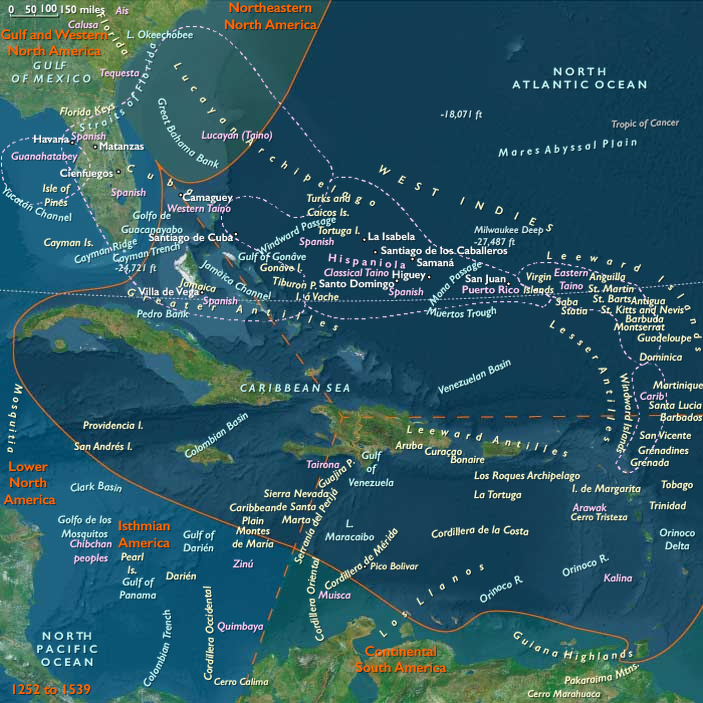
West Indies
View →Subregions