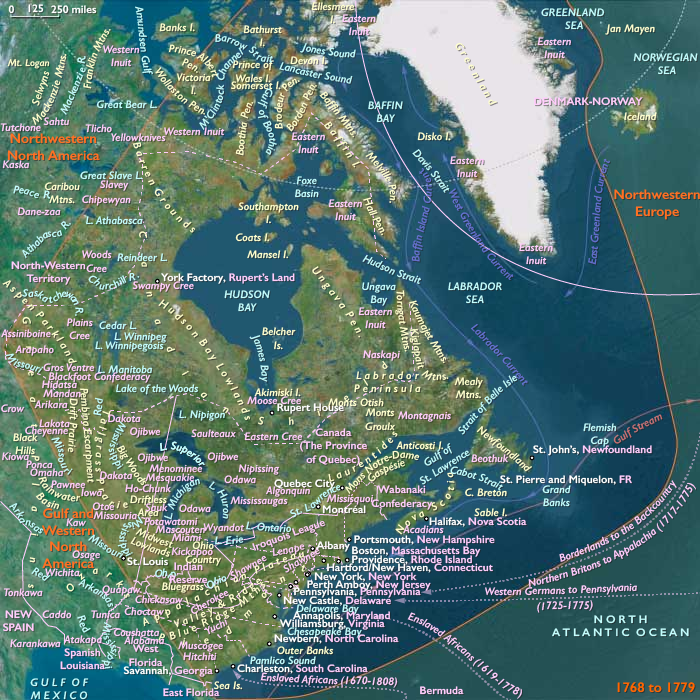
Following the capture of Ticonderoga, Arnold and…
June 1775 CE
They each separately propose expeditions against Quebec, suggesting that a force as small as twelve hundred to fifteen hundred men will be sufficient to drive the British military from the province.
Congress had at first ordered the forts to be abandoned, prompting New York and Connecticut to provide troops and material for purposes that were essentially defensive in nature.
Public outcries from across New England and New York had challenged the Congress to change its position.
When it becomes clear that Guy Carleton, the governor of Quebec, is fortifying Fort St. Johns, and is also attempting to involve the Iroquois in upstate New York in the conflict, Congress decides that a more active position was needed.
On June 27, 1775, Congress authorizes General Philip Schuyler to investigate, and, if it seems appropriate, begin an invasion.
Arnold, passed over for its command, goes to Boston and persuades General George Washington to send a supporting force to Quebec City under his command.
People
Groups
Iroquois (Haudenosaunee, also known as the League of Peace and Power, Five Nations, or Six Nations)
View →
Connecticut (English Crown Colony)
View →
New York, Province of (English Colony)
View →
New Hampshire, English royal Province of
View →
Massachusetts, Province of (English Crown Colony)
View →
Maryland, Province of (English Colony)
View →
Britain, Kingdom of Great
View →
Quebec (British Province)
View →
Green Mountain Boys
View →
Topics
Regions
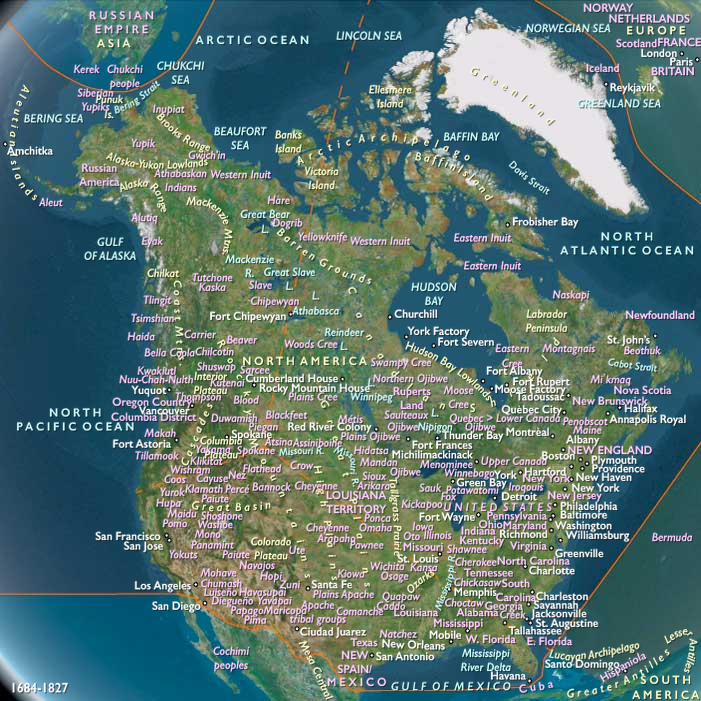
Northern North America
View →Subregions