Lachlan Macquarie, while serving as governor of…
February 1822 CE
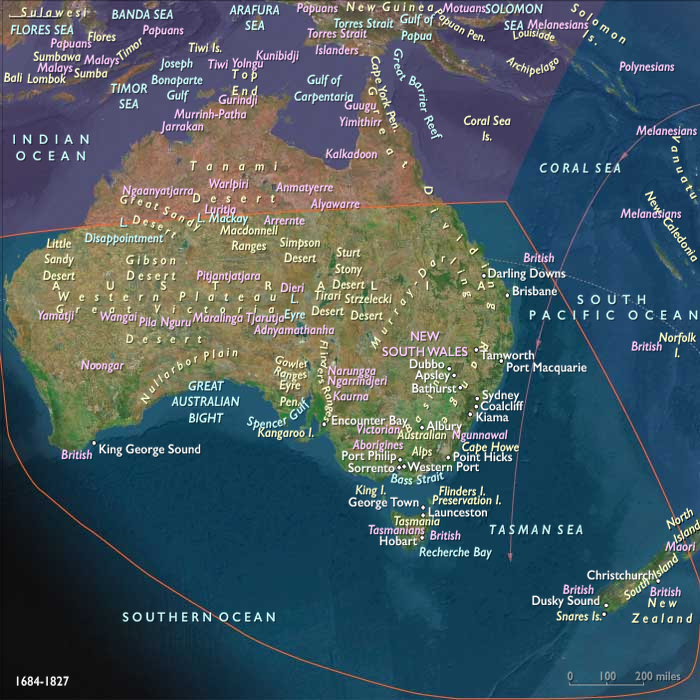
Lachlan Macquarie, while serving as governor of New South Wales, had been promoted to Colonel in 1810, Brigadier in 1811 and Major-General in 1813.
The end of the Napoleonic Wars in 1815 has brought a renewed flood of both convicts and settlers to New South Wales, as the sea lanes become free and as the rate of unemployment and crime in Britain rises.
Macquarie has presided over a rapid increase in population and economic activity.
The white population has reached an 'estimated' thirty-six thousand nine hundred and sixty-nine by the time of his departure for London on February 15, 1822.
The colony has begun to have a life beyond its functions as a penal settlement, and an increasing proportion of the population earns their own living.
Central to Macquarie's policy has been his treatment of the emancipists: convicts whose sentences had expired or who had been given conditional or absolute pardons.
Emancipists had outnumbered the free settlers by 1810, and Macquarie had set the tone himself by appointing emancipists to government positions: Francis Greenway as colonial architect and Dr. William Redfern as colonial surgeon.
He has scandalized settler opinion by appointing an emancipist, Andrew Thompson, as a magistrate, and by inviting emancipists to tea at Government House.
Macquarie demands in exchange, that the ex-convicts live reformed (Christian) lives, requiring that former convicts regularly attend church services, and in particular, strongly encourages formal Christian (Anglican) marriages.
The Exclusives (who include many free settlers, civil servants and military officers) often shun the society of the Emancipists and consider them to be little more than criminals.
When Macquarie invites emancipists to social functions at Government House, for example, many military officers refuse to attend.
Locations
People
Groups
Commodities
Subjects
Regions
Australasia
View →Subregions