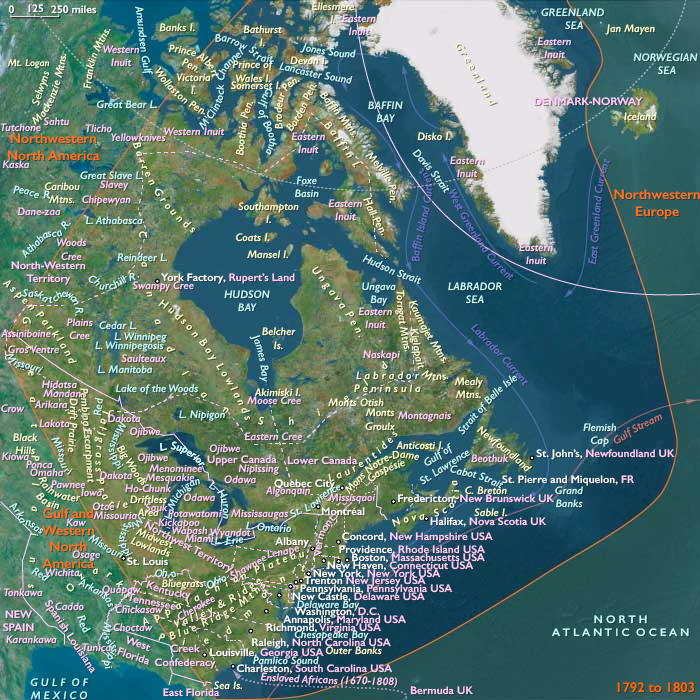
The amount of vilification heaped upon George…
1800 CE
The amount of vilification heaped upon George Washington—the Father of His Country, the Victorious General, the Fort President, the Man Who Would Not Be King—in his two terms as president will be unsurpassed by the amounts of mud slung upon his many successors up until the twenty-first century.
The young coastal republic needs a new leader.
John Adams had narrowly defeated Thomas Jefferson in the 1796 election.
Under the rules of the electoral system in place (prior to the 1804 ratification of the 12th Amendment), each member of the Electoral College casts two votes, with no distinction made between electoral votes for president and electoral votes for vice president.
As Jefferson had received the second-most votes in 1796, he was elected vice president.
In 1800, unlike in 1796, both parties formally nominate tickets.
The Democratic-Republicans nominate a ticket consisting of Jefferson and Aaron Burr, while the Federalists nominated a ticket consisting of Adams and Charles Pinckney.
Each party forms a plan in which one of their respective electors will vote for a third candidate or abstain so that their preferred presidential candidate (Adams for the Federalists and Jefferson for the Democratic-Republicans) will win one more vote than the party's other nominee.
The chief political issues revolve around the fallout from the French Revolution and the Quasi-War.
The Federalists favor a strong central government and close relations with Great Britain.
The Democratic-Republicans favor decentralization to the state governments, and the party attacks the taxes imposed by the Federalists.
The Democratic-Republicans also denounce the Alien and Sedition Acts, which the Federalists have passed to make it harder for immigrants to become citizens and to restrict statements critical of the federal government.
While the Democratic-Republicans are well organized at the state and local levels, the Federalists are disorganized and suffer a bitter split between their two major leaders, President Adams and Alexander Hamilton.
According to historian John Ferling, the jockeying for electoral votes, regional divisions, and the propaganda smear campaigns created by both parties make the election recognizably modern. (Ferling, John (2004). Adams vs. Jefferson: The Tumultuous Election of 1800. New York, NY: Oxford University Press.)
People
Groups
Subjects
Regions
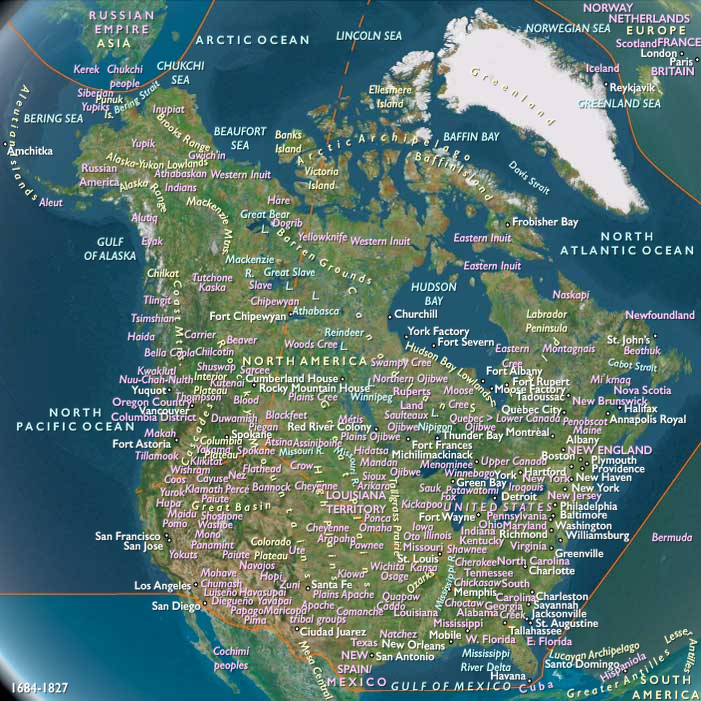
Northern North America
View →Subregions