
Zhai Zhao tries to start a coup…
393 CE
Zhai Zhao tries to start a coup against Murong Yong in 393 and is killed.
Locations
Groups
Topics
Commodities
Subjects
Regions
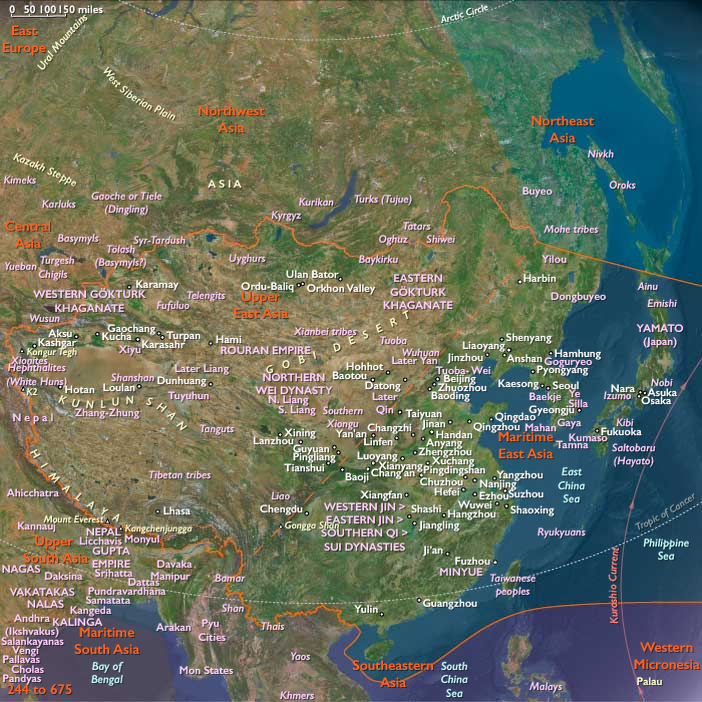
East Asia
View →Subregions

Maritime East Asia
View →Related Events
Active Filters
Refine Results
Showing 10 events out of 20 total
The Battle of Lake George, comprising three parts, eventually ends in a British victory.
Johnson's expedition eventually stops short of Fort St. Frédéric and the strategic result at Lake George is significant.
Johnson is able to advance a considerable distance down the lake and consolidates his gains by building Fort William Henry at its southern end.
Johnson's expedition eventually stops short of Fort St. Frédéric and the strategic result at Lake George is significant.
Johnson is able to advance a considerable distance down the lake and consolidates his gains by building Fort William Henry at its southern end.
The French and their native allies, based at Fort St. Frédéric (located at what is now Crown Point, New York) and Fort Carillon (known to the British as Fort Ticonderoga), have continued to scout and probe the British defenses on Lake George and the upper Hudson River.
The British, who have fewer native allies, have resort to companies of rangers for their scouting and reconnaissance activities.
The ranger companies, organized and directed by Robert Rogers, had eventually became known as Rogers' Rangers.
In the winter of 1757, Rogers and several companies of his rangers are stationed at Fort William Henry at the southern end of Lake George and at Fort Edward on the upper Hudson.
These forts are principally garrisoned by elements of the 44th and 48th Regiments, and form the frontier between the British province of New York and the French province of Canada.
Captain Rogers had led a scouting expedition from Fort Edward on January 15, stopping at Fort William Henry to acquire provisions, snowshoes, and additional soldiers.
The company had left Fort William Henry on January 17 with eighty-six men, heading down the frozen Lake George.
The next day, twelve men had turned back because of injuries.
The remaining men had continued north, ...
The British, who have fewer native allies, have resort to companies of rangers for their scouting and reconnaissance activities.
The ranger companies, organized and directed by Robert Rogers, had eventually became known as Rogers' Rangers.
In the winter of 1757, Rogers and several companies of his rangers are stationed at Fort William Henry at the southern end of Lake George and at Fort Edward on the upper Hudson.
These forts are principally garrisoned by elements of the 44th and 48th Regiments, and form the frontier between the British province of New York and the French province of Canada.
Captain Rogers had led a scouting expedition from Fort Edward on January 15, stopping at Fort William Henry to acquire provisions, snowshoes, and additional soldiers.
The company had left Fort William Henry on January 17 with eighty-six men, heading down the frozen Lake George.
The next day, twelve men had turned back because of injuries.
The remaining men had continued north, ...
Rogers returns to Fort William Henry on January 23 with forty-eight able-bodied and six wounded soldiers.
A similar battle will be fought the following year, in which Rogers will very nearly be killed and his company decimated.
A similar battle will be fought the following year, in which Rogers will very nearly be killed and his company decimated.
Fort William Henry, built in the fall of 1755, is a roughly square fortification with bastions on the corners, in a design that is intended to repel native attacks but is not necessarily sufficient to withstand attack from an enemy that has artillery.
Its walls are thirty feet (nine point one meters) thick, with log facings surrounding an earthen filling.
Inside the fort are wooden barracks two stories high, built around the parade ground.
Its magazine is in the northeast bastion, and its hospital is located in the southeast bastion.
The fort is surrounded on three sides by a dry moat, with the fourth side sloping down to the lake.
The only access to the fort is by a bridge across the moat.
The fort is capable of housing only four to five hundred men; additional troops are quartered in an entrenched camp seven hundred and fifty yards (six hundred and ninety meters) southeast of the fort, near the site of the 1755 Battle of Lake George.
Fort William Henry had been garrisoned during the winter of 1756–57 by several hundred men from the 44th Foot under Major Will Eyre.
In March 1757 the French send an army of fifteen hundred to attack the fort under the command of the governor's brother, François-Pierre de Rigaud.
Composed primarily of colonial troupes de la marine, militia, and natives, and without heavy weapons, they besiege the fort for four days.
Lacking sufficient logistical and artillery support, and hampered further by a blinding snowstorm on 21 March, French forces are unable to take the fort and the siege is called off.
Although the French fail to take the fort itself, their forces do destroy three hundred bateaux and several lightly armed vessels beached on the shore, a saw-mill and numerous outbuildings before retreating.
Its walls are thirty feet (nine point one meters) thick, with log facings surrounding an earthen filling.
Inside the fort are wooden barracks two stories high, built around the parade ground.
Its magazine is in the northeast bastion, and its hospital is located in the southeast bastion.
The fort is surrounded on three sides by a dry moat, with the fourth side sloping down to the lake.
The only access to the fort is by a bridge across the moat.
The fort is capable of housing only four to five hundred men; additional troops are quartered in an entrenched camp seven hundred and fifty yards (six hundred and ninety meters) southeast of the fort, near the site of the 1755 Battle of Lake George.
Fort William Henry had been garrisoned during the winter of 1756–57 by several hundred men from the 44th Foot under Major Will Eyre.
In March 1757 the French send an army of fifteen hundred to attack the fort under the command of the governor's brother, François-Pierre de Rigaud.
Composed primarily of colonial troupes de la marine, militia, and natives, and without heavy weapons, they besiege the fort for four days.
Lacking sufficient logistical and artillery support, and hampered further by a blinding snowstorm on 21 March, French forces are unable to take the fort and the siege is called off.
Although the French fail to take the fort itself, their forces do destroy three hundred bateaux and several lightly armed vessels beached on the shore, a saw-mill and numerous outbuildings before retreating.
Eyre and his men are replaced by Lieutenant Colonel George Monro and the 35th Foot in the spring.
Monro establishes his headquarters in the entrenched camp, where most of his men are located.
The French may have not been able to take the fort, but the destruction of so many boats crippled Monro’s ability to sortie reconnaissance parties further up the lake to assess French and native movements.
The loss of the boats and manpower shortages make patrolling and scouting outside the protective walls of Fort William Henry precarious for Monro and he is unable to send out sufficient scouts.
Monro establishes his headquarters in the entrenched camp, where most of his men are located.
The French may have not been able to take the fort, but the destruction of so many boats crippled Monro’s ability to sortie reconnaissance parties further up the lake to assess French and native movements.
The loss of the boats and manpower shortages make patrolling and scouting outside the protective walls of Fort William Henry precarious for Monro and he is unable to send out sufficient scouts.
The natives, spurred on by French rewards of brandy, guns, ammunition, and clothing, have sortied on raiding parties from Fort Carillon south towards Fort William Henry throughout the spring and early summer, kidnapping and scalping anyone who dared venture beyond the protective walls of the fort.
Monro can do little to respond to the native raids or gain intelligence on French movements until sufficient reinforcements arrive.
He also moves slowly to re-construct the buildings and boats destroyed by the French months earlier.
Reinforcements finally arrive in June when Provincial and militia units from New York, New Jersey and New Hampshire are sent up from Fort Edward by General Daniel Webb.
Desperate for information and now newly reinforced, Monro decides to act.
Monro can do little to respond to the native raids or gain intelligence on French movements until sufficient reinforcements arrive.
He also moves slowly to re-construct the buildings and boats destroyed by the French months earlier.
Reinforcements finally arrive in June when Provincial and militia units from New York, New Jersey and New Hampshire are sent up from Fort Edward by General Daniel Webb.
Desperate for information and now newly reinforced, Monro decides to act.
Monro, an officer with virtually no battle experience, decides to risk a reconnaissance in force.
His plan is to gather all available boats, pack them with approximately three hundred and fifty men and sends them north up the lake into an area controlled by an enemy he knows little about.
To command this force Monro chooses Colonel John Parker of the newly arrived Jersey Blues unit.
It is decided to land Colonel Parker’s flotilla of men on Sabbath Day Point situated approximately twenty miles (thirty-two kilometers) north of Fort William Henry on the west side of Lake George.
An advance party of three boats had left for the point on July 20, with Parker’s main force departing in the predawn hours of July 21.
The passage of the first three boats had been spotted by French scouts.
An interception force of approximately four hundred and fifty French and native men under the command of Ensign de Corbiere departs Fort Carillon on July 21.
The French ambush Parker’s three lead boats and while under interrogation by natives, the Provincials tell them exactly where Parker plans to come ashore.
The French trap is now set.
The ambush plan is to place musket-men along the shore of the point and a flotilla of natives in fifty canoes out of view on the opposite side of the point.
His plan is to gather all available boats, pack them with approximately three hundred and fifty men and sends them north up the lake into an area controlled by an enemy he knows little about.
To command this force Monro chooses Colonel John Parker of the newly arrived Jersey Blues unit.
It is decided to land Colonel Parker’s flotilla of men on Sabbath Day Point situated approximately twenty miles (thirty-two kilometers) north of Fort William Henry on the west side of Lake George.
An advance party of three boats had left for the point on July 20, with Parker’s main force departing in the predawn hours of July 21.
The passage of the first three boats had been spotted by French scouts.
An interception force of approximately four hundred and fifty French and native men under the command of Ensign de Corbiere departs Fort Carillon on July 21.
The French ambush Parker’s three lead boats and while under interrogation by natives, the Provincials tell them exactly where Parker plans to come ashore.
The French trap is now set.
The ambush plan is to place musket-men along the shore of the point and a flotilla of natives in fifty canoes out of view on the opposite side of the point.
Parker’s main force approaches Sabbath Day Point in the early morning hours of July 23, unaware that the French had intercepted his three lead boats and learned his plan.
As Parker's men approach the shore they notice the three boats sent out a day ahead and assume nothing is wrong.
Three decoys aid the French and natives in springing the trap by beckoning Parker’s men towards the shore.
Once within range Parker’s men come under a withering volley of musket fire from the soldiers and natives hidden along the shore.
At the same time, the natives in the canoes break around the point and surround Parker’s men.
The natives jump into the water from their canoes and sink, capsize, or capture all but two of Parker's boats.
Once in the water, many of the Provincials are speared or drowned.
The ensuing battle is severely one-sided as the terrified and overwhelmed soldiers surrender almost without firing a shot.
Barely on hundred of Parker’s men, including Parker himself, escape the onslaught of the French and natives.
Of Parker’s force of three hundred and fifty, nearly one hundred and sixty drown or are killed.
The remainder are taken prisoner.
Colonel Parker, lucky to escape the onslaught, leads what is left of his men through the brush and thick forest back to Fort William Henry.
The victors load their prisoners and spoils into boats and head north.
Along the way they sang songs and indulge in the rum taken from the Provincials.
Once back at Fort Carillon the natives, drunk on rum, will boil and eat one unlucky captive.
As Parker's men approach the shore they notice the three boats sent out a day ahead and assume nothing is wrong.
Three decoys aid the French and natives in springing the trap by beckoning Parker’s men towards the shore.
Once within range Parker’s men come under a withering volley of musket fire from the soldiers and natives hidden along the shore.
At the same time, the natives in the canoes break around the point and surround Parker’s men.
The natives jump into the water from their canoes and sink, capsize, or capture all but two of Parker's boats.
Once in the water, many of the Provincials are speared or drowned.
The ensuing battle is severely one-sided as the terrified and overwhelmed soldiers surrender almost without firing a shot.
Barely on hundred of Parker’s men, including Parker himself, escape the onslaught of the French and natives.
Of Parker’s force of three hundred and fifty, nearly one hundred and sixty drown or are killed.
The remainder are taken prisoner.
Colonel Parker, lucky to escape the onslaught, leads what is left of his men through the brush and thick forest back to Fort William Henry.
The victors load their prisoners and spoils into boats and head north.
Along the way they sang songs and indulge in the rum taken from the Provincials.
Once back at Fort Carillon the natives, drunk on rum, will boil and eat one unlucky captive.
Webb, who commands the area from his base at Fort Edward, had received intelligence in April that the French were accumulating resources and troops at Carillon.
News of continued French activity had arrived with a captive taken in mid-July.
Following an attack by Joseph Marin de la Malgue on a work crew near Fort Edward on 23 July, Webb had traveled to Fort William Henry with a party of Connecticut rangers led by Major Israel Putnam, and sent a detachment of them onto the lake for reconnaissance.
They had returned with word that natives were encamped on islands in the lake about eighteen miles (twenty-nine kilometers) from the fort.
Swearing Putnam and his rangers to secrecy, Webb had returned to Fort Edward, and on August 2 sends Lieutenant Colonel John Young with two hundred regulars and eight hundred Massachusetts militia to reinforce the garrison at William Henry.
This raises the size of the garrison to about twenty-five hundred, although several hundred of these are ill, some with smallpox.
News of continued French activity had arrived with a captive taken in mid-July.
Following an attack by Joseph Marin de la Malgue on a work crew near Fort Edward on 23 July, Webb had traveled to Fort William Henry with a party of Connecticut rangers led by Major Israel Putnam, and sent a detachment of them onto the lake for reconnaissance.
They had returned with word that natives were encamped on islands in the lake about eighteen miles (twenty-nine kilometers) from the fort.
Swearing Putnam and his rangers to secrecy, Webb had returned to Fort Edward, and on August 2 sends Lieutenant Colonel John Young with two hundred regulars and eight hundred Massachusetts militia to reinforce the garrison at William Henry.
This raises the size of the garrison to about twenty-five hundred, although several hundred of these are ill, some with smallpox.
Monro has paid a heavy price to learn that there is a sizeable body of French and natives further up the lake.
The French capitalize on the win and send two forces south from Carillon, one on Lake George and one chopping through the dense forest on the west side of the lake.
With the defeat on Sabbath Day Point, both bodies meet little British resistance.
Their objective is Fort William Henry; on the morning of August 3, the French come down the lake and glide into the view of the British.
The Battle of Fort William Henry is about to begin.
The French capitalize on the win and send two forces south from Carillon, one on Lake George and one chopping through the dense forest on the west side of the lake.
With the defeat on Sabbath Day Point, both bodies meet little British resistance.
Their objective is Fort William Henry; on the morning of August 3, the French come down the lake and glide into the view of the British.
The Battle of Fort William Henry is about to begin.
Loading...