Estonia, Danish
Substate | Defunct
1219 CE to 1346 CE
Danish Estonia refers to the territories of present-day Estonia that are ruled by Denmark firstly during the 13th–14th centuries and again in the 16th–17th centuries.Denmark had risen as a great military and mercantile power in the 12th century.
It has an interest to end the frequent Estonian Viking attacks that threatened its Baltic trade.
Danish fleets had attacked Estonia in 1170, 1194, and 1197.
In 1206, King Valdemar II and archbishop Andreas Sunonis led a raid on Ösel island (Saaremaa).
The Kings of Denmark lay a claim on Estonia as their possession, which is recognized by the pope.
In 1219, the Danish fleet lands in the major harbor of Estonia and defeats the Estonians in the Battle of Lyndanisse, which bringsNorthern Estonia under Danish reign until the Estonian uprising in 1343, when the territories are taken over by the Teutonic Order and sold by Denmark in 1346.In 1559, during the Livonian war, the Bishop of Ösel-Wiek in Old Livonia sells his lands to King Frederick II of Denmark for 30,000 thalers.
The Danish king gives the territory to his younger brother Magnus who lands on Saaremaa with an army in 1560.
The whole of Saaremaa becomes a Danish possession in 1573, and remains so until it is transferred to Sweden in 1645.
Capital
Worlds
The Great Crossroads
View →Related Events
Showing 10 events out of 41 total
Because the Song have had the benefit of a lull of nearly ten years in which to recover
and to reorganize, conquering Asia has become more difficult than it would have been earlier.
Möngke himself takes command, but he also places great responsibility on his younger brother, Kublai.
Another brother, Hulagu, is sent to Iran to renew the expansion of Mongol control in Southwest Asia.
Möngke encourages Batu to raid Central Europe, but does not send him additional resources.
Thus, although Batu's armies raid deep into Poland, Lithuania, and Estonia, and again overrun Serbia and Bulgaria, these campaigns are not so important as the ones being undertaken in Southeast Asia and Southwest Asia.
North Europe (1108 – 1251 CE): Crusades, Kingdoms, and the Northern Seas
Between 1108 and 1251 CE, the northern world—stretching from the British Isles to the Baltic—entered a transformative age.
It was a time when Christian monarchies consolidated power, crusades reached the Arctic forests, and seafaring linked the fjords of Norway with the markets of Flanders and the fur frontiers of Novgorod.
While England and France clashed for continental supremacy, Scandinavian and German crusaders advanced eastward, reshaping the Baltic and Finnic worlds.
This was the age when the North became both frontier and center—a maritime and mercantile sphere binding the Atlantic to the forests of Eurasia.
Geographic and Environmental Context
North Europe encompassed the British Isles, Scandinavia, Iceland, the Baltic coasts, and the North Sea—a world of fjords, forests, and fertile river valleys encircling the Northern Seas.
-
The British Isles combined agrarian lowlands and mountainous hinterlands, surrounded by a constellation of trade ports from London to Dublin and Bristol.
-
Scandinavia, spanning Norway, Denmark, and Sweden, linked Atlantic and Baltic routes.
-
The Baltic frontier included Finland, Estonia, Latvia, and Lithuania, bordered by the Orthodox state of Novgorod.
-
Iceland, the Orkneys, and the Shetlands marked the North Atlantic periphery.
Together, these lands formed the maritime and cultural bridge between Latin Christendom and the eastern forests of Rus’.
Climate and Environmental Shifts
The High Medieval Warm Period (c. 950–1250) brought longer summers, milder winters, and population growth.
In England and Denmark, new farmlands replaced forests; in Sweden and Finland, agriculture spread northward.
The North Atlantic fisheries of Iceland and Norway became vital sources of protein and trade.
Warm, stable conditions fostered both agricultural surplus and the revival of long-distance seafaring, while forests and waterways provided furs, timber, and tar—the commodities of the northern economy.
Political and Military Developments
The British Isles and the Angevin World:
-
England, under Henry II (1154–1189), forged the Angevin Empire, stretching from the Pyrenees to the Scottish border.
-
The Magna Carta (1215) limited royal power, establishing principles of law and counsel that endured.
-
Ireland, invaded by Anglo-Norman barons after 1169, fell under English control, its Gaelic kings confined to the west.
-
Scotland, under David I and Alexander II, adopted feudal institutions and episcopal structures, balancing English influence with Celtic tradition.
-
Wales, under Llywelyn the Great, resisted Norman marcher lords, preserving independence through strategic diplomacy.
Scandinavia and the Baltic Kingdoms:
-
Denmark, at its zenith under Valdemar I–II (1157–1241), dominated southern Baltic trade and launched crusades into Estonia and Livonia.
-
Sweden consolidated around Uppsala and Västergötland, expanding east into Finland through both colonization and crusade.
-
Norway, after a century of civil wars (1130–1240), reunited under Håkon IV, restoring royal authority and overseas trade.
-
Iceland, governed by local chieftains (goðar), remained culturally vibrant but politically fractured, leading to submission to Norway in 1262 (beyond this period).
The Baltic Crusades and Novgorodian Influence:
-
The Livonian Brothers of the Sword (founded 1202) and the Teutonic Order (merged 1237) conquered Latvia and Estonia, founding Riga and Reval (Tallinn) as fortress-towns of the crusader state.
-
Lithuania, still pagan, resisted conversion and began unifying under native princes.
-
Novgorod extended Orthodox influence into Karelia and Finland, balancing trade and mission against Latin incursion.
By mid-century, the Baltic had become both Christianized and militarized—Europe’s newest frontier.
Economy and Trade
The northern economy thrived on its integration of land and sea:
-
England’s wool fed Flemish looms, generating vast export wealth through ports like Bristol, Boston, and London.
-
Norwegian stockfish (dried cod) and timber supplied continental markets.
-
Baltic furs, wax, and honey from Finnic and Rus’ lands moved through Novgorod to Western Europe.
-
Danish and German merchants laid the foundations for the Hanseatic League, linking Lübeck, Hamburg, and Visby into a proto-network of northern trade.
-
Agricultural expansion—rye, barley, oats—transformed Sweden and the Baltic, while shipbuilding and ironworking flourished in Scandinavian yards.
The Baltic Sea became the “new Mediterranean” of the north—an enclosed sea of commerce, crusade, and colonization.
Society, Faith, and Culture
Christianization and Crusade:
By 1200, Christianity was universal in Scandinavia and Britain, enforced by kings and monasteries.
In the Baltic, missionary wars replaced diplomacy: cathedrals rose over pagan sanctuaries in Riga and Dorpat, while Orthodox monasteries anchored Novgorodian Karelia.
The Northern Crusades fused faith and conquest, extending Latin Christendom’s frontiers.
Art and Architecture:
Romanesque and early Gothic churches appeared from Canterbury and Lincoln to Uppsala and Trondheim.
In England, Gothic innovation produced Salisbury Cathedral (begun 1220) and Westminster Abbey.
Runic traditions faded as Latin literacy spread; illuminated manuscripts, stone crosses, and wooden stave churches preserved local artistry.
Learning and Law:
Cathedrals and monasteries became schools of governance.
The English common law, Scottish charters, and Scandinavian law codes (Gulating, Uppland) established enduring legal cultures.
In the Baltic, Latin and German law (Riga Charter, Lübeck Law) laid civic foundations for later Hanseatic cities.
Movement and Interaction Corridors
-
The North Sea route — London ⇄ Bruges ⇄ Bergen ⇄ Trondheim — maritime commerce and exchange of goods and pilgrims.
-
The Baltic Sea loop — Lübeck ⇄ Visby ⇄ Riga ⇄ Novgorod — the crucible of early Hanseatic trade.
-
Atlantic passages — Bristol ⇄ Dublin ⇄ Reykjavík ⇄ Trondheim — sustaining Norse and English contact.
-
Crusader corridors — Lübeck ⇄ Riga ⇄ Livonia — conduits of conquest and colonization.
-
Overland routes — through Denmark and Sweden, connecting the Baltic to continental Europe’s interior.
By uniting these corridors, the Northern Seas became the commercial frontier of Latin Christendom.
Adaptation and Resilience
-
Maritime adaptation: Viking-era seamanship evolved into large cargo fleets for trade and war.
-
Agrarian diversification: Mixed farming and grazing stabilized local economies.
-
Ecological resilience: Fishing, forestry, and fur-trapping buffered societies against crop failure.
-
Political flexibility: Monarchies and chieftaincies balanced feudal forms with local assemblies (thing, althing, lagting).
-
Religious integration: Pagan and Christian traditions blended in folklore and festival, softening conversion shocks.
These adaptive systems ensured both survival and expansion across one of Europe’s most climatically and politically challenging frontiers.
Long-Term Significance
By 1251 CE, North Europe had become a unified yet diverse zone of Christian monarchy and maritime trade:
-
England emerged as a centralized kingdom with parliamentary roots.
-
Scotland and Wales asserted identities under reforming kings and native princes.
-
Norway, Denmark, and Sweden stood as stable Christian monarchies, projecting power across the Baltic and Atlantic.
-
Novgorod extended Orthodox influence, while German crusading orders entrenched Catholic dominance in Livonia and Prussia.
-
Lithuania, still pagan, remained independent—the last great frontier of conversion.
The northern seas—once Viking waters—became arteries of commerce and Christendom, setting the stage for the Hanseatic League, Scandinavian expansion, and the political unifications of the late Middle Ages.
Northeast Europe (1108 – 1251 CE): Crusades, Novgorodian Influence, and Scandinavian Kingdoms
Geographic and Environmental Context
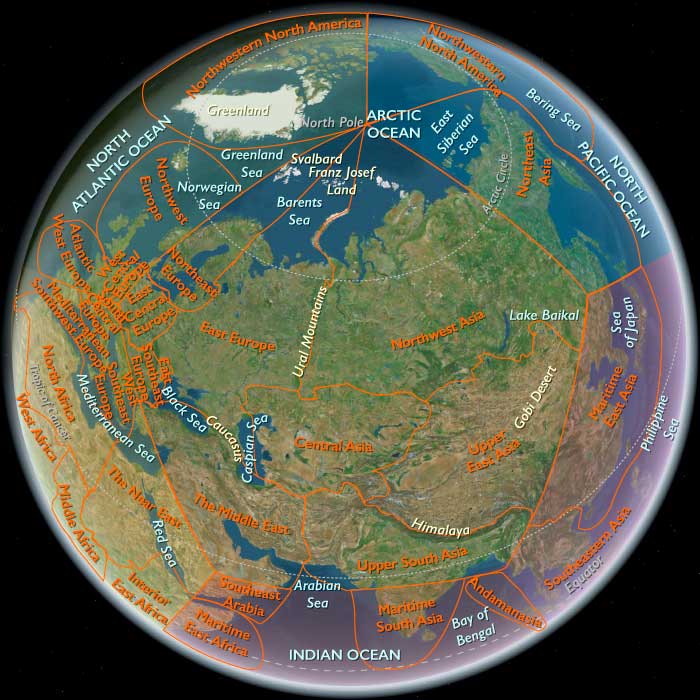
Northeast Europe includes Sweden, Finland, Lithuania, Latvia, Estonia, eastern Denmark, and eastern Norway (including Copenhagen and Oslo).
-
The Baltic Sea and Gulf of Finland served as vital maritime corridors linking Scandinavia, Rus’, and Western Europe.
-
The forests and lakes of Finland and the Baltic lands sustained hunting, fishing, and limited agriculture.
-
Eastern Denmark and Norway anchored trade and military expeditions into the Baltic.
Climate and Environmental Shifts
-
The Medieval Warm Period favored agricultural expansion in Sweden, Denmark, and the Baltic littoral.
-
Longer growing seasons allowed cereals and livestock to spread into areas previously dependent on foraging.
-
Forest and marine resources remained abundant, buffering communities against agricultural shortfalls.
Societies and Political Developments
-
Scandinavia:
-
Sweden consolidated under kings who expanded eastward, seeking influence over Finland and Baltic trade.
-
Denmark asserted dominance over the southern Baltic, with Copenhagen and other towns growing as trading hubs.
-
Norway maintained maritime power, with Oslo developing as a regional center.
-
-
Finland: Populated by Finnic tribes, semi-independent but increasingly contested by Swedes, Danes, and Novgorod.
-
Novgorod: Expanded influence into Karelia and Finland, establishing forts and Orthodox missions.
-
Baltic lands (Latvia, Estonia, Lithuania): Pagan societies resisted Christianization.
-
The Northern Crusades (from the 12th century) brought German, Danish, and Swedish crusaders into Estonia and Latvia.
-
The Livonian Brothers of the Sword (est. 1202) conquered parts of Latvia and Estonia, later merging with the Teutonic Order (1237).
-
Lithuania, though still pagan, grew into a strong polity resisting crusaders.
-
Economy and Trade
-
Agriculture: Rye, barley, oats, and livestock expanded in Scandinavia and the Baltic.
-
Fur, wax, honey, and fish were exported from Finnic and Baltic lands to Novgorod and Western Europe.
-
Hanseatic trade began to develop, with German merchants linking the Baltic to Lübeck and Hamburg.
-
Maritime commerce tied Denmark, Sweden, and Norway into broader North Sea and Baltic economies.
Subsistence and Technology
-
Scandinavian farmers employed iron ploughs, watermills, and sailing ships for trade and warfare.
-
Finnic and Baltic peoples relied on slash-and-burn agriculture, hunting, and riverine fishing.
-
Fortified hilltop settlements and wooden castles dotted Estonia and Latvia.
-
The crusading orders built stone fortresses, symbols of Christian power.
Movement and Interaction Corridors
-
The Baltic Sea was the central artery of movement, carrying merchants, crusaders, and missionaries.
-
River routes tied the Baltic to Novgorod and Rus’, especially the Neva and Volkhov systems.
-
Crusader campaigns opened military corridors into Livonia and Estonia.
-
Scandinavian and German fleets patrolled and fought for dominance of Baltic trade.
Belief and Symbolism
-
Scandinavia: By this period, Christianity was firmly established, with churches, monasteries, and cathedrals reinforcing royal power.
-
Finnic and Baltic peoples: Maintained animist traditions centered on forests, rivers, and sky deities.
-
Northern Crusades: Framed conquest as a Christian mission, blending religious zeal with political and economic ambitions.
-
Novgorod advanced Orthodox Christianity in Karelia and Finland, competing with Latin Christianity.
Adaptation and Resilience
-
Agricultural expansion and trade sustained Scandinavian kingdoms, allowing them to project power eastward.
-
Baltic pagan societies adapted through fortified defenses and guerrilla tactics against crusaders.
-
Novgorod adapted through hybrid diplomacy and warfare, balancing trade interests with missionary activity.
-
Finnic groups maintained resilience through ecological knowledge, shifting between farming, hunting, and fishing.
Long-Term Significance
By 1251 CE, Northeast Europe had become a frontier of crusade and colonization. Scandinavia consolidated as Christian monarchies, Novgorod extended eastward influence, and German crusading orders established footholds in Estonia and Latvia. Lithuania emerged as a resistant pagan power, soon to become a major state. The region’s blend of crusading conquest, trade networks, and cultural contestation positioned Northeast Europe as a decisive frontier between Latin Christendom, Orthodox Rus’, and enduring pagan traditions.
Legend has it that the Danish flag, the Dannebrog, fell from the sky during the Battle of Lyndanisse in Estonia in 1219.
A series of Danish defeats culminating in the Battle of Bornhöved on July 22, 1227, cements the loss of Denmark's north German territories.
Valdemar himself is saved only by the courageous actions of a German knight who carries Valdemar to safety on his horse.
From this time on Valdemar focuses his efforts on domestic affairs.
One of the changes he institutes is the feudal system in which he gives properties to men with the understanding that they owe him service.
This increases the power of the noble families (Danish: højadelen) and gives rise to the lesser nobles (Danish: lavadelen) who control most of Denmark.
Free peasants loss the traditional rights and privileges they have enjoyed since Viking times.
The king of Denmark has difficulty maintaining control of the kingdom in the face of opposition from the nobility and from the Church.
An extended period of strained relations between the crown and the Popes of Rome takes place, known as the "archiepiscopal conflicts".
Following the Battle of Bornhöved in 1227, a weakened Denmark provides windows of opportunity to both the Hanseatic League and the Counts of Holstein.
The Holstein Counts gain control of large portions of Denmark because the king will grant them fiefs in exchange for money to finance royal operations.
Valdemar spends the remainder of his life putting together a code of laws for Jutland, Zealand and Skåne.
These codes are used as Denmark's legal code until 1683.
This is a significant change from the local law making at the regional assemblies (Danish: landting), which had been the long-standing tradition.
Several methods of determining guilt or innocence are outlawed, including trial by ordeal and trial by combat.
The Code of Jutland (Danish: Jyske Lov) is approved at meeting of the nobility at Vordingborg in 1241 just prior to Valdemar's death.
Because of his position as "the king of Dannebrog" and as a legislator, Valdemar enjoys a central position in Danish history.
To posterity, the civil wars and dissolution that follow his death make him appear to be the last king of a golden age.
Northeast Europe (1216–1227 CE): Danish and German Dominance, Baltic Resistance, and the Formation of Danish Estonia
Introduction
Between 1216 and 1227 CE, Northeast Europe saw decisive military successes of the Northern Crusades, the formation of organized crusader states, and continued resilience among the Baltic peoples. The era notably witnessed the territorial division following the Livonian Crusade, with the establishment of Danish Estonia and the Livonian Confederation under German control, fundamentally reshaping the political and cultural landscape of the eastern Baltic.
Danish Estonia and the Founding of Reval (Tallinn)
Following significant territorial conquests during the Livonian Crusade, the German- and Danish-occupied Baltic territories were formally divided. The northern territories fell under direct Danish control, forming Danish Estonia. In 1219, Danish King Valdemar II "the Victorious" led a crucial invasion at Lyndanisse, resulting in the founding of Reval (modern-day Tallinn). Here, the Danes constructed the prominent fortress known as Castrum Danorum ("Danish Castle") atop Toompea Hill, symbolizing Danish authority and dominance.
The city's Estonian name, "Tallinn," is often linked through urban legend to Taani linna, meaning "Danish town" or "castle," reflecting Denmark's lasting imprint on local historical memory.
Livonian Confederation under German Influence
Concurrently, the southern territories conquered by German crusading orders were organized into the Livonian Confederation by the Papal legate William of Modena. This confederation encompassed significant parts of modern-day Latvia and Estonia, where German crusaders and clergy firmly established political and ecclesiastical dominance. The Confederation became a crucial stronghold, serving as a military, economic, and ecclesiastical center integral to the wider crusading effort.
Continued Swedish Expansion in Finland
Swedish colonization and missionary work persisted vigorously in southern Finland, consolidating earlier gains. The accelerated settlement and cultural integration deepened Finland’s ties to Sweden, setting it apart politically and culturally from its Finnic relatives to the south, especially the Estonians under Danish and German rule.
Persistent Baltic Resistance and Rebellions
Despite substantial territorial losses and crusader occupation, Baltic tribes—particularly Estonians, Latvians, Curonians, and Semigallians—remained defiant. Numerous rebellions erupted, challenging foreign rule, and forcing Danish and German forces to maintain strong military presences and extensive fortifications throughout occupied lands. This ongoing resistance emphasized local determination to preserve autonomy and traditional cultural identities.
Economic Prosperity and Urbanization
The establishment of Reval (Tallinn) under Danish rule, along with the already thriving German-founded city of Riga, significantly expanded regional trade and urban development. Both cities became key economic hubs, fostering trade between the Scandinavian, Baltic, and broader European markets. Commerce in established centers such as Visby on Gotland continued to flourish, underscoring the expanding influence of merchant guilds and urban life.
Ecclesiastical Dominance and Cultural Integration
Ecclesiastical institutions significantly expanded their influence during this era, consolidating their power through bishoprics and monastic establishments across newly conquered territories. The establishment of the Livonian Confederation reinforced the ecclesiastical structure, as German clergy and monastic orders actively managed the religious, educational, and cultural integration of local populations into Latin Christendom.
Legacy of the Era
The era from 1216 to 1227 CE profoundly influenced Northeast Europe's historical trajectory. The territorial division of Baltic lands into Danish Estonia and the German-dominated Livonian Confederation reshaped regional political boundaries, fortified urban growth, and entrenched ecclesiastical authority. Persistent Baltic resistance highlighted the ongoing struggle between conquest and autonomy, setting enduring cultural and political patterns that would significantly impact future centuries.
The German- and Danish-occupied territory is divided after the success of the Livonian Crusade into the Livonian Confederation, which is organized by William of Modena, and Danish Estonia.
The capital of Danish Estonia is Reval (Tallinn), founded at the place of Lyndanisse after the invasion of 1219.
The Danes build the fortress of Castrum Danorum at Toompea Hill.
Estonians still call their capital "Tallinn", which according to an urban legend derives from Taani linna (Danish town or castle).
Northwest Europe (1216–1227 CE): Consolidation and New Realities
England: Restoration and Governance
The death of King John in 1216 brought his young son, Henry III (r. 1216–1272), to the throne under regency, leading to the stabilization of English politics after the turmoil surrounding Magna Carta. Regent William Marshal, one of the most respected knights in Europe, successfully defended the young king’s reign, defeating rebellious barons and French invaders at the decisive Battle of Lincoln in 1217. The reissued Magna Carta in 1225, under Henry III, marked a pivotal moment in solidifying its place in English law and governance.
Scotland: Strengthening Royal Authority
Under Alexander II (r. 1214–1249), Scotland experienced growing royal authority and territorial consolidation. Alexander maintained Scotland’s independence from English influence, expanding royal control northward and westward, reducing the power of local magnates, and further centralizing governance. His diplomatic strategies and political marriages also reinforced Scotland's international position.
Ireland: Norman Settlements and Irish Resistance
Ireland continued to see the deepening of Anglo-Norman control, with increased fortifications and town-building activities strengthening the Norman presence. Native Gaelic resistance persisted, particularly in regions less accessible to Norman power, maintaining a complex political landscape. The interplay of Norman authority and indigenous resilience defined the era.
Denmark: Challenges to Baltic Dominance
Despite Valdemar II’s earlier successes, his rule encountered significant setbacks during this period. Captured in 1223 by his vassal, Count Henry of Schwerin, Valdemar was imprisoned until 1225, significantly weakening Danish influence in the Baltic. Upon his release, Denmark was compelled to concede territories and influence, limiting further expansion.
Norway: Steps Toward Stability
The death of King Inge Bårdsson in 1217 led to the ascent of the young Håkon IV Håkonsson (r. 1217–1263), who, under regency initially, gradually brought stability to a fragmented Norway. By 1223, Håkon’s regency began consolidating power, significantly diminishing internal conflicts and laying the groundwork for a more unified Norwegian state.
Iceland: Cultural and Political Continuity
Iceland maintained its political independence and cultural richness during this period, governed by the Althing, its traditional assembly. The era continued the flourishing tradition of saga writing and historical recording, preserving an invaluable literary heritage. The society, largely free of external conflicts, remained culturally vibrant and politically autonomous.
Economic and Cultural Developments
Trade and economic activity grew steadily, with merchants from England, Flanders, and the Baltic states actively engaged in commerce. Commodities like wool, fish, timber, and increasingly popular imported spices and luxury goods continued to shape the economies of Northwest Europe, enhancing urban growth and prosperity.
Religious Orders and Education
The Dominican Order, founded in the previous decade, established itself significantly during this era, emphasizing preaching, education, and combating heresies. Alongside existing monastic communities, these mendicant friars began influencing urban centers profoundly, fostering intellectual debate, education, and religious reform.
Legacy of the Era
By 1227 CE, Northwest Europe had emerged from a period of turmoil into greater stability. England had solidified its constitutional frameworks; Scotland strengthened royal authority; Ireland navigated Norman control and Gaelic resistance; Denmark faced setbacks limiting its Baltic dominance; Norway began the path toward internal unity; and Iceland sustained its distinctive political and cultural identity. These developments collectively established lasting political, economic, and cultural frameworks for future generations.
The Knights of the Sword have been attempting to Christianize the peoples of the eastern Baltic, but by 1219 they are being hard pressed and turned to Denmark’s King Valdemar II for help.
Pope Honorius III, via the bishop of Riga, elevates Valdemar's invasion of Estonia into a crusade.
Valdemar raises an army and calls all of Denmark's ship to gather to transport the army eastward.
Once assembled, the fleet numbers fifteen hundred ships.
When the army lands at Reval, located on Tallinn Bay, an inlet of the Gulf of Finland, the chiefs of the Estonians, who have come under the influence of the Orthodox Russians, sit down with the Danes and agree to acknowledge the Danish king as their overlord.
A few of them allow themselves to be baptized, which seems a good sign.
While suing for peace, the vastly outnumbered Estonian-Russian forces are clandestinely building their troop strength.
While the Danes are attending mass three days later, thousands of Estonians launch a surprise five-pronged counterattack on the Danish camp on June 15, 1219.
Confusion reigns and things look bad for Valdemar's crusade.
Luckily for him, Vitslav of Rügen gathers his men in a second camp and attacks the Estonians from the rear.
After destroying Reval, Valdemar builds a fortress on the site—called Tallin, which means "Danish castle" in Estonian—garrisoning it with soldiers to enforce conversion to Western Christianity.
The legend traces the origin of the Danish national flag, a white cross on a red field, to this encounter, called Battle of Lyndanisse, also known as the Battle of Valdemar.
Although myth holds that it fell from heaven during the battle to give victory to the Danes, is probably based on the war flag of the Holy Roman Empire.
The order of the Brothers of the Sword had conquered Southern Estonia while Denmark had taken the North, and the two agreed to divide Estonia, but quarreled over the exact borders.
The King of Denmark had agreed in 1220 to submit southern Estonian provinces Sakala and Ugaunia that were already conquered by Sword Brethren.
Bishop Albert had submitted to Denmark the Estonian provinces of Harria, Vironia and Jerwia.
The Livonian Brothers of the Sword conquer all Danish territories in Northern Estonia in 1227.
