Goryeo
State | Defunct
1232 CE to 1270 CE
The Goryeo Dynasty or Koryŏ is a Korean dynasty established in 918 by Emperor Taejo.
This kingdom later gives name to the modern state of Korea.
It unites the Later Three Kingdoms in 936 and rules most of the Korean peninsula until it is removed by the leader of the Joseon dynasty in 1392.
Goryeo expands its borders to present-day Wonsan in the northeast (936–943) and the Amnok River (993) and finally almost the whole of the Korean peninsula (1374).Two of this period's most notable products are Goryeo celadon pottery and the Tripitaka Koreana — the Buddhist scriptures (Tripitaka) carved onto roughly 80,000 woodblocks and stored, and still in, Haeinsa.
Goryeo also creates the world's first metal-based movable type in 1234 and the oldest surviving movable metal type book, the Jikji, is made in 1377.In 668, Silla conquers Baekje and Goguryeo in alliance with the Tang Dynasty, but by the late 9th century it is tottering, its monarchs being unimaginative and pressed by the power of powerful statesmen.
Many robbers and outlaws agitate and in 900 Gyeon Hwon revolts from Silla control in the Jeolla region as Hubaekje; the next year, Gung Ye revolts from the northern regions as Hugoguryeo (Taebong).
A son of a regional lord, Wang Geon goes into Hugoguryeo as a general.Hugoguryeo falls when Wang Geon revolts and kills Gung Ye in 918, and the tottering Silla is also overpowered by Goryeo and Hubaekje and surrenders to Goryeo in 935.
In 936, Hubaekje surrenders and Goryeo starts an unbroken dynasty that rules Korea for 474 years.By the 14th century, Goryeo is tottering under Yuan Dynasty influences.
Although King Gongmin manages to free his kingdom from the Mongol influence, the Goryeo general Yi Seonggye revolts and overthrows the last king of Goryeo, King Gongyang, in 1392.
Gongyang is killed in 1394.The name "Goryeo" is derived from "Goguryeo", one of the ancient Three Kingdoms of Korea, which changed its name to "Goryeo" during the reign of King Jangsu of Goguryeo (in the 5th century).
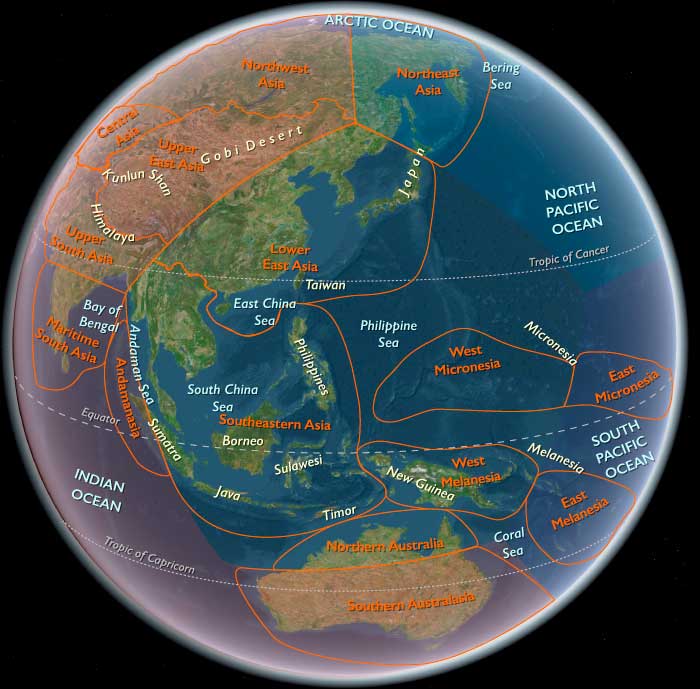
The English name "Korea" derives from "Goryeo."
Worlds
The Far East
View →Related Events
Showing 10 events out of 19 total
The Kangi famine of 1231-1232, possibly the worst famine in Japan's history, is caused by unusually cold, damp weather related to world wide volcanic activity.
Snow falls in central Japan in the summer of 1230.
In 1231, in one estate in central Japan about twenty percent of cultivators die in less than a month.
Law and order breaks down; the widespread banditry even affects relations with Goryeo when hungry residents of Kyushu raided the neighboring Korean peninsula for food.
The famine also leads to numerous quarrels between warrior landlords and urban proprietors, with many estates unable to pay taxes or organize labor gangs.
When harvests are inadequate, warriors had pressured and abused the hapless cultivators, driving them from their fields.
Both the Kyoto and Kamakura governments take steps to make more grain available to commoners, but with only modest results.
A family faced with starvation might choose to sell children or other relatives in return for grain, at the same time ensuring sufficient food for the sellers and the person to be sold.
This behavior has been going on illegally for centuries, but its official authorization from 1231 to 1239 demonstrates the severity of the Kangi famine.
The policy helps to distribute famine victims to people who can feed them, but also tears apart more families.
Moreover, all those sold become members of a servile class, dwelling in small lean-tos or perhaps a room in their new master’s house.
The new policy save lives but creates many dependent, broken, and poor families.
The result is a lower fertility rate, making recovery from the famine even more difficult.
One consequence of the famine is the considerable expansion of the servile class, which is to remain a significant proportion of Japanese society for the next four centuries. (Farris, William Wayne. Japan To 1600: A Social and Economic History. University of Hawai'i Press, 2009)
Korean potters manufacture high-quality green Koryo ware.
In 1234, Koreans invent a new printing system with moveable type, allowing the ready dissemination of Buddhist and Confucian writings.
Ögödei, on the refusal by the fugitive Goryean monarch of an order to appear at the Mongol capital of Karakorum, in 1235 sends a punitive expedition to Korea to reestablish control.
The Mongols have fought for six years to regain control of Korea, but the renegade client-king finally submits, sends hostages to Karakorum, and is reinstalled in 1241 as Goryeo’s puppet ruler.
The repulsions of two Mongol invasions are momentous events in Japanese history.
Japanese relations with China had been terminated in the mid-ninth century after the deterioration of late Tang China and the turning inward of the Heian court.
Some commercial contacts are maintained with southern China in later centuries, but Japanese pirates make the open seas dangerous.
At a time when the bakufu has little interest in foreign affairs and ignoresd communications from China and Goryeo (as Korea is at this time known), news arrives in 1268 of a new Mongol regime in Beijing.
Its leader, Kublai Khan, demands that the Japanese pay tribute to the new Yuan Dynasty (1279-1368) and threatenes reprisals if they fail to do so.
Unused to such threats, Kyoto raises the diplomatic counter of Japan's divine origin, rejects the Mongol demands, dismisses the Korean messengers, and starts defensive preparations.
After further unsuccessful entreaties, the first Mongol invasion takes place in 1274.
More than six hundred ships carry a combined Mongol, Chinese, and Korean force of twenty-three thousand troops armed with catapults, combustible missiles, and bows and arrows.
In fighting, these soldiers group in close cavalry formations against samurai accustomed to one-on-one combat.
Local Japanese forces at Hakata, on northern Kyushu, defend against the superior mainland force, which, after one day of fighting is decimated by the onslaught of a sudden typhoon.
Khubilai realizes that nature, not military incompetence, had been the cause of his forces' failure so, in 1281, he launches a second invasion.
Seven weeks of fighting take place in northwestern Kyushu before another typhoon strikes, again destroying the Mongol fleet.
The invasion leaves a deep impression on the bakufu leaders, although Shinto priests attribute the two defeats of the Mongols to a "divine wind" (kamikaze), a sign of heaven's special protection of Japan.
Long-standing fears of the Chinese threat to Japan are reinforced, and the Korean Peninsula becomes regarded as "an arrow pointed at the heart of Japan."
The Japanese victory, however, gives the bushi a sense of fighting superiority that will remain with Japan's soldiers until 1945.
The victory also persuades the bushi of the value of the bakufu form of government.
The Mongol war has been a drain on the economy, and new taxes have to be levied to maintain defensive preparations for the future.
The invasions also cause disaffection among those who expect recompense for their help in defeating the Mongols.
There are no lands or other rewards to be given, however, and such disaffection, combined with overextension and the increasing defense costs, leads to a decline of the Kamakura bakufu.
Additionally, inheritances have divided family properties, and landowners increasingly have to turn to moneylenders for support.
Roving bands of ronin further threaten the stability of the bakufu.
The six Mongol campaigns in the Korean peninsula ultimately result in Korea becoming a tributary state of the Mongol Yuan Dynasty for approximately eighty years.
Goryeo's royal court had moved in 1232 to Ganghwa Island in the Bay of Gyeonggi after Mongols under Ögedei Khan invaded Goryeo the preceding year as part of a general campaign to conquer China.
The military ruler, Choe U, had insisted on fighting back; the Mongols had ravaged parts of Gyeongsang and Jeolla provinces in the major campaigns of 1231-1232, 1235, 1238.
In 1247, the Mongols had begun the fourth campaign against Goryeo, again demanding the return of the capital to Songdo and the Imperial Family as hostages.
With the death of Güyuk Khan in 1248, however, the Mongols had again withdrawn.
Upon the 1251 ascension of Möngke Khan, the Mongols had again repeated their demands.
Goryeo refuses, and in 1253 the Mongols begin a large campaign.
King Gojong, the twenty-third king of the Goryeo dynasty, finally agrees to move the capital back to the mainland, and sends one of his sons, Prince Angyeonggong, as a hostage.
The Mongols withdraw, but later learn that top Goryeo officials remain on Ganghwa Island, and have punished those who had negotiated with the Mongols.
They renew their campaign.
The Mongols under Jalairtai Qorchi, in the final successful campaign against Korea, have launched four devastating invasions between 1253 and 1258 at tremendous cost to civilian lives throughout the Korean peninsula.
The Mongols annex the northern provinces of Korea after the invasions and incorporate them into their empire.
The long-ruling Ch’oe military family had in 1258 been forced from power in Koryo; their civilian successor in 1259 acknowledges Mongol suzerainty.
The treaty permits the sovereign power and traditional cultures of Goryeo, and implies that the Mongols have given up controlling Goryeo by direct rule.
