Anastasios II
Eastern Roman Emperor
Years: 665 - 719
Artemius Anastasius, known in English as Anastasios II or Anastasius II (died 719), is the Byzantine Emperor from 713 to 715.
Related Events
Filter results
Showing 10 events out of 11 total
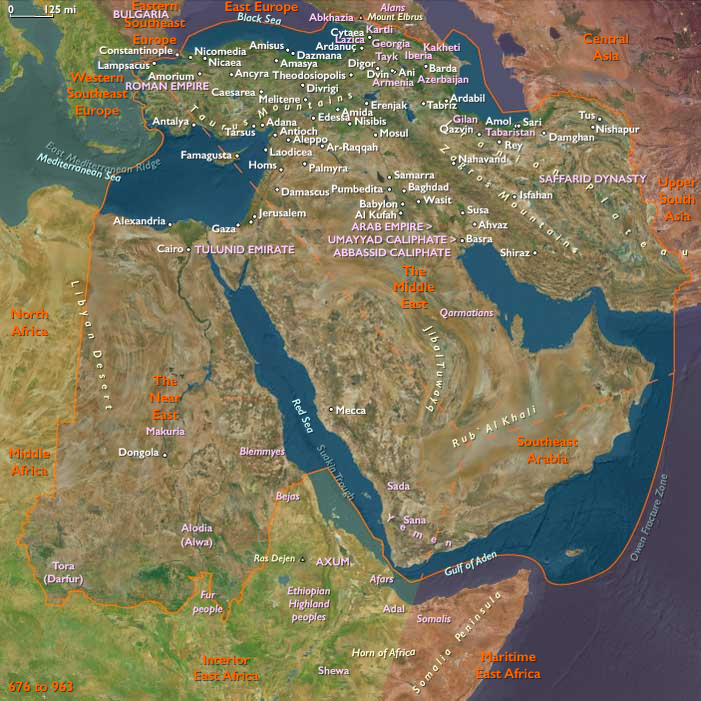
The Arab raids from 712 on penetrate ever deeper into Anatolia, with the final objective of mounting an assault on Constantinople.
Emperor Anastasios constructs extensive military fortifications in and around Constantinople, which the Arabs, renewing their assaults by land and sea, again besiege in 717, lured by the unsettled conditions following the second deposition of Justinian II.
The repulsion in 718 of the second Arab siege of Constantinople is a major imperial success, and halts Arab attacks against the Empire for a few years.
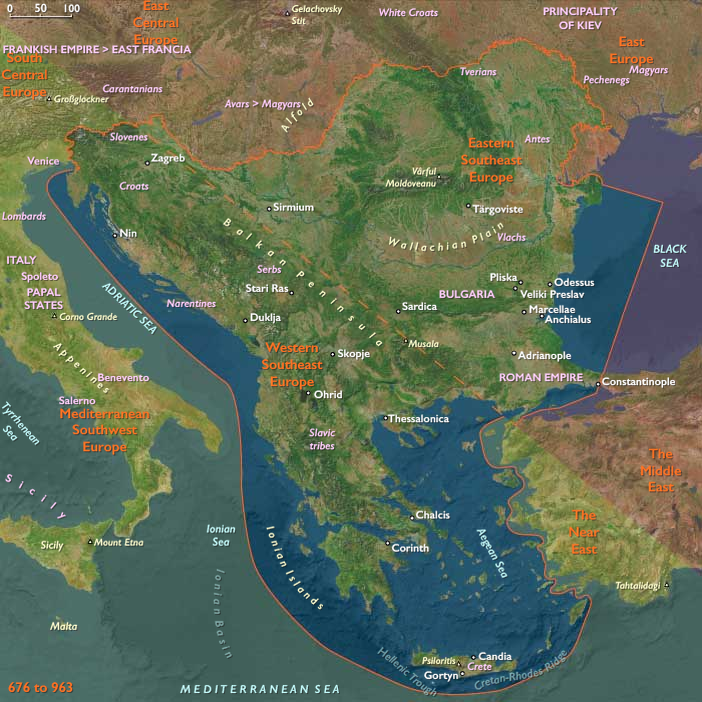
Eastern Southeast Europe (712–723 CE): Fortification and Imperial Triumph
Settlement and Migration Patterns
Continued Stability Amid Persistent Threats
From 712 to 723 CE, Eastern Southeast Europe experienced continued stability within settled regions despite relentless external threats. The integration and cultural cohesion between Slavic and Bulgar populations persisted, reinforcing demographic stability.
Political and Military Developments
Escalation of Arab Raids
Arab raids intensified significantly from 712 onward, penetrating deeper into Anatolia with the strategic objective of eventually attacking Constantinople itself. These incursions posed severe threats to imperial security and territorial integrity.
Emperor Anastasios’ Fortifications
Recognizing the escalating threat, Emperor Anastasios commissioned extensive military fortifications in and around Constantinople. These preparations were critical in bolstering the city's defenses against anticipated Arab attacks.
Second Arab Siege of Constantinople (717–718 CE)
Following internal instability triggered by the second deposition of Emperor Justinian II, the Arabs launched a renewed and determined siege of Constantinople by both land and sea in 717. The successful repulsion of this siege in 718 marked a significant triumph for the empire, effectively halting Arab offensives for several subsequent years and reasserting Byzantine strategic dominance.
Economic and Technological Developments
Economic Resilience and Resource Allocation
Despite ongoing military pressures, the regional economy demonstrated resilience through strategic resource allocation and sustained trade networks. Constantinople’s enhanced fortifications and defenses played a vital role in safeguarding economic stability.
Advanced Defensive Strategies
The era witnessed continued development in defensive strategies and technologies, particularly in naval warfare and urban fortifications. These innovations proved decisive in successfully repelling the major Arab siege.
Cultural and Artistic Developments
Cultural Continuity Amid Conflict
Cultural and artistic expressions continued to flourish, sustaining regional identity and spiritual resilience. The religious and artistic innovations established in earlier periods persisted, further embedding Byzantine cultural heritage.
Scholarly and Intellectual Persistence
Intellectual institutions remained dedicated to preserving classical and theological knowledge. These scholarly efforts continued uninterrupted, reinforcing the cultural and educational foundations of the region.
Social and Religious Developments
Consolidation of Eastern Orthodoxy
Eastern Orthodox Christianity solidified its central role within society, providing moral and social cohesion amid ongoing military threats. Religious institutions continued to play an influential role in community resilience and spiritual guidance.
Reinforced Community Identity
The successful defense of Constantinople in 718 strengthened communal identity and regional pride, reinforcing societal cohesion and resilience during periods of conflict.
Long-Term Consequences and Historical Significance
The period from 712 to 723 CE was marked by critical military challenges, including the significant Arab siege of Constantinople and its successful repulsion, thanks to extensive fortifications and strategic defense preparations by Emperor Anastasios. These events decisively shaped the regional geopolitical landscape, reinforced imperial authority, and provided lasting stability for Eastern Southeast Europe.
Emperor Philippikos Bardanes is an advocate of the Monothelite heresy, the belief in a single will of Christ.
Even before entering Constantinople, he had ordered the picture of the Third Council of Constantinople (which had condemned Monothelitism in 680) to be removed from the palace and the names of those the council had condemned restored.
Patriarch Cyrus refuses to support the new policy and is deposed and replaced by the more compliant deacon John VI, a member of his own sect, early in 712.
Among the first acts of the new emperor is the summoning of a conciliabulum of Eastern bishops, which abolishes the canons of the Sixth Ecumenical Council.
In response, the Roman Church refuses to recognize the new Emperor and his patriarch.
In foreign policy, the reign of Philippikos is disastrous.
The Bulgarians, taking advantage of the disorders in the empire, raid through Thrace and plunder as far as the vicinity of Constantinople in 712.
When Philippikos transfers an army from the Opsikion theme to police the Balkans, the Umayyad Caliphate under Al-Walid I makes inroads across the weakened defenses of Asia Minor.
The Arabs capture several cities in 712-713.
The Opsikian army in Thrace on June 3, 713, overthrows and blinds Philippikos and, mainly at the instigation of the Senate and people, installs his chief secretary, Artemios, as Anastasios II.
Soon after his accession, Anastasios II imposes discipline on the army and executes those officers who had been directly involved in the conspiracy against Philippikos.
Andrew of Crete had been sent from his monastery in Jerusalem to Constantinople, where he had become deacon of the Hagia Sophia.
During the reign of Philippikos he had been made archbishop of Gortyna and had taken part in the Synod of Constantinople, where he had subscribed to Monothelitism; he recants his Monothelitic views in 713.
In developing the liturgy of the Greek Church, he is credited with inventing the kanon, a new genre of hymnography that consists of nine odes in stanzaic form, each sung to a different melody.
His canon replaces the kontakion, a homiletic hymn of which all stanzas were sung to the same melody.
Andrew is the author of many hymns and canons still used in Greek liturgical books.
Anastasios reverses the ecclesiastical policies of Philippikos and tries to reform the army before he, too, is deposed.
Assuring Pope Constantine of his orthodoxy, Anastasios withdraws Philippikos' Monothelite decrees, which had imposed the heretical doctrine of a single will of Christ.
Militarily, he fortifies Constantinople, selects the island of Rhodes as an imperial naval base, and sends the Isaurian Leo to defend Syria against the Arabs.
Leo, called the Isaurian, born at Germanicia (Mar'ash) in northern Syria (modern Maras, Turkey), had been taken as a youth by his parents (who apparently were prosperous) to Mesembria, in Thrace.
Justinian II had appointed the young man to the prestigious rank of spatharius (attendant) as a reward for assisting him in the recovery of his throne in 705, but the Emperor had soon developed a distrust of him and had therefore sent him to perform a perilous mission among the Alani on the remote eastern frontier, anticipating that he would never return.
Despite the danger, Leo had accomplished his assignment, had managed to preserve his life, and ultimately, at the hands of the new emperor, Anastasios, receives appointment as commander of the Anatolikon (central Anatolia), the largest theme, or military-district army, in Asia Minor.
The invading Arabs threaten the Empire by land and sea (they had penetrated as far as Galatia in 714), and Anastasios has attempted to restore peace by diplomatic means.
His emissaries having failed in Damascus, he undertakes the restoration of Constantinople's walls and the construction of a new fleet.
However, the death of the Caliph al-Walid I in February 715 has given Anastasius an opportunity to turn the tables on the enemy.
He has his fleet concentrate on Rhodes with orders not only to resist the approach of the enemy but to destroy their naval stores, and he dispatches an army under Leo the Isaurian, afterwards emperor, to invade Syria.
The troops of the Opsikian theme, resenting the Emperor's strict measures, mutiny, slay the admiral John, and proclaim as emperor Theodosios, a financial officer and tax collector of lowborn extraction in the southern portion of the theme of Opsikion.
According to one theory, he was the son of the former Emperor Tiberius III.
He did not readily accept this choice and, according to the chronicler Theophanes the Confessor, had even attempted to hide in the forests near Adramyttium.
Eventually he was found and was acclaimed emperor in May 716.
Theodosius and his troops immediately lay siege to Constantinople.
The eunuch churchman Germanus, made bishop of Cyzicus in about 705, had been pressured by Philippikos to sign a decree in 712 rehabilitating Monothelite teachings.
Anastasios upholds the decisions of the Sixth Ecumenical Council and deposes the Monothelete Patriarch John VI of Constantinople, replacing him with Germanus in August 715.
Germanus pronounces the orthodox creed and once again repudiates Monothelitism at a local council this same year.
This also puts an end to the short-lived local schism with the Church in Rome.
The rebels, after besieging the city for six months, gain entry in November.
Theodosius shows himself remarkably moderate in his treatment of his predecessor and his supporters.
Through the intercession of Patriarch Germanus I of Constantinople, Anastasios II is persuaded to abdicate and become a monk in Thessalonica.
Little is known of the short reign of Theodosios III, who immediately faces an Arab invasion deep into Anatolia and the advance of the Arab fleet.
Theodosius turns out to be quite unsuited to imperial office.
Arabic expansion at the expense of the Empire presumably precipitates the famous Roman-Bulgar treaty of 716, under which Constantinople agrees to pay annual tribute to khan Tervel (whom Justinian, prior to his second deposition, had made his son-in-law and named Caesar), further Roman-Bulgar commercial relations, and recognize the border in Thrace, where the Bulgars are to retain Zagora.
(This policy will pay off in 719 when they help relieve the Arabs’ second siege of Constantinople.)
Leo, in alliance with Artavasdos, the commander of the Armeniakon theme (the second largest in Asia Minor), refuses to recognize the new emperor and continues to champion the cause of Anastasios.
Anastasios heads a revolt in 719 against Leo the Isaurian, who had succeeded Theodosius as Leo III, receiving considerable support, including auxiliaries reportedly provided by Tervel of Bulgaria.
However the chronicler Theophanes the Confessor, who offers this information elsewhere, confuses Tervel with his eventual successor Kormesiy, so perhaps Anastasios was allied with the younger ruler.
In any case, the rebel forces advance on Constantinople.
The enterprise fails, and Anastasios falls into Leo's hands and is put to death by his orders.