Anton Reicha
Czech-born, later naturalized French composer
Years: 1770 - 1836
Anton (Antonín, Antoine) Reicha (Rejcha) (February 26, 1770 – May 28, 1836) is a Czech-born, later naturalized French composer.
A contemporary and lifelong friend of Beethoven, he is now best remembered for his substantial early contributions to the wind quintet literature and his role as teacher of pupils including Franz Liszt, Hector Berlioz and César Franck.
He is also an accomplished theorist, and writes several treatises on various aspects of composition.
Some of his theoretical work deals with experimental methods of composition, which he applies in a variety of works such as fugues and études for piano and string quartet.
Reicha was born in Prague.
His father, the town piper, died when the boy was just ten months old, leaving him in custody of a mother who had no interest in educating him.
The young composer runs away from home when only ten years old, and is subsequently raised and educated in music by his paternal uncle Josef Reicha.
When they move to Bonn, Josef secures for his nephew a place playing violin in the Hofkapelle electoral orchestra alongside the young Beethoven on viola, but for Reicha this is not enough.
He studies composition secretly, against his uncle's wishes, and enters the University of Bonn in 1789.
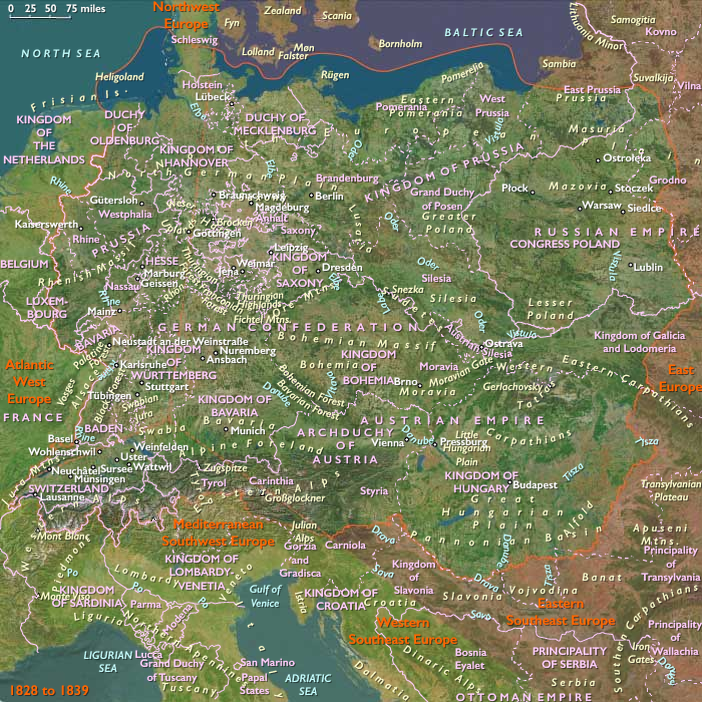
When Bonn is captured by the French in 1794, Reicha flees to Hamburg, where he makes a living teaching harmony and composition and studies mathematics and philosophy.
Between 1799 and 1801 he lives in Paris, trying to gain recognition as an opera composer, without success.
In 1801 he moves on to Vienna, where he studies with Salieri and Albrechtsberger and produces his first important works.
His life is once again affected by war in 1808, when he leaves Vienna, occupied by the French under Napoleon, and returns to Paris, where he will spend the rest of his life teaching composition and in 1818 is appointed professor at the Conservatoire.
Reicha's output during his Vienna years is prolific and included large semi-didactic cycles of works such as thirty-six Fugues for piano, L'art de varier (a set of fifty-seven variations on an original theme), and exercises for the treatise Practische Beispiele (Practical Examples).
During the later Paris period, however, he focuses his attention mostly on theory and produces a number of treatises on composition.
Works of this period include twenty-five crucially important wind quintets which are considered the locus classicus of that genre and are his best-known compositions.
None of the advanced ideas he advocated in the most radical of his music and writings (not used in the wind quintets), including polyrhythm, polytonality and microtonal music, sre accepted or employed by nineteenth-century composers.
Due to Reicha's unwillingness to have his music published (like Michael Haydn before him), he falls into obscurity soon after his death and his life and work have yet to be intensively studied.