Bogdan III the One-Eyed
Voivode (Prince) of Moldavia
Years: 1470 - 1517
Bogdan III the One-Eyed (Romanian: Bogdan al III-lea cel Chior) or Bogdan III the Blind (Romanian: Bogdan al III-lea cel Orb) (1470/1471 – April 20, 1517) is Voivode of Moldavia from July 2, 1504 to 1517.
Related Events
Filter results
Showing 4 events out of 4 total
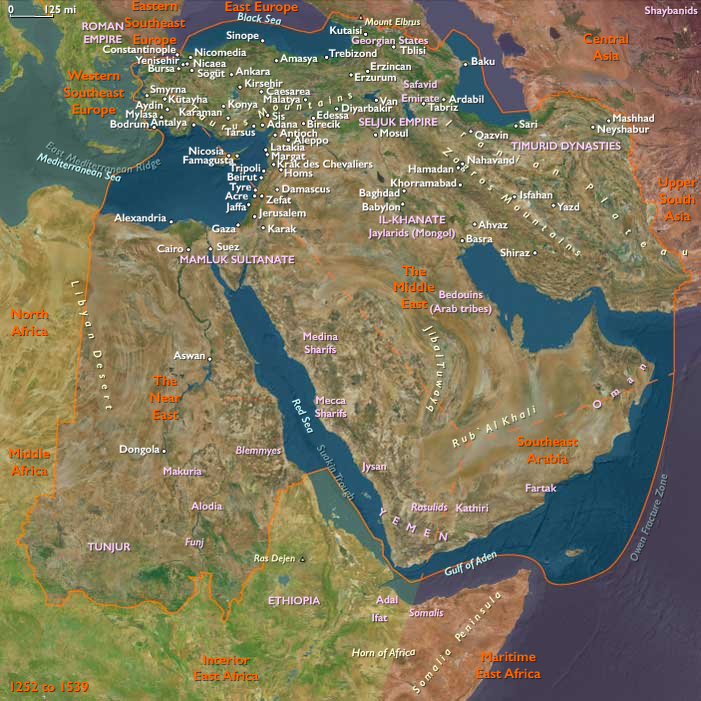
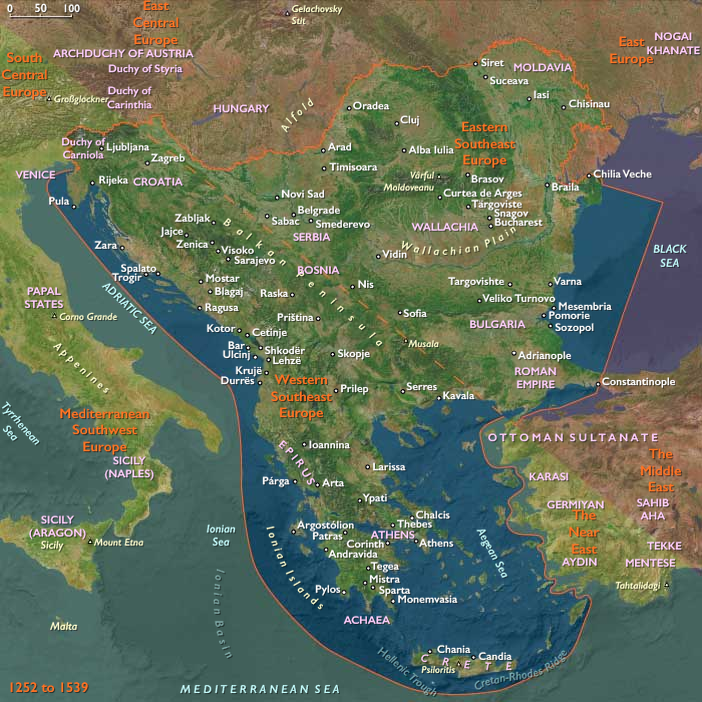
Eastern Southeast Europe (1504–1515 CE): Ottoman Expansion, Cultural Flourishing, and Regional Struggles
Settlement and Migration Patterns
Urban Growth and Capital Relocations
Between 1504 and 1515 CE, Eastern Southeast Europe saw continued urban development and shifting political centers. In Wallachia, the capital transitioned from Curtea de Argeș to Târgoviște, reflecting changing political alliances, particularly with the Kingdom of Hungary. Throughout the fifteenth and sixteenth centuries, Târgoviște evolved into a significant trade hub, notably interacting with Poland, Brașov, and Sibiu. By this period, Romanians had become the majority in the city, joined by Greek merchants and monks, enriching its cultural fabric.
Economic and Technological Developments
Economic Continuity and Technological Innovation
The regional economy remained stable and resilient, particularly in urban centers like Târgoviște, where a Cyrillic printing press was established in 1508, producing Slavonic liturgical texts. This innovation marked significant technological and cultural progress, bolstering literacy and cultural cohesion. Urban workshops continued to thrive, contributing tools, weaponry, and everyday goods vital to regional commerce.
Cultural and Artistic Developments
Flourishing of Jewish and Ottoman Culture
Jewish communities, particularly the Sephardic population established in Constantinople since the late fifteenth century, continued their vibrant cultural life. The era under Bayezid II witnessed significant Jewish cultural flourishing, exemplified by scholarly and commercial successes. Architecturally, Bayezid II commissioned a major imperial mosque complex in Istanbul, continuing his father's legacy of grand construction projects. This architectural landmark symbolized the integration of Ottoman and Western artistic influences, as the mosque's architect was closely associated with earlier Greek architectural traditions.
Social and Religious Developments
Religious Integration and Community Cohesion
The inclusive policies of Bayezid II persisted, fostering religious harmony and community integration. Jewish and Muslim refugees continued contributing significantly to Ottoman society, particularly in commerce, crafts, and intellectual endeavors. Jewish cultural life, energized by figures like Chief Rabbi Moses Capsali, thrived under Ottoman protection and patronage.
Political Dynamics and Regional Rivalries
Moldavian Turmoil and Ottoman Influence
Regional politics during this period were complex and volatile, particularly in Moldavia. Under Prince Bogdan III, Moldavia confronted significant external threats, including repeated invasions by the Crimean Tatars. After a devastating defeat in 1509 and further invasions in 1511, Bogdan sought Ottoman protection in 1514, negotiating vassalage terms with Sultan Selim I. This agreement entailed annual tribute payments and military support in exchange for considerable autonomy, underscoring the nuanced nature of Ottoman suzerainty.
Internal and External Challenges to Ottoman Rule
Internally, the Ottoman Empire grappled with persistent revolts, notably the Qizilbash rebellions, often backed by Shah Ismail of Persia, whose promotion of Shi'ism undermined Ottoman authority in Anatolia. These rebellions caused significant disruptions, including the battlefield death of Ali Pasha, highlighting the ongoing vulnerabilities and internal divisions within the empire.
Long-Term Consequences and Historical Significance
The period 1504–1515 CE was marked by sustained urban growth, significant technological and cultural achievements, and complex political realignments. Ottoman governance strategies fostered cultural diversity and religious tolerance, bolstering regional stability despite persistent external threats and internal rebellions. The foundation laid during these years significantly influenced the socio-political landscape of Eastern Southeast Europe, solidifying Ottoman administrative effectiveness and cultural vibrancy.

Iasi, or Jassy, located on the Bahlui River near its confluence with the Prut, first settled in the seventh century, and a fort and customs station on trade routes during the fourteenth century, suffers attacks from the Tatars in 1513.
Immediately after Bogdan comes to the Moldavian throne, he had expressed his wish to marry Elisabeth, sister of Polish King Alexander Jagiello; after being twice refused despite offering generous gifts (including territorial concessions), he raids southern Poland, and is conceded his demands—based on his promise to be more lenient towards the status of the Roman Catholic Church in Moldavia—in 1506.
Alexander's death and Sigismund's ascendancy lead to a breaking of the previous agreement, provoking further incursions on each side.
In October 1509, Bogdan is severely defeated on the Dniester river; a peace is signed on January 17, 1510, when the ruler finally renounces his pretensions.
In the same year, Moldavia suffers two major Tatar invasions (they are alleged to have carried away seventy-four thousand as slaves).
In 1511, the Tatars even manage to occupy most of the country.
The events force Poland, still recovering from the great invasion of 1506, to send troops as aid, helping Bogdan regain his lands after a victory in May 1512.
In 1514, in order to block the Tatar threat by enlisting the help of a powerful overlord, Bogdan sends chancellor Tăutu to negotiate the terms of Moldavia's submission to the Ottoman Empire, now under the rule of Sultan Selim.
The Porte demands that a certain sum (initially expressed as four thousand gold coins) be paid yearly, together with a ceremonial gift of forty horses and forty falcons, additional expenses (such as for the celebration of Eid ul-Fitr) and assistance in case of war—princes themselves are required to lead a four thousand-strong army that will place itself under the orders of the Sultan.
In exchange for these, Moldavia is allowed a high level of autonomy.
The long reign of Prince Stephen III of Moldavia, though marked by continual strife, has nonetheless brought considerable cultural development and has been a period of great ecclesiastical building and endowment.
Many churches and monasteries have been erected by Stephen himself; some of which, including Voroneț and Putna, are now part of UNESCO's World Heritage sites.
In 1462, during the assault of Chilia Nouǎ, Stephen had been shot in the leg, leaving a wound that has never fully healed.
In 1486, during the battle of Șcheia, his horse had been injured: both horse and rider ad fallen and Stephen had been trapped under the horse, his old leg injury further aggravated.
Over time, he has summoned to his royal court many doctors, astrologists and other persons, who have attempted to heal his wound.
Among these are Hermann, "bacalaurio in medicina", astrologist Baptista de Vesentio, Maestro Zoano Barbero from Genoa (in 1468), Isaac Beg (in 1473), Don Antonio Branca (skilled in fixing cut noses), Mateo Muriano from Venice (in 1502), and Hieronimo di Cesena from Venice (in 1503).has immobilized his hands and legs.
On November 9, 1503, Vladislav, King of Hungary had written to the Doge of Venice: "The voivode of Moldavia is tormented by an old illness."
On June 30, 1504, Stephen's wound is cauterized by the doctors present in Suceava (one of whom is Hieronimo di Cesena from Venice).
The operation causes great pain to the old voivode, who dies two days later, on the morning of July 2, 1504.
He is buried in the Monastery of Putna.
Stefan had reportedly told his son from his deathbed to submit to the Ottoman Turks if they offered an honorable suzerainty.
Succession struggles will weaken Moldavia after his death.
Eastern Southeast Europe (1516–1527 CE): Ottoman Dominance and Regional Transformations
Settlement and Migration Patterns
Expansion and Consolidation
Between 1516 and 1527 CE, the Ottoman Empire solidified its dominion over Eastern Southeast Europe, completing major territorial expansions into the Arab lands, including the conquest of Egypt, Syria, Palestine, and the Hejaz by 1517. This era saw increased migrations within Ottoman territories, including the movement of administrative personnel, soldiers, and merchants, further integrating regional populations and enhancing urban development in cities like Constantinople.
Economic and Technological Developments
Economic Integration and Trade Expansion
The Ottoman Empire fostered economic stability through effective trade networks that spanned from Eastern Europe to the Middle East. The conquest of Egypt in 1517 gave the Ottomans control over vital trade routes connecting the Mediterranean and the Red Sea, significantly boosting commerce and the empire’s economic strength. Regional cities like Constantinople continued to thrive economically, benefiting from increased trade and commercial activity.
Cultural and Artistic Developments
Continuation of Cultural Flourishing
Cultural prosperity persisted throughout this period, characterized by artistic and architectural patronage, particularly in major urban centers. Ottoman cultural life was enriched by continued support for scholars, artisans, and merchants, fostering a diverse and vibrant cultural landscape. The influx of populations, including Jewish and Muslim communities from Iberia, continued to enhance cultural diversity and intellectual vibrancy within the empire.
Social and Religious Developments
Religious Diversity and Imperial Tolerance
Ottoman policies of religious tolerance and integration remained robust, facilitating the continued prosperity of diverse religious communities, notably Jews and Christians, alongside the Muslim majority. The communities established earlier, such as the Sephardic Jews who had settled in Constantinople, continued to flourish, contributing significantly to the empire’s economic and intellectual life.
Political Dynamics and Regional Rivalries
Ottoman Territorial Consolidation
Under Sultan Selim I and his successor, Suleiman the Magnificent, the Ottoman Empire achieved significant military and territorial gains. The decisive defeat and absorption of the Mamluk Sultanate in 1517 granted the Ottomans critical control over key Islamic holy sites and trade routes. Concurrently, Moldavia, under Prince Bogdan III, became increasingly enmeshed in Ottoman politics, negotiating terms of vassalage that balanced autonomy with obligations such as tribute payments and military assistance.
Continued Internal and External Pressures
Despite considerable territorial and political successes, the Ottomans continued to face internal challenges, notably from the Qizilbash rebels, who were supported by Persian Shah Ismail. These ongoing rebellions highlighted persistent internal vulnerabilities, requiring sustained military and administrative attention.
Long-Term Consequences and Historical Significance
The period 1516–1527 CE marked a pivotal phase of Ottoman territorial consolidation, economic expansion, and cultural diversity. These developments significantly shaped the region's socio-political landscape, cementing Ottoman power and influence in Eastern Southeast Europe and beyond, while laying the groundwork for the empire's cultural and administrative practices in subsequent eras.