East Central Europe (1840–1851 CE): National Awakening, Revolutionary Tensions, and the Rise of Liberal Movements
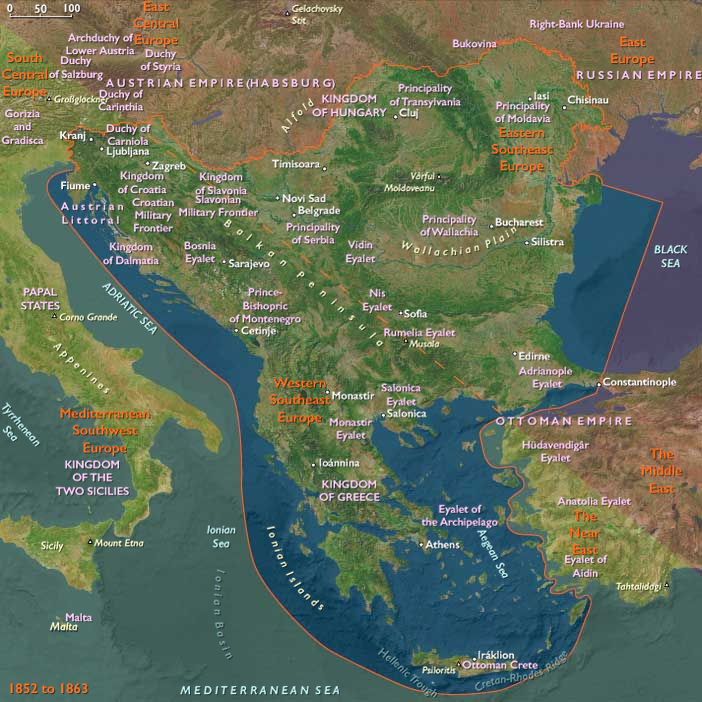
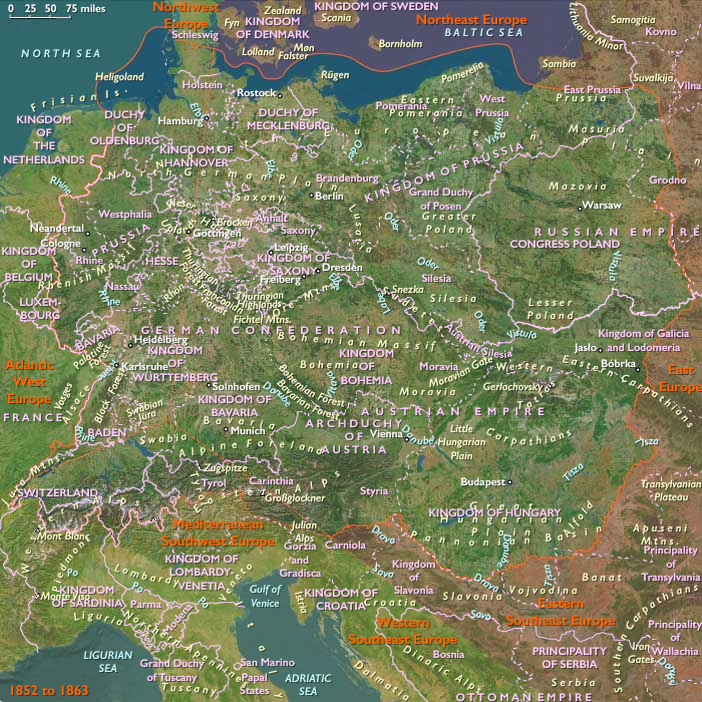
Between 1840 and 1851 CE, East Central Europe—comprising the territories of modern-day Poland, Czechia, Slovakia, Hungary, and eastern portions of Germany and Austria east of 10°E and northeast of the defined southeastern boundary—experienced intense political, social, and cultural upheaval. This era was shaped by growing nationalist sentiments, liberal demands for political reform, the widespread revolutionary turmoil of 1848–1849, and the consequential reassertion of conservative Habsburg authority. The period fundamentally redefined national identities, social relations, and political aspirations across the region.
Political and Military Developments
National Awakening and Liberal Movements
Throughout the 1840s, liberal nationalism intensified, especially in the Czech lands, Hungary, and Polish territories. Intellectual and political figures sought autonomy, linguistic recognition, civil liberties, and representative government. Societies such as the Czech National Revival (České národní obrození) gained momentum, emphasizing Czech linguistic and cultural pride.
Galician and Polish National Aspirations
In Austrian-controlled Galicia, Polish and Ukrainian nationalist aspirations intensified. The cultural and educational movement advocating Polish language and literature influenced increased demands for political autonomy and social reforms, laying groundwork for future independence struggles.
Hungarian Liberalism and Reform
Hungarian nationalists, led by figures such as Lajos Kossuth and István Széchenyi, increasingly challenged Habsburg centralism. The liberal reformist agenda emphasized constitutional governance, civic liberties, and Magyar cultural predominance within the Kingdom of Hungary, creating tensions with other ethnic groups.
Revolutionary Crisis of 1848–1849
The revolutionary wave beginning in 1848 profoundly shook East Central Europe. Notable revolts included:
-
Vienna Uprising (March 1848): Liberal and nationalist groups forced Chancellor Metternich’s resignation, temporarily establishing constitutional rule in the Austrian Empire.
-
Hungarian Revolution (1848–1849): Hungary declared autonomy under Kossuth, initiating wide-ranging liberal reforms. Following initial success, the movement was suppressed by Austrian and Russian troops in 1849.
-
Prague Slavic Congress (June 1848): Sought greater rights and recognition for Slavic peoples within the Austrian Empire, ultimately crushed by Austrian military forces.
-
Polish Uprisings in Poznań (1848): Driven by national and social grievances, crushed by Prussian forces, reaffirming Prussian dominance in western Poland.
These movements temporarily disrupted the Habsburg and Prussian orders but ultimately led to strengthened conservative authority.
Conservative Restoration under Franz Joseph
Following revolutionary suppression, the young Emperor Franz Joseph I (r. 1848–1916) reasserted centralized authority through a neo-absolutist regime, notably via the 1851 Sylvester Patent, reversing many revolutionary gains and restoring autocratic rule within the Austrian Empire.
Economic and Technological Developments
Early Industrialization and Railway Expansion
The 1840s saw accelerating industrialization in Bohemia, Silesia, and Hungary. Textile mills, coal mining, iron production, and railway expansion notably reshaped regional economies, particularly enhancing Prague, Brno, Ostrava, and Budapest as significant industrial hubs.
Agricultural Modernization
Agricultural reform intensified, notably in Hungary and Austrian-controlled territories. The abolition of serfdom, enacted in principle during the 1848 revolutions, transformed rural economies and labor relations despite slow implementation and persistent aristocratic resistance.
Cultural and Artistic Developments
Flourishing National Cultures
The era witnessed vibrant nationalist cultural expressions. Czech, Hungarian, and Polish literary, musical, and artistic movements vigorously celebrated national identities, histories, and folklore, significantly influencing regional cultural life.
-
In Bohemia, literary figures such as Karel Havlíček Borovský and Božena Němcová popularized Czech literature.
-
Hungarian composer Franz Liszt (Ferenc Liszt) emerged as a pivotal figure, highlighting Hungarian themes through music, bolstering national pride.
-
Polish Romantic literature, led by figures like Adam Mickiewicz, inspired strong patriotic sentiments.
Artistic Patronage and Public Architecture
Throughout East Central Europe, public architecture flourished with monumental structures reflecting nationalist pride and liberal aspirations, notably theaters, museums, and civic buildings in cities like Prague, Budapest, and Kraków.
Settlement and Urban Development
Accelerating Urbanization
Rapid industrial growth and railway construction accelerated urbanization, particularly in industrialized regions of Bohemia, Silesia, and Hungary. Cities like Prague, Budapest, Ostrava, and Łódź expanded significantly, attracting migrants from rural areas and changing demographic patterns dramatically.
Social and Religious Developments
Social Reforms and Emancipation
Revolutionary upheavals sparked widespread social reforms, notably peasant emancipation and land redistribution in Hungary and Austria. Although conservative authorities resisted full implementation, these reforms transformed rural society and social dynamics, permanently altering feudal structures.
Religious Institutions amid Revolution
The Catholic Church maintained considerable social influence but faced challenges from secular liberalism and emerging nationalist movements. In response, religious institutions emphasized educational and charitable roles, adapting cautiously to shifting political and social environments.
Long-Term Consequences and Historical Significance
The period 1840–1851 CE represented a crucial turning point for East Central Europe. Nationalist and liberal revolutions of 1848–1849 deeply reshaped political aspirations, reinforced national identities, and accelerated industrialization and urban growth. Despite initial revolutionary failures, the era laid essential foundations for modern nation-states, social transformations, and cultural flourishing. The conservative restoration under Franz Joseph I did not suppress but rather intensified demands for national autonomy, democracy, and reform, deeply influencing subsequent developments through the late 19th century and beyond.