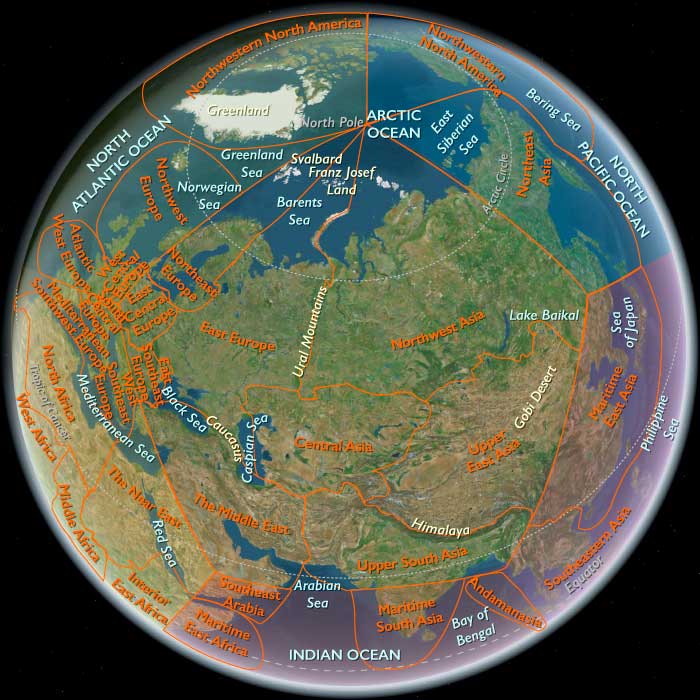
Constantine IX Monomachos
Emperor of the East Roman (Byzantine) Empire
Years: 1000 - 1055
Constantine IX Monomachos, Latinized as Constantine IX Monomachus (c. 1000 – January 11, 1055), reigns as Byzantine emperor from June 11, 1042 to January 11, 1055.
He had been chosen by the Empress Zoe as a husband and co-emperor in 1042, although he had been exiled for conspiring against her previous husband, Emperor Michael IV the Paphlagonian.
They rule together until Zoe dies in 1050.




Related Events
Filter results
Showing 10 events out of 36 total
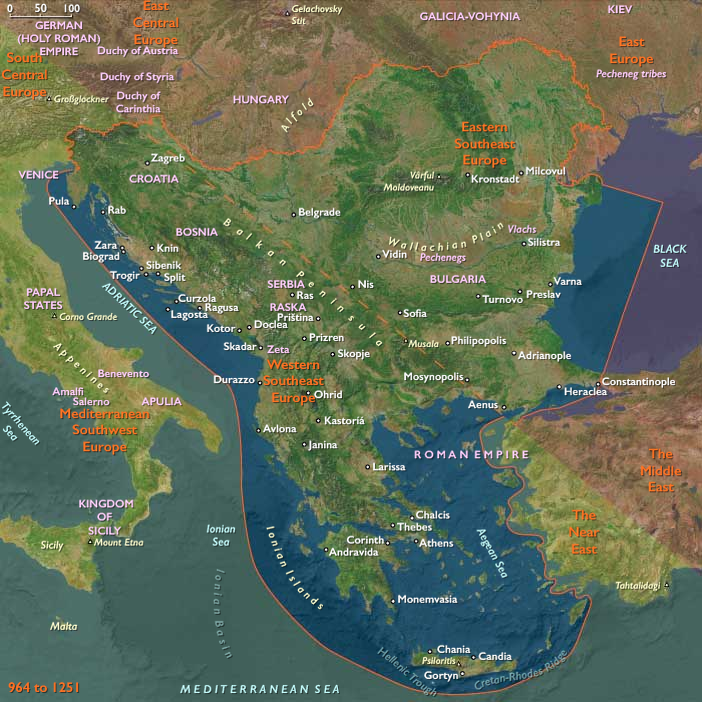
Eastern Southeast Europe (1036–1047 CE): Cultural Revival and Imperial Neglect
Settlement and Migration Patterns
Urban Stability and Aristocratic Influence
Between 1036 and 1047 CE, demographic stability persisted within Eastern Southeast Europe, notably characterized by a cultural renaissance centered in Constantinople. The urban aristocracy played a crucial role in promoting cultural sophistication and intellectual pursuits amid a relatively peaceful interval.
Political and Military Developments
Cultural Renaissance under Constantine IX
Emperor Constantine IX Monomachus significantly impacted cultural and intellectual life by reorganizing the University of Constantinople, fostering an era marked by the efflorescence of learning, literature, and scholarly activity. His patronage helped establish the city as a renowned cultural hub.
Neglect of Imperial Defenses
Despite cultural achievements, Constantine IX notably neglected imperial defenses. His extravagant expenditures on luxuries, grand buildings, and public works, coupled with the serious debasement of coinage, weakened imperial finances and the empire's overall military readiness.
Economic and Technological Developments
Economic Strain from Fiscal Mismanagement
The emperor’s extravagant spending habits and debasement of currency significantly strained the Byzantine economy. These financial practices undermined economic stability, resulting in inflation and reduced fiscal resources necessary for defense and infrastructure.
Fortifications and Defense Decline
During Constantine IX’s reign, critical defensive infrastructure received insufficient attention, compromising the empire’s preparedness against external threats and leaving its borders increasingly vulnerable.
Cultural and Artistic Developments
Flourishing Cultural Activities
Under the patronage of Constantine IX, cultural activities flourished, marking a renaissance in Byzantine learning and the arts. This cultural revival manifested prominently in the reorganization and expansion of the University of Constantinople.
Continued Literary and Intellectual Output
Scholarly and literary endeavors thrived during this period, driven by the reinvigorated University of Constantinople, monastic scriptoria, and ecclesiastical patronage, thereby ensuring continued cultural resilience and intellectual advancement.
Social and Religious Developments
Strengthening of Orthodox Christianity
Orthodox Christianity maintained its significant societal role, continuing to provide stability and cultural cohesion. Ecclesiastical institutions further reinforced their position through sustained influence over cultural and educational initiatives.
Ongoing Presence of Religious Movements
The Bogomil movement continued to influence rural religious life and societal dynamics, representing a persistent alternative to Orthodox ecclesiastical authority and traditional religious practices.
Long-Term Consequences and Historical Significance
The era from 1036 to 1047 CE was distinguished by significant cultural and intellectual achievements, largely due to the efforts of Emperor Constantine IX. However, his financial mismanagement and neglect of military defenses had severe repercussions, undermining imperial security and stability, and setting the stage for future challenges in Eastern Southeast Europe.
Constantinople’s urban aristocracy, reacting against the brutalization of war, strive to make the city a center of culture and sophistication.
Under the auspices of Emperor Constantine IX Monomachus, the University of Constantinople is reorganized, with an efflorescence of learning and letters, However, he neglects imperial defenses, spending extravagant sums on luxuries and magnificent buildings and seriously debasing the coinage.
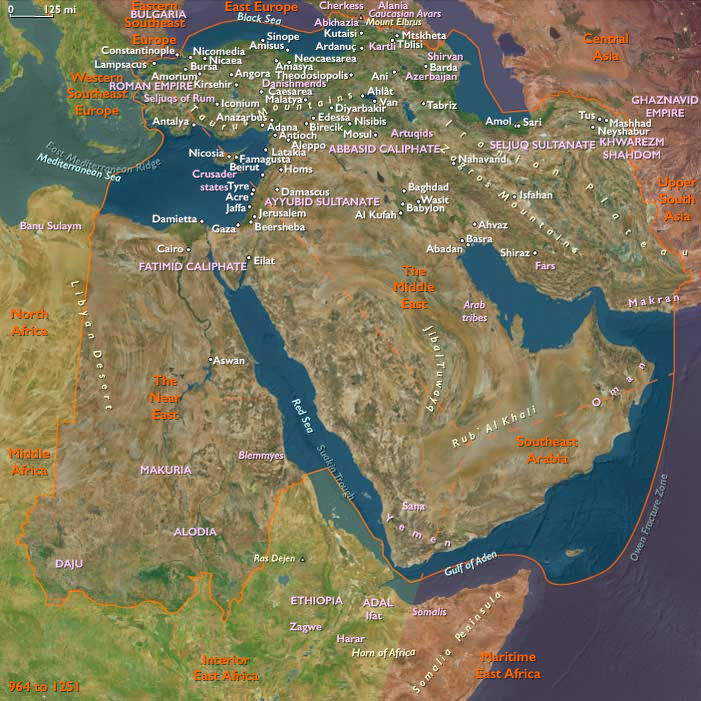
The Empire signs a thirty years' peace with the Fatimid Caliphate in about 1037, thus ending a period of hostilities.
Constantinople and Cairo each agree not to aid the enemies of the other.
Emperor Michael IV receives permission to renovate the Church of the Holy Sepulchre in Jerusalem at his own expense, and he might have received the right to appoint the patriarch of Jerusalem.
In return, the emperor releases five thousand Muslim prisoners.
John the Orphanotrophos had first comes to historical attention as protonotarios and trusted confidant of Basil II..
He had supported Romanos' interests before the latter became emperor.
After his elevation to the imperial throne, Romanos had created John praepositus sacri cubiculi (head of the imperial household and the highest-ranking eunuch position; this title is probably identical with parakoimomenos) and senator.
With the accession of his brother Michael IV in 1034, John had been able to pursue his goal of furthering his family's interest with vigor.
The chronicler John Skylitzes goes so far as to say that 'with John's help all of his brothers became members of the emperor's household'.
John had ensured that his sister Maria's husband, Stephen, was made admiral, his brother Niketas named Duke of Antioch (succeeded by his brother Constantine), and his brother George named protovestiarios in succession to Symeon, who had resigned from his position in protest at John's behavior and retired to Mount Olympus.
Anthony the Fat, a member of John's extended family, had been named Bishop of Nicomedia.
Although John himself ultimately remains only an orphanotrophos, ("caretaker of orphans"), he effectively runs the state as a sort of prime minister.
John attempts in 1037 to have himself made Patriarch of Constantinople by trying unsuccessfully to have Alexius Studites dismissed from the patriarchate.
John puts Stephen in charge of the fleet bearing George Maniakes and his army to Sicily in 1038.
John recalls Maniakes and has him imprisoned on charges of treason in 1040 after the disastrous desertions of the Normans, Salernitans, and Varangians from Maniakes' army.
Michael IV the Paphagonian, who ascended the imperial throne in 1034, suffers from epilepsy, a condition that has continually worsened.
Returning from the Bulgarian campaign mortally ill, he retires to the monastery of Saints Cosmas and Damian, where he dies on December 10, 1041.
Shortly before his death, Michael IV had granted his nephew the title of Kaisar (Caesar), and, together with Zoe, had adopts his nephew as a son, who now succeeds to the throne as Michael V.
His father had been a caulker before becoming an admiral under Michael IV (hence the new emperor’s nickname, Kalaphates, “caulker”) and botching an expedition to Sicily.
Although the emperor had preferred another of his nephews, the future Michael V had been advanced as heir to the throne by his other uncle John the Orphanotrophos and the Empress Zoe.
John, having seen brother Michael elevated to the imperial throne, makes his nephew Constantine his protégé with the object, according to Psellos, of ensuring his succession.
Determined to rule on his own, Michael V comes into conflict with John, whom he almost immediately banishes to the Monastery of Monobatae, then, again according to Psellos, has all of John's male relatives castrated.
Michael now reverses his uncle's decisions, recalling the nobles and courtiers who had been exiled during the previous reign, including the future patriarch Michael Keroularios and the general George Maniakes.
Maniakes is promptly sent back to southern Italy in order to contain the advance of the Normans.
Michael V banishes his adoptive mother and co-ruler Zoe to a convent on the night of April 18 to 19, 1042, becoming sole Emperor.
His announcement of the event in the morning leads to a popular revolt; the palace is surrounded by a mob demanding Zoe's immediate restoration.
The demand is hurriedly met, and Zoe is brought back as joint-ruler with her sister Theodora, a nun.
On April 20, 1042 Theodora declares the emperor deposed, and he flees to seek safety in the monastery of the Stoudion together with his remaining uncle.
Although he had taken monastic vows, Michael is arrested, blinded, and castrated.
The popular movement that has caused the dethronement of Michael V also leads to Theodora's installment as joint empress with her sister on Easter Tuesday, 1042.
Quarrels, however, break out between the sisters; and, in order to secure her position, the sixty-four-year-old Zoë marries a man of good family who belongs to the civil party, the opponents of the military magnates, and elevates him to the throne as Constantine IX Monomachus.
Patriarch Alexius I of Constantinople had refused to officiate over a third marriage (for both spouses).
After two months of active participation in government, Theodora allows herself to be virtually superseded by Zoë's newest husband.
Constantine continues the purge instituted by Zoe and Theodora, removing the relatives of Michael V from the court.
Michael V Kalaphates dies as a monk on August 24, 1042.
His uncles John the Orphanotrophos and Constantine are blinded in 1042.
John is sent to Lesbos, where he will die on May 13, 1043.
The new emperor is pleasure-loving and prone to violent outbursts on suspicion of conspiracy.
He is heavily influenced by his mistress, Maria Skleraina, a niece of his second wife, and Maria's relatives.
In August 1042, under the influence of the Skleroi, the emperor relieves General George Maniakes from his command in Italy, and Maniakes, his accomplishments in Sicily largely ignored by the Emperor, revolts against Constantine IX, though he had been appointed catepan of Italy.
The individual particularly responsible for antagonizing Maniakes into revolt is one Romanus Sklerus.
Sklerus, like Maniakes, is one of the immensely wealthy landowners who owns large areas of Anatolia - his estates neighbor those of Maniakes and the two are rumored to have attacked each other during a squabble over land.
Sklerus owes his influence over the emperor to his famously charming sister the Sclerina, who, in most areas, is a highly positive influence on Constantine.
Finding himself in a position of power, Sklerus has used it to poison Constantine against Maniakes—ransacking the latter's house and even seducing his wife, using the charm his family for which his family is famous.
Maniakes response, when faced with Sklerus demanding that he hand command of the empires forces in Apulia over to him, is to brutally torture the latter to death, after sealing his eyes, ears, nose and mouth with excrement.
Maniakes is then proclaimed emperor by his troops (including the Varangians) in September.
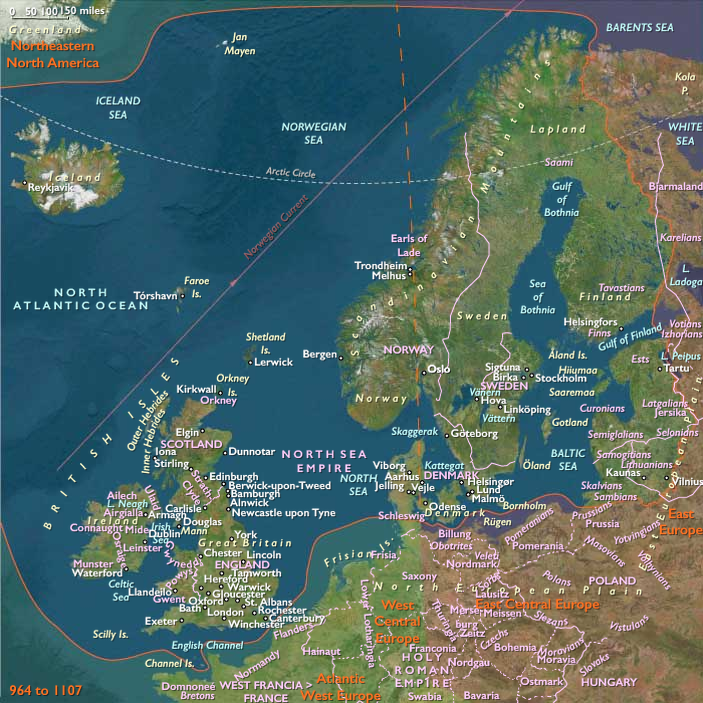
Scandinavian prince Harald (called the Ruthless), the son of Sigurd Sow (Syr), a chieftain in eastern Norway, and of Estrid, mother of the Norwegian king Olaf II Haraldsson, had fought at the age of fifteen against the Danes in 1030 at the celebrated Battle of Stiklestad, in which Olaf, his half-brother, was killed.
(known during his lifetime as Olaf the Fat, he will eventually be canonized as Saint Olaf).
Fleeing to Russia with a band of exiles, Harald had served under the grand prince of Kiev, Yaroslav I the Wise.
Having entered service under Michael and Zoë, Harald has led the elite mercenary unit known as the Varangian Guard to frequent victories in Bulgaria, Italy, Sicily, and North Africa, also penetrating to Jerusalem, to which city he is said to have made a pilgrimage.
Having amassed enormous treasure and fame as a warrior, he leaves Constantinople for Kiev in 1042, supposedly because he has been refused the hand of a princess (an apparently fictional niece or granddaughter of Zoe, called Maria).
Duklja defeats another imperial attack in 1042.
Constantinople had sent a "coalition" of vassal Slavic chiefs to fight Voislav, consisting of the Župan of Bosnia, Knez (Prince) Ljutovid of Zachlumia and the Župan of Raska.
Fine suggests that under imperial dominance, "Rascia" had in the 1040s emerged as yet another Serbian state (roughly centered on what is now southern Serbia and Kosovo.
Vojislav wins a great victory against his attackers.
He overthrows Ljutovid and places the region entirely under his control.
Duklja is undoubtedly the leading Slavic state.
Yaroslav stages a naval raid against Constantinople in 1043, led by his son Vladimir of Novgorod and his general Vyshata.
Although the Rus' navy is defeated, Yaroslav manages to conclude the war with a favorable treaty and prestigious marriage of his son Vsevolod to the emperor's daughter.
It has been suggested that the peace with Constantinople was so advantageous to the Kievans because they had succeeded in taking a key imperial possession in Crimea, Chersonesos Taurica.