Diego Velázquez
Spanish painter
Years: 1599 - 1660
Diego Rodríguez de Silva y Velázquez (June 6, 1599 – August 6, 1660) is a Spanish painter who is the leading artist in the court of King Philip IV.
He is an individualistic artist of the contemporary Baroque period, important as a portrait artist.
In addition to numerous renditions of scenes of historical and cultural significance, he paintis scores of portraits of the Spanish royal family, other notable European figures, and commoners, culminating in the production of his masterpiece Las Meninas (1656).
From the first quarter of the nineteenth century, Velázquez's artwork is to be a model for the realist and impressionist painters, in particular Édouard Manet.
Since that time, more modern artists, including Spain's Pablo Picasso and Salvador Dalí, as well as the Anglo-Irish painter Francis Bacon, have paid tribute to Velázquez by recreating several of his most famous works.
Related Events
Filter results
Showing 10 events out of 15 total
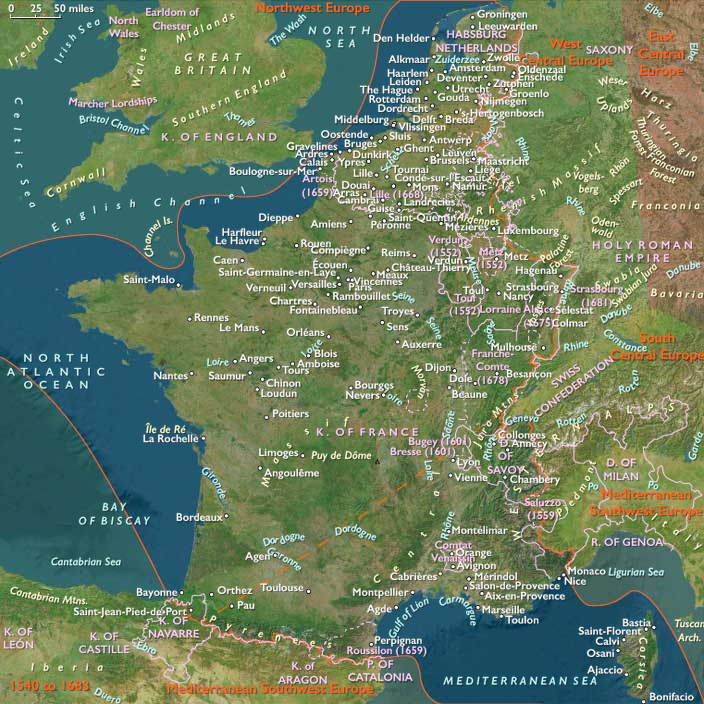
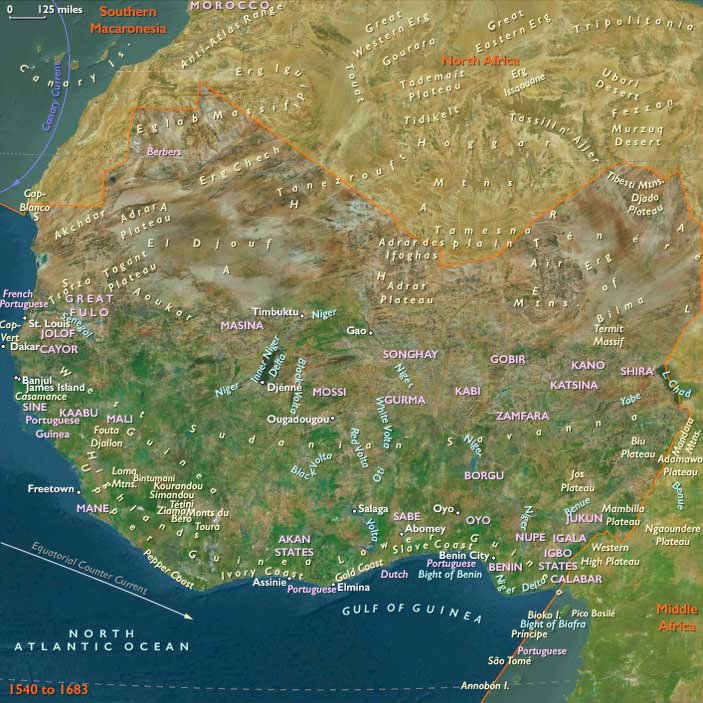
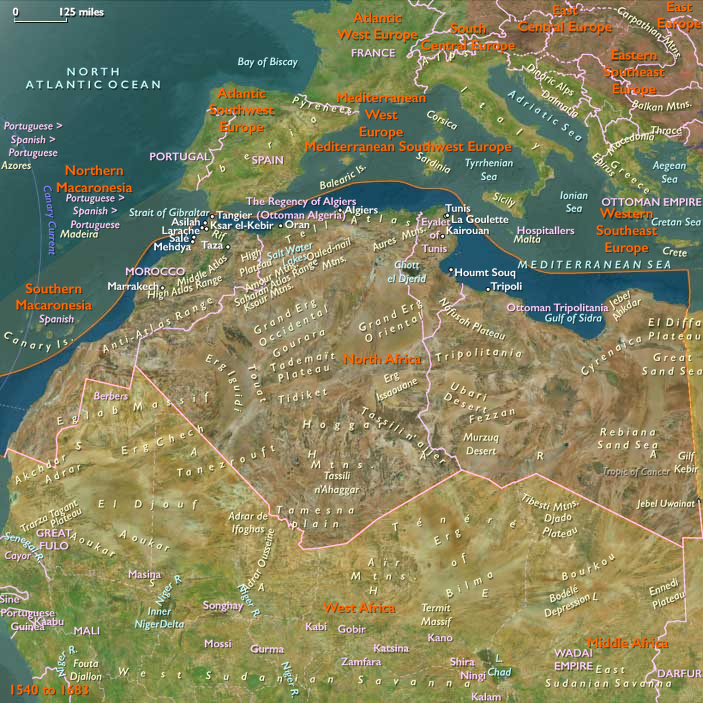
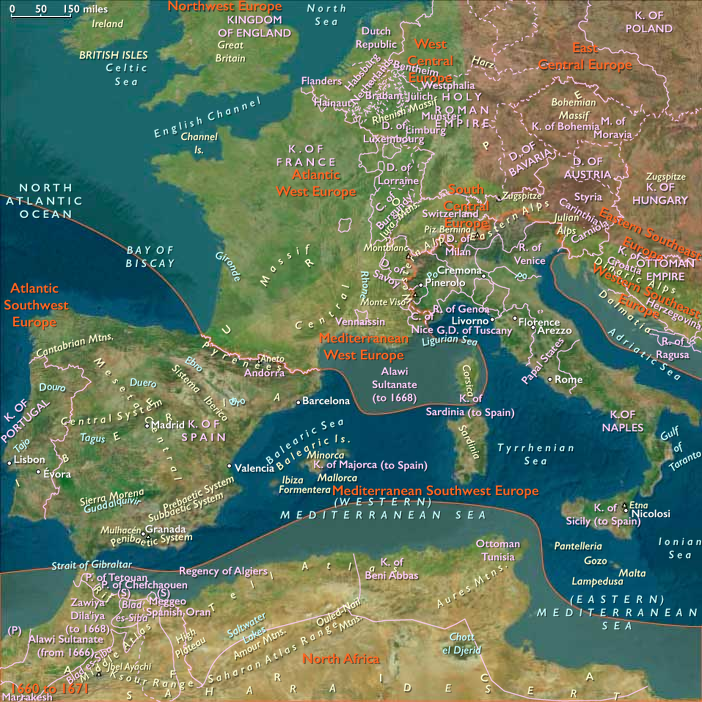
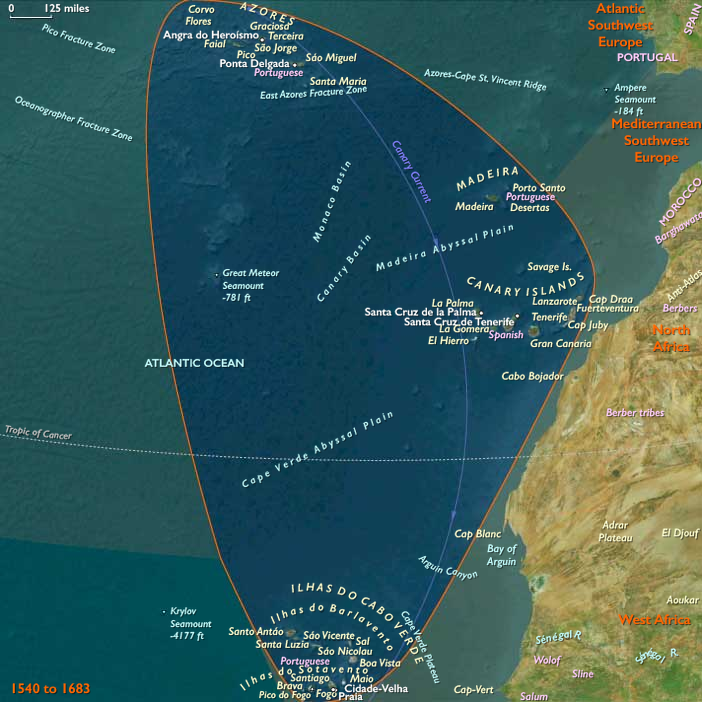
Atlantic Southwest Europe (1540–1683 CE): Political Transformation, Maritime Expansion, and Cultural Flourishing
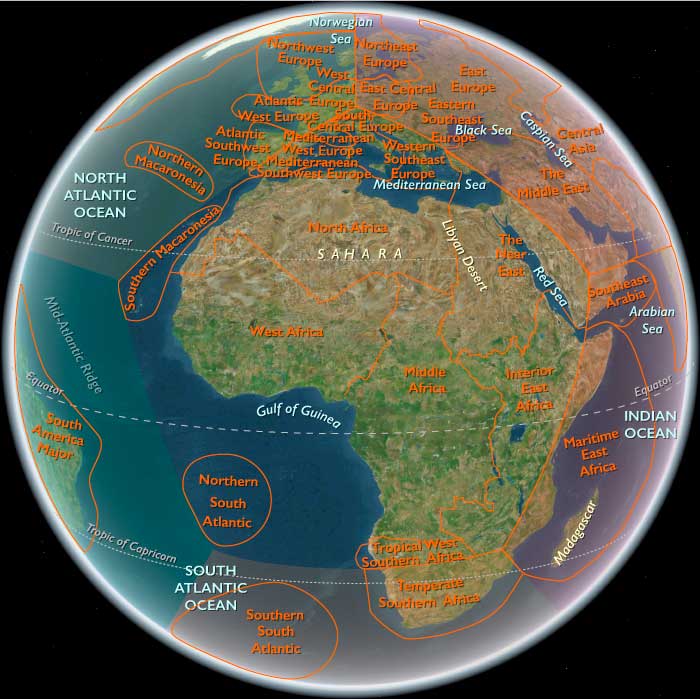
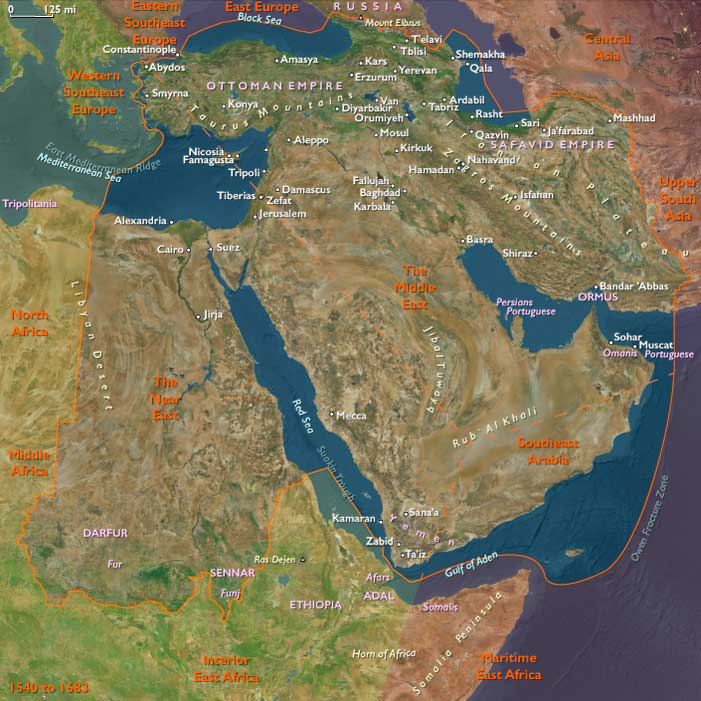
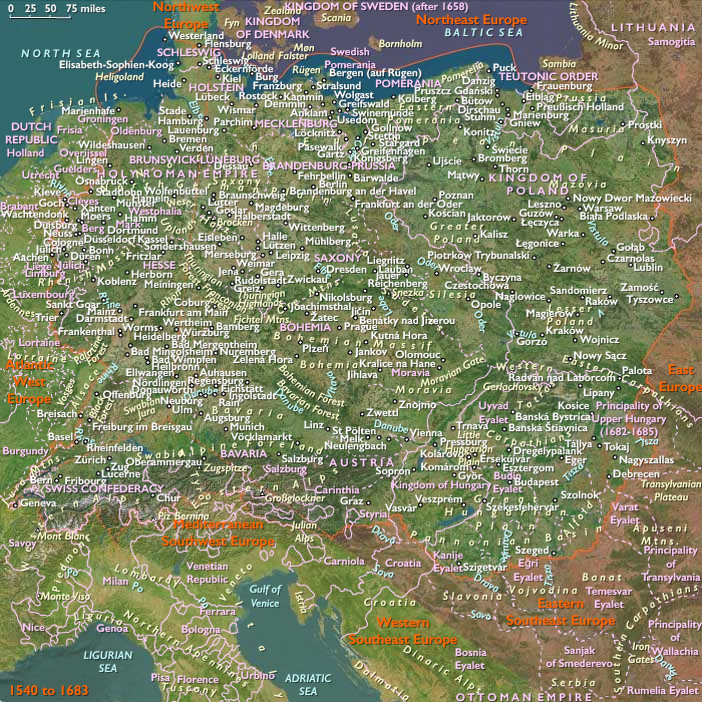
Between 1540 and 1683, Atlantic Southwest Europe—including northern and central Portugal (Lisbon and Porto), Galicia, Asturias, Cantabria, northern León and Castile, northern Navarre, northern Rioja, and the Basque Country—underwent a transformative era marked by political upheaval, economic prosperity through maritime commerce, intense religious reform, and dynamic cultural expression. The region developed distinctive identities deeply influenced by the Renaissance and later the Baroque era, significantly shaping its trajectory toward modernity.
Political and Military Developments
The Iberian Union and Portuguese Restoration
In 1580, Portugal’s succession crisis resulted in the Iberian Union (1580–1640) under the Spanish Habsburg monarchy. This union initially strained the economies of northern Portuguese cities, notably Porto and Lisbon, which experienced intensified taxation and restrictions on trade. Dissatisfaction intensified, culminating in Portugal’s successful Restoration of Independence (1640) led by King João IV (House of Braganza). This pivotal moment restored political autonomy and stability, revitalizing regional governance structures and economic dynamism.
Autonomy and Fueros in Northern Spain
Throughout this period, regions such as the Basque Country and Navarre staunchly defended their traditional fueros, which guaranteed local autonomy, taxation privileges, and self-governance. These institutions effectively insulated the northern territories from the Spanish Crown's centralizing policies, sustaining political stability even as Spain faced broader imperial challenges.
In contrast, Galicia, Asturias, and Cantabria were more integrated within Castilian governance yet retained significant local autonomy. Their administrative flexibility enabled them to balance central demands and local interests effectively.
Military Pressures and Regional Stability
Atlantic Southwest Europe occasionally found itself at the forefront of broader military conflicts, notably during England’s maritime confrontations with Spain and Portugal. Despite such external pressures—including the disastrous defeat of the Spanish Armada (1588), which deeply impacted Basque and Cantabrian ports—the region largely maintained internal stability, enabling sustained economic recovery and growth in subsequent decades.
Economic Developments: Maritime and Commercial Expansion
Portuguese Maritime and Commercial Prosperity
Northern and central Portugal, especially cities like Lisbon, Porto, and Viana do Castelo, benefited enormously from maritime trade expansion. Porto, in particular, flourished as international demand surged for Port wine from the Douro Valley, becoming a key commercial hub for exports to England and the Low Countries. Shipbuilding along the northern Portuguese coast simultaneously expanded, driven by this booming maritime economy.
Northern Spain’s Industrial and Maritime Growth
The Basque provinces and Cantabria witnessed substantial economic prosperity driven by industrial growth, particularly shipbuilding, iron production, fisheries, and robust maritime commerce. The city of Bilbao became a major iron exporter, enhancing its economic importance within European trade networks. Santander similarly prospered through increased transatlantic and northern European maritime trade.
Galicia notably revitalized its maritime economy with strengthened fishing industries and expanded commercial ties through ports like Vigo and A Coruña, reinforcing regional economic resilience.
Religious Developments: Counter-Reformation and Local Identity
Counter-Reformation Orthodoxy
Following the Council of Trent (1545–1563), Atlantic Southwest Europe firmly embraced Counter-Reformation Catholicism, reinforced by inquisitorial tribunals and revitalized ecclesiastical institutions. Cities such as Valladolid, Braga, Coimbra, Santiago de Compostela, and Pamplona became prominent centers of religious orthodoxy, significantly shaping local educational, cultural, and spiritual life.
Pilgrimage routes, notably the Camino de Santiago, experienced renewed popularity, underscoring regional religious identity and promoting cultural cohesion, especially in Galicia.
Influence of the Jesuits
The establishment of Jesuit colleges significantly impacted regional intellectual life, fostering robust Catholic education in cities like Lisbon, Coimbra, Porto, and Valladolid. These institutions contributed significantly to the region’s intellectual vitality, while simultaneously ensuring adherence to Counter-Reformation doctrine.
Cultural and Artistic Flourishing
Transition from Renaissance to Baroque
Initially influenced by Renaissance humanism, cities like Braga, Santiago de Compostela, Burgos, Bilbao, and Lisbon sponsored art and architecture that reflected classical ideals and humanist values. By the late sixteenth century, the Baroque aesthetic profoundly reshaped the region, with elaborate cathedrals, palaces, and public buildings adorning urban landscapes, exemplified by iconic structures in Braga, Lisbon, and Santiago.
Literary and Linguistic Vibrancy
The period witnessed a notable literary flourishing across languages—Portuguese, Castilian, and Galician—strengthening regional identities and promoting linguistic diversity. Literature often subtly asserted local pride, reflecting broader political and cultural autonomy movements emerging across the region.
Social and Urban Developments
Urban Expansion and Merchant Ascendancy
Significant urban growth characterized this era, driven by maritime commerce, industrial expansion, and the increasing wealth of merchant classes. Cities like Porto, Lisbon, Bilbao, Santander, and Vitoria-Gasteiz expanded substantially, providing enhanced infrastructure, vibrant marketplaces, and burgeoning civic institutions.
The rising merchant and artisan classes became influential in urban governance, shifting social structures toward increased social mobility, prosperity, and localized political power.
Strengthened Regional Autonomy and Identity
Throughout Atlantic Southwest Europe, particularly in the Basque Country, Navarre, Galicia, and northern Portugal, traditional rights (fueros) were persistently reaffirmed. These protections solidified local identities, empowering regional governance against centralized imposition from Madrid, ensuring sustained political resilience and autonomy.
Notable Regional Groups and Settlements
-
Portuguese (Central and Northern): Experienced political restoration, maritime prosperity, and cultural renaissance in cities like Lisbon and Porto.
-
Galicians and Asturians: Balanced maritime economic prosperity with persistent rural challenges, fostering strong regional identities.
-
Basques, Navarrese, and Cantabrians: Leveraged local autonomy for economic growth, maintaining distinctive political and cultural identities despite imperial pressures.
-
Northern Castilians and Riojans: Maintained effective local governance, contributing to regional stability despite broader Spanish imperial decline.
Long-Term Significance and Legacy
From 1540 to 1683, Atlantic Southwest Europe:
-
Achieved critical political transformations, notably Portugal’s restoration of independence and northern Spain’s affirmation of regional autonomy.
-
Experienced significant maritime and economic prosperity, firmly integrating the region into European and global trade networks.
-
Fostered vibrant cultural expressions through Renaissance humanism and Baroque aesthetics, enriching regional identities and artistic legacies.
-
Strengthened local governance structures, particularly via the preservation of fueros, ensuring lasting political stability and regional resilience.
This formative period profoundly influenced Atlantic Southwest Europe's historical trajectory, embedding a legacy of economic vibrancy, cultural distinctiveness, and enduring regional autonomy that would persist well beyond the seventeenth century.
Diego Velázquez, born in Seville, Andalusia, Spain, as the first child of Juan Rodríguez de Silva and Jerónima Velázquez, was baptized at the church of St. Peter in Seville on Sunday, June 6, 1599.
This christening must have followed the baby's birth by no more than a few weeks, or perhaps only a few days.
Velázquez's paternal grandparents, Diego da Silva and Maria Rodrigues, had moved to Seville from their native Porto, Portugal decades earlier.
As for Juan Rodríguez de Silva and his wife, both were born in Seville, and were married, also at the church of St. Peter, on 28 December 1597.
They came from the lesser nobility and were accorded the privileges generally enjoyed by the gentry.
Velázquez had been educated by his parents to fear God and, intended for a learned profession, had received good training in languages and philosophy.
Showing an early gift for art, he had consequently begun to study under Francisco de Herrera, a vigorous painter who disregarded the Italian influence of the early Seville school.
Velázquez had remained with him for one year; it was probably from Herrera that he had learned to use brushes with long bristles.
After leaving Herrera's studio when he was twelveyears old, Velázquez began to serve as an apprentice under Francisco Pacheco, an artist and teacher in Seville, who, although considered a generally dull, undistinguished painter, sometimes expressed a simple, direct realism in contradiction to the style of Raphael that he had been taught.
Velázquez will remain in Pacheco's school for five years, studying proportion and perspective and witnessing the trends in the literary and artistic circles of Seville.
The Old Woman Cooking Eggs, a genre painting produced by Velázquez during his Seville period (its date is not clearly defined but is considered to be around the turn of 1618, before his definitive move to Madrid in 1623), is now in the National Gallery of Scotland, in Edinburgh.
Velázquez frequently uses working-class characters in such early works, using his family as models in many cases: the old woman here also appears in his Christ in the House of Martha and Mary, painted in 1618).
La Mulata or Kitchen Maid with the Supper of Emmaus is one of the first known works by Velázquez, possibly begun at the end of 1617 or the start of 1618 and completed around 1623 in Seville.
It shows a mulatto kitchen maid, with the supper at Emmaus in the left background.
It is now in the National Gallery of Ireland in Dublin.
Another version, without the religious scene, is in the Art Institute of Chicago.
The Portrait of Philip IV in Armour, a portrait of Philip IV of Spain by Velázquez now in the Museo del Prado in Madrid, is one of the artist's most realistic portraits of Philip IV and is one of the first he produces after being made painter to the king in 1623.
Its style corresponds to the artist's beginnings in Seville and shows its subject in a sculptural style like a portrait bust, with abrupt color contrasts.
Philip IV of Spain is to become famous for his patronage of his court painter Diego Velázquez.
Velázquez originates from Seville and mutual contacts had caused him to become known in 1623 to Gaspar de Guzmán, Count Duke of Olivares, Philip’s principal minister, who comes from the same region; he is summoned to Madrid by the king in 1624.
Despite some jealously from the existing court painters, Velázquez rapidly becomes a success with Philip, being retained for the rest of his career until his death, painting a celebration of the Treaty of the Pyrenees for Philip.
The king and Velázquez share common interests in horses, dogs and art, and in private are to form an easy, relaxed relationship over the years.
Velázquez is to paint at least three portraits of Olivares, his friend and original patron, producing the baroque equestrian portrait along with the standing portraits now at the Hermitage and São Paulo.
Like many contemporaries, Olivares is 'haunted' by Spain's potential decline, and sees part of the solution at least in a reform of the Spanish state.
Olivares sees Catalonia and the other provinces as paying less to the crown than they should, and does not really understand why the inhabitants should object to a fairer distribution of taxes.
He is confident in the intellectual argument for a better defended, better ordered Spain, and never seems to have shown serious doubt that his plans would succeed, or understood the growing hatred against his rule.
These plans take form first in Olivares' Unión de Armas, or 'Union of Arms' concept, put forward in 1624.
This would have involved the different elements of Philip's territories raising fixed quotas of soldiers in line with their size and population.
Despite being portrayed by Olivares as a purely military plan, it reflects Olivares' desire for a more closely unified Spain—although not, it is generally argued, a completely unified kingdom.
Philip has clear intentions to try and control the Spanish currency, which had become increasingly unstable during the reign of his father and grandfather, but in practice, inflation has soared.
Partly this is because in 1627 Olivares had attempted to deal with the problem of Philip's Genoese bankers —who had proved uncooperative in recent years—by declaring a state bankruptcy.
With the Genoese debt now removed, Olivares hopes to turn to indigenous bankers for renewed funds.
In practice, the plan is a disaster.
The Spanish treasure fleet of 1628 is captured by the Dutch, and Spain's ability to borrow and transfer money across Europe declines sharply.
Velázquez had in 1629 gone to live in Italy for a year and a half.
Though his first Italian visit is recognized as a crucial chapter in the development of Velázquez's style—and in the history of Spanish Royal Patronage, since Philip IV sponsored his trip—we know rather little about the details and specifics: what the painter saw, whom he met, how he was perceived and what innovations he hoped to introduce into his painting.
During his stay in Rome, Velázquez had made various nude studies he uses in later paintings, such as Apollo at the Forge of Vulcan (1630) and Joseph's Tunic (1630).
Art critics assert that the study for his Christ Crucified, a frontal nude, is exceptional and masterly in its fusion of serenity, dignity and nobility.
The Spanish army was by the late 1620s no longer as dominant on the battlefield as it once had been.
The feared tercio regiments, composed of well-disciplined pikemen, are increasingly appearing inflexible and outmoded in the face of the new Swedish and Dutch formations with a higher proportion of musketeers.
Philip and Olivares have attempted to address the perceived weaknesses of the army, which they have concluded is primarily due to the falta de cabezas, or a lack of leadership.
In keeping with their wider agenda of renewing the concepts of duty, service and aristocratic tradition, the king has agreed to efforts to introduce more grandees into the higher ranks of the military, working hard to overcome the reluctance of many to take up field appointments in the Netherlands and elsewhere.
The results are not entirely as hoped.
The grandees dragooned into service in this way are disinclined to spend years learning the normal professional military skill set.
By the 1630s, the king is waiving the usual rules to enable promotion to higher ranks on a shorter timescale, and having to pay significant inflated salaries to get grandees to take up even these appointments.
Philip is also notable for his interest in the Spanish armada, or navy.
Shortly after taking power in 1621, he had begun to increase the size of his fleets, rapidly doubling the size of the naval budget from the start of his reign, then tripling it; Philip is credited with a 'sensible, pragmatic approach' to provisioning and controlling it.
He is prepared to involve himself in considerable details of naval policy -- he was commenting on the detail of provisions for the armada in 1630, for example.
Poussin has become acquainted with other artists in Rome and tends to befriend those with classicizing artistic leanings: the French sculptor François Duquesnoy who he had lodged with in 1626; the French artist Jacques Stella; Claude Lorraine; Domenichino; Andrea Sacchi.
He has joined an informal academy of artists and patrons opposed to the current Baroque style that has formed around Joachim von Sandrart.
At this time the papacy is Rome’s foremost patron of the arts.
Poussin’s Martyrdom of St. Erasmus for St. Peter’s is Poussin’s only papal commission, secured for him by Cardinal Barberini, the papal nephew, and Poussin will not be asked again to contribute major altarpieces or paint large scale decorations for a pope.
His subsequent career will depend on private patronage.
Apart from Cardinal Francesco Barberini, his first patrons include Cardinal Aluigi Omodei, for whom he produces around 1630 to 1632 the Triumphs of Flora (Louvre), Cardinal de Richelieu, who commissions various Bacchanals; Vincenzo Giustiniani, for whom he will paint the Massacre of the Innocents (uncertain early date, Museé Condé, Chantilly); Cassiano dal Pozzo, who is to become the owner of the first series of the Seven Sacraments (late 1630s, Belvoir Castle); and Paul Fréart de Chantelou, with whom Poussin, at the call of Sublet de Noyers, will return to France in 1640.
Diego Velázquez around 1650 paints a portrait of Juan de Pareja (1606-1670), a native of Seville and mulatto son of a female slave, primarily known as a member of the painter’s household and workshop. (He is also a painter in his own right; his 1661 work "The Calling of St. Matthew" (sometimes also referred to as "The Vocation of St. Matthew") is currently on display at the Museo del Prado in Madrid, Spain.)
As court painter to Philip IV of Spain in 1648, Velázquez had been sent to Rome to purchase works of art for the Alcázar in Madrid, and had brought Juan de Pareja with him.
During his stay in Rome, Velázquez executed this oil portrait, which is displayed on March 19, 1650, as part of a larger exhibition of paintings at the Pantheon.
According to Antonio Palomino's biography of Velázquez, the painting "was generally applauded by all the painters from different countries, who said that the other pictures in the show were art but this one alone was 'truth'."
Velázquez had painted the Juan de Pareja as an exercise in preparation for his official portrait of Pope Innocent X.
The Pope, a ruddy-faced man who would be depicted in the bright pink and crimson robes of his office, presents a tricky study in both color and composition.
Additionally, since he will be executing a portrait from life, Velázquez will be forced to work quickly while still capturing the essence of Innocent X's character.
The Juan de Pareja reflects Velázquez's exploration of the difficulties he is to encounter in the Pope's portrait.
To compensate for a restricted palette of colors, Velázquez has adopted a loose, almost impressionistic style of brushwork to bring an intense vitality to his subject—a style which will make both the Juan de Pareja and the subsequent portrait of Innocent X two of the most renowned paintings of his career.