Elagabalus
25th Emperor of the Roman Empire
Years: 203 - 222
Elagabalus (Latin: Marcus Aurelius Antoninus Augustus; ca.
203 – March 11, 222), also known as Heliogabalus, is Roman Emperor from 218 to 222.
A member of the Severan Dynasty, he is Syrian on his mother's side, the son of Julia Soaemias and Sextus Varius Marcellus.
Early in his youth he serves as a priest of the god El-Gabal at his hometown, Emesa.
Upon becoming emperor he takes the name Marcus Aurelius Antoninus Augustus andis called Elagabalus only after his death.
In 217, the emperor Caracalla is assassinated and replaced by his Praetorian prefect, Marcus Opellius Macrinus.
Caracalla's maternal aunt, Julia Maesa, successfully instigates a revolt among the Third Legion to have her eldest grandson, Elagabalus, declared emperor in his place.
Macrinus is defeated on June 8, 218, at the Battle of Antioch, upon which Elagabalus, barely fourteen years old, ascends to the imperial power and begins a reign that is marred by infamous controversies.
During his rule, Elagabalus shows a disregard for Roman religious traditions and sexual taboos.
He replaces the traditional head of the Roman pantheon, Jupiter, with a lesser god, Deus Sol Invictus (in Greek: Helios, hence the name Heliogabalos), and forces leading members of Rome's government to participate in religious rites celebrating this deity, which he personally leads.
Elagabalus is married as many as five times, lavishes favors on courtiers popularly assumed to have been his homosexual lovers, employs a prototype of whoopee cushions at dinner parties, and is reported to have prostituted himself in the imperial palace.
His reputed behavior infuriates the Praetorian Guard, the Senate and the common people alike.
Amidst growing opposition, Elagabalus, only 18 years old, is assassinated and replaced by his cousin Alexander Severus on March 11, 222, in a plot formed by his grandmother, Julia Maesa, and disgruntled members of the Praetorian Guard.
Elagabalus developed a reputation among his contemporaries for extreme eccentricity, decadence and zealotry which was likely exaggerated by his successors and political rivals.
This likely propaganda was passed on and, as a result, he was one of the most reviled Roman emperors to early historians.
Related Events
Filter results
Showing 10 events out of 14 total
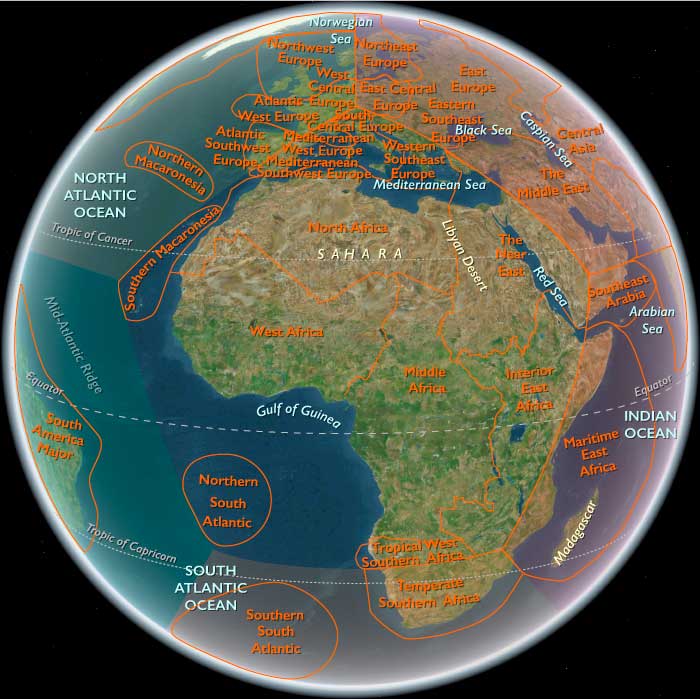
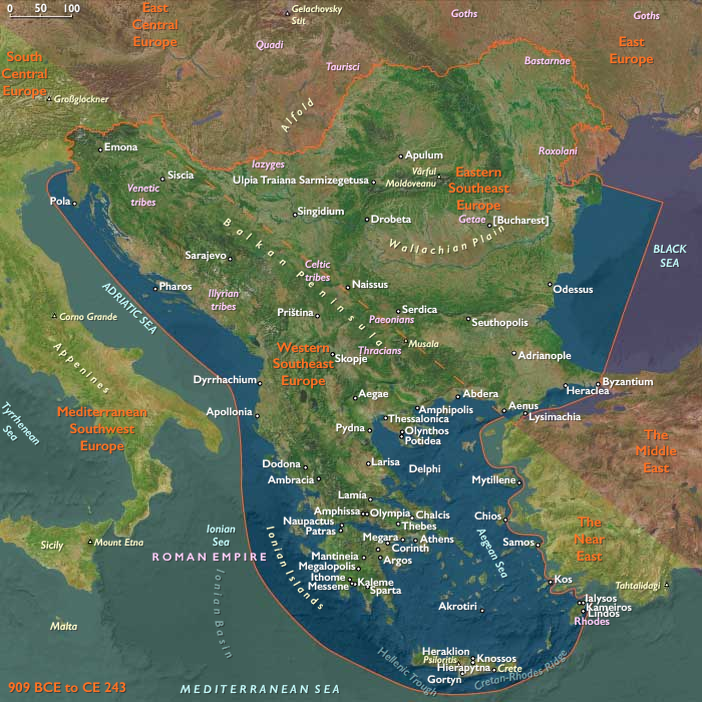
Mediterranean Southwest Europe (100–243 CE): Imperial Zenith, Cultural Flourishing, and Emerging Instability
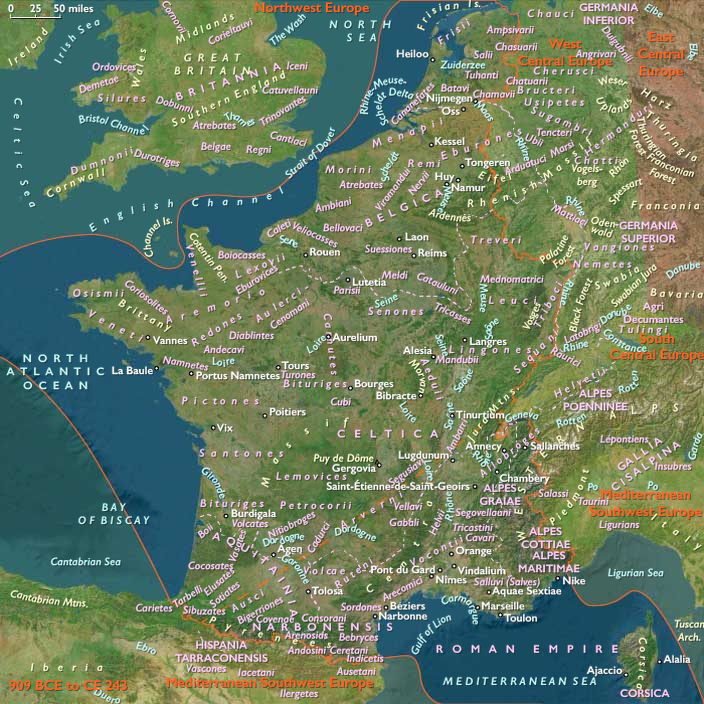
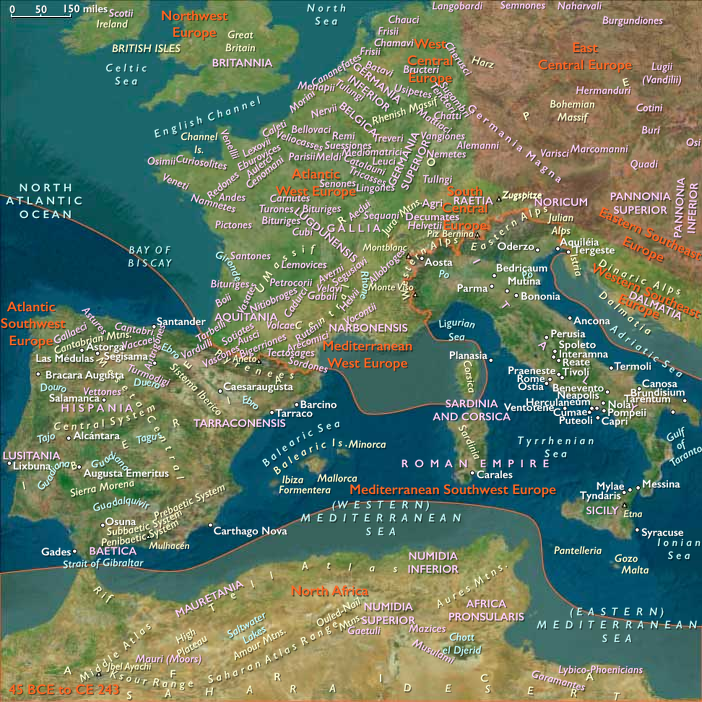
The age 100–243 CE in Mediterranean Southwest Europe—covering Italy, southern and eastern Iberia, Andorra, and the islands of the Western Mediterranean except Corsica—marks the peak and initial decline of Roman imperial power. The period witnesses remarkable territorial expansion, significant cultural contributions from prominent Hispano-Roman figures, intense religious debates, and escalating internal tensions that culminate in political crisis.
Trajan’s Golden Age and Imperial Expansion (100–111 CE)
Under Emperor Trajan (r. 98–117 CE), the Roman Empire reaches its territorial zenith, encompassing nearly five million square kilometers. Trajan, born in Hispania to a colonial Roman family, significantly strengthens the empire through military campaigns, particularly the Dacian Wars, extensive infrastructure projects, and judicial reforms. The Hispano-Roman elite increasingly contribute to Roman society, with the region fully integrated into the imperial structure by the end of the first century CE.
Cultural Reflections and Societal Critiques (112–123 CE)
The satirist Juvenal critically assesses Roman society, immortalizing phrases such as "bread and circuses" and "who will watch the watchers?" His writings underscore cultural introspection and societal concerns during a period of relative stability and economic growth.
Architectural and Cultural Innovations under Hadrian (124–135 CE)
Emperor Hadrian (r. 117–138 CE), another Hispano-Roman, significantly transforms Rome’s architectural landscape, notably with the Pantheon and the Temple of Trajan. Hadrian’s urban reforms and infrastructural projects underline a period of sustained prosperity and cultural patronage.
Continued Stability under Antoninus Pius (136–147 CE)
Hadrian's successor, Antoninus Pius, maintains administrative efficiency, judicial fairness, and regional prosperity. Infrastructure and cultural activities continue robustly, ensuring prolonged stability and intellectual vibrancy.
Religious Debates and Christian Expansion (148–159 CE)
During Pope Anicetus’s pontificate, Rome becomes a significant center for Christian theological debates, exemplified by Polycarp’s visit and discussions on Paschal observances. This era solidifies Christianity’s role as an increasingly influential intellectual and religious presence within Roman society.
Marcus Aurelius and Philosophical Flourishing (160–171 CE)
Emperor Marcus Aurelius (r. 161–180 CE), also of Hispano-Roman descent, embodies Stoic philosophy, producing his reflective masterpiece, Meditations. Concurrently, Christian intellectuals, notably Justin Martyr and Tatian, actively engage with Greek philosophical traditions, deeply influencing Christian theology and apologetics.
Marcus Aurelius’s Military and Philosophical Leadership (172–183 CE)
Marcus Aurelius balances philosophical pursuits with military responsibilities, particularly during the Marcomannic Wars. Cultural and artistic expressions, exemplified by intricately carved Roman sarcophagi, continue to thrive despite external challenges.
Commodus’s Decline and Imperial Instability (184–195 CE)
Commodus's troubled reign drastically destabilizes Rome through extravagance and erratic governance. His assassination precipitates a period of political upheaval, starkly contrasting with previous imperial stability.
Severan Dynasty’s Restoration and Economic Revival (196–207 CE)
Septimius Severus restores stability, consolidating military strength, implementing administrative reforms, and revitalizing the economy. His reign fortifies imperial borders and fosters continued regional prosperity.
Caracalla’s Citizenship Reform and Internal Struggles (208–219 CE)
Emperor Caracalla’s Constitutio Antoniniana profoundly reshapes Roman society, granting citizenship to nearly all free inhabitants. Despite internal tensions and familial strife, infrastructure projects and economic stability persist.
From Chaos to Stability under Alexander Severus (220–231 CE)
The turbulent reign of Elagabalus yields to Alexander Severus, whose moderate governance and judicial reforms stabilize the empire temporarily. His efforts maintain economic vitality and cultural activity despite rising external threats.
Late Severan Instability and the Third Century Crisis (232–243 CE)
Alexander Severus’s later reign faces significant military pressures, culminating in his assassination in 235 CE, which triggers the prolonged "Crisis of the Third Century." This period reveals deep vulnerabilities within the imperial structure.
Legacy of the Age
The period from 100–243 CE represents the Roman Empire at its apex, characterized by territorial expansion, cultural and intellectual achievements, and extensive contributions from Hispano-Romans like Trajan, Hadrian, Marcus Aurelius, Seneca, Lucanus, and Martial. Despite eventual instability, the advancements in governance, citizenship rights, infrastructure, and intellectual life during this era significantly influence Roman society, laying enduring foundations for European cultural and historical development.
Atlantic Southwest Europe (208–219 CE): Expanded Citizenship, Provincial Stability, and Cultural Integration under Severus and Caracalla
Between 208 and 219 CE, Atlantic Southwest Europe—encompassing northern and central Portugal, Galicia, Asturias, Cantabria, and northern Spain south of the Franco-Spanish border (43.05548° N, 1.22924° W)—continued its period of notable stability and prosperity under the latter reign of Emperor Septimius Severus (until 211 CE) and during the rule of Emperor Caracalla (211–217 CE), concluding with the short reign of Macrinus (217–218 CE) and the rise of Elagabalus in 218 CE. The era was profoundly shaped by Caracalla’s pivotal Constitutio Antoniniana (212 CE), which extended universal Roman citizenship, significantly altering local identities and civic integration. Indigenous cultures adapted dynamically within the increasingly integrated Roman social, economic, and political frameworks.
Political and Military Developments
Stability and Civic Transformation under Severan Administration
-
Provincial administration remained effective and stable under Septimius Severus and Caracalla, ensuring internal peace and regional prosperity. Administrative continuity, military garrisons, fortified towns, and urban infrastructure continued supporting effective governance.
-
The Constitutio Antoniniana of 212 CE significantly transformed provincial civic structures by granting universal Roman citizenship, profoundly accelerating social integration and reshaping local identities.
Northern Tribal Integration and Stability
-
Northern tribes, particularly the Gallaeci, Astures, and Cantabri, remained stable, prosperous, and fully integrated within Roman provincial governance, actively embracing the expanded citizenship rights and civic participation.
-
The Vascones continued preserving territorial autonomy, diplomatic neutrality, cultural distinctiveness, and internal stability despite broader civic changes.
Economic and Technological Developments
Sustained Economic Prosperity and Mediterranean Trade Integration
-
Atlantic Southwest Europe’s economy continued robustly, deeply integrated into Roman Mediterranean trade networks. Regional exports—including valuable metals (silver, copper, tin), agricultural products, salt, timber, textiles, livestock, and slaves—remained strong, while imports of luxury items, fine ceramics, wine, olive oil, and sophisticated metal goods continued enhancing local prosperity.
-
Provincial elites maintained substantial economic prosperity, reinforcing regional specialization, social stratification, and reliance on Mediterranean commerce.
Persistent Reliance on Slave Labor
-
Slavery remained deeply embedded within the regional economy, particularly in mining, agriculture, domestic labor, artisanal production, and urban infrastructure. The robust slave trade continued reinforcing slavery’s fundamental economic and social role.
Infrastructure and Technological Advancements
-
Continued investments in infrastructure, such as roads, aqueducts, public buildings, amphitheaters, temples, bridges, and ports, further improved provincial connectivity, economic efficiency, and urban life.
-
Technological innovation, especially in metallurgy, agriculture, and construction, continued enhancing productivity, craftsmanship, urban infrastructure, and regional prosperity.
Cultural and Religious Developments
Cultural Adaptation and Mature Artistic Expression
-
Material culture showcased ongoing integration of indigenous Iberian traditions, Celtic motifs, and dominant Roman artistic influences. Intricate metalwork, jewelry, fine pottery, ceremonial artifacts, and household objects continued reflecting resilient regional identities and cultural vitality.
-
Indigenous communities—particularly among Lusitanians, Gallaeci, Astures, Cantabri, and Vascones—remained culturally vibrant, dynamically adapting and integrating within the Roman provincial context.
Ritual Continuity and Religious Adaptation
-
Ritual traditions persisted actively, integrating indigenous Iberian, Celtic, and Roman religious elements. Sacred sites, temples, and communal ceremonies reinforced regional identities, cultural continuity, and local tribal cohesion.
-
Traditional ancestral rites, warrior ceremonies, and local festivals continued robustly, maintaining regional solidarity, identity, and cultural resilience within the stable Roman framework.
Universal Roman Citizenship: Constitutio Antoniniana (212 CE)
-
Caracalla’s landmark edict of universal Roman citizenship profoundly transformed civic identities in Atlantic Southwest Europe, formally integrating all free inhabitants into Roman citizenship. Local tribal distinctions gradually diminished in official contexts, significantly accelerating cultural and social integration into broader Roman identity, though informal cultural identities persisted strongly in rural and tribal communities.
Notable Tribal Groups and Settlements
-
Lusitanians: Further integrated civically and culturally into Roman provincial society following the universal citizenship decree, maintaining economic prosperity and regional identity.
-
Vettones and Vaccaei: Continued prosperous integration and civic participation, actively embracing Roman citizenship while maintaining localized cultural traditions.
-
Gallaeci, Astures, Cantabri: Fully integrated within provincial governance, economically thriving, and preserving local traditions amidst expanded Roman civic identity.
-
Vascones: Continued preserving territorial autonomy, diplomatic neutrality, cultural distinctiveness, and internal stability.
Long-Term Significance and Legacy
Between 208 and 219 CE, Atlantic Southwest Europe:
-
Experienced continued provincial stability, economic prosperity, and administrative effectiveness under Severan rule and Caracalla’s transformative civic policies.
-
Achieved profound civic integration through the Constitutio Antoniniana, substantially reshaping regional identities and integrating local societies more deeply into Roman citizenship frameworks.
-
Demonstrated enduring cultural resilience and adaptive integration, preserving indigenous identities and local traditions while simultaneously embracing expanded Roman civic identity and cultural influences.
This era decisively shaped Atlantic Southwest Europe’s historical trajectory, permanently integrating the region within the broader Roman civic, cultural, and administrative frameworks, setting lasting foundations for its future development within and beyond the Roman imperial context.
The surviving members of the Severan dynasty, headed by Julia Maesa (Caracalla's aunt) and her daughters, foster this discontent.
When Macrinus came to power, he suppressed the threat against his reign by the family of his assassinated predecessor by exiling them—Julia Maesa, her two daughters, and her eldest grandson Elagabalus—to their estate near Emesa in Syria, where the Severan women plot, with Julia Maesa’s eunuch advisor and Elagabalus' tutor Gannys, to place another Severan on the imperial throne.
They use their hereditary influence over the cult of sun-deity Elagabalus (the Latinized form of El-Gabal) to proclaim Soaemias' son Elagabalus (named for his family's patron deity) as the true successor to Caracalla.
The false rumor is spread by Elagabalus, with the assistance of the Severan women, that he is Caracalla's illegitimate son and thus the child of a union between first cousins.
He is therefore due the loyalties of Roman soldiers and senators who had sworn allegiance to Caracalla.
Born around the year 203, as Varius Avitus Bassianus to the family of Sextus Varius Marcellus and Julia Soaemias Bassiana, his father had initially been a member of the equestrian class, but had later been elevated to the rank of senator.
His grandmother Julia Maesa is the widow of the Consul Julius Avitus, the sister of Julia Domna, and the sister-in-law of emperor Septimius Severus.
Her daughter Julia Soaemias is a cousin of Caracalla.
Other relatives include his aunt Julia Avita Mamaea and uncle Marcus Julius Gessius Marcianus and their son Alexander Severus.
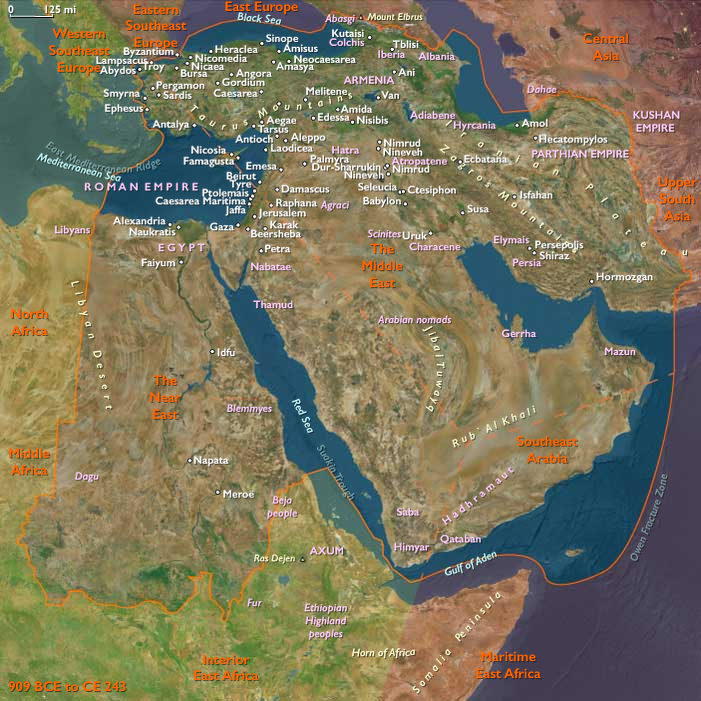
Elagabalus's family holds hereditary rights to the priesthood of the sun god El-Gabal, of whom Elagabalus is the high priest at Emesa (modern Homs) in Syria.
Elagabalus was initially venerated at Emesa.
The name is the Latinized form of the Syrian Ilāh hag-Gabal, which derives from Ilāh ("god") and gabal ("mountain"), resulting in "the God of the Mountain" the Emesene manifestation of the deity.
The cult of the deity had spread to other parts of the Roman Empire in the second century.
For example, a dedication has been found as far away as Woerden (Netherlands).
The god is later imported and assimilated with the Roman sun god, who was known as Sol Indiges in republican times and as Sol Invictus during the second and third centuries.
Macrinus' short reign, while important for its historical "firsts", is cut short due to the inability of this otherwise accomplished man to control or satisfy the soldiery.
After Julia Maesa displays her wealth to the Legio III Gallica at Raphana, they swear allegiance to Elagabalus.
At sunrise on May 16, 218, Publius Valerius Comazon Eutychianus, commander of the legion, declares him emperor.
To strengthen his legitimacy through further propaganda, Elagabalus assumes Caracalla's names, Marcus Aurelius Antoninus.
In response, Macrinus dispatches his Praetorian prefect Ulpius Julianus to the region with a contingent of troops he considers strong enough to crush the rebellion.
However, this force soon joins the faction of Elagabalus when, during the battle, they turn on their own commanders.
The officers are killed and Julianus' head is sent back to the emperor.
Macrinus now sends letters to the Senate denouncing Elagabalus as the False Antoninus and claiming he is insane.
Both consuls and other high ranking members of Rome's leadership condemn him, and the Senate subsequently declares war on both Elagabalus and Julia Maesa.
A force under Bassianus’s tutor Gannys marches on Antioch and engages a force under Macrinus Macrinus and his son, who, weakened by the desertion of the Second Legion due to bribes and promises circulated by Julia Maesa, are defeated on June 8, 218 at the Battle of Antioch.
Macrinus flees toward Italy, disguised as a courier, but is later intercepted near Chalcedon and executed in Cappadocia.
His son Diadumenianus, sent for safety to the Parthian court, is captured at Zeugma and also put to death.
The demise of Macrinus has reinforced the notion of the soldiers as the true brokers of power in the third-century empire and highlighted the importance of maintaining the support of this vital faction.
Elagabalus declares the date of the victory at Antioch to be the beginning of his reign and assumes the imperial titles without prior senatorial approval, which violates tradition but is a common practice among third-century emperors nonetheless.
Letters of reconciliation are dispatched to Rome extending amnesty to the Senate and recognizing the laws, while also condemning the administration of Macrinus and his son.
The senators respond by acknowledging Elagabalus as emperor and accepting his claim to be the son of Caracalla.
Caracalla and Julia Domna are both deified by the Senate, both Julia Maesa and Julia Soaemias are elevated to the rank of Augustae, and the memory of Macrinus and Diadumenianus is condemned and vilified by the Senate.
The former commander of the Third Legion, Comazon, is appointed to be commander of the Praetorian Guard.
Elagabalus and his entourage spend the winter of 218 in Bithynia at Nicomedia, where the emperor's religious beliefs first manifest themselves as a problem.
The contemporary historian Cassius Dio suggests that Gannys was in fact killed by the new emperor because he was forcing Elagabalus to live "temperately and prudently."
To help Romans adjust to the idea of having an oriental priest as emperor, Julia Maesa has a painting of Elagabalus in priestly robes sent to Rome and hung over a statue of the goddess Victoria in the Senate House.
This places senators in the awkward position of having to make offerings to Elagabalus whenever they make offerings to Victoria.
The legions, dismayed at his behavior, quickly come to regret their decision to have him supported as emperor.
While Elagabalus is still on his way to Rome, brief revolts break out by the Fourth Legion, at the instigation of Gellius Maximus, and by the Third Legion, which itself had been responsible for the accession of Elagabalus as emperor, under command of Senator Verus.
The rebellion is quickly struck down, and the Third Legion disbanded.
Comazon and other allies of Julia Maesa and Elagabalus are given powerful and lucrative positions in the autumn of 219 when the new emperor’s entourage reaches Rome, much to the outrage of many senators who do not consider them to be respectable.
After Comazon's tenure as Praetorian prefect, he will serve as the city prefect of Rome three times, and as consul twice.
Elagabalus soon devalues the Roman currency, decreasing the silver purity of the denarius from 58% to 46.5%—the actual silver weight dropping from 1.82 grams to 1.41 grams.
He also demonetized the antoninianus during this period in Rome.
Elagabalus tries to have his presumed lover, the charioteer Hierocles, declared Caesar, while another alleged lover, the athlete Aurelius Zoticus, is appointed to the non-administrative but influential position of Cubicularius.
His offer of amnesty for the Roman leadership is largely honored, though the jurist Ulpian is exiled.
The relationships between Julia Maesa, Julia Soaemias, and Elagabalus are strong, at first.
His mother and grandmother become the first women to be allowed into the Senate, and both received senatorial titles: Soaemias the established title of Clarissima and Maesa the more unorthodox Mater Castrorum et Senatus.
While Julia Maesa tries to position herself as the power behind the throne and subsequently the most powerful woman in the world, Elagabalus will prove to be highly independent, set in his ways, and impossible to control.
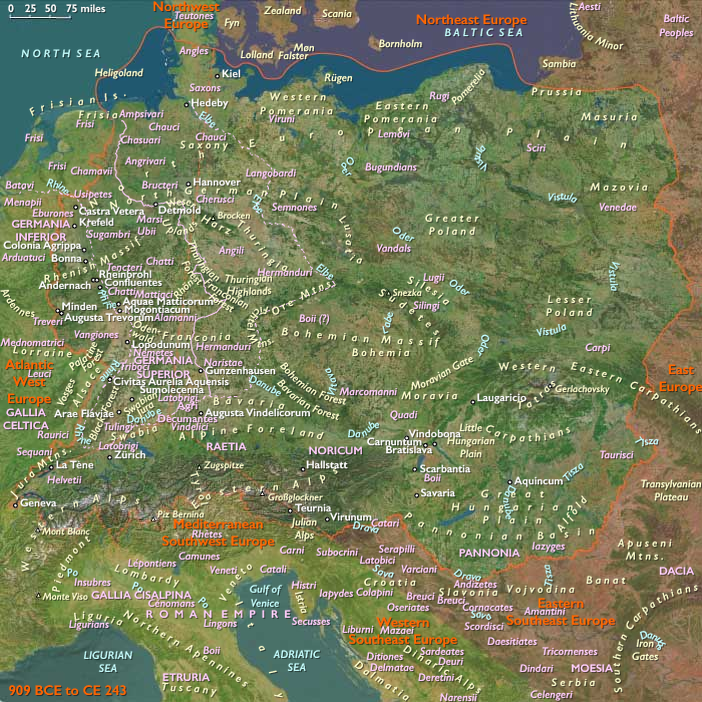
East Central Europe (220–231 CE): Emerging Frontier Pressures and Shifting Tribal Dynamics
Between 220 and 231 CE, East Central Europe—encompassing Poland, Czechia, Slovakia, Hungary, and those portions of Germany and Austria lying east of 10°E and north of a line stretching from roughly 48.2°N at 10°E southeastward to the Austro-Slovenian border near 46.7°N, 15.4°E—experienced growing pressures along the Roman frontier. The previously stable frontier under the Severan dynasty (193–235 CE) began encountering signs of strain due to increasing internal Roman instability, shifting tribal alliances, and intensified diplomatic complexity among Germanic and Sarmatian neighbors, including the Marcomanni, Quadi, Iazyges, and other emerging groups.
Political and Military Developments
Emerging Frontier Challenges
-
After the stable reigns of Severan emperors, Roman provinces along the Danube—Pannonia Superior, Pannonia Inferior, and Noricum—began experiencing heightened pressures from neighboring tribal communities.
-
Internal political uncertainty within the Roman Empire under emperors like Elagabalus (218–222 CE) and Severus Alexander (222–235 CE) weakened Roman frontier administration, increasing vulnerabilities.
Increased Diplomatic Complexity
-
Diplomatic interactions became increasingly complex, with tribes such as the Marcomanni, Quadi, and Iazyges adopting more assertive postures, seeking advantageous terms as Roman strength appeared uncertain.
-
New tribal alliances and power shifts among Germanic and Sarmatian groups gradually reshaped frontier relationships, creating a more fluid diplomatic landscape.
Economic and Technological Developments
Moderate Economic Strain
-
While cross-border trade continued, the region’s economic prosperity faced moderate disruptions resulting from growing frontier uncertainties and occasional tribal tensions. Roman goods (metalwork, pottery, textiles, glass) remained central in trade exchanges but required increased military escort or protection, reflecting new regional challenges.
Continued Frontier Infrastructure
-
Despite challenges, the Romans maintained and continued strengthening their defensive frontier infrastructure—fortifications, roads, and communications—though at a reduced pace compared to previous eras.
Cultural and Artistic Developments
Adapting Cultural Expressions
-
Cultural and artistic activities reflected changing regional dynamics, with increased emphasis on defensive, military, and protective motifs in artifacts. Artisans adapted to uncertainties, producing durable, practical, and defensively oriented objects.
Persistent Cultural Integration
-
Roman and tribal communities continued cultural interactions despite emerging challenges, maintaining productive exchanges and synthesis in craftsmanship and material culture.
Settlement and Urban Development
Frontier Fortification Adjustments
-
Roman frontier towns (Carnuntum, Vindobona, Aquincum) experienced modest expansion and further fortification adjustments, responding to increased frontier threats and uncertainty.
Adaptive Tribal Settlements
-
Germanic and Sarmatian communities adjusted settlement patterns, fortifying and strategically positioning villages to better respond to potential instability and future conflicts.
Social and Religious Developments
Strengthened Tribal Leadership
-
Tribal leadership became increasingly assertive and militarily focused in response to emerging Roman weaknesses and frontier uncertainties. Warrior elites gained prominence through preparations for potential future conflict.
Religious Practices Reflecting Uncertainty
-
Tribal religious practices emphasized protective rites and communal solidarity rituals, responding culturally to the growing instability and uncertainty along the frontier.
Long-Term Consequences and Historical Significance
The period from 220 to 231 CE signaled an important shift in East Central Europe, marking the gradual erosion of Severan-era stability and the beginnings of a new phase of frontier challenges. Increased internal Roman instability and shifting tribal dynamics began reshaping the region’s political, economic, and social conditions, setting the stage for intensified frontier pressures and tribal migrations that would profoundly influence subsequent eras.
Mediterranean Southwest Europe (220–231 CE): Severan Challenges and the Rise of Alexander Severus
The era 220–231 CE in Mediterranean Southwest Europe encompasses a period of political instability, imperial transitions, and attempts at administrative consolidation under the Severan dynasty. This era witnesses the chaotic rule of Elagabalus, followed by the more stable and reform-oriented leadership of Alexander Severus.
Elagabalus’s Controversial Reign
In 218 CE, Elagabalus, a young relative of the Severan dynasty, ascends to power through a military uprising. His reign (218–222 CE) is marked by religious controversy and personal eccentricities, significantly undermining imperial authority and senatorial respect. His promotion of the Syrian deity Elagabal and scandalous behavior lead to widespread political dissatisfaction and instability.
Transition to Alexander Severus
Elagabalus’s turbulent rule ends abruptly with his assassination in 222 CE, after which his cousin Alexander Severus becomes emperor. Alexander, despite his youth, quickly proves a more capable and moderate ruler, restoring relative stability and initiating comprehensive administrative and legal reforms.
Administrative and Legal Reforms under Alexander Severus
Alexander Severus’s reign (222–235 CE) is characterized by efforts to reinforce central administration, improve judicial fairness, and reduce corruption. He relies on capable advisors, notably the influential jurist Ulpian, whose extensive contributions to Roman law help refine and stabilize imperial governance.
Economic Stabilization and Infrastructure Development
Under Alexander Severus, Mediterranean Southwest Europe experiences renewed economic vitality. His administration invests substantially in infrastructure, enhancing urban development, roads, and public amenities. Such initiatives support continued regional commerce, trade expansion, and provincial prosperity.
Cultural and Intellectual Continuity
Cultural activities flourish, sustaining Rome’s artistic and intellectual vitality. Artistic expressions, particularly detailed sculptural works and public monuments, continue to thrive. Philosophical and theological discussions within the region's vibrant Christian communities persist, reflecting ongoing intellectual engagement and religious development.
Religious Dynamics and Early Christianity
Christian communities remain active and influential, increasingly integrating philosophical and theological traditions. This period sees sustained growth and consolidation of Christian identity, supported by ongoing intellectual debates and doctrinal refinement, reinforcing Christianity's evolving role within the broader Roman cultural context.
Legacy of the Era
The era 220–231 CE highlights the challenges of imperial governance, marked by the abrupt transition from Elagabalus’s chaotic reign to Alexander Severus’s more measured leadership. Alexander's administrative reforms, judicial enhancements, and economic stabilization efforts significantly influence the empire's trajectory, offering temporary relief from political volatility and reinforcing the Severan dynasty’s complex legacy in Mediterranean Southwest Europe.
Atlantic Southwest Europe (220–231 CE): Civic Consolidation, Continued Prosperity, and Cultural Adaptation under the Later Severans
Between 220 and 231 CE, Atlantic Southwest Europe—including northern and central Portugal, Galicia, Asturias, Cantabria, and northern Spain south of the Franco-Spanish border (43.05548° N, 1.22924° W)—continued to experience relative provincial stability, economic resilience, and cultural adaptation during the turbulent reigns of Emperors Elagabalus (218–222 CE) and Severus Alexander (222–235 CE). Although imperial Rome faced growing internal instability, the region remained relatively insulated, benefiting from established provincial administration, continued civic consolidation following Caracalla’s citizenship edict, and robust economic and cultural vitality.
Political and Military Developments
Stable Provincial Administration Amid Imperial Instability
-
Despite increasing political instability at the imperial core under Elagabalus and Severus Alexander, Atlantic Southwest Europe maintained stable, effective provincial governance. Established administrative structures, permanent military garrisons, fortified towns, and well-developed infrastructure ensured regional cohesion, internal peace, and efficient governance.
-
Local civic elites, now fully integrated Roman citizens after Caracalla’s Constitutio Antoniniana (212 CE), played increasingly pivotal roles in provincial administration, effectively insulating the region from broader imperial uncertainties.
Northern Tribes: Continued Stability and Civic Integration
-
Northern tribal territories—including the Gallaeci, Astures, and Cantabri—remained stable and prosperous under provincial governance, actively embracing Roman citizenship and civic responsibilities while preserving local identities.
-
The Vascones continued successfully maintaining territorial autonomy, diplomatic neutrality, cultural distinctiveness, and internal stability within provincial rule.
Economic and Technological Developments
Continued Economic Prosperity and Mediterranean Integration
-
Atlantic Southwest Europe maintained its robust economic vitality and remained deeply integrated into Roman Mediterranean trade networks. Regional exports—precious metals (silver, copper, tin), agricultural products, salt, timber, textiles, livestock products, and slaves—continued actively, alongside imports of luxury goods, fine ceramics, wine, olive oil, and sophisticated iron products.
-
Provincial elites remained economically prosperous, reinforcing regional economic specialization, social stratification, and sustained reliance upon Mediterranean commerce.
Persistent Reliance on Slave Labor
-
Slavery remained fundamental to regional economic structures, prominently employed in mining, agriculture, domestic labor, artisanal crafts, and urban construction. The ongoing slave trade continued to reinforce slavery’s central economic and social role.
Infrastructure and Technological Advancements
-
Investments in provincial infrastructure, including roads, aqueducts, public buildings, amphitheaters, temples, bridges, and port facilities, continued enhancing regional connectivity, economic efficiency, and urban amenities.
-
Technological innovations in metallurgy, agriculture, and construction continued enhancing productivity, artisanal craftsmanship, urban infrastructure, and overall regional prosperity.
Cultural and Religious Developments
Mature Cultural Integration and Artistic Continuity
-
Material culture continued showcasing a dynamic synthesis of indigenous Iberian traditions, Celtic motifs, and dominant Roman artistic influences. Intricate metalwork, jewelry, fine pottery, ceremonial artifacts, and household objects demonstrated resilient regional identities and ongoing cultural vitality.
-
Indigenous communities—particularly the Lusitanians, Gallaeci, Astures, Cantabri, and Vascones—remained culturally robust, creatively adapting local traditions and integrating these within the Roman provincial context.
Ritual Continuity and Religious Adaptation
-
Ritual traditions continued actively, blending indigenous Iberian, Celtic, and Roman religious practices. Sacred sites, temples, ritual landscapes, and communal ceremonies reinforced regional identity, cultural cohesion, and local tribal solidarity.
-
Traditional ancestral rites, warrior ceremonies, and local festivals endured robustly, maintaining social solidarity, regional identity, and cultural resilience within stable Roman governance.
Consolidation of Roman Citizenship and Civic Identity
-
Following universal Roman citizenship granted by Caracalla’s Edict (212 CE), civic identities became firmly consolidated within Roman administrative and social frameworks. While formal tribal distinctions began fading from administrative records, strong local identities and customs persisted culturally, especially in rural areas.
Notable Tribal Groups and Settlements
-
Lusitanians: Fully integrated civically and culturally, maintaining economic prosperity, vibrant local identities, and robust participation in provincial governance.
-
Vettones and Vaccaei: Maintained regional prosperity, stability, and local autonomy through active civic participation and cooperation within Roman provincial structures.
-
Gallaeci, Astures, Cantabri: Continued prosperous integration into provincial governance, actively preserving local identities and cultural traditions alongside Roman civic identity.
-
Vascones: Successfully preserved autonomy, diplomatic neutrality, territorial integrity, and distinct cultural identity.
Long-Term Significance and Legacy
Between 220 and 231 CE, Atlantic Southwest Europe:
-
Maintained remarkable provincial stability, economic vitality, and effective governance despite broader imperial instability at Rome.
-
Experienced sustained economic prosperity and integration within Mediterranean trade networks, deeply embedding slavery as an essential economic institution.
-
Consolidated civic integration following universal citizenship, dynamically preserving indigenous cultural traditions while firmly integrating into Roman social and administrative structures.
This era significantly reinforced Atlantic Southwest Europe’s historical legacy as a stable, economically resilient, culturally adaptive province within the Roman Empire, setting lasting foundations for regional identities and cultural dynamics in subsequent centuries.