
Emperor Taiwu of Northern Wei
emperor of the Chinese/Xianbei dynasty Northern Wei
408 CE to 452 CE
Emperor Taiwu of Northern Wei (408–452), personal name Tuoba Tao, nickname Foli, is an emperor of the Chinese/Xianbei dynasty Northern Wei.
He is generally regarded as a capable ruler, and during his reign, Northern Wei roughly doubles in size and unites all of northern China, thus ending the Sixteen Kingdoms period and, together with the southern dynasty Liu Song, starts the Southern and Northern Dynasties period of Chinese history.
He is a devout Taoist, under the influence of his prime minister Cui Hao, and in 444, at Cui Hao's suggestion and believing that Buddhists had supported the rebellion of Gai Wu, he orders the abolition of Buddhism, at the penalty of death.
This is the first of the Three Disasters of Wu for Chinese Buddhism.
Late in his reign, his reign begins to be cruel, and his people are also worn out by his incessant wars against Liu Song.
In 452, he is assassinated by his eunuch Zong Ai, who puts his son Tuoba Yu on the throne but then assassinates Tuoba Yu as well.
The other officials overthrow Zong and put Emperor Taiwu's grandson Tuoba Jun (son of Tuoba Huang the Crown Prince, who had predeceased him) on the throne as Emperor Wencheng.
World
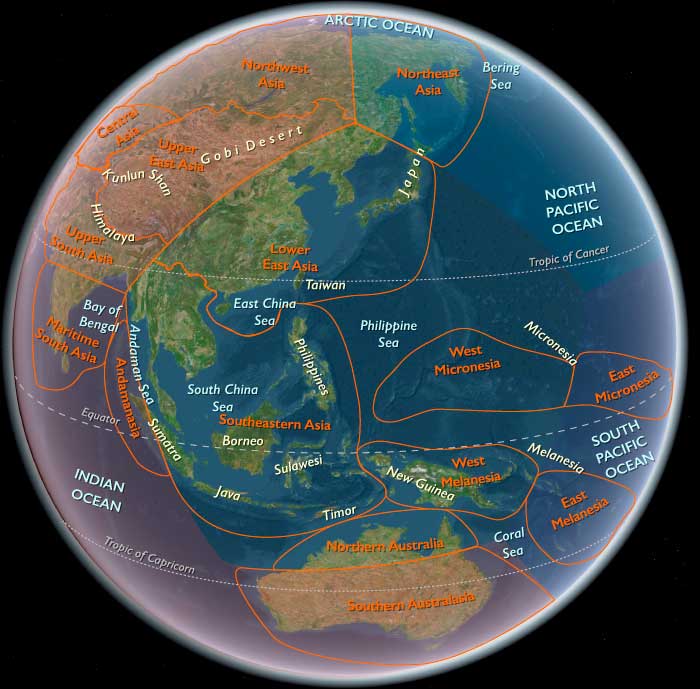
The Far East
View →Related Events
Showing 10 events out of 38 total
Emperor Mingyuan's wife Consort Yao had died in 420, and he posthumously honored her as an empress.
The Emperor suffers a major illness in 422, apparently caused by medicines that alchemists had given him that were supposedly capable of extending life spans.
He consults Cui Hao on what he should do to prepare for events after his death.
Cui Hao predicts that he will recover, but advises him to create his oldest son, fourteen-year-old Tuoba Tao, the Prince of Taiping, crown prince, then transfer some of the authorities to the crown prince so that his own burdens could be lessened.
Baba Song also agrees, and Emperor Mingyuan creates Tuoba Tao crown prince, and further has Crown Prince Tao take the throne to serve as the secondary emperor.
He commissions his key advisors Baba, Cui, Daxi Jin, Anchi Tong, Qiumuling Guan, and Qiudun Dui to serve as the Crown Prince's advisor.
From this point, Crown Prince Ta rules on most matters, particularly domestic matters, while Emperor Mingyuan himself only rules on important matters.
Later in 422, after hearing about the death of Liu Yu (who had seized the Jin throne in 420 and established Liu Song), Emperor Mingyuan breaks off relations with Liu Song and calls his council, informing the advisors that he plans to attack and seize three major cities south of the Yellow River from Liu Song—Luoyang, Hulao, and Huatai, despite Cui's opposition.
He commissions Daxi as the commander of the forced to attack Liu Song.
Daxi first puts Huatai under siege, but after he is unable to capture it quickly, Emperor Mingyuan personally led an army south to aid Daxi.
He also has Crown Prince Tao lead an army to the northern border, to guard against a Rouran attack.
Huatai then falls.
Daxi now approaches Hulao and Luoyang.
Meanwhile, Emperor Mingyuan also sends the generals E Qing, Lü Dafei, Pu Ji, and Yizhan Jian east, capturing several prefectures in modern western Shandong.
However, while other cities in Song's Qing Province (modern central and eastern Shandong) fall as well, the Northern Wei forces are unable to capture the capital of Qing Province, Dongyang (in modern Qingzhou, Shandong), and are eventually forced to withdraw after food supplies run out and a large number of soldiers grow ill.
Emperor Mingyuan also starts a major building project in 423—the building of a wall on the northern borders to defend against Rouran attacks.
Emperor Mingyuan dies in winter 423, and Crown Prince Tao takes the throne as Emperor Taiwu.
Northern Wei forces also stall in their siege of Hulao, defended by the capable Liu Song general Mao Dezu, but are meanwhile able to capture Luoyang and Xuchang (in modern Xuchang, Henan) in spring 423, cutting off the path of any Liu Song relief force for Hulao.
In summer 423, Hulao falls.
The campaign then ceases, with Northern Wei now in control of much of modern Henan and western Shandong.
Emperor Mingyuan soon after the Chinese/Xianbei Northern Wei dynasty had captured most of modern Henan from the Liu Song dynasty, and his son Tuoba Tao had succeeded to the throne as Emperor Taiwu.
Mouhanheshenggai Khan, Yujiulü Datan, has heard of Mingyuan's death.
anhe Rouran, a confederation of nomadic tribes on the northern borders of China Proper, had attacked almost immediately.
Taiwu had engaged Rouran troops, and been surrounded by them on the very first engagement, but he had fought his way out of danger.
He initiates near-annual attacks against the Rouran, and each year, Rouran forces will continue to elude him by retreating north, only to return south after he withdraws.
Taiwu had become a devout Taoist soon after taking the throne, and it is around this time that the Taoist reformer Kou Qianzhi becomes well-known: the prime minister Cui Hao, who becomes a follower of Kou, often praises him before the Emperor.
Taiwu is pleased by Kou's prophecies, which imply that he is divine in origin, and he officially endorses Kou's proselytization of his state.
Emperor Taiwu reestablishes peaceful relations with Liu Song in 425.
Emperor Taiwu begins in 426 to seek a target for a concentrated attack, asking his officials for their opinions on whether to attack Xia or the Rouran.
His officials are divided in their opinions, some proposing Northern Yan as a third alternative, although after hearing of the death of the Xia emperor Helian Bobo, the emperor settles on Xia.
When the senior official Baba Song opposes this, the intemperate emperor has his guards pound Baba's head on the floor, but does not demote him.
He now sends Daxi Jin to attack …
…Puban (in modern Yuncheng, Shanxi), and …
…Pu Ji to attack Shancheng (in modern Sanmenxia, Henan), …