
Emperor Taizu of Song
Emperor of the Northern Song Dynasty
927 CE to 976 CE
Zhao Kuangyin (927–976), formally Emperor Taizu, is the founder and the 1st emperor of ancient China's Song Dynasty.
Originally a military general under the Later Zhou Dynasty, he stages a coup d'état in 960 and forces the young Emperor Gongdi of Later Zhou to abdicate power, forming the Song Dynasty which he rules until his death.
During his reign, he conquers the kingdoms of Southern Tang, Later Shu, Southern Han and Jingnan, thus reunifying most of China proper and effectively ending the tumultuous Five Dynasties and Ten Kingdoms period.
To strengthen his control, he lessens the power of influential military generals, keeping his country intact.
He is succeeded by Emperor Taizong, his younger brother who had possibly murdered him for the throne.
World
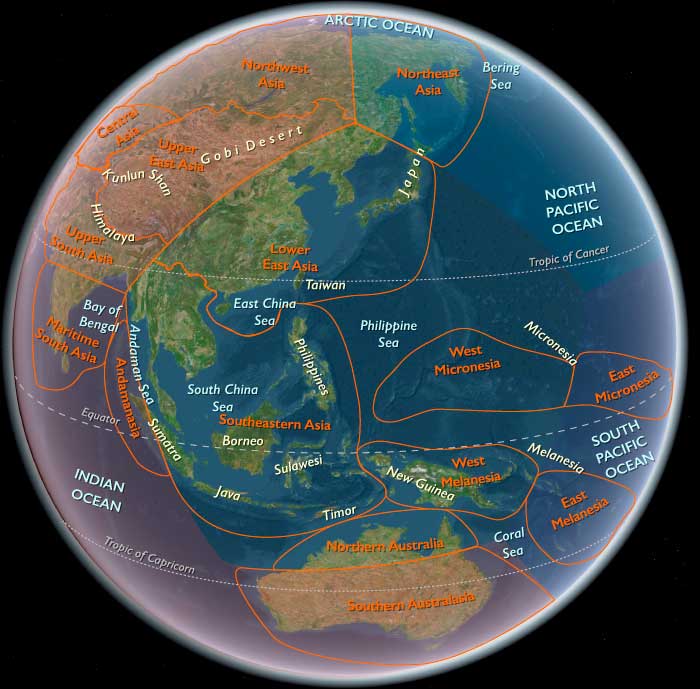
The Far East
View →Related Events
Showing 7 events out of 7 total
Northern Song armies invade the Later Shu Kingdom and force it to surrender in 965.
Crossbow fire from Song Dynasty troops soundly defeats the war elephant corps of the Southern Han at Shao.
The Southern Han state is forced to submit to the Song Dynasty, ending not only Southern Han rule, but also the first regular war elephant corps employed in a Chinese army that had gained the Southern Han victories throughout the tenth century.
The Later Zhou Dynasty had been the last of the Five Dynasties that had controlled northern China after the fall of the Tang Dynasty in 907.
Zhao Kuangyin, later known as Emperor Taizu, had usurped the throne with the support of military commanders, initiating the Song Dynasty.
Upon taking the throne in 960, his first goal had been the reunification of China after half a century of political division.
This included the conquests of Nanping, Wu-Yue, Southern Han, Later Shu, and Southern Tang in the south as well as the Northern Han and the Sixteen Prefectures in the north.
During the first couple decades of rule, relations between the Song and the Liao dynasty, a Khitan empire in northern China that rules over the regions of Manchuria, Mongolia, and parts of northern China proper, have been relatively peaceful, the two outstanding issues of the Northern Han—the remnant of the Later Han Dynasty that had been toppled in 950—and Sixteen Prefectures—a disputed region in northern China stretching from present-day Beijing westward to Datong—notwithstanding.
The two begin exchanging embassies on New Years Day, 974.
However, this peace is an illusion as the Song state is more concerned with consolidating the south.
With capable military officers, the Song military has become the dominant force in China.
Techniques of warfare such as defending supply lines across floating pontoon bridges have led to success in battle; such is the case in the Song assault against the Southern Tang state while crossing the Yangtze River in 974.
Emperor Taizu, who has established the core Song Ancestor Rules and Policy for future emperors, has expanded the examination system such that most of the civil service are recruited through the exams (in contrast to the Tang where less than ten percent of the civil servants had come through exams).
He has also created academies that allow a great deal of freedom of discussion and thought, which facilitate the growth of scientific advance, economic reforms as well as achievements in arts and literature.
He is perhaps best known for weakening the military and so preventing anyone else rising to power as he did.
The Song army has crisscrossed China, conquering one kingdom after another; the Southern Tang kingdom falls in 975.
Within two decades, the Song state has been able to incorporate the southern kingdoms into its realm, unifying nearly all of traditional Chinese lands.
Southern Tang poet-king Li Yu, reportedly virtuous and skilled in letters, calligraphy, and painting, has passed his idyllic life in his palace in Nanjing (Nanking), reading Buddhist texts, drinking with his officials, and watching dancing girls.
Following his kingdom’s defeat by the Song in 975, he is imprisoned in the Song capital, and begins writing a series of lyrically beautiful poems in the ci style (forty-five of which survive) expressing his deep longing for the life that could no longer be.
The Yueleu Academy is founded in 976, the ninth year of the Song Dynasty under the reign of Emperor Taizu; it is to become one of four most renowned shuyuan (academies of higher learning).
Zhang Sixun, although innovative, builds upon the efforts of those before him.
The Han Dynasty era scientist and engineer Zhang Heng (CE 78-139) had invented the first hydraulic-powered (i.e.
with waterwheel and clepsydra) armillary sphere.
In addition, the Tang Dynasty era Buddhist monk and engineer Yi Xing (683-727) had invented the first hydraulic-powered armillary sphere that incorporated the escapement mechanism, yet Zhang Sixun has applied some innovative ideas of his own in order for his hydraulic-powered armillary sphere to function.
His astronomical armillary sphere and clock is much like that of the later statesman Su Song (1020-1101), incorporating the scoop-bearing driving-wheel and gearing, together with 19 clock jacks to report and sound the hours.
His device also employs the use of liquid mercury in the closed circuit of the clepsydra and waterwheel instead of water, because water would freeze easily during winter, while mercury could assure smooth and continual function and timekeeping during the cold season.
Later Ming Dynasty clocks will have the same concern in mind when they employ the use of falling sand grains to push the wheel drive.
The later Su Song will write that after Zhang's death, no one could replicate what he had achieved, much like with Su Song himself and his astronomical clock tower after his own death.