Farouk of Egypt
King of Egypt and the Sudan
Years: 1920 - 1965
Farouk I (February 11, 1920 – March 18, 1965) is the tenth ruler of Egypt from the Muhammad Ali dynasty and the penultimate King of Egypt and the Sudan, succeeding his father, Fuad I, in 1936.
His full title is "His Majesty Farouk I, by the grace of God, King of Egypt and the Sudan".
He is overthrown in the Egyptian Revolution of 1952, and forced to abdicate in favor of his infant son, Ahmed Fuad, who succeeds him as Fuad II.
Farouk dies in exile in Italy in 1965.
His sister, Princess Fawzia Fuad, is the first wife and consort of the Shah of Iran, Mohammad Reza Pahlavi.
Related Events
Filter results
Showing 10 events out of 16 total
Four matters are "absolutely reserved to the discretion" of the British government until agreements concerning them can be negotiated: the security of communications of the British Empire in Egypt; the
defense of Egypt against all foreign aggressors or interference, direct or indirect; the protection of foreign interests in Egypt and the protection of minorities; and Sudan.
Sultan Ahmad Fuad becomes King Fuad I, and his son, Faruok, is named as his heir.
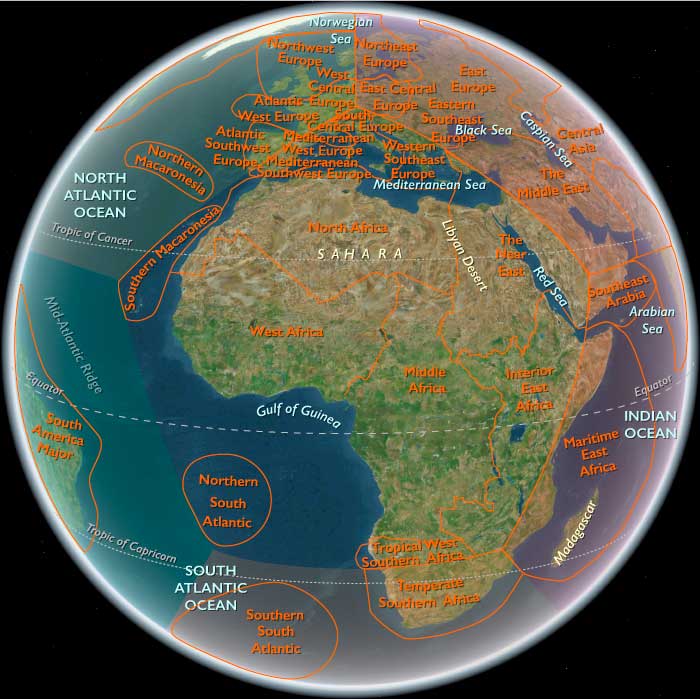
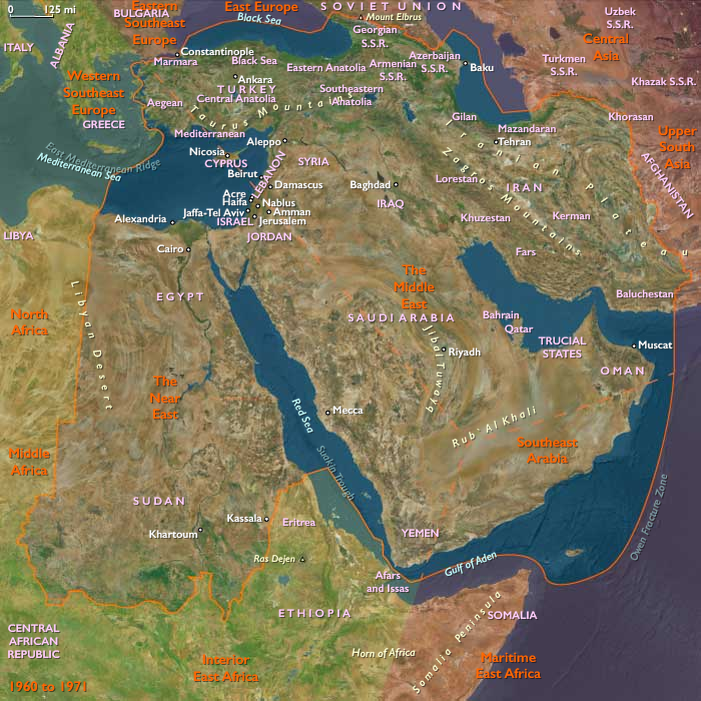
The Near East, 1936 to 1947 CE: Escalating Nationalism, War, and Shifting Alliances
Egyptian Nationalism and Political Turmoil
Political tensions escalate dramatically in Egypt from 1936 onward. Prime Minister Ismail Sidky, previously a key opponent of the nationalist Wafd Party, negotiates with the British to withdraw troops from Egyptian cities, although the status of Sudan remains unresolved, sparking further nationalist agitation. Sidky's resignation in December 1946 leads to Mahmoud El Nokrashy becoming Prime Minister, who unsuccessfully appeals to the United Nations over Sudanese sovereignty. His demand for British evacuation and renegotiation of the 1936 Anglo-Egyptian Treaty triggers widespread anti-British demonstrations and violence in Cairo and Alexandria.
During the Second World War, British strategic interests dominate Egyptian politics. In 1942, facing Axis advances under General Erwin Rommel, the British compel King Farouk to appoint Wafdist leader Mustafa Nahhas as Prime Minister. This incident starkly illustrates British dominance and erodes the Wafd Party's credibility, already weakened by allegations of corruption from former member Makram Ubayd.
Emergence of Militant Nationalist Organizations
As mainstream nationalist parties like the Wafd lose popularity, more radical groups gain prominence. Young Egypt, established in 1933 by Ahmad Husayn, promotes a militant nationalism infused with fascist elements, including admiration for Nazi Germany. Its paramilitary wing, the Green Shirts, openly opposes British influence.
Meanwhile, the Muslim Brotherhood, founded by Hasan al Banna in 1928, grows significantly, advocating an Islamic revivalist state based on early Islamic principles. The Brotherhood organizes cells nationwide and develops a secret apparatus to conduct underground activities. These movements represent a new political landscape characterized by militancy and ideological rigor.
British-Egyptian Relations and the Second World War
The 1936 Anglo-Egyptian Treaty permits Britain to maintain military bases in the Suez Canal Zone, solidifying its strategic presence while exacerbating nationalist sentiments. Although nominally ending British capitulations and foreign judicial privileges, the treaty's limitations spur widespread discontent, weakening the Wafd Party.
The outbreak of the Second World War transforms Egypt into a strategic asset for Britain, although Egyptians view the conflict primarily as a European issue. British authorities closely manage Egyptian neutrality, particularly as Axis victories initially mount. The Sudan Defence Force (SDF) expands its role, notably contributing to Allied victories against Italian forces in East Africa and participating in the successful North African campaign.
Sudanese Nationalism and Administrative Reforms
Sudanese nationalism intensifies post-war, driven by the educated elite. The Graduates' General Conference in 1942 submits demands for self-determination and administrative reforms, rejected initially but subsequently prompting the British colonial administration to consider greater Sudanese participation in governance. In response to ongoing nationalist pressures, the British further modernize indirect rule and administrative structures, gradually preparing Sudan for self-governance.
Intensifying Conflict in Palestine
In Palestine, the mid-1930s see sharply increased violence due to heightened Arab resistance to Jewish immigration and Zionist settlement efforts. Adolf Hitler’s rise in Germany drives unprecedented numbers of Jewish refugees toward Palestine, leading to major violence, notably the Arab-Jewish riots of 1936. These conflicts lead the British to impose stricter immigration controls, exacerbating tensions.
The Nazi persecution in Europe profoundly impacts Palestine, with immigration reaching record highs in 1935. Arab fears that Palestine will become predominantly Jewish fuel significant resistance, shaping the region's increasingly volatile demographic and economic landscape.
Legacy of the Era: Prelude to Decolonization and Ongoing Strife
From 1936 to 1947, the Near East is shaped by rising nationalist fervor, World War II upheavals, and deepening colonial tensions. Britain's presence in Egypt and Sudan remains a focal point of nationalist struggle, as Egyptians and Sudanese intensify demands for complete sovereignty. In Palestine, the conflict between Arabs and Jews enters a more violent and irreversible stage, laying the foundations for future regional turmoil.
The Middle East (1948–1959): Independence, Conflict, and Cold War Alignments
The era from 1948 to 1959 dramatically reshapes the political landscape of the Middle East, marked by the establishment of new states, the eruption of intense conflicts, and the region’s growing strategic importance amid Cold War rivalries. This period sees the founding of Israel, a surge in Arab nationalism, and major shifts in geopolitical alliances, all of which have profound long-term consequences.
Establishment of Israel and the Arab-Israeli Conflict
In 1947, the United Nations proposes partitioning British-mandated Palestine into separate Jewish and Arab states, igniting fierce Arab opposition. On May 14, 1948, the State of Israel declares independence, immediately triggering the 1948 Arab-Israeli War, as neighboring Arab states—including Egypt, Syria, Jordan, Iraq, and Lebanon—launch attacks aiming to prevent Israel's establishment.
Despite initial setbacks, Israel emerges victorious, expanding its territory beyond the original UN partition boundaries. Jordan takes control of the West Bank and East Jerusalem, while Egypt occupies the Gaza Strip. The conflict results in the mass displacement of over 700,000 Palestinian Arabs, marking the beginning of the Palestinian refugee crisis.
Armistice agreements in 1949 do not lead to peace; instead, a fragile ceasefire prevails. Tensions persist, shaping Arab-Israeli relations for decades.
Egypt and the Rise of Nasser
The early 1950s see a nationalist revolution in Egypt. In July 1952, a military coup led by Colonel Gamal Abdel Nasser overthrows King Farouk, abolishing Egypt’s monarchy and establishing a republic in 1953. Nasser rapidly rises as Egypt's foremost leader, championing Arab nationalism, anti-imperialism, and economic reform.
In 1956, Nasser nationalizes the Suez Canal, previously controlled by British and French interests, to finance the construction of the Aswan High Dam. Britain, France, and Israel respond with the Suez Crisis (1956), launching a coordinated invasion to retake control. International pressure, particularly from the United States and Soviet Union, forces the invading powers to withdraw, dramatically elevating Nasser’s prestige as a symbol of Arab resistance against colonialism and Western interference.
Syria and Lebanon: Political Instability and Emerging Nationalism
In Syria, the early independence period is turbulent, with frequent military coups and shifting governments. Syrian politics become increasingly radicalized, influenced by Arab nationalism, socialism, and a growing alignment with the Soviet Union. In 1958, Syria briefly unites with Egypt to form the United Arab Republic (UAR) under Nasser’s leadership, reflecting widespread Arab nationalist aspirations. However, the union proves short-lived due to internal disagreements, eventually dissolving in 1961.
In contrast, Lebanon experiences relative stability in the early 1950s but faces rising internal tensions by the decade’s end. The influx of Palestinian refugees after 1948 alters Lebanon’s delicate sectarian balance, increasing internal strain. President Camille Chamoun’s pro-Western stance in the late 1950s triggers unrest, culminating in the 1958 Lebanese crisis. U.S. Marines intervene militarily to support Chamoun, stabilizing the situation temporarily but highlighting Lebanon’s vulnerability to regional and sectarian pressures.
Iraq: Monarchy, Revolution, and the Emergence of the Republic
Iraq initially remains a conservative monarchy closely aligned with Britain. However, growing dissatisfaction with economic inequalities, British influence, and the monarchy’s pro-Western policies lead to mounting nationalist agitation.
In July 1958, a military coup led by General Abd al-Karim Qasim overthrows the Hashemite monarchy, brutally killing King Faisal II and his family. Iraq becomes a republic under Qasim, who institutes land reform, expands social welfare, and distances Iraq from Western alliances. Although initially popular, Qasim faces fierce internal struggles between Arab nationalist factions (including Ba'athists) and communists, foreshadowing further turmoil.
Iran: Mossadegh, Oil Nationalization, and the 1953 Coup
Iran in the early 1950s is dominated by nationalist leader Prime Minister Mohammad Mossadegh, who in 1951 nationalizes the British-owned Anglo-Iranian Oil Company, sparking a severe international crisis. Britain and the United States, concerned by Mossadegh’s increasingly independent policies and potential Soviet influence, orchestrate a covert operation (Operation Ajax) in 1953, removing Mossadegh and reinstating Shah Mohammad Reza Pahlavi’s autocratic rule.
The Shah consolidates his power, aligning firmly with Western interests, especially the United States. Though initially stabilizing Iran’s economy and securing Western support, this event sows deep resentment, fueling anti-Western sentiment and laying groundwork for future revolutionary movements.
Turkey and NATO Membership
Amid increasing Cold War tensions, Turkey moves decisively toward the West, joining the North Atlantic Treaty Organization (NATO) in 1952. This strategic alignment provides Turkey with military security and substantial U.S. economic aid. NATO membership firmly places Turkey as a critical Western ally bordering the Soviet Union, influencing regional dynamics significantly during the Cold War.
Saudi Arabia and the Gulf States: Rising Oil Revenues
The Arabian Peninsula experiences profound economic transformations during this era due to oil discoveries and exports. Saudi Arabia, under King Saud (1953–1964), rapidly expands infrastructure and development projects financed by burgeoning oil revenues. Saudi Arabia's geopolitical importance rises dramatically, becoming a key Western ally and an influential voice in Arab politics.
Smaller Gulf states such as Kuwait, Qatar, and Bahrain also benefit from increased oil revenues, transforming from impoverished sheikhdoms into wealthy states. These countries continue under British protection, maintaining traditional tribal governance structures but modernizing their economies rapidly.
Jordan: Consolidation under King Hussein
Jordan, having annexed the West Bank after the 1948 war, faces a significant Palestinian population and rising nationalist sentiment. King Hussein, ascending the throne in 1952, stabilizes his rule by balancing British and American support with domestic political reforms, carefully navigating regional tensions. Despite persistent challenges, Jordan emerges as a relatively stable monarchy in a volatile region.
Legacy of the Era (1948–1959)
The years between 1948 and 1959 leave an enduring legacy on Middle Eastern geopolitics. The establishment of Israel and subsequent Arab-Israeli conflict define regional hostilities for decades. The rise of assertive Arab nationalism, particularly under Nasser, reshapes political ideologies throughout the Arab world, challenging Western dominance. Iran’s pivotal 1953 coup plants seeds of future revolutionary upheaval, while oil wealth transforms the Arabian Peninsula into a global economic center. Amid Cold War dynamics, Turkey’s NATO membership and strategic alignments further polarize regional politics, embedding global tensions within local conflicts. The complex interplay of nationalism, colonial legacies, and superpower rivalry profoundly reshapes the Middle East, influencing regional and global politics for generations.
Although there are individual heroic acts of resistance, the army does not perform well, and nothing can disguise the defeat or mitigate the intense feeling of shame.
After the war, there are scandals over the inferior equipment issued to the military, and the king and government are blamed for treacherously abandoning the army.
Albania’s former King Zog, formally deposed in absentia in 1946 and having temporarily moved to Egypt, has become friends with King Farouk while he ponders the serious question of where an ex-monarch can live.
The United States and British intelligence organizations are working with Zog and the fanatic mountain men of his personal guard by 1949.
They have recruited Albanian refugees and émigrés from Egypt, Italy, and Greece, and trained them in ...
Nahas introduces, and Parliament approves, decrees abrogating unilaterally the Anglo-Egyptian
Treaty of 1936 and proclaiming Farouk king of Egypt and Sudan in October 1951.Egypt exults, with newspapers proclaiming that Egypt has broken "the fetters of British imperialism."
The Wafd government gives way to pressure from the Brotherhood and leftist groups for militant opposition to the British.
"Liberation battalions" are formed, and the Brotherhood and auxiliary police are armed.
Food supplies to the Suez Canal Zone are blocked, and Egyptian workers are withdrawn from the base.
A guerrilla war against the British in the Suez Canal Zone is undertaken by students and the Brotherhood.