Feodor I of Russia
last Rurikid Tsar of Russia
Years: 1557 - 1598
Fyodor (Theodore) I Ivanovich or Feodor I Ioannovich (May 31, 1557 – Januar y16/17 (NS) 1598), also known as Feodor the Bellringer, is the last Rurikid Tsar of Russia (1584–1598).
Feodor's mother dies when he is three, and he grows up in the shadow of his father, Ivan the Terrible.
A pious man of retiring disposition, Feodor takes little interest in politics, and the country is effectively administered in his name by Boris Godunov, the brother of his beloved wife Irina.
His childless death leaves the Rurikid dynasty extinct, and spurs Russia's descent into the catastrophic Time of Troubles.
In Russian documents, Feodor is sometimes called blessed.
He is also listed in the "Great Synaxaristes" of the Orthodox Church, with his feast day on January 7 (OS).
Related Events
Filter results
Showing 5 events out of 5 total
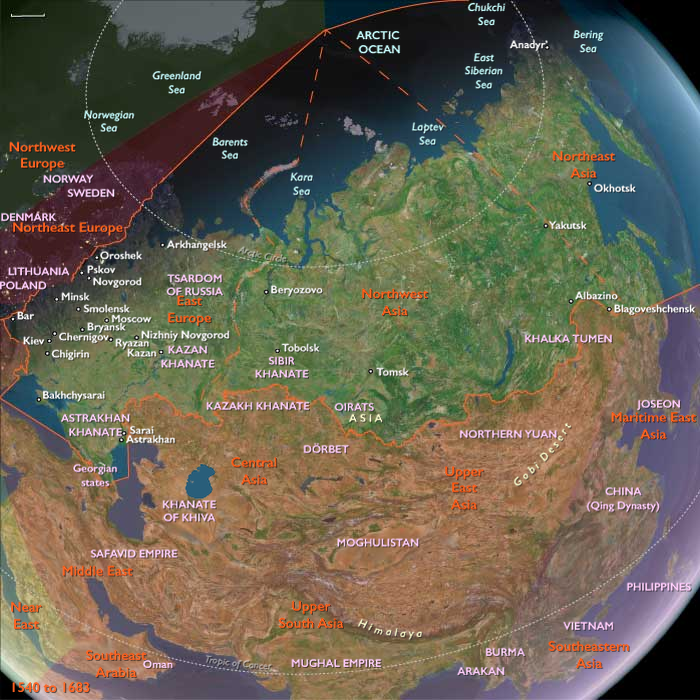
East Europe (1588–1599 CE): Muscovite Stability and Administrative Reforms
Political and Military Developments
Consolidation of Central Authority
From 1588 to 1599 CE, Muscovy further consolidated central authority, stabilizing governance following previous decades of turmoil. Tsar Feodor I’s reign, guided significantly by his regent Boris Godunov, saw strengthened administrative reforms aimed at enhancing political stability and efficiency.
Continued Territorial Integration
The integration and administration of diverse territories, particularly those involving ethnic groups such as the Bashkirs and other Ural and Volga populations, remained a priority. Diplomatic engagements and military presence ensured relative peace and administrative coherence across these regions.
Economic and Technological Developments
Sustained Economic Revival
Economic growth continued steadily, bolstered by robust trade along vital routes such as the Volga River and international commerce. Urban centers, notably Moscow, benefited from improved trade conditions and economic resilience.
Technological and Military Advancements
Military enhancements persisted, focusing on fortification improvements, refined siege tactics, and advancements in cavalry operations. These developments significantly bolstered Muscovy’s defensive capabilities and regional stability.
Cultural and Artistic Developments
Flourishing Cultural Patronage
Cultural and artistic patronage continued under Tsar Feodor I, facilitating the growth of architectural projects, religious artwork, and secular cultural initiatives. These activities contributed significantly to the Muscovite cultural identity and heritage.
Vibrant Intellectual Environment
Intellectual and literary productivity flourished, with chroniclers and scholars actively recording and analyzing the political, religious, and social developments. This scholarly activity maintained historical continuity and enriched Muscovy’s intellectual heritage.
Settlement Patterns and Urban Development
Urban Expansion and Development
Cities, particularly Moscow, expanded further, supported by strategic infrastructure investments, efficient urban planning, and enhanced administrative oversight. Population growth and economic vitality characterized this urban expansion.
Strengthened Fortifications and Regional Defense
Improvements in urban fortifications continued, ensuring security and stability amid ongoing regional management challenges and geopolitical dynamics.
Social and Religious Developments
Enhanced Social Stability
Social structures stabilized further, integrating diverse ethnic groups into cohesive administrative and societal frameworks. The continued incorporation of ethnic territories enhanced regional harmony and administrative efficiency.
Orthodox Church’s Continuing Influence
The Orthodox Church remained a central societal institution, guiding educational norms, moral values, and community cohesion, thus significantly contributing to overall societal stability and cultural continuity.
Long-Term Consequences and Historical Significance
The era from 1588 to 1599 CE represented continued administrative consolidation, economic growth, and cultural enrichment. These developments reinforced Muscovy’s central governance and territorial integration, setting essential foundations for future stability and state cohesion.
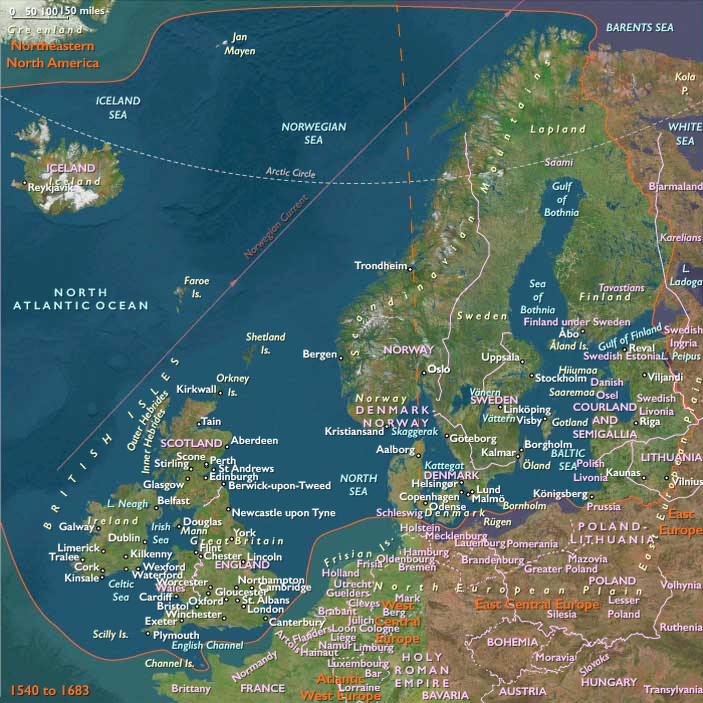
Northeast Europe (1588–1599 CE): Post-War Stabilization, Continued Rivalries, and Cultural Flourishing
Between 1588 and 1599 CE, Northeast Europe transitioned from prolonged warfare to relative stabilization following the conclusion of the Livonian War. This period saw cautious diplomatic realignments, internal political consolidations, continued economic resilience, and significant cultural and intellectual developments, even as regional rivalries persisted.
Aftermath and Stabilization Following the Livonian War
The Treaty of Plussa (1583) and the Truce of Yam-Zapolsky (1582) ended hostilities, allowing Northeast Europe a brief respite from decades of warfare. Territories previously ravaged by conflict, especially in Livonia, began recovery processes through reconstruction and economic revitalization, although geopolitical tensions remained high among former combatants.
Swedish Consolidation and Governance in Estonia and Livonia
Under John III (r. until 1592) and subsequently his son Sigismund III Vasa, Sweden solidified its control over northern Livonia and Estonia. Sweden improved administrative governance, reinforced defensive fortifications in key cities such as Reval (Tallinn) and Narva, and encouraged continued settlement by communities like the Forest Finns, enhancing Sweden’s territorial stability and economic strength.
Polish–Lithuanian Commonwealth’s Internal Strength and Regional Influence
The Polish–Lithuanian Commonwealth under Sigismund III Vasa (r. from 1587) sought internal stability and consolidation of its extensive Livonian territories. The Commonwealth maintained effective administrative control, promoted economic recovery, and strengthened diplomatic relationships, solidifying its role as a central power influencing Northeast Europe’s geopolitical landscape.
Denmark–Norway’s Maritime and Diplomatic Ambitions
Under Christian IV (r. from 1588), Denmark–Norway actively strengthened its Baltic maritime interests. The kingdom invested in naval expansion, enhanced fortifications, and diplomatic initiatives aimed at balancing Swedish and Polish–Lithuanian influence, further complicating regional dynamics.
Muscovy’s Internal Challenges and Territorial Adjustments
Following the death of Ivan IV (the Terrible) in 1584 and the subsequent ascension of Feodor I, Muscovy grappled with significant internal governance challenges. Despite diplomatic truces, Muscovy continued strategic preparations aimed at future territorial revisions, maintaining regional tension.
Economic Stability and Growth in the Duchy of Prussia
Under Duke Albert Frederick, the secularized Duchy of Prussia sustained political neutrality, robust internal governance, and continued economic prosperity, particularly through thriving urban centers like Königsberg. Prussia’s strategic diplomatic neutrality and economic strength provided regional stability amidst surrounding geopolitical shifts.
Continued Economic Vitality of Urban Centers
Major urban centers such as Reval (Tallinn), Riga, Königsberg, and Visby on Gotland furthered their economic resilience. Stable maritime commerce, active merchant networks, and effective urban governance fostered regional prosperity and helped recover from the war’s disruptions.
Cultural, Educational, and Religious Flourishing
Protestantism, especially Lutheranism, deepened its influence, driving further educational reforms and cultural developments. Schools and universities flourished, promoting literacy, intellectual advancements, and cultural production across Northeast Europe. However, religious tensions, particularly between Protestant and Catholic communities, continued to influence internal and external politics significantly.
Intellectual and Scientific Contributions
The region continued to benefit from intellectual advancements, exemplified by the continuing impact of Danish astronomer Tycho Brahe, whose meticulous astronomical observations remained influential, setting the stage for future scientific developments and consolidating Northeast Europe as a significant center of scholarly activity.
Diplomatic Realignments and Strategic Maneuvering
Diplomatic interactions remained intricate as regional powers navigated post-war realities. Negotiations and alliances sought to balance territorial interests, mitigate ongoing rivalries, and secure lasting stability, reflecting continued geopolitical caution among major powers.
Legacy of the Era
The era from 1588 to 1599 CE significantly shaped Northeast Europe's trajectory through post-war stabilization, cultural advancements, and continued diplomatic complexity. These developments laid critical foundations for subsequent regional stability, territorial delineations, and cultural identities, guiding Northeast Europe into the seventeenth century.
Ivan IV is succeeded by his son Feodor, who is mentally deficient.
Actual power goes to Feodor's brother-in-law, the boyar Boris Godunov.
Perhaps the most important event of Fedor's reign is the proclamation of the patriarchate of Moscow in 1589.
The creation of the patriarchate climaxes the evolution of a separate and totally independent Russian Orthodox Church.
In 1598 Feodor dies without an heir, ending the Rurik Dynasty.
Boris Godunov then convenes a zemskiy sobor, a national assembly of boyars, church officials, and commoners, which proclaim him tsar, although various boyar factions refuse to recognize the decision.
Widespread crop failures cause a famine between 1601 and 1603, and during the ensuing discontent, a man emerges who claims to be Dmitriy, Ivan IV's son who had died in 1591.
This pretender to the throne, who comes to be known as the first False Dmitriy, gains support in Poland and marches to Moscow, gathering followers among the boyars and other elements as he goes.
Historians speculate that Godunov would have weathered this crisis, but he dies in 1605.
As a result, the first False Dmitriy enters Moscow and is crowned tsar that year, following the murder of Tsar Fyodor II, Godunov's son.
East Europe (1600–1611 CE): Time of Troubles and Political Crisis
Political and Military Developments
Onset of the Time of Troubles
Between 1600 and 1611 CE, Muscovy entered the tumultuous "Time of Troubles," characterized by political instability, succession crises, and significant internal conflict. Following the death of Tsar Feodor I in 1598 and the end of the Rurik dynasty, Boris Godunov assumed power, but his reign saw considerable internal dissent and challenges.
Dynastic Crisis and Pretenders
This period featured several claimants to the throne, notably the appearance of "False Dmitry," an impostor who claimed to be the son of Ivan IV. His brief success highlighted the deep divisions and instability within Muscovy.
Military Invasions and Foreign Interference
The political instability invited foreign invasions, including Polish-Lithuanian intervention, exacerbating Muscovy’s internal crisis. Muscovy’s territories faced significant threats, challenging regional governance and national sovereignty.
Economic and Technological Developments
Economic Disruption and Challenges
The period saw economic disruption due to political instability, military conflicts, and foreign intervention. Trade and commerce suffered significantly, leading to hardship across urban centers and rural areas.
Military Adjustments Amid Crisis
Despite internal turmoil, Muscovy continued to adapt and refine military technologies and strategies, crucial for addressing immediate threats and stabilizing territories amidst ongoing crises.
Cultural and Artistic Developments
Cultural Strains and Survival
The cultural scene experienced considerable strain due to political and economic upheaval. Nonetheless, cultural expressions, religious art, and architecture persisted, reflecting resilience amid adversity.
Intellectual Efforts and Chronicling of Events
Chroniclers and intellectuals actively documented events during this chaotic period, providing critical insights and historical narratives that contributed to the preservation of Muscovite identity and historical consciousness.
Settlement Patterns and Urban Development
Urban Struggles and Resilience
Cities, particularly Moscow, faced severe challenges due to political instability and warfare. However, strategic urban planning and infrastructure maintenance continued, albeit under difficult conditions, ensuring some degree of urban resilience.
Defensive Fortifications Amid Instability
Urban fortifications remained crucial, receiving attention despite broader crises, to provide essential protection against internal disorder and external threats.
Social and Religious Developments
Social Disruption and Efforts at Cohesion
Societal structures were significantly disrupted by political upheaval and conflict. Efforts continued to maintain social cohesion, with communities striving for stability amidst uncertainty.
Role of the Orthodox Church
The Orthodox Church played a vital stabilizing role during the Time of Troubles, offering moral guidance, maintaining educational continuity, and providing essential community support amid widespread instability.
Long-Term Consequences and Historical Significance
The period from 1600 to 1611 CE profoundly impacted Muscovite society, reshaping political structures, and highlighting vulnerabilities that would inform future governance strategies. These events significantly influenced the trajectory toward eventual political stabilization and the re-establishment of centralized authority.
Northeast Europe (1600–1611 CE): Renewed Rivalries, Expansion Efforts, and Cultural Innovation
Between 1600 and 1611 CE, Northeast Europe experienced renewed geopolitical tensions, significant territorial ambitions, and cultural advancements following the brief stabilization after the Livonian War. This era witnessed intensified rivalry between Sweden, Denmark–Norway, the Polish–Lithuanian Commonwealth, and Muscovy, coupled with notable intellectual and economic growth.
Swedish Territorial Ambitions and Internal Consolidation
Under Charles IX (r. 1604–1611), Sweden aggressively pursued territorial expansion in the Baltic region, strengthening control in Livonia and Estonia. Sweden fortified key cities such as Reval (Tallinn), Narva, and Riga, improving military preparedness and administrative efficiency. Efforts continued to promote settlements by communities including the Forest Finns, aiding territorial security and economic development in frontier regions.
Danish–Norwegian Assertiveness under Christian IV
King Christian IV actively expanded Denmark–Norway’s maritime and commercial presence in the Baltic. He initiated significant urban developments, reinforced naval strength, and promoted trade, intensifying the kingdom’s competition with Sweden. His assertive foreign policy sought to balance Swedish territorial expansion and uphold Danish interests, heightening regional tensions.
Polish–Lithuanian Commonwealth’s Geopolitical Influence
Under Sigismund III Vasa, the Polish–Lithuanian Commonwealth continued consolidating its influence in Livonian territories, securing southern Livonia and strengthening regional administration. Sigismund’s dual claims to the Swedish crown heightened diplomatic and military tensions, complicating interactions between the Commonwealth and Sweden.
Muscovite Recovery and Strategic Reorientation
After the death of Feodor I in 1598, Muscovy entered the tumultuous "Time of Troubles" marked by dynastic crises, internal rebellions, and foreign interventions. Despite significant internal disruptions, Muscovy began reorienting strategically, preparing for future territorial assertions in Livonia and the broader Baltic region, maintaining regional uncertainty.
Duchy of Prussia’s Neutrality and Stability
Under Duke Albert Frederick, the secularized Duchy of Prussia maintained its careful diplomatic neutrality, administrative stability, and economic prosperity. Königsberg and other urban centers continued thriving economically, serving as stable hubs within the turbulent regional landscape.
Economic Prosperity in Major Urban Centers
Key cities including Reval (Tallinn), Riga, Königsberg, and Visby continued to experience significant economic prosperity. Enhanced maritime commerce, active merchant networks, and effective urban governance supported regional economic resilience and growth despite surrounding geopolitical pressures.
Cultural and Educational Advancements
Protestantism, particularly Lutheranism, drove continued educational and cultural innovations. Universities, schools, and scholarly institutions flourished, significantly enhancing literacy, intellectual activities, and cultural production. Lutheran ecclesiastical influence shaped societal structures and regional identities, though religious tensions between Catholic and Protestant communities persisted.
Scientific and Intellectual Progress
Northeast Europe continued benefiting from intellectual advancements, prominently through astronomical studies inspired by Tycho Brahe. His scientific legacy furthered scholarly activities across the region, consolidating its reputation as a center of intellectual and scientific innovation.
Diplomatic Complexities and Strategic Alliances
Diplomatic interactions intensified significantly during this period, with intricate alliances, territorial claims, and strategic negotiations among regional powers. The geopolitical complexity involving Sweden, Denmark–Norway, Poland–Lithuania, Muscovy, and Prussia necessitated careful diplomatic management, influencing lasting territorial and political alignments.
Legacy of the Era
The era from 1600 to 1611 CE significantly influenced Northeast Europe’s historical trajectory through intensified geopolitical rivalries, territorial expansions, and substantial cultural and intellectual developments. These events laid vital groundwork for future political stability, territorial boundaries, and cultural identities, shaping the region profoundly into the seventeenth century.