Ferdinand I of Bulgaria
Tsar of Bulgaria
Years: 1861 - 1948
Ferdinand (26 February 1861 – 10 September 1948), born Ferdinand Maximilian Karl Leopold Maria of Saxe-Coburg and Gotha-Koháry, is the ruler of Bulgaria from 1887 to 1918, first as knyaz (prince regnant, 1887–1908) and later as tsar (1908–1918).
He is also an author, botanist, entomologist and philatelist.
Related Events
Filter results
Showing 10 events out of 20 total
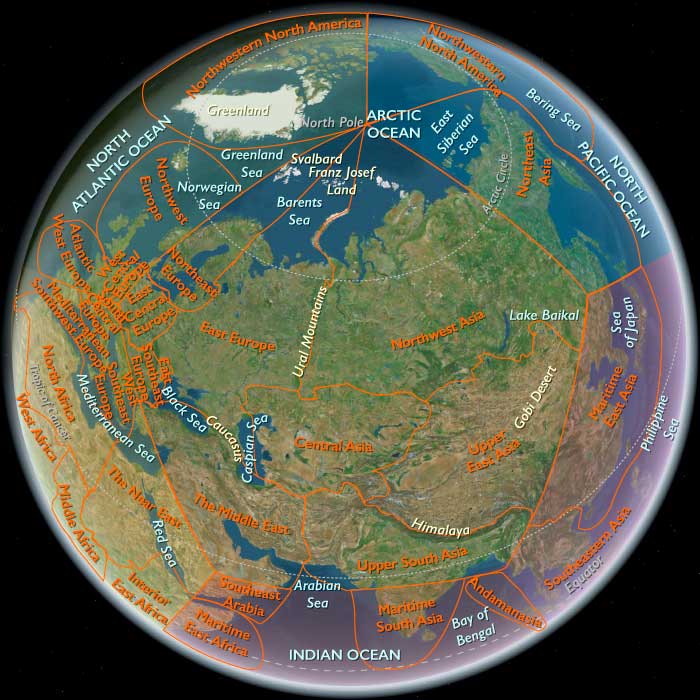
Southeast Europe (1828–1971 CE)
Empires in Retreat, Nations in Rebirth, and Frontiers Between Worlds
Geography & Environmental Context
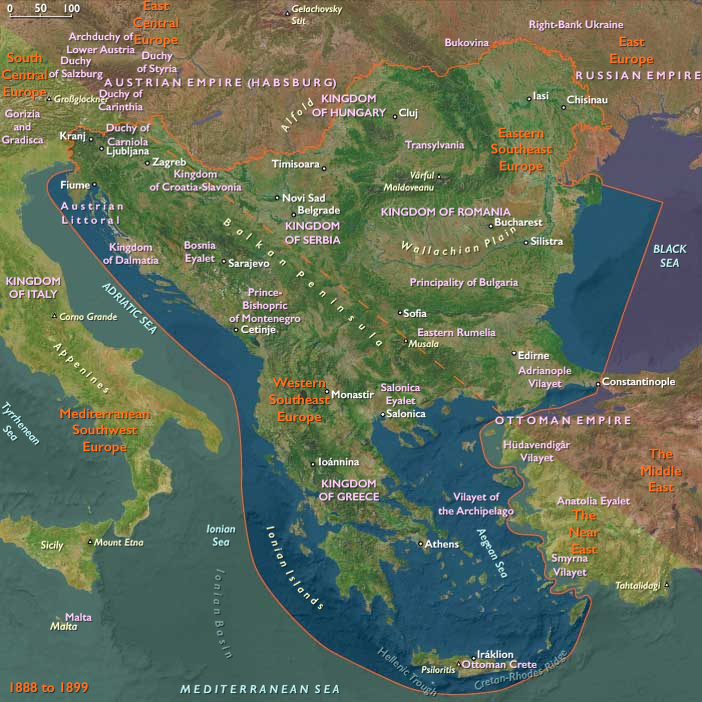
Southeast Europe includes two fixed subregions:
-
Eastern Southeast Europe — Romania, Moldova, Bulgaria (except the southwestern portion), northeastern Serbia, northeastern Croatia, extreme northeastern Bosnia and Herzegovina, modern-day Moldova, and the European side of Turkey, including Istanbul.
-
Western Southeast Europe — Greece, Albania, Montenegro, North Macedonia, Kosovo, most of Bosnia and Herzegovina, most of Croatia, southwestern Serbia, and the Adriatic and Aegean coasts facing the Mediterranean.
Anchors include the Balkan Mountains, Carpathians, Danube River, Aegean, Adriatic, and Black Sea coasts, as well as key cities such as Istanbul, Bucharest, Sofia, Athens, Belgrade, Sarajevo, and Thessaloniki. The subregion links central Europe to the eastern Mediterranean and Anatolia — a crossroads of empires, faiths, and ideologies.
Climate & Environmental Shifts
The region’s temperate continental and Mediterranean climates supported mixed agriculture and mountain pastoralism. Deforestation and erosion increased through the 19th century as railways and timber exports expanded. Flooding along the Danube and its tributaries required early engineering works. Twentieth-century industrialization and urbanization accelerated pollution but also brought reforestation and hydroelectric projects. Coastal areas remained vulnerable to earthquakes and drought, while inland winters could be severe.
Subsistence & Settlement
-
Agrarian life dominated until mid-20th century, with cereals, vines, olives, and livestock central to rural economies. Peasant communities balanced subsistence with market sales under Ottoman, Habsburg, and later national administrations.
-
Urban centers such as Athens, Belgrade, Sofia, Bucharest, and Istanbul expanded as administrative and industrial capitals. Port cities—Salonika (Thessaloniki), Constanța, Dubrovnik, and Trieste—thrived on Mediterranean and Black Sea trade.
-
After World War II, socialist land reforms and collectivization reshaped rural life; industrial towns multiplied along river corridors and mining basins (e.g., Nis, Ploiești, Varna).
-
Tourism and migration to Western Europe after 1950 introduced remittances and urban growth on the coasts.
Technology & Material Culture
Railways, bridges, and telegraphs of the 19th century tied the Balkans to European networks. Textile mills, shipyards, and munitions factories developed under both Ottoman and Habsburg influence. Twentieth-century modernization brought hydropower dams, concrete housing blocks, and expanding road systems. Material culture reflected blending: Ottoman bazaars stood beside neoclassical and socialist architecture; folk crafts, Orthodox icons, and Islamic calligraphy persisted as living art forms.
Movement & Interaction Corridors
-
Trade and migration followed the Danube, Adriatic, and Aegean routes linking inland markets to seaports.
-
Pilgrimage and faith networks connected Orthodox monasteries on Mount Athos with Slavic and Greek communities; Muslim routes linked Sarajevo and Istanbul.
-
Labor migrations carried Balkan workers to Vienna, Paris, and later Germany and Switzerland.
-
Military corridors—from the Crimean and Balkan Wars to both World Wars—crossed the peninsula repeatedly, leaving deep scars on settlements and memory.
Cultural & Symbolic Expressions
National revivals defined the century: Romantic historians, philologists, and poets reasserted Slavic, Greek, Albanian, and Romanian identities. Orthodox Christianity, Catholicism, and Islam coexisted, often in tension but also in hybrid traditions. Literature and art—Vuk Karadžić’s language reforms, Ion Luca Caragiale’s satires, Nikola Tesla’sinnovations, Nikos Kazantzakis’s epics—bridged folk and modernist sensibilities. Music and dance, from Byzantine chant to sevdah and rebetiko, expressed cultural resilience. After 1945, socialist realism and modernism merged in film, muralism, and architecture.
Environmental Adaptation & Resilience
Mountain terraces and transhumance persisted into the 20th century. Drainage projects reclaimed wetlands along the Danube and Thessaly Plain. Postwar collectivization altered traditional landholding but expanded irrigation. Coastal regions diversified into fishing and tourism; interior highlands relied on remittances and forest products. Hydroelectric and reforestation projects mitigated erosion, though industrial pollution rose near new mining and chemical centers.
Political & Military Shocks
-
Ottoman decline and independence: Greece (independence 1830), Serbia and Romania (recognized 1878), Bulgaria (autonomous 1878, independent 1908), and Albania (1912) emerged from imperial rule.
-
Balkan Wars (1912–13) redrew frontiers; Ottoman Europe contracted to Istanbul and Eastern Thrace.
-
World War I: Sparked by the assassination in Sarajevo (1914), it devastated the region and dissolved empires.
-
Interwar instability: Ethnic minorities, border disputes, and authoritarian monarchies dominated.
-
World War II: Axis occupation and resistance movements (notably Tito’s Partisans in Yugoslavia, the Greek Resistance) reshaped politics.
-
Postwar socialism and division: Yugoslavia under Josip Broz Tito pursued independent socialism; Bulgaria, Romania, and Albania aligned with the Soviet bloc; Greece experienced civil war (1946–49) and joined NATO (1952).
-
Cold War era: The Iron Curtain cut through the Balkans; Yugoslavia balanced East and West, hosting the Non-Aligned Movement (1961); Bulgaria and Romania industrialized under Soviet models; Greece rebuilt under Western alliances and endured military dictatorship (1967–74, partially beyond our range).
Transition
Between 1828 and 1971, Southeast Europe moved from imperial frontier to a complex patchwork of nation-states, socialist republics, and contested borderlands. Independence movements, world wars, and ideological divides repeatedly redrew its map. Ottoman bazaars and Byzantine monasteries gave way to factories, collective farms, and concrete housing blocks. Yet, amid wars and revolutions, cultural synthesis persisted: Orthodox chants, sevdah songs, and folk embroidery survived in socialist festivals and tourist markets alike. By 1971, the peninsula was once again at Europe’s fault line—its peoples navigating between memory and modernity, nationalism and integration, the Mediterranean and the East.
Eastern Southeast Europe (1828–1971 CE): From Ottoman Provinces to Socialist Republics and Cold War Faultlines
Geography & Environmental Context
Eastern Southeast Europe includes Turkey-in-Europe (Istanbul/Constantinople and Thrace), Thrace-in-Greece, all of Bulgaria (except the southwest), northeastern Serbia, northeastern Croatia, extreme northeastern Bosnia and Herzegovina, and all of modern Moldova and Romania. Anchors include the Danube River corridor (Iron Gates, the Wallachian plain, the Delta), the Balkan Mountains (Stara Planina), the Rhodope foothills, the Dobrudja steppe, and the Black Sea ports (Constanța, Varna, Burgas). The region also encompasses major cities such as Istanbul, Bucharest, Sofia, Belgrade, Zagreb, Chișinău, and Iași.
Climate & Environmental Shifts
The region sits between continental and Mediterranean zones. Harsh winters in the Danube plain alternated with drought-prone summers, especially in Dobrudja and eastern Bulgaria. The Danube’s flooding cycles challenged settlements until large-scale river control projects in the 19th and 20th centuries. The 20th century brought irrigation, drainage of marshlands, and damming (e.g., the Iron Gates hydroelectric project, 1964–71). Agricultural collectivization after 1945 transformed landscapes, replacing small peasant plots with mechanized state farms.
Subsistence & Settlement
-
19th century:
-
The Danubian plains of Wallachia, Moldavia, and Bulgaria produced wheat, maize, and livestock for export through Black Sea ports.
-
Vineyards, orchards, and tobacco fields dotted Thrace and the Bulgarian lowlands.
-
Istanbul remained an imperial metropolis, provisioning itself from the Thracian hinterlands.
-
-
20th century:
-
Under socialism, collectivized farms in Romania and Bulgaria mechanized cereal, maize, and sunflower cultivation.
-
Industrialization accelerated in cities like Bucharest, Sofia, and Varna.
-
Black Sea fisheries and ports (Constanța, Varna, Burgas) expanded as hubs of trade, energy, and tourism.
-
Technology & Material Culture
-
Transport: 19th-century railways tied Bucharest, Sofia, and Constanța to Vienna and Istanbul. After WWII, highways, electrification, and hydro dams modernized the region.
-
Industry: From the late 19th century, oil in Romania (Ploiești), textiles in Bulgaria, and shipyards on the Black Sea were developed. By the 1960s, heavy industry (steel, chemicals, machinery) dominated socialist economies.
-
Everyday life: Villages retained traditional Orthodox churches, Ottoman-style houses, and folk crafts until mid-20th-century collectivization introduced apartment blocks and standardized housing. Radios and televisions spread after 1950.
Movement & Interaction Corridors
-
Danube River: The artery linking Vienna, Belgrade, and the Black Sea, carrying grain, timber, and later oil.
-
Caravan & rail: Ottoman caravan trails gave way to 19th-century railways (e.g., Bucharest–Giurgiu line, 1869).
-
Black Sea: Ports exported grain, oil, and industrial products to Mediterranean and global markets.
-
Labor and migration: Peasants moved to towns during industrialization; after WWII, rural depopulation accelerated as cities absorbed labor for factories.
Cultural & Symbolic Expressions
-
Religion: Orthodoxy dominated in Romania and Bulgaria; Islam retained influence in Thrace; Catholic enclaves persisted in Croatia and Bosnia. Churches and mosques coexisted uneasily, often politicized in nationalist discourse.
-
Nationalism:
-
Romanian and Bulgarian revivals in the 19th century emphasized language, folklore, and Orthodox faith.
-
Revolutionaries in 1848, independence fighters in the Russo-Turkish War (1877–78), and Balkan wars (1912–13) created heroic pantheons.
-
-
Modern culture: Interwar Bucharest earned the nickname “Paris of the East.” Socialist regimes after 1945 promoted workers’ culture, folk dance troupes, and monumental architecture while censoring dissent.
Environmental Adaptation & Resilience
-
Agrarian cycles: Crop rotation, terracing, and pastoralism provided resilience until collectivization.
-
River control: Drainage of the Danube marshes in Romania and Bulgaria reclaimed farmland and reduced malaria.
-
Social welfare: After WWII, socialist states subsidized food, housing, and education, cushioning shocks but reducing household autonomy.
Political & Military Shocks
-
1828–1878: Russo-Turkish Wars and nationalist uprisings freed Romania, Bulgaria, and Serbia from Ottoman rule.
-
1878 Berlin Congress: Established Romania, Serbia, and Bulgaria as independent or autonomous; left Thrace and Macedonia under Ottoman control.
-
Balkan Wars (1912–13): Bulgaria and Romania fought over Macedonia and Dobruja; territorial shifts embittered neighbors.
-
World War I: Romania and Bulgaria fought on opposing sides; Dobruja and Transylvania contested.
-
Interwar: Authoritarian monarchies and peasant movements shaped politics.
-
World War II: Romania allied with Axis, Bulgaria with Axis but resisted deporting Jews, while Yugoslav and Greek partisans fought German occupation.
-
1944–48 Soviet expansion: Romania and Bulgaria absorbed into the Soviet bloc, establishing one-party socialist states; purges, collectivization, and repression followed.
-
Cold War: Eastern Southeast Europe became a Warsaw Pact frontier with NATO’s Turkey and Greece; heavy militarization and ideological control lasted through 1971.
Transition
Between 1828 and 1971, Eastern Southeast Europe transformed from Ottoman provinces into independent kingdoms, then into Soviet-aligned socialist republics. The Danube and Black Sea tied the region into global grain and oil markets in the 19th century, while nationalism redrew maps through wars and uprisings. After 1945, industrialization, collectivization, and Soviet patronage reshaped economies and societies. By 1971, Romania and Bulgaria were deeply embedded in the socialist bloc, while Thrace and Istanbul marked the border between NATO and the Warsaw Pact—this subregion now firmly a faultline of the Cold War world.
The Bulgarian government is as unstable as it had been in its first year, Alexander having left behind a three-man regency headed by Stefan Stambolov.
A Russian-educated liberal, Stambolov becomes prime minister in 1887 and ceases tailoring Bulgarian policy to Russian requirements.
The tsar's special representative in Bulgaria returns to Russia after failing to block a subranie called to nominate a new prince.
Russo-Bulgarian relations will remain chilly for the next ten years, and this break will further destabilize Bulgarian politics and society.
Stambolov brutally suppresses an army uprising in 1887 and begins seven years of iron control that often bypass the country's democratic institutions but bring unprecedented stability to Bulgaria.
Meanwhile, Ferdinand of Saxe-Coburg-Gotha, a Catholic German prince, accepts the Bulgarian throne in August 1887.
Stefan Stambolov, a Russian-educated liberal, becomes Bulgaria’s prime minister in 1887 and ceases tailoring Bulgarian policy to Russian requirements.
The tsar's special representative in Bulgaria returns to Russia after failing to block a subranie called to nominate a new prince.
Stambolov brutally suppresses an army uprising in 1887.
The regency is thus successful in preserving order but has great difficulty finding a new prince, for few candidates wish to assume the throne in the face of Russian hostility.
A willing candidate is at last found in the person of twenty-six-year-old Catholic German prince, Ferdinand Maximilan Karl Leopold Maria of Saxe-Coburg and Gotha, a ducal family that has contrived to occupy, either by marriage or by direct election, several European thrones in the course of the nineteenth century.
Ferdinand, who is currently serving as an officer in the Austrian army, is the son of Prince Augustus of Saxe-Coburg-Gotha (1818-81) and his wife Clémentine of Orléans (1817-1907), daughter of king Louis Philippe I of the French.
Ferdinand is a grand-nephew of Ernst I, Duke of Saxe-Coburg-Gotha and of Leopold I, first king of the Belgians.
His father Augustus is a brother of the Prince Consort of Portugal, and also a first cousin of both Queen Victoria and her husband Prince Albert.
He also descends from medieval rulers of Bulgaria from both his mother's and father's side.
Elected prince in July 1887 by the Grand National Assembly, he accepts the throne in August.
Eastern Southeast Europe (1888–1889 CE): Nationalism, Reform, and Regional Tensions
Political Developments and Regional Realignments
Serbia: Turmoil and Autocratic Rule
A regency governed Serbia until 1893, following the abdication of King Milan Obrenović. His teenage son, Aleksandar Obrenović (1889–1903), then assumed authority, swiftly nullifying the existing constitution. Aleksandar's authoritarian style, scandals, and his pronounced alignment with Austria-Hungary significantly undermined his popularity and fostered political instability.
Romania: Secret Alliances and Diplomatic Tensions
In a climate of heightened distrust towards Russia, Romania’s King Carol I secretly aligned with the Central Powers—Austria-Hungary, Germany, and Italy—by signing a clandestine treaty in 1883, details of which only emerged publicly years later. This pact deeply influenced Romania's diplomatic posture, prompting the fortification of defenses along the Russian border, while strategically neglecting the vulnerable mountain passes into Hungarian-held Transylvania.
Bulgarian Autonomy and Governance Challenges
In Bulgaria, Prince Ferdinand of Saxe-Coburg-Gotha struggled for international recognition, achieving acceptance by Russia and other Great Powers only in 1896. The government's authoritarian stance under Prime Minister Stefan Stambolov included widespread voter intimidation and political patronage, aimed at suppressing extreme nationalism and stabilizing the nation’s political landscape. Stambolov's policies significantly enhanced Bulgaria's economic infrastructure, exemplified by the completion of the Vienna-to-Constantinople Railway through Bulgaria in 1888 and the Burgas-Yambol Railway in the early 1890s.
Social and Economic Dynamics
Land Reform and Social Unrest in Romania
Romania continued grappling with inequitable land distribution, which led to persistent rural unrest. By 1888, peasant discontent had escalated, culminating in agrarian disturbances and eventually forcing the government into limited land reforms. Despite these attempts, substantial inequalities persisted, maintaining tensions and widespread poverty among the rural populace.
Jewish Communities and Economic Frictions
The Jewish population in Romania, which had grown significantly due to immigration after the Treaty of Adrianople (1829), faced increased discrimination and exclusion from citizenship. Economic rivalry frequently escalated into violence and anti-Semitic attacks, severely restricting social integration and economic advancement opportunities for the Jewish communities, especially concentrated in urban areas such as Iași.
Industrialization and Socialism in Bulgaria
Bulgaria experienced rapid industrialization, which significantly reshaped its economic and social fabric. Numerous factories had opened since the nation's independence in 1878, creating a new urban working class. The harsh realities of industrial employment spurred the establishment of the Social Democratic Party in 1891, marking the beginnings of organized labor movements and socialist politics in Bulgaria.
Cultural and National Identity Movements
Bulgarian Nationalism and Macedonian Question
The issue of Macedonia continued to fuel Bulgarian nationalism, as revolutionary and secret liberation movements persisted in advocating for the unification of Macedonian territories with Bulgaria. Diplomatic maneuvers by Stambolov in 1890 successfully obtained Ottoman concessions, granting three major Macedonian dioceses to the Bulgarian Exarchate and thus reinforcing Bulgarian national sentiment and church authority.
Transylvanian Romanians and Magyarization
In Transylvania, Romanian nationalism intensified against Hungary's aggressive Magyarization policies. Calls from Bucharest for unification with Romanians in Transylvania, Bukovina, and Bessarabia became increasingly vocal, reflecting deepening ethnic tensions within the Austro-Hungarian Empire.
Key Historical Developments (1888–1889)
-
Secret treaty between Romania and the Central Powers (Austria-Hungary, Germany, Italy).
-
Limited land reform efforts in Romania after agrarian disturbances.
-
Completion of major railways (Vienna-Constantinople Railway, Burgas-Yambol Railway) in Bulgaria, significantly enhancing its economic infrastructure.
-
Continued political instability in Serbia under Aleksandar Obrenović's autocratic rule.
Long-Term Consequences and Historical Significance
The period marked critical developments in nationalistic fervor, political alliances, and economic transformations across Eastern Southeast Europe. Rising nationalism and ethnic tensions sowed seeds of future conflicts, while economic modernization introduced significant social changes, laying foundations for subsequent historical shifts in the region.
Bulgarian's new administration is mainly conservative, and Ferdinand becomes the dominant force in policy making.
His position grows stronger when Russia finally recognizes him in 1896.
The price for recognition is the conversion of Prince Boris to Orthodoxy from Catholicism.
The Russian attitude has changed for two reasons: Alexander III had died in 1894, and new Turkish massacres have signaled a collapse of the Ottoman Empire that will threaten Russian and Bulgarian interests alike.
In the next twenty years, no strong politician like Stambolov will emerge, and Ferdinand will be able to accumulate power by manipulating factions.
Several liberal and conservative parties, the descendants of the two preliberation groups, will hold power through 1912 in a parliamentary system that seldom functions according to the constitution.
The Bulgarian Social Democratic Party takes its place in the new political order, advocating class struggle, recruiting members from the working class, and organizing strikes.
Bulgaria remains primarily an agricultural country despite industrialization.
Liberation had eliminated the Ottoman feudal landholding system.
Bulgarian peasants were able to buy land cheaply or simply occupy it after Turkish landlords left, and a system of village-based small landholding had begun.
Agricultural production rises in spite of heavy government land taxes.
Many peasants are forced into the urban work force by taxes or high interest on borrowings for land purchase.
Until the end of the nineteenth century, the vast majority of the Bulgarian population are small landholders or independent small tradesmen.
Stefan Stambolov and the People's Liberal Party he had founded in 1886 exert virtually dictatorial power to suppress extreme nationalism and opposing parties and create conditions for economic growth in Bulgaria.
After the 1886 coup, the army has been strictly controlled.
Voters are intimidated to ensure the reelection of incumbent officials, and political patronage grows rampant.
Using his own and Prince Ferdinand's ties with Germany and Austria-Hungary, Stambolov builds a capitalist Bulgarian economic system on foreign loans, protectionism, an expanded industrial and transport infrastructure, and a strict tax system for capital accumulation.
Especially important to the Bulgarian economy is completion of the Vienna-to-Constantinople Railway through Bulgaria in 1888 and the Burgas-Yambol Railway in the early 1890s.
Stambolov derives strong political support from the entrepreneurs who benefit from his industrial policy.
The Stambolov era marks the victory of executive over legislative power in the Bulgarian political system.
Russia and the other great powers will not recognize Ferdinand as rightful prince of Bulgaria until 1896.
Supporters of Prince Alexander who remain in power use this failure as a weapon against the policies of Ferdinand and Stambolov.
In 1890 a widespread plot against the government is discovered.
As before, the basis of the plot is dissatisfaction with Stambolov's refusal to intercede with the Turks on behalf of Macedonian independence.
In a masterful diplomatic stroke, Stambolov represents the insurrection to the Turks as an example of potential chaos that could be avoided by minor concessions.
Fearing the Balkan instability that would follow an overthrow of Ferdinand, the Turks now cede three major Macedonian dioceses to the Bulgarian exarchate.
Stambolov thus gains solid church support and an overwhelming victory in the 1890 election, which legitimizes his government among all Bulgarian factions and reduces the threat of radical plots.
Bulgaria's independence from the Ottoman Empire brings drastic economic and social changes to the country at the end of the nineteenth century.
Industrialization proceeds rapidly (thirty-six major factories had opened between 1878 and 1887), and a new class of industrial labor forms from displaced artisans and agricultural workers.
Harsh working conditions lead the urban poor to the cause of socialism, and in 1891 the Social Democratic Party is formed. (Later transformation of one of its factions into the Bulgarian Communist Party will make this organization the oldest communist party in the world.)
Town-centered trade and the guild structure are swept away by an influx of West European commerce to which Bulgaria had been opened by the terms of the Treaty of Berlin.