Gustav IV Adolf
King of Sweden
Years: 1778 - 1837
Gustav IV Adolf or Gustav IV Adolph (November 1, 1778 – February 7, 1837) is King of Sweden from 1792 until his abdication in 1809.
He is the son of Gustav III of Sweden and his queen consort Sophia Magdalena, eldest daughter of Frederick V of Denmark and his first wife Louise of Great Britain.
He is the last Swedish ruler of Finland, the occupation of which by Russian Emperor Alexander I in 1808-09 is the immediate cause of his violent downfall.
After an army revolt, the king is seized by officers and forced to relinquish the throne on behalf of his family on March 29, the anniversary of his father's death (due to gunshot wound, in 1792).
The Instrument of Government subsequently written is adopted on June 6, the current National Day of Sweden, and is in effect until replaced in 1974.
The crown (now with strictly limited powers) passes to his childless uncle, Charles XIII, whose want of heirs sets into motion an intense quest for a successor, who is found the following year in the person of Jean-Baptiste Bernadotte, who assumes the throne in 1818, commencing the present House of Bernadotte.
Gustavia in Swedish Pomerania is named after Gustav, but is lost in the Napoleonic Wars.
Related Events
Filter results
Showing 10 events out of 50 total
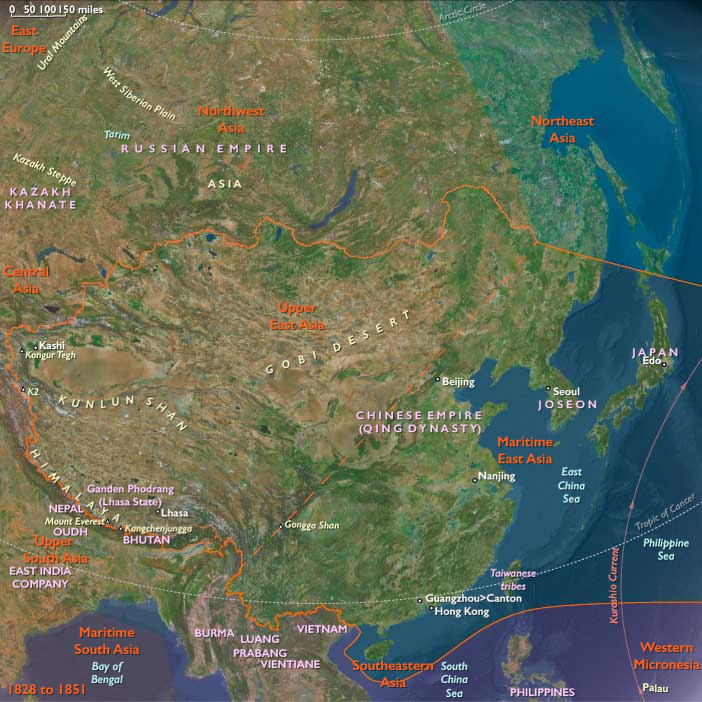
Northeast Europe (1792–1803 CE): Political Turmoil, Defensive Realignments, and Socioeconomic Challenges
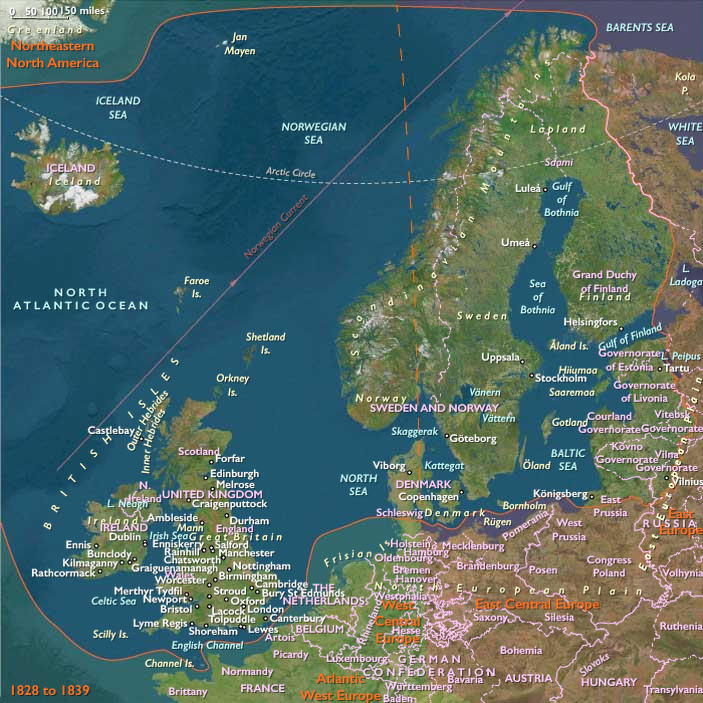
Between 1792 and 1803 CE, Northeast Europe faced significant political upheaval, shifting diplomatic alliances, and intensified socioeconomic pressures resulting from broader European instability caused by the French Revolutionary Wars. Sweden experienced internal turmoil following the assassination of King Gustav III, with Finland enduring particular economic strain under Sweden’s mercantilist policies. Denmark–Norway maintained careful neutrality amidst growing European conflict, while Prussia navigated internal reforms and diplomatic caution. The Baltic territories—Estonia, Latvia, and Lithuania—experienced cautious stability and incremental economic advancement, despite rising regional tensions.
Sweden: Assassination and Internal Instability
The assassination of King Gustav III in 1792 plunged Sweden into political uncertainty. His young successor, Gustav IV Adolf (r. 1792–1809), assumed full control in 1796, following a regency period marked by noble intrigue and governance inefficiencies. Internally, the Swedish nobility regained significant influence, reversing many earlier absolutist reforms, exacerbating governance challenges, and increasing social tensions.
Sweden’s frequent involvement in costly wars resulted in heavy taxation and governmental attempts to augment state revenues through strict economic controls, rooted in mercantilist policies. This economic strategy not only constrained Sweden’s domestic growth but had particularly severe implications for Finland, its eastern province.
Finnish Economic Exploitation and Social Strains under Swedish Rule
Finland, under Swedish governance, endured notable economic exploitation and socioeconomic stress during this period. Sweden’s mercantilist policies systematically directed Finnish economic output—particularly the profitable trade in naval stores such as timber, tar, pitch, and resin—primarily toward the benefit of Sweden itself. Consequently, Finland's economic development was severely hindered, perpetuating dependence and limiting the emergence of a robust indigenous middle class.
Finnish society remained predominantly agrarian, with the peasantry forming its backbone. However, peasants faced heavy taxation and compulsory labor obligations imposed by the Swedish state, despite the absence of formal serfdom. These burdens, coupled with warfare-induced economic hardships, intensified social pressures throughout rural Finland.
Moreover, Sweden’s military engagements facilitated significant land grants to Swedish aristocrats and military officers within Finland, further entrenching the dominance of the Swedish-speaking minority over Finnish political, economic, and social life. While provincial assemblies allowed Finnish peasants to retain a small measure of local political representation, real political and economic power remained concentrated among the Swedish-speaking nobility and elite.
Despite such socioeconomic challenges, agricultural productivity in Finland saw incremental improvement, notably due to the earlier introduction and expanded cultivation of potatoes from the 1730s onward, which provided a stable food supply and helped alleviate some of the hardships associated with warfare and economic exploitation. The agricultural frontier gradually extended northward, settling new stretches of inland wilderness.
Danish–Norwegian Neutrality and Economic Stability
Denmark–Norway, effectively governed since 1784 by Crown Prince Frederick (later Frederick VI) due to King Christian VII’s mental illness, steadfastly adhered to neutrality amidst Europe’s escalating conflicts. This neutrality significantly benefited maritime trade, particularly in Copenhagen, leading to sustained economic prosperity. Internal stability and economic resilience were reinforced by improved agricultural methods, infrastructure investments, and efficient governance, although Denmark–Norway faced growing pressures concerning maritime neutrality.
Prussian Diplomatic Caution and Internal Consolidation
Prussia, under Frederick William II (r. 1786–1797) and subsequently Frederick William III (r. 1797–1840), navigated cautiously, seeking diplomatic neutrality amid Europe’s Revolutionary conflicts. Internally, Prussia continued to prioritize administrative efficiency, economic consolidation, and military readiness, notably around strategically significant Königsberg (Kaliningrad). Prussia’s cautious diplomacy avoided immediate conflict, although external diplomatic pressures gradually intensified.
Stability and Incremental Development in the Baltic Territories
The Baltic territories—Estonia, Latvia, and Lithuania—experienced relative internal stability and modest economic growth, continuing under Baltic-German nobility governance. Major urban centers, especially Riga and Reval (Tallinn), maintained gradual economic development through sustained commerce and prudent administration, despite broader regional uncertainties.
Economic Prosperity and Urban Stability
Throughout Northeast Europe, major urban centers such as Stockholm, Copenhagen, Königsberg, Riga, and Reval sustained relative economic prosperity. Maritime commerce flourished under stable governance and effective merchant networks, enabling these cities to maintain economic resilience despite regional tensions and geopolitical uncertainty.
Cultural Continuity Amidst Political Instability
Despite political upheavals, cultural and intellectual institutions maintained continuity. Sweden’s established cultural institutions, notably the Swedish Academy, continued fostering scholarly and cultural activities. Danish–Norwegian institutions similarly thrived, particularly within Copenhagen’s academic circles. Prussia continued supporting educational and cultural advancement, contributing to sustained intellectual engagement and regional prestige.
Diplomatic Realignments and Pragmatic Neutrality
Diplomatic interactions remained cautiously pragmatic. Sweden’s diplomatic isolation deepened amid internal instability, costly warfare, and strained finances. Denmark–Norway preserved neutrality, though increasingly challenged by maritime disputes. Prussia’s careful neutrality and internal consolidation mitigated immediate conflicts but faced growing external pressures amid shifting European alliances.
Legacy of the Era
The era from 1792 to 1803 CE profoundly influenced Northeast Europe through intensified socioeconomic strains, particularly evident in Finland’s economic exploitation under Swedish mercantilist policies. While agricultural innovations alleviated some hardships, Finnish society faced ongoing burdens due to heavy taxation, compulsory labor, and persistent Swedish dominance. Denmark–Norway’s careful neutrality fostered economic resilience, whereas Prussia maintained cautious diplomatic strategies. Collectively, these developments significantly shaped the region’s geopolitical alignments, internal stability, and socioeconomic trajectories, laying critical groundwork for future historical transformations.
The coup is a failure in the short run. However, the wound has become infected, and on March 29, the king finally dies with these last words:
Jag känner mig sömnig, några ögonblicks vila skulle göra mig gott ("I feel sleepy, a few moments' rest would do me good")
Ulrica Arfvidsson, the famous medium of the Gustavian era, had told him something that could be interpreted as a prediction of his assassination in 1786, when he visited her anonymously—a coincidence—but she was known to have a large network of informers all over town to help her with her predictions, and she is in fact interrogated about the murder.
Gustav Adolf succeeds to his fathers' throne at the age of fourteen, under the regency of his uncle, Charles, duke of Södermanland, who will later become King Charles XIII of Sweden when his nephew is forced to abdicate and flee the country in 1809.
Northeast Europe (1804–1815 CE): Geopolitical Transformations, Territorial Reconfigurations, and the End of Old Alliances
Between 1804 and 1815 CE, Northeast Europe experienced dramatic geopolitical upheaval, territorial realignments, and profound socioeconomic adjustments due to the far-reaching consequences of the Napoleonic Wars. Central to this era was the dissolution of the centuries-old union between Sweden and Finland, Finland’s transition into a Russian Grand Duchy with substantial autonomy, Denmark–Norway’s forced alliance shifts and territorial losses, Prussia’s military setbacks and subsequent reform-driven resurgence, and incremental social progress within the Baltic territories, particularly Estonia’s initial steps towards peasant reform.
Sweden’s Loss of Finland and Internal Political Reorganization
Under King Gustav IV Adolf (r. 1792–1809), Sweden adopted an anti-Napoleonic stance, leading to diplomatic isolation. Following France and Russia’s alliance at the Treaty of Tilsit (1807), Napoleon urged Tsar Alexander I to compel Sweden into joining their alliance against Britain. Complying with this directive, Russia invaded Finland in 1808, quickly overwhelming Sweden’s poorly organized defenses in the ensuing Finnish War (1808–1809). The war culminated with the decisive Treaty of Hamina (Fredrikshamn) on September 17, 1809, through which Sweden formally ceded Finland to Russia, thereby dissolving their historic union.
This significant territorial loss triggered domestic political upheaval, forcing the abdication of Gustav IV Adolf. His uncle succeeded him as Charles XIII (r. 1809–1818), under whom Sweden adopted a new constitutional monarchy in 1809, effectively ending absolutism. Subsequently, Sweden sought diplomatic realignment, electing Jean-Baptiste Bernadotte (later King Karl XIV Johan) as crown prince in 1810, marking Sweden’s entry into the anti-Napoleonic coalition and initiating a dramatic geopolitical shift.
Finland: Autonomy and Conciliation Under Russian Sovereignty
Initially, Russia planned to annex Finland directly as an ordinary province, but recognizing potential Finnish resistance, Tsar Alexander I offered an alternative arrangement. Under his proposal, Finland was not annexed outright but joined to Russia through the person of the tsar himself, creating the autonomous Grand Duchy of Finland. This arrangement preserved Finland’s existing laws, constitution, and administrative traditions from the era of Swedish absolutism, including the comprehensive Law Code of 1734, which safeguarded individual rights.
In 1809, the Finnish Diet convened at Porvoo (Swedish, Borgå) to formally endorse this agreement, and as a further act of goodwill, in 1812 the tsar returned to Finland territories previously annexed by Russia in the eighteenth century. This careful conciliatory approach proved effective, securing Finnish loyalty for decades. The governance structure stipulated that the tsar directly controlled Finland’s government through an appointed Governor-General—the first being the Swedish-Finn Göran Sprengtporten, assisted notably by prominent Swedish-Finn statesman Gustaf Mauritz Armfelt.
During this transitional period, Finnish society and economy remained predominantly agrarian, with approximately ninety percent of its roughly 900,000 inhabitants engaged in farming by 1810. The combined effects of warfare, heavy taxation, and previous famines had suppressed population growth, keeping urbanization minimal and society largely static, despite shifting political affiliations.
Danish–Norwegian Conflict and Union Dissolution
Denmark–Norway, governed by Crown Prince (later King) Frederick VI (r. 1808–1839), was reluctantly drawn into the Napoleonic conflict after Britain attacked and captured the Danish fleet at Copenhagen in 1807. Forced into an alliance with Napoleonic France, Denmark–Norway’s maritime commerce was severely restricted, causing considerable economic distress. Following Napoleon’s defeat, the Treaty of Kiel (1814) compelled Denmark to cede Norway to Sweden, ending the centuries-old Danish-Norwegian union. Despite Norway’s brief bid for independence in 1814, the subsequent Convention of Moss secured a personal union under the Swedish crown, dramatically reordering the political landscape of Scandinavia.
Prussian Struggles and Reformative Resurgence
Prussia, initially neutral under King Frederick William III (r. 1797–1840), suffered catastrophic defeat by Napoleonic forces at Jena–Auerstedt in 1806, losing vast territories and prestige at the Treaty of Tilsit (1807). This defeat spurred extensive internal reforms focused on military modernization, educational improvements, and administrative restructuring, especially crucial in the strategic exclave around Königsberg (Kaliningrad). These reforms enabled Prussia’s resurgence, pivotal participation in Napoleon’s defeat at Leipzig (1813), and ultimate territorial and diplomatic rehabilitation at the Congress of Vienna (1815).
Estonia’s First Steps Towards Serfdom Reform
Within the Baltic territories, significant socioeconomic progress emerged when Estonia initiated its first real reforms of serfdom in 1804, granting peasants limited rights and protections. While modest, these reforms marked the beginning of gradual social transformations in Estonian rural life, setting a precedent for broader changes in subsequent decades.
Economic Resilience in Urban Centers
Major Northeast European cities—Stockholm, Copenhagen, Königsberg, Riga, and Reval (Tallinn)—managed relative economic resilience despite wartime disruptions. Danish maritime commerce faced severe British restrictions but later stabilized. Sweden’s internal reorganization and alliance shifts fostered eventual economic stabilization, while Prussian urban recovery was supported by post-war reforms and infrastructure investments.
Cultural and Intellectual Continuity
Throughout Northeast Europe, cultural and intellectual life maintained resilience. Finland, despite its territorial transfer to Russia, preserved its distinct cultural institutions, education systems, and traditions. In Sweden and Denmark, scholarly and cultural institutions continued to thrive, benefiting from Enlightenment ideals and intellectual continuity. Prussia’s educational reforms notably enhanced regional intellectual vigor, helping underpin societal recovery after military setbacks.
Diplomatic Reorientation and Legacy of the Era
Diplomatic interactions in this period were marked by strategic realignments and pragmatic flexibility. Sweden’s dramatic shift from diplomatic isolation toward an anti-Napoleonic coalition significantly redefined its international relationships. The transformation of Finland into a Russian Grand Duchy altered the regional balance, while Denmark–Norway’s forced alliance and union dissolution reshaped Scandinavia’s political configuration. Prussia’s internal reforms and diplomatic repositioning laid critical foundations for its later prominence.
The era from 1804 to 1815 CE thus profoundly reshaped Northeast Europe. Sweden’s loss of Finland fundamentally altered both states’ trajectories, while Finland’s autonomy under Russia established a unique governance model. Denmark–Norway’s dissolution and Prussia’s transformative recovery underscored the complexity of geopolitical realignments. Collectively, these developments defined regional identities, diplomatic alliances, and socioeconomic structures, leaving an enduring legacy on Northeast Europe’s subsequent historical evolu
His reign is ill-fated and will end abruptly.
The level of detail is so great that Russian maps of Finland are in many respects more accurate than their Swedish counterparts.
The Russians had the services of General Georg Magnus Sprengtporten when forming their plans.
Sprengtporten had suggested going on to an offensive during the winter since Finland is mostly isolated when seas are frozen.
His ideas had been further developed by General Jan Pieter van Suchtelen before General Friedrich Wilhelm von Buxhoeveden was appointed as the commander of the Russian army in Finland in December 1807.
The plan involves using the series of fortifications built after 1790 as staging grounds for the Russian advances into Finland.
In southern Finland, armies are to isolate the fortifications and first take control of the whole of southern Finland before advancing further to the north.
Forces in Savolax are to press hard against the Swedes and reach the Gulf of Bothnia towards Uleåborg and Vasa to cut off the retreat of the main body of the Swedish army.
Some advocates for taking a more active approach include Lieutenant Colonel Samuel Möller, who advocates for taking an immediate offensive, and Gustaf Mauritz Armfelt, who supports actively delaying the advancing enemies in co-operation with the garrisons in the southern coast.
In the end, the instructions that the new Swedish commander in Finland, General Wilhelm Mauritz Klingspor, receives from the king are an unsuccessful and open-ended mixture of ideas from these very different plans.
The Russian Emperor Alexander I, after concluding the 1807 Treaty of Tilsit with Napoleon, had written to the Swedish King Gustav IV Adolf on September 24, 1807, informing the king that the peaceful relations between Russia and Sweden depend on Swedish agreement to abide by the limitations of the Treaty of Tilsit, which in practice means that Sweden will be been required to follow the Continental System.
The king, who views Napoleon as the Antichrist and Britain as his ally against Napoleon's France, is apprehensive of the system's ruinous consequences for Sweden's maritime commerce.
He instead enters into negotiations with Britain in order to prepare a joint attack against Denmark, whose Norwegian possessions he covets.
In the meantime, the Royal Navy had attacked Copenhagen and the Anglo-Russian War had been declared.
Referring to the treaties of 1780 and 1800, the emperor had demanded that Gustav Adolf close the Baltic Sea to all foreign warships.
Although he reiterated his demand on November 16, 1807, it had taken two months before the king responded that it is impossible to honor the previous arrangements as long as the French are in control of the major Baltic ports.
King Gustav Adolf does this after securing an alliance with England on February 8, 1808.
Meanwhile, on December 30, 1807, Russia had announced that should Sweden not give a clear reply Russia would be forced to act.
Although most Swedish officers are skeptical about their chances in fighting the larger and more experienced Russian army, Gustav Adolf has an unrealistic view of Sweden's ability to defend itself against Russia.
In Saint Petersburg, his stubbornness is viewed as a convenient pretext to occupy Finland, thus pushing the Russo-Swedish frontier considerably to the west of the Russian capital and safeguarding it in case of any future hostilities between the two powers.
The situation is problematic for Sweden, since it once again faces both Denmark and Russia as potential enemies requiring the Swedes to split their forces.
The king thinks it impossible to defend Finland should the enemy attack during the winter and chooses largely to ignore the repeated warnings of the Russian threat he had received in early 1808.
Most of the Swedish plans assume that warfare will be impossible during winter, disregarding the lessons from recent wars.
In addition, several new good roads have been built into Finland, greatly reducing the earlier dependency on naval support for any large operation in Finland.
While the garrison is seven hundred men strong, only a third of the men have actual functioning weapons, while most of the fortress' guns have no carriages.
The fortress has fallen into disrepair and lacks both adequate food and ammunition stores.
Even the wells are found to be unusable.
The Russians, after starting the siege on February 21, issue a surrender demand for the fort, but this is refused by the Swedes.
He is notified of the Russian invasion on February 21, and since it is impossible to hold the predefined defense lines, as the army had not yet fully assembled, he orders the army to assemble at Tavastehus.