Henrik Ibsen
Norwegian playwright, theater director, and poet
Years: 1828 - 1906
Henrik Ibsen (20 March 1828 – 23 May 1906) is a major 19th-century Norwegian playwright, theater director, and poet.
He is often referred to as "the father of realism" and is one of the founders of Modernism in the theater.
His major works include Brand, Peer Gynt, An Enemy of the People, Emperor and Galilean, A Doll's House, Hedda Gabler, Ghosts, The Wild Duck, Rosmersholm, and The Master Builder.
Several of his plays are considered scandalous to many of his era, when European theater is required to model strict morals of family life and propriety.
Ibsen's work examines the realities that lie behind many façades, revealing much that is disquieting to many contemporaries.
It utilizes a critical eye and free inquiry into the conditions of life and issues of morality.
The poetic and cinematic play Peer Gynt, however, has strong surreal elements.
Ibsen is often ranked as one of the truly great playwrights in the European tradition.
He influences other playwrights and novelists such as George Bernard Shaw, Oscar Wilde, Arthur Miller, James Joyce, and Eugene O'Neill.
Many critics consider him the greatest playwright since Shakespeare.
Ibsen writes his plays in Danish (the common written language of Denmark and Norway) and they are published by the Danish publisher Gyldendal.
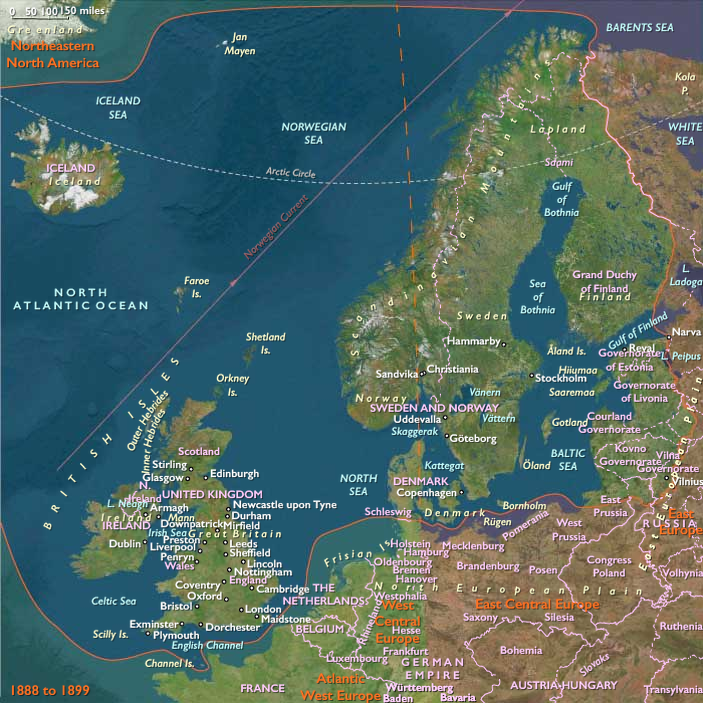
Although most of his plays are set in Norway—often in places reminiscent of Skien, the port town where he grew up—Ibsen lives for 27 years in Italy and Germany, and rarely visitsNorway during his most productive years.
Born into a merchant family connected to the patriciate of Skien, his dramas are shaped by his family background.
He is the father of Prime Minister Sigurd Ibsen.