
Isaac Le Maire
Dutch merchant for the Vereenigde Oostindische Compagnie
1558 CE to 1624 CE
Isaac Le Maire (c. 1558 in Tournai – September 20, 1624 in Egmond aan den Hoef) is a merchant for the Vereenigde Oostindische Compagnie and later for the Austraalse Compagnie.
He is best known for his constant strife with the VOC, which ultimately leads to the discovery of Cape Horn.
Isaac Le Maire was born in 1558 or 1559 in Tournai.
He learns the trade from his merchant brother-in-law Jacques van de Walle.
Isaac hsd four brothers, three of them are merchants.
Already in 1584 he is registered in Antwerp as a wealthy grocer.
At the time, he is also captain of the company of the Antwerp militia.
He rents the house of Bourgognien Schilt, but in 1585 after the fall of Antwerp he flees to the northern Netherlands.
In 1585 he settles in Amsterdam.
He is married in Antwerp to Maria Jacobsdr. Walraven and they have twenty-two children, and one of them, his son Jacob, will go down in history as an explorer.
In 1641 his son Maximiliaen becomes the first VOC chief of Dejima in Japan.
Initially, Isaac Le Maire is the largest shareholder in the VOC.
World
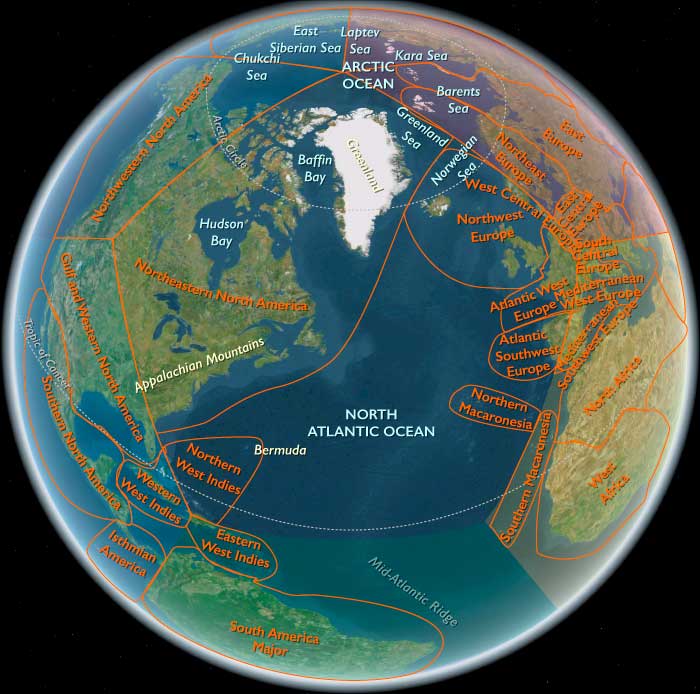
The Atlantic Lands
View →Related Events
Showing 1 events out of 1 total
In early modern Europe it has the wealthiest trading city (Amsterdam) and the first full-time stock exchange.
The inventiveness of the traders leads to insurance and retirement funds as well as phenomena such as the boom-bust cycle, the world's first asset-inflation bubble, the tulip mania of 1636–1637, and the world's first bear raider, Isaac le Maire, who forces prices down by dumping stock and then buying it back at a discount.
In 1672—known in Dutch history as the Rampjaar (Disaster Year)—the Dutch Republic is at war with France, England and three German Bishoprics simultaneously.
At sea it can successfully prevent the English and French navy entering the western shores.
On land, however, it is almost taken over internally by the advancing French and German armies coming from the east.
It can, however, turn the tide by inundating parts of Holland, but will never recover to its former glory again and will go into a state of general decline in the eighteenth century, with economic competition from England and long-standing rivalries between the two main factions in Dutch society, the republican Staatsgezinden and the supporters of the stadtholder, the Prinsgezinden, as the main political factions.