
John Hanson
9th President of the Continental Congress
1721 CE to 1783 CE
John Hanson (April 14, 1721 – November 22, 1783) is a merchant and public official from Maryland during the era of the American Revolution.
After serving in a variety of roles for the Patriot cause in Maryland, in 1779 Hanson was elected as a delegate to the Continental Congress.
He signed the Articles of Confederation in 1781 after Maryland finally joined the other states in ratifying them.
In November 1781, he was the first person to be elected as the presiding officer, leading some historians to claim he was the first President of the United States.
Stiverson (2000) states that Hanson was little more than the first among equals in Congress and had no executive power.
His duties were largely ceremonial, and his correct title was President of the Continental Congress.
World
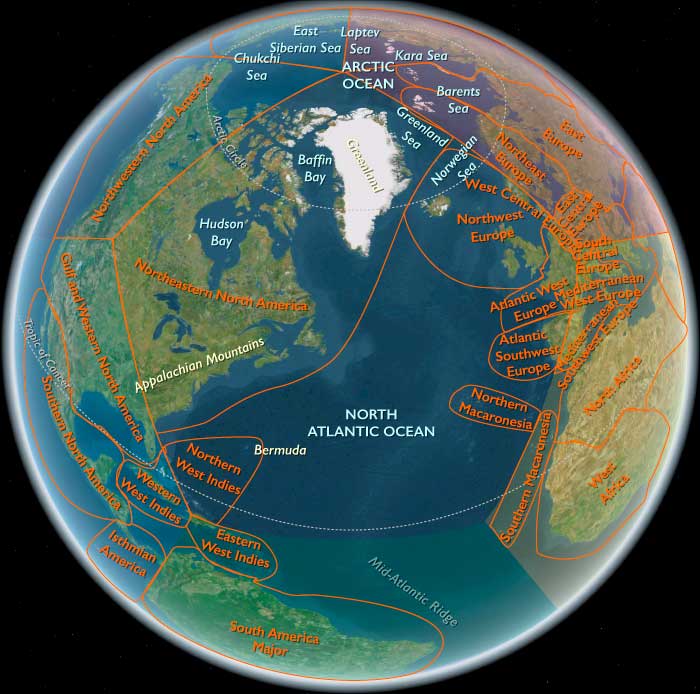
The Atlantic Lands
View →Related Events
Showing 2 events out of 2 total
Contrary to the claims of some of his later advocates, however, he is not the first president to serve under the Articles, nor the first to be elected under the Articles.
When the Articles went into effect in March 1781, Congress had not bothered to elect a new president; instead, Samuel Huntington continued serving a term that had already exceeded a year.
On July 9, 1781, Samuel Johnston became the first man to be elected as president of Congress after the ratification of the Articles.
He declined the office, however, perhaps to make himself available for North Carolina's gubernatorial election.
After Johnston turned down the office, Thomas McKean was elected.
McKean served just a few months, resigning in October 1781 after hearing news of the British surrender at Yorktown.
Congress had asked him to remain in office until November, when a new session of Congress is scheduled to begin.
Under the Articles of Confederation, the United States has no executive branch; the president of Congress is a mostly ceremonial position, but the office does require Hanson to handle a good deal of correspondence and sign official documents.
Hanson finds the work tedious and had considered resigning after just one week, citing his poor health and family responsibilities.
Colleagues had urged him to remain because Congress at the moment lacks a quorum to choose a successor.
Out of a sense of duty, Hanson remains in office, although his term as a delegate to Congress is nearly expired.
The Maryland Assembly reelects him as a delegate on November 28, 1781, and Hanson will continue to serve as president until November 4, 1782.
Britain, under the terms of the 1783 Treaty of Paris, recognizes an independent United States of America as all lands east of the Mississippi, north of Spanish Florida and New Orleans, and south of the Great Lakes and the provincial frontiers of Quebec and Nova Scotia.
Washington disbands the army and resigns his command.
John Hanson dies, and Thomas Mifflin is elected the third President of Congress Assembled.