
John Philip Sousa
American composer and conductor of the late Romantic era
1854 CE to 1932 CE
John Philip Sousa (November 6, 1854 – March 6, 1932) is an American composer and conductor of the late Romantic era known primarily for American military marches.
He is known as "The March King" or the "American March King", to distinguish him from his British counterpart Kenneth J. Alford who is also known as "The March King".
Among his best-known marches are "The Stars and Stripes Forever" (National March of the United States of America), "Semper Fidelis" (official march of the United States Marine Corps), "The Liberty Bell", "The Thunderer", and "The Washington Post".
Sousa begins his career playing violin and studying music theory and composition under John Esputa and George Felix Benkert.
His father enlists him in the United States Marine Band as an apprentice in 1868.
He leaves the band in 1875 and learns to conduct.
From 1880 until his death, he focuses exclusively on conducting and writing music.
He eventually rejoins the Marine Band and serves there for twelve years as director, after which he organizes his own band.
Sousa aids in the development of the sousaphone, a large brass instrument similar to the helicon and tuba.
Upon the outbreak of the Great War, Sousa is awarded a wartime commission of lieutenant commander to lead the Naval Reserve Band in Illinois.
He then returns to conduct the Sousa Band until his death in 1932. (In the 1920s, he is promoted to the permanent rank of lieutenant commander in the naval reserve, but he never sees active service again.)
World
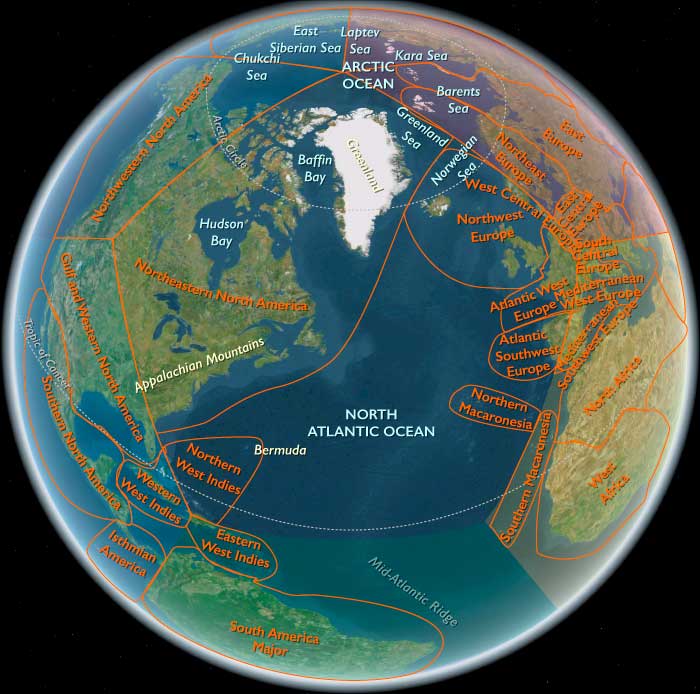
The Atlantic Lands
View →Related Events
Showing 2 events out of 2 total
In 1888, Sousa had composed The March Past of the National Fencibles, in honor of a renowned militia drill team affiliated with the National Guard of the District of Columbia.
In 1890, the rival drill team of the Washington High School (subsequently Washington Central) asks Sousa, a native of the District, to compose a march for them, and he obliges with The High School Cadets March, now generally known simply as High School Cadets.
High School Cadets will quickly become one of Sousa's most popular marches.
Just four years after its composition, the Nebraska State Journal will list it as one of the composer's "most notable" marches, along with Washington Post March, Liberty Bell March, and several others.
It will be recorded by Sousa's Grand Concert Band around 1899 and will be frequently recorded ever since.
The march is published in 1890 by Philadelphia music publisher Harry Coleman in arrangements for band, for piano solo and for several other small instrumental ensembles.
Subsequently the copyright will be picked up by Carl Fischer Music of New York, which continues today to list the march in its catalog, both in the original form and in a modern arrangement.
John Philip Sousa, who composes marches for Marine bands, leads "The President's Own" band under five presidents from Rutherford B. Hayes to Benjamin Harrison.
His band played at the inaugural balls of James A. Garfield in 1881 and Benjamin Harrison in 1889.
Sousa had completed his apprenticeship in 1875 and began performing on the violin; he then joined a theatrical pit orchestra where he learned to conduct.
He had returned to the Marine Band as its head in 1880 and will remain as its conductor until 1892.