John VI Kantakouzenos
East Roman (Byzantine) emperor
Years: 1292 - 1383
John VI Kantakouzenos or Cantacuzenus (c. 1292 – 15 June 1383) is the East Roman (Byzantine) emperor from 1347 to 1354.




Related Events
Filter results
Showing 10 events out of 49 total
Periodic civil warfare continues in the lands still under the control of Constantinople, with the younger Andronikos Palaiologos enjoying the support of the powerful Greek nobility, particularly the wealthy John Kantakouzenos, against his grandfather, the emperor Andronikos II.
The young Andronikos finally forces his grandfather to abdicate in 1328 and enter a monastery, and becomes sole ruler as Andonikos III.
It is in some ways a victory for the younger generation of the aristocracy, of whom the leading light is John Kantakouzenos.
As emperor, Andronikos relies heavily on the guidance of Kantakouzenos, who encourages reform of the law courts and initiates the rebuilding of the imperial navy, which had been neglected in the reign of Andronikos' predecessor.
Under Andronikos, the Orthodox monasteries take a more active role in both ecclesiastical and civil affairs.
Eastern Southeast Europe (1336–1347 CE): Byzantine Civil War and Societal Polarization
Settlement and Migration Patterns
Continued Territorial Fragmentation
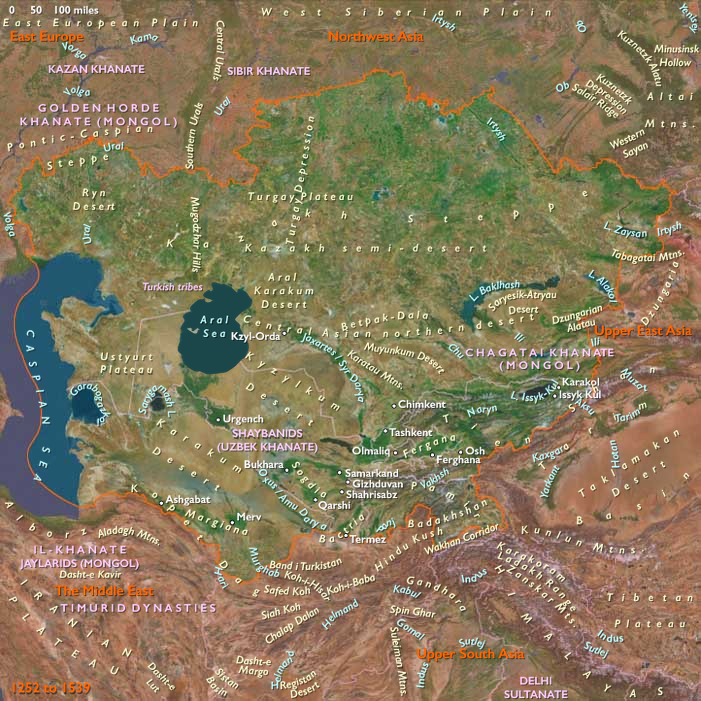
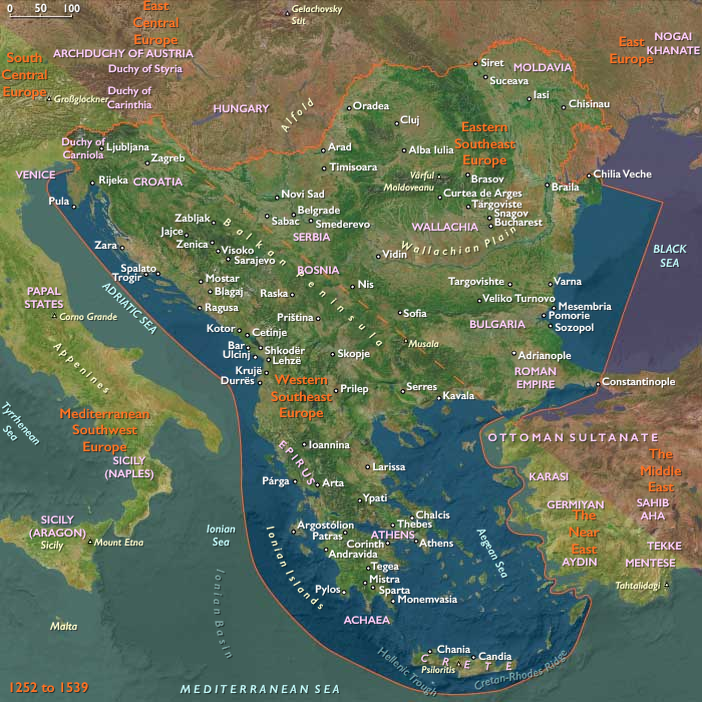
Between 1336 and 1347, Eastern Southeast Europe faced continued political instability, exacerbated by internal Byzantine conflicts. The Byzantine Empire remained territorially fragmented, significantly weakened by the ongoing civil war known as the Second Palaiologan Civil War (1341–1347). This turmoil undermined urban security and further strained rural settlements.
Political Dynamics and Regional Rivalries
Second Palaiologan Civil War
The death of Andronikos III Palaiologos in 1341 triggered a destructive civil war over the guardianship of his nine-year-old heir, John V Palaiologos. The conflict pitted the emperor's chief minister, John VI Kantakouzenos, representing aristocratic interests, against a regency faction led by Empress-Dowager Anna of Savoy, Patriarch John XIV Kalekas, and the powerful megas doux Alexios Apokaukos, supported primarily by the lower and middle classes. This deep polarization of Byzantine society along class lines significantly weakened the state, both politically and militarily.
Rising External Threats
Exploiting Byzantine internal conflicts, the Ottoman Turks continued their incursions into Thrace and the broader Balkans, steadily extending their territorial influence. Concurrently, the Bulgarian and Serbian states also took advantage of Byzantine disarray, solidifying their regional power.
Economic and Technological Developments
Economic Decline amid Warfare
The ongoing civil war severely disrupted Byzantine economic life, significantly reducing trade, agricultural productivity, and urban economic stability. Commercial activities, already diminished by earlier conflicts and territorial losses, continued declining under the strain of sustained military and political turmoil.
Defensive Adaptations and Fortifications
Byzantine defensive infrastructure saw urgent efforts to maintain and strengthen city walls, fortresses, and regional garrisons, reflecting heightened security concerns due to both internal unrest and external Ottoman threats.
Cultural and Artistic Developments
Cultural Survival and Decline
Although Byzantine culture maintained its sophistication—particularly evident in religious art and literature—the economic and political crises severely limited new artistic projects. Patronage was reduced, and cultural institutions faced resource shortages and reduced support, though monastic centers continued preserving religious and cultural traditions.
Class Tensions Reflected in Culture
The deep societal divisions revealed by the civil war were increasingly reflected in Byzantine cultural expressions, with tensions between aristocratic traditions and popular sentiment becoming more pronounced in art, literature, and public discourse.
Social and Religious Developments
Societal Polarization
The civil war sharply polarized Byzantine society, creating lasting social divisions between the aristocracy and lower social classes. This division was particularly significant, as it marked one of the first instances in Byzantine history where class interests openly defined political alliances and conflicts.
Ecclesiastical Influence and Conflict
The active involvement of ecclesiastical figures like Patriarch John XIV Kalekas in the civil conflict underscored the Byzantine Church’s influential role in politics. However, this involvement also deepened religious divisions and contributed to ongoing factionalism within the Orthodox hierarchy.
Long-Term Consequences and Historical Significance
The period from 1336 to 1347 CE marked a critical turning point characterized by deep internal conflict, societal polarization, and accelerated external threats from the Ottomans. The severe weakening of Byzantine political structures during this era set the stage for future Ottoman expansion, significantly influencing the region's subsequent historical trajectory.
The Byzantine civil war of 1341–47, sometimes referred to as the Second Palaiologan Civil War, breaks out after the death of Andronikos III Palaiologos over the guardianship of his nine-year-old son and heir, John V Palaiologos.
It pits on the one hand Andronikos III's chief minister, John VI Kantakouzenos, and on the other the Empress-Dowager Anna of Savoy, the Patriarch of Constantinople John XIV Kalekas, and the megas doux Alexios Apokaukos.
The war polarizes Byzantine society along class lines, with the aristocracy backing Kantakouzenos and the lower and middle classes supporting the regency.
Nicholas Orsini, who had married the widow of the rival he had poised, Thomas I Komnenos Doukas, had claimed to rule not only Epirus, but all of Greece; his rule was limited only to Akamania, or the southern part of Epirus.
He was overthrown by his brother John in 1323, who attempted to balance submission to Constantinople with cooperation with the Angevins of Naples, who also claim Greece as part of their domains.
John had been poisoned around 1335 by his wife Anna, who became regent for their son Nikephoros II.
The new Emperor, Andronikos III Palaiologos, arrives in northern Epirus in 1337 with an army partly composed of two thousand Turks contributed by his ally Umur of Aydın.
Andronikos first deals with unrest due to attacks by Albanians and then turns his interest to the Despotate.
Anna tries to negotiate and obtain the Despotate for her son when he comes of age, but Andronikos demands the complete surrender of the Despotate, to which she finally agrees.
Thus Epirus comes peacefully under imperial rule, with Theodore Synadenos as governor.
By so doing, Andronikos and Kantakouzenos are able to call on the services of almost limitless numbers of Turkish soldiers to fight for them against their other enemies: the Italians in the Aegean islands and the Serbs and the Bulgars in Macedonia and Thrace.
Northwestern Anatolia, once the heart of the empire, is lost to Greek rule after the Turkish warriors of Orhan, second emir of the powerful Ottoman principality, had captured Nicomedia in 1337, renaming it Izmit, …
… Chrysopolis.
The imperials had insisted that Nikephoros would be engaged to one of the daughters of the emperor's right-hand man, John Kantakouzenos.
When the time of the engagement came, Nikephoros had vanished.
Andronikos learned that Nikephoros had fled to Italy, with the help of members of the Epirote aristocracy who supported an independent Epirus.
He stayed in Taranto, Italy, in the court of Catherine II of Valois (Philip of Taranto's widow), the titular empress of Constantinople.
A revolt had begun in 1339, supported by Catherine of Valois, who had previously moved to the Peloponnese, and by Nikephoros, who had returned to Epirus, based in Thomokastron.
The imperial army had returned to the area by the end of the year and in the following year, 1340, Andronikos III himself arrives together with John Kantakouzenos.
Nikephoros is persuaded through diplomacy to recognize the authority of the emperor.
He surrenders Thomokastron, marries Maria Kantakouzene, the daughter of John Kantakouzenos, and receives the title of panhypersebastos.
The declining Empire, with Andronikos dead, once more falls prey to family quarrels and civil war.
Dushan, arriving before the gates of Salonika, receives an unexpected ally in Kantakouzenos, who takes up arms against the regents of the young successor, and …