Joscius
Archbishop of Tyre
Years: 1135 - 1202
Joscius (also Josce or Josias) (died 1202) iss Archbishop of Tyre in the crusader Kingdom of Jerusalem in the late 12th century.

Related Events
Filter results
Showing 10 events out of 25 total
William of Tyre, a Crusade chronicler writing in the late twelfth century, describes sugar as "very necessary for the use and health of mankind".
William’s importance had dwindled with the victory of Agnes and her supporters, and with the accession of Baldwin V, infant son of Sibylla and William of Montferrat.
Baldwin was a sickly child and he died the next year.
He is succeeded in 1186 by his mother Sibylla and her second husband Guy of Lusignan, ruling jointly.
William is probably in failing health by this point.
There had been a new chancellor in May 1185; by October 21, 1186, there is a new archbishop of Tyre, Joscius, a canon and subdeacon of the church of Acre who had become Bishop of Acre on November 23, 1172.
He had been a member of the delegation from the Latin church of the Crusader states at the Third Lateran Council in 1179.
While in Europe, he had also visited France on behalf of King Baldwin IV, to negotiate a marriage between Hugh III, Duke of Burgundy, and Baldwin's sister Sibylla, but the marriage never took place; Sibylla instead married Guy of Lusignan the next year.
Meanwhile Sibylla and Guy have become Queen and King of Jerusalem, against the ambitions of Raymond III of Tripoli, who had hoped to have his own supporters succeed to the throne.
Raymond of Tripoli has allied with the Muslim sultan Saladin against Guy.
Guy, hoping to establish a truce in April 1187 sends an embassy to Raymond, led by Balian of Ibelin, Gerard de Ridefort, master of the Knights Templar; Roger des Moulins, master of the Knights Hospitaller; Reginald of Sidon, and Archbishop Joscius.
A portion of Saladin's army, which had entered the Kingdom at Raymond III's fief of Tiberias, attacks the Jerusalem embassy and meets the Crusaders at the Battle of Cresson on May 1.
Balian and Reginald had stopped at their own castles on the way, but Joscius is present at the battle.
The Muslims had feigned a retreat, a common tactic which should not have fooled Gerard; nevertheless, he had ordered a charge, against Roger's advice, and the knights had been separated from the foot-soldiers.
The Muslims easily repulse a direct Christian attack, killing both the exhausted knights, and, later, the foot-soldiers.
Gerard is wounded, but survives; however, almost all the others are killed.
According to the Itinerarium, however, Gerard did not rashly engage the enemy, but was actually caught unaware and was the victim of an attack himself.
The Itinerarium also records the exploits of a certain Templar named Jakelin de Mailly, who, after all his companions had been killed, fought single-handedly against the throng of Muslims until he too fell.
Joscius and Balian continue on to Tiberias.
Balian is still a day behind, and had also stopped at Sebastea to celebrate a feast day.
After reaching the castle of La Fève, where the Templars and Hospitallers had camped, he found that the place was deserted.
He had sent his squire Ernoul ahead to learn what had happened, and news of the disastrous battle soon arrived from the few survivors.
Raymond had heard about the battle as well and meets the embassy at Tiberias, and agreed to accompany them back to Jerusalem.
Raymond is finally willing to acknowledge Guy as king, but the damage to the kingdom is severe, and both Gerard and Raynald consider Raymond a traitor.
However Guy, knowing that Saladin's army is already forming for a renewed assault on the kingdom, cannot afford to let this internecine quarrel continue and welcomes Raymond with open arms.
Conrad of Monferrat had sent Archbishop Joscius of Tyre to the West in a black-sailed ship after the fall of Jerusalem to Saladin in October, 1187, bearing appeals for aid, including propaganda drawings of the horses of Saladin's army stabled (and urinating) in the Church of the Holy Sepulchre.
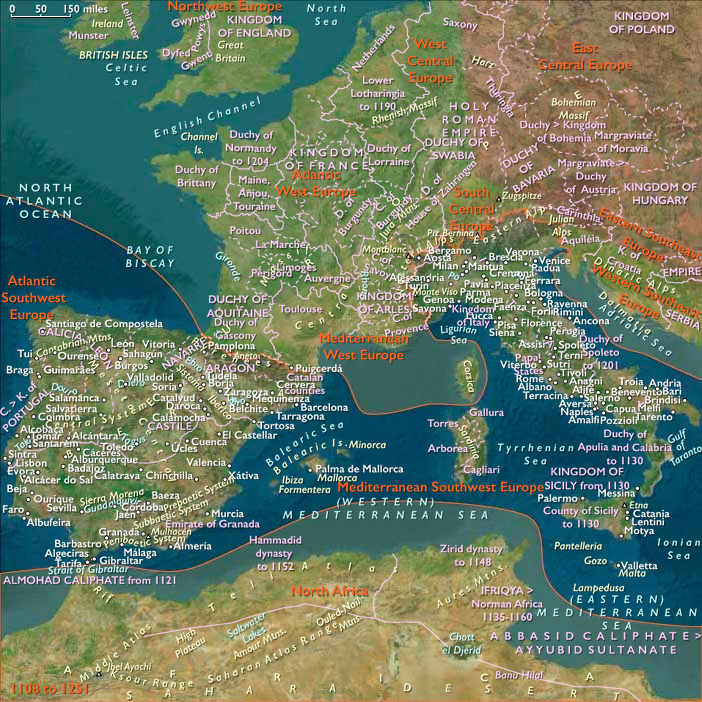
Joscius arrives first in Sicily, where King William II promises to send a Sicilian fleet to the east; he himself will die before he can go on crusade but his fleet will help save Tripoli from Saladin's attacks.
Joscius continues on to Rome.
Archbishop Joscius and the Call for the Third Crusade at Gisors (January 1188)
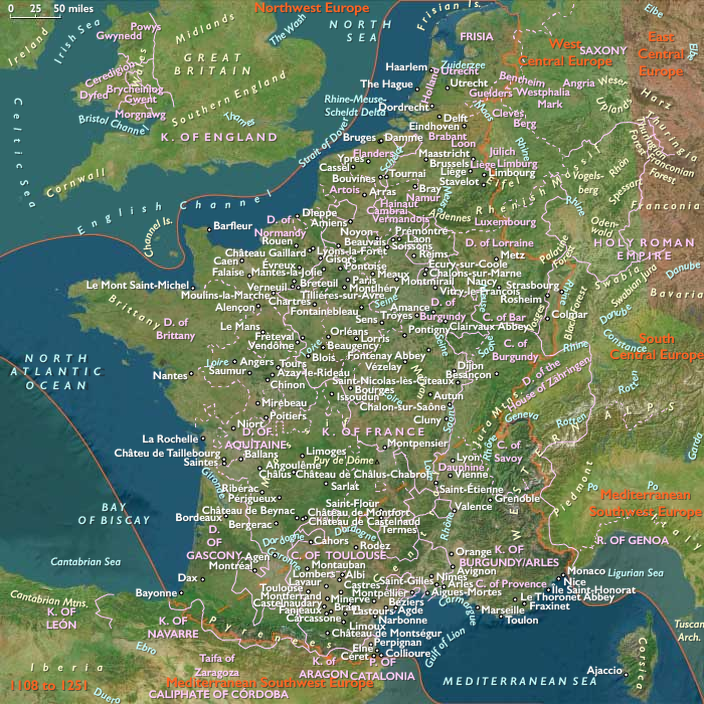
In January 1188, Archbishop Joscius of Tyre, traveling from Italy to France, arrived at Gisors, where he met with Henry II of England, Philip II of France, and Philip, Count of Flanders. By this time, news of the disastrous Christian defeat at the Battle of Hattin (1187) had already spread, and Richard, Count of Poitou (later Richard I, the Lionheart), had vowed to go on crusade.
Joscius’ Role at Gisors
-
Mediating Peace Between Henry II and Philip II
- At the time, Henry II and Philip II were engaged in ongoing conflicts over French territories.
- Joscius successfully negotiated a temporary peace, allowing both kings to focus on the Crusade rather than their rivalry.
-
Convincing Monarchs to Take the Cross
- Joscius urged Henry II, Philip II, and Philip of Flanders to take the cross, committing themselves to the Third Crusade.
- His appeal was successful, and the event marked the official launch of the Capetian-Plantagenet participation in the Crusade.
The Saladin Tithe and Its Possible Origins
- In response to the need for funding the Crusade, Henry II instituted the Saladin Tithe, a special tax levied in England to finance the expedition.
- The tax may have been inspired by the 1183 tax in Jerusalem, which had been imposed to strengthen the city's defenses against Saladin.
- It is likely that Joscius, having firsthand knowledge of the situation in the Holy Land, informed Henry about this precedent during the Gisors meeting.
Mistaken Attribution of the Archbishop at Gisors
- Some later chroniclers, including Matthew Paris, mistakenly claimed that the archbishop present at Gisors was William of Tyre.
- However, William had already retired from active diplomacy by this time, and it was Joscius of Tyre who played the key role in securing Western European participation in the Crusade.
Significance of the Meeting at Gisors
- The 1188 council at Gisors marked a crucial turning point in the preparations for the Third Crusade (1189–1192).
- Joscius’ diplomatic efforts united England and France under the Crusader cause, even if their cooperation remained tense and fragile.
- The Saladin Tithe became one of the earliest examples of a centralized tax system in England, showing how the Crusades influenced European financial administration.
Though the Crusade itself would be plagued by tensions between Richard and Philip, the diplomatic success at Gisors ensured that both England and France would play leading roles in the campaign to recover Jerusalem.
Gregory VIII had meanwhile sent a legation to the emperor, who is now nearly in his mid-sixties and approaching the end of an eventful career, which has included a protracted controversy with the papacy.
Nevertheless, Frederick has made peace with the church, had participated in the Second Crusade, and for some time has been genuinely desirous of taking the cross again.
A charter in 1189, given orally for Hamburg's backing of Frederick's crusades, grants Hamburg the status of an Imperial Free City and tax-free access up the Lower Elbe into the North Sea, including the right to fish, to cut trees and the freedom of military service.
Frederick, leaving his son Henry in charge of the empire, sets out in May of 1189 with the largest Crusade army so far assembled.
England’s so-called Saladin Tax compels Jews to raise sixty thousand pounds (equal to a quarter of their property) for the Third Crusade.