Archbishop Joscius and the Call for the Third Crusade at Gisors (January 1188)
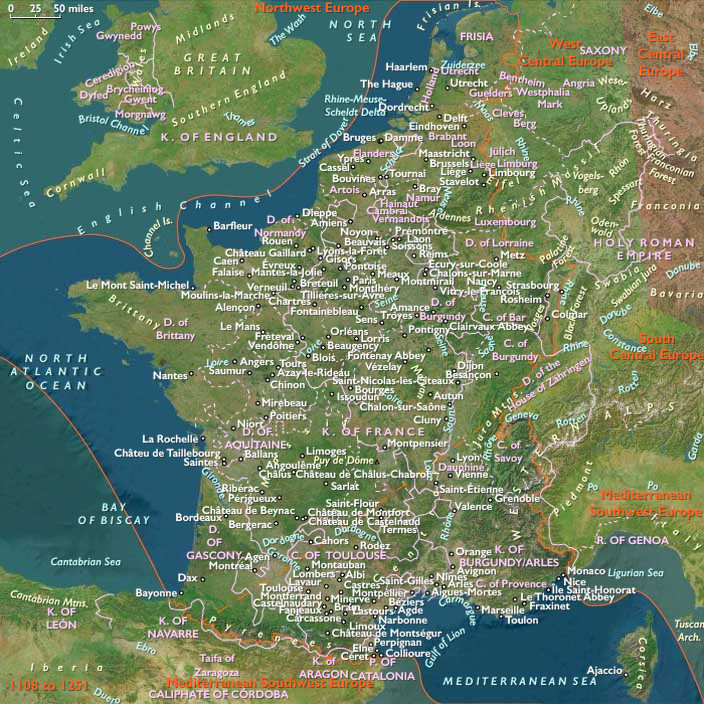
In January 1188, Archbishop Joscius of Tyre, traveling from Italy to France, arrived at Gisors, where he met with Henry II of England, Philip II of France, and Philip, Count of Flanders. By this time, news of the disastrous Christian defeat at the Battle of Hattin (1187) had already spread, and Richard, Count of Poitou (later Richard I, the Lionheart), had vowed to go on crusade.
Joscius’ Role at Gisors
The Saladin Tithe and Its Possible Origins
- In response to the need for funding the Crusade, Henry II instituted the Saladin Tithe, a special tax levied in England to finance the expedition.
- The tax may have been inspired by the 1183 tax in Jerusalem, which had been imposed to strengthen the city's defenses against Saladin.
- It is likely that Joscius, having firsthand knowledge of the situation in the Holy Land, informed Henry about this precedent during the Gisors meeting.
Mistaken Attribution of the Archbishop at Gisors
- Some later chroniclers, including Matthew Paris, mistakenly claimed that the archbishop present at Gisors was William of Tyre.
- However, William had already retired from active diplomacy by this time, and it was Joscius of Tyre who played the key role in securing Western European participation in the Crusade.
Significance of the Meeting at Gisors
- The 1188 council at Gisors marked a crucial turning point in the preparations for the Third Crusade (1189–1192).
- Joscius’ diplomatic efforts united England and France under the Crusader cause, even if their cooperation remained tense and fragile.
- The Saladin Tithe became one of the earliest examples of a centralized tax system in England, showing how the Crusades influenced European financial administration.
Though the Crusade itself would be plagued by tensions between Richard and Philip, the diplomatic success at Gisors ensured that both England and France would play leading roles in the campaign to recover Jerusalem.

 The North Atlantic Lands
World
 West Europe
Region
 Atlantic West Europe
Subregion
