Josephus
Jewish historian and hagiographer
Years: 37 - 100
Titus Flavius Josephus (37 – c. 100), also called Joseph ben Matityahu, is a 1st-century Romano-Jewish historian and hagiographer of priestly and royal ancestry who records Jewish history, with special emphasis on the 1st century CE and the First Jewish–Roman War, which results in the Destruction of Jerusalem and its temple in 70.
His most important works are The Jewish War (c. 75) and Antiquities of the Jews (c. 94).
The Jewish War recounts the Jewish revolt against Roman occupation (66–70).
Antiquities of the Jews recounts the history of the world from a Jewish perspective for an ostensibly Roman audience.
These works provide valuable insight into 1st century Judaism and the background of Early Christianity.
Related Events
Filter results
Showing 10 events out of 34 total
The Jews of Judea, always generally hostile to the ruling Idumaean dynasty and increasingly incensed by the political and religious insensitivity of the various Herodians and the Roman governors, are on the verge of rebellion.
Burdened by excessive taxation and outraged by acts of brutality, the Judaeans have become increasingly restive under Roman rule, the more so because they are confident that God will ultimately vindicate them.
Jewish scholars have, for four centuries, intensively studied the biblical laws recorded in the Pentateuch—long transmitted by word of mouth and known as the Oral Torah—applying them to new situations and supplemented them with traditions of popular observance and with precedents established by prominent leaders.
Another body of laws, halachah, or halakhah, a Hebrew term meaning "the way," have developed since biblical times to define the holy way of life in Judaism.
Distinct from the laws recorded in the Pentateuch, halachah, based on oral traditions believed to have been revealed to Moses at the same time as the Scriptures, is used to explicate and interpret the Scriptures.
Study of the written and unwritten oral law had become central to Judaism during the Hasmonean period, during which the Pharisees had become dominant.
The Roman-supported Sadducees, drawn mainly from the conservative and aristocratic priestly class, have engaged in an ongoing power struggle with the Pharisees, who tend to be middle class and open to religious innovation.
The struggle has led to rancor and, in some instances, violence.
The Zealots, pledged to expel all foreigners from the Jewish state, antagonize Cestius Gallus, the inept Syria-based Roman provincial governor, and Gessius Florus, the avaricious Roman procurator of Judea, both of whom are entirely contemptuous of the Jews.
The ultra-orthodox Zealots and other revolutionary groups agitate for armed revolt.
The Sadducees are inclined to collaborate with the Romans; the Pharisees advocate passive resistance but seek to avoid open war.
Joseph ben Matthias, born in 37-38 of an aristocratic priestly family in Jerusalem, was, according to his own account, a precocious youth who by the age of 14 was consulted by high priests in matters of Jewish law.
At age sixteen, he had undertaken a three-year sojourn in the wilderness with the hermit Bannus, a member of one of the ascetic Jewish sects that flourishes in Judaea.
Returning to Jerusalem, he had joined the Pharisees—a fact of crucial importance in understanding his later collaboration with the Romans.
Joseph in 64 is sent on an embassy to Rome to secure the release of a number of Jewish priests of his acquaintance who are held prisoners in the capital.
He is there introduced to Poppaea Sabina, Emperor Nero's second wife, whose generous favor enables him to complete his mission successfully.
During his visit, Joseph is deeply impressed with Rome's culture, it’s sophistication, and, especially, its military might.
The historian Josephus calls Poppaea Sabina, the second wife of Emperor Nero, a deeply religious woman (perhaps privately a Jewish proselyte) who urges Nero to show compassion, namely to the Jewish people.
However, she harms the Jews by securing the position of procurator of Judaea for her friend's husband, Gessius Florus, in 64.
The Great Fire of Rome erupts on the night of July 18, 64.
The fire starts at the southeastern end of the Circus Maximus in shops selling flammable goods.
The extent of the fire is uncertain.
According to Tacitus, who was nine at the time of the fire, it spread quickly and burnedv for over five days.
It destroys three of fourteen Roman districts and severely damages seven.
The only other historian who lived through the period and mentioned the fire is Pliny the Elder, who wrote about it in passing.
Other historians who lived through the period (including Josephus, Dio Chrysostom, Plutarch, and Epictetus) make no mention of it in what remains of their work.
It is uncertain who or what actually caused the fire — whether accident or arson.
Suetonius and Cassius Dio favor Nero as the arsonist, so he could build a palatial complex.
Tacitus mentions that Christians confessed to the crime, but it is not known whether these confessions were induced by torture.
However, accidental fires are common in ancient Rome.
It was said by Suetonius and Cassius Dio that Nero sang the "Sack of Ilium" in stage costume while the city burned.
Popular legend claims that Nero played the fiddle at the time of the fire, an anachronism based merely on the concept of the lyre, a stringed instrument associated with Nero and his performances.
(There are no fiddles in first-century Rome.)
Tacitus's account, however, has Nero in Antium at the time of the fire.
Tacitus also said that Nero playing his lyre and singing while the city burned was only rumor.
According to Tacitus, upon hearing news of the fire, Nero returned to Rome to organize a relief effort, which he paid for from his own funds.
Nero's contributions to the relief extended to personally taking part in the search for and rescue of victims of the blaze, spending days searching the debris.
After the fire, Nero opens his palaces to provide shelter for the homeless, and arranges for food supplies to be delivered in order to prevent starvation among the survivors.
In the wake of the fire, he makes a new urban development plan.
Houses after the fire are spaced out, built in brick, and faced by porticos on wide roads.
Nero also builds a new palace complex known as the Domus Aurea (Golden House) in an area cleared by the fire.
This includes lush artificial landscapes and a thirty-meter-tall statue of himself, the Colossus of Nero.
The size of this complex is debated (from one hundred to three hundred acres).
To find the necessary funds for the reconstruction, tributes are imposed on the provinces of the empire.
According to Tacitus, the population searched for a scapegoat and rumors held Nero responsible.
To deflect blame, Nero targeted Christians.
He ordered Christians to be thrown to dogs, while others were crucified and burned.
Among the supposed victims are Peter and Paul (later sources hold that Peter went to Rome, was martyred, by crucifixion, under Nero, and buried on Vatican Hill, but evidence concerning his presence, activity, and death in Rome is very slight).
Berenice, the daughter of King Agrippa I, attempts to ease Judeo-Roman tensions in 65, but she and other moderates prove unable to control the increasingly desperate populace.
There has been a long tradition of hostility between the large Hellenized populations of Palestine and the Jews (also a problem in the Diaspora, most notably at Alexandria during the reign of Caligula).
Gessius Florus, the Roman procurator of Judaea, upon taking office in Caesarea in 64 had begun a practice of favoring the local Greek population of the city over the Jewish population.
The Greeks, noticing Florus' policies, have taken advantage of the circumstances to denigrate their Jewish neighbors.
One notable instance of provocation occurs while the Jews are worshiping at their local synagogue and a Hellenist sacrifices several birds on top of an earthenware container at the entrance of the synagogue, an act that renders the building ritually unclean.
In response to this action, the Jews send a group of men to petition Florus for redress.
Florus, despite accepting a payment of eight talents to hear the case, refuses to listen to the complaints and instead has the petitioners imprisoned.
The son of the Kohen Gadol (high priest) Eliezar ben Hanania, in reaction, ceases prayers and sacrifices for the Roman Emperor at the Temple.
Protests over taxation join the list of grievances and random attacks on Roman citizens and perceived 'traitors' occur in Jerusalem.
Joseph returns to Jerusalem on the eve of a general revolt against Roman rule.
Florus further angers the Jewish population of his province by having seventeen talents removed from the treasury of the Temple in Jerusalem, claiming the money is for the Emperor.
In response to this action, the city falls into unrest and some of the Jewish population begins to openly mock Florus by passing a basket around to collect money as if Florus were poor.
Florus reacts to the unrest by sending soldiers into Jerusalem the next day to raid the city and arrest a number of the city leaders.
The arrested individuals are whipped and crucified despite many of them being Roman citizens.
The pro-Roman king Agrippa II has expended large sums in beautifying Jerusalem and other cities, especially Berytus.
His partiality for the latter has rendered him unpopular among his own subjects, and the capricious manner in which he has appointed and deposed the high priests make him disliked by the Jews.
Agrippa fails to prevent his subjects from rebelling, and urges instead that they tolerate the behavior of the Florus.
But in 66 the Jews expels him and his sister Berenice, who, fearing the worst, flee to Galilee.
Urged on by the fanatical Zealots, the Jews oust Florus and set up a revolutionary government in Jerusalem that extends its influence throughout the whole country.
Along with many others of the priestly class, Joseph counsels compromise but is drawn reluctantly into the rebellion.
Cestius Gallus, the legate of Syria, brings a legion, the XII Fulminata, and auxiliary troops as reinforcements to restore order.
All available troops in autumn 66 are mustered, formed into a column and sent to confront the rebellion’s perceived center.
Ideally, such a show of force would have allowed the Romans to regain the initiative and prevent the rebellion from developing and growing stronger.
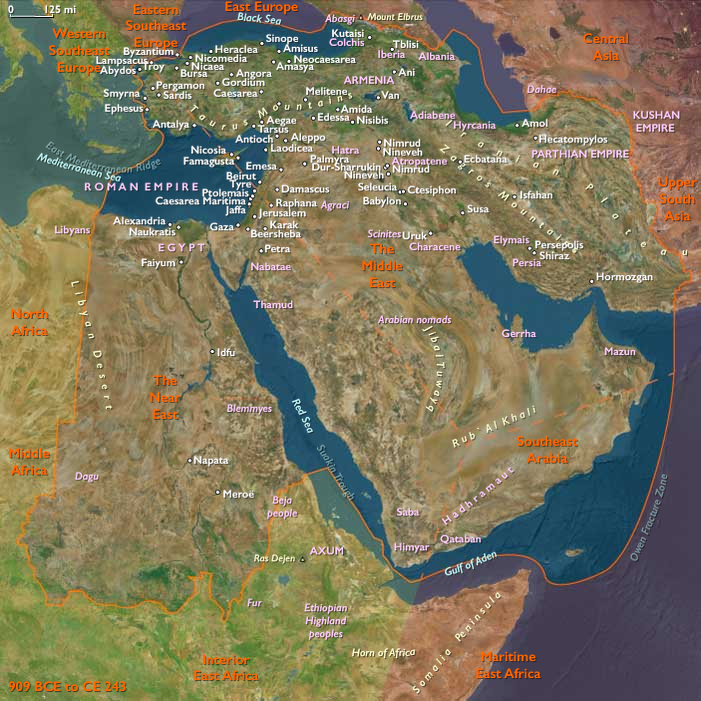
Gallus conquers Bezetha, in the Jezreel Valley, soon to be the seat of the Great Sanhedrin (Jewish supreme religious court), but is unable to take The Temple Mount.
The Roman forces invest Jerusalem, then for uncertain reasons, withdraw back towards the coast, closely pursued by rebel scouts.
The organization of the Jews is better than it had been previously.
As the Romans near the pass of Beth Horon, they are ambushed and come under attack from massed missile fire, and are then suddenly rushed by a large force of infantry, twenty-four hundred Zealots led by Eleazar ben Simon.
The Romans cannot get into formation within the narrow confines of the pass and lose cohesion under the fierce assault.
The equivalent of an entire legion is destroyed.
Gallus succeeds in escaping with a fraction of his troops to Antioch by sacrificing the greater part of his army and a large amount of war material.
After the massacre, the Jewish Zealots go through the Roman dead, stripping them of their armor, helmets, equipment, and weapons.
Eleazar, returning to Jerusalem with substantial loot, will use the wealth acquired in this decisive victory as political leverage during the battle for power in Jerusalem in 67-69.
The battle of Beth-Horon is one of the worst defeats suffered by regular Roman troops against a rebelling province in history, encouraging many more volunteers and towns to throw their lot in with the rebels.
A full-scale war is now inevitable.
The rebel government in Jerusalem assigns command of both Galilee and the Golan to Yosef Ben Matityahu (the future Josephus) who (if his own untrustworthy account may be believed), is obstructed in his efforts at conciliation by the enmity of the local partisans led by John of Giscala.
Though realizing the futility of armed resistance, he nevertheless sets about fortifying nineteen of the most important towns of the north against the forthcoming Roman juggernaut.
The mountaintop fortress of Masada occupies the entire top of an isolated mesa near the southwest coast of the Dead Sea, First fortified either by Jonathan Maccabeus or by Alexander Jannaeus, both of the Hasmonean dynasty, the site was chiefly developed between 37 and 31 BCE by Herod the great, as a refuge for himself in the event of a revolt.
After Herod's death, the Romans occupied Masada, but a group of Jewish extremists, the Sicarii, overcomes the Roman garrison of Masada in 66.
The steep slopes of the mountain make Masada a virtually unassailable fortress.
Simon bar Giora, who had first become notable when Roman troops marched towards Jerusalem in 66, had helped in defeating the advance by attacking from the north.
He had put the hindmost of the army into disorder, and had carried off many of the beasts that carried the weapons of war, leading them into the city.
However, he had been rejected for a command position by the Jerusalem authorities, for they did not want a popular leader of a rebellious peasantry if they were to moderate the revolt and negotiate with the Romans.
As a result, Simon has gathered a large number of revolutionaries and starts robbing houses of wealthy people in the district of Acrabbene in Samaria.
The shock of the defeat at the Battle of Beth-Horon has persuaded the Romans of the need to fully commit to crushing the rebellion regardless of the effort it will require.
Soon after his return, Gallus had died and been succeeded in the governorship of Syria by Licinius Mucianus.
Mucianus, who had been sent by Claudius to Armenia with Gnaeus Domitius Corbulo, is recorded around 65 as suffect consul under Nero.
After he, too, fails to put down the Jewish revolt, Nero and the senate, greatly annoyed by the revolt and Gallus’ loss of six thousand men, gives Titus Flavius Sabina Vespasianus (Vespasian), who has held many political and military offices, the command against the rebels.
Vespasian lands at Ptolemais in April 67 with two legions, with eight cavalry squadrons and ten auxiliary cohorts.
Here he is joined by his elder son Titus, who arrives from Alexandria at the head of Legio XV Apollinaris, as well as by the armies of various local allies including that of king Agrippa II.
Vespasian, fielding more than sixty thousand soldiers, begins operations by subjugating Galilee.
Many towns give up without a fight, although others have to be taken by force.
The Romans quickly break the Jewish resistance in the north.
The Jews have failed to establish an effective field army and Vespasian's campaign is therefore dominated by sieges.
Josephus after a failed attempt to confront the Roman army at Sepphoris had retired to Tiberias but soon establishes himself at Yodfat (Jotapata), drawing the Roman legions to the town.
Yodfat, however, suffers from a lack of any local natural source of water.
Excavations have revealed the existence of an extensive system of cisterns, both public and private, that were used to collect rain water.
While a large quantity of corn had been stored away, Yodfat's dependence on a limited and diminishable supply of water will prove problematic during the Roman siege.
Josephus puts the population of Yodfat on the eve of the siege at over forty thousand people, including refugees, although this number is undoubtedly inflated.
On the forty-seventh day of the siege, the day when the ramp surpasses the walls, a deserter goes over to the Romans and discloses the dire situation within Yodfat.
Few defenders have remained, and these, worn out by their perpetual fighting and vigilance, usually sleep during the last watch of the night.
At dawn on the very next day (July 20, 67), a band of Romans reportedly led by Titus himself stealthily scales the walls, cuts the throats of the watch and opens the gates, letting in the entire Roman army.
The Jews, taken by surprise, are furthermore confounded by a thick mist, and the Romans quickly take hold of the summit, pursuing the inhabitants down the eastern slope.
According to Josephus, forty thousand are slain or commit suicide and twelve hundred women and infants are taken into slavery, while the Romans suffer but a single fatality.
Vespasian orders the town demolished and its walls torn down.
The Romans prohibit burial of the fallen and it is only a year or more later when Jews are allowed to return to bury the remains in caves and cisterns.
Yosef Ben-Matityahu had hidden in one of the caves that litter the site, along with forty other prominent citizens of Yodfat.
Although Ben-Matityahu is in favor of surrendering to the Romans, the majority of his comrades opt to kill themselves rather than fall into Roman hands.
As suicide is considered sinful, they decide to draw lots to kill each other.
Ben-Matityahu and another man, however, are the last to survive, and both resolve to give themselves up.
Taken in chains to see the Roman general, Ben-Matityahu, assuming the role of a prophet, foretells that Vespasian will one day become emperor.
Vespasian subsequently spares the rebel leader, who begins collaborating with the Romans.
At first a slave, he will later be freed and be granted Roman citizenship as Flavius Josephus.
Josephus' role as leader of the defenders of Yodfat, his subsequent collaboration with the Romans and his servitude to the Flavians have all made his account of the siege of Yodfat suspect.
As the sole account of the battle, as well as of many events of the Great Revolt, the credibility of Josephus has been a central subject of historical inquiry.
Although evidence from excavations indicate that hundreds, possibly thousands, of people were clearly killed during the battle, the archaeology of Yodfat also reveals that the fortification of Yodfat cannot be credited to Josephus' effort alone.
Furthermore, archaeology is unable to provide insight into many of the details he provides, particularly events surrounding the final fall of Yodfat and his surrender to Vespasian.
The figure he provides for the population of Yodfat, and the large number of casualties are clearly inflated.
A more realistic figure would place the population of the town on the eve of the siege, including refugees and fighting men, at seven thousand people.