
Juan Bosch
43rd President of the Dominican Republic
1909 CE to 2001 CE
Juan Emilio Bosch Gaviño (30 June 1909, La Vega – 1 November 2001, Santo Domingo) is a politician, historian, short story writer, essayist, educator, and the first democratically elected president of the Dominican Republic for a brief time in 1963.
Previously, he had been the leader of the Dominican opposition in exile to the dictatorial regime of Rafael Trujillo for over 25 years.
To this day he is remembered as an honest politician and regarded as one of the most prominent writers in Dominican literature.
He foundd both the Dominican Revolutionary Party (PRD) in 1939 and the Dominican Liberation Party (PLD) in 1973.
In 1934 he married Isabel García and had two children with her: Leon and Carolina.
During Trujillo's dictatorship, Bosch is jailed for his political ideas, being released after several months.
In 1938, Bosch managed to leave the country, settling in Puerto Rico.
World
South America and The Eastern Isles
View →Related Events
Showing 3 events out of 3 total
The West Indies (1828–1971 CE)
Emancipation, Empire, and the Quest for Unity
Geography & Environmental Context
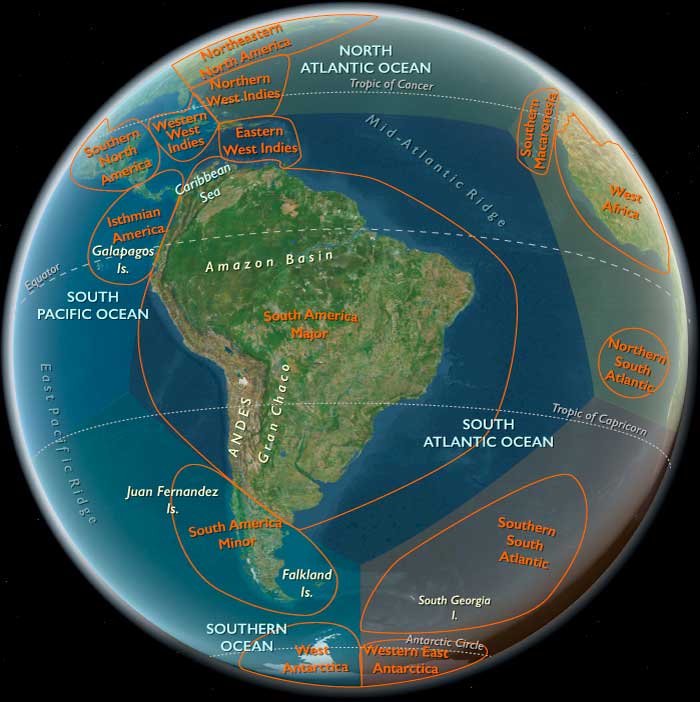
The West Indies comprises three fixed subregions:
-
Northern West Indies — Bermuda, the Turks and Caicos, northern Hispaniola, and the Outer Bahamas(Grand Bahama, Abaco, Eleuthera, Cat Island, San Salvador, Long Island, Crooked Island, Mayaguana, Little Inagua, and eastern Great Inagua). Anchors include the Bahama Banks, Bermuda’s naval dockyards, the Caicos salt pans, and the northern valleys of Hispaniola.
-
Eastern West Indies — Trinidad, Saint Lucia, Barbados, most of Haiti and the Dominican Republic, Puerto Rico, and the Virgin Islands. Anchors include the Kingston–San Juan sea lanes, the Hispaniolan cordilleras, the Caroni and Naparima plains of Trinidad, and the Windward–Leeward channels that structured trade, migration, and naval passage.
-
Western West Indies — Cuba, Jamaica, the Cayman Islands, and the Inner Bahamas (Andros, New Providence, Great Exuma, and neighboring islands). Anchors include Havana Harbor, the Blue Mountains of Jamaica, the Andros Barrier Reef, and the Cayman Trench.
Fertile volcanic soils, limestone valleys, and strategic sea lanes made these islands central to Atlantic commerce and imperial rivalry from the age of sugar through decolonization.
Climate & Environmental Shifts
The tropical climate brought seasonal hurricanes and variable rainfall. Deforestation and plantation monoculture caused erosion and flooding, while earthquakes periodically struck Hispaniola and Puerto Rico. By the 20th century, hurricanes became a recurring test of infrastructure and governance. Marine resources, from coral reefs to fisheries, sustained local economies even as tourism and oil refining reshaped coasts.
Subsistence & Settlement
-
Plantation economies dominated the 19th century, producing sugar, coffee, cocoa, and bananas under systems of wage labor that replaced slavery after emancipation (1834–38 in the British colonies, 1848 in the French, 1863 in the Dutch, 1886 in Cuba, and 1898 in Puerto Rico).
-
Peasant freeholds emerged across Jamaica, Barbados, and Trinidad, where former slaves cultivated provisions and cash crops. In Hispaniola, smallholder coffee and cacao farming thrived.
-
Urban growth accelerated: Havana, San Juan, Port of Spain, and Kingston became centers of trade, education, and politics.
-
Migration shaped the region: Indian indentured laborers arrived in Trinidad, Guyana, and Saint Lucia after 1838; inter-island migration filled estates and urban jobs; transatlantic migration linked the islands to New York and London.
Technology & Material Culture
Steamships, railways, and telegraphs integrated the Caribbean into global networks by the late 19th century. Sugar mills, rum distilleries, and port warehouses dominated industrial landscapes. Oil refining began in Trinidad (early 20th century) and later in Curaçao and Aruba. After WWII, airports, cruise terminals, and tourism infrastructure redefined economies. Architecture ranged from Georgian and Spanish colonial to modernist hotels and government buildings, while vernacular crafts—baskets, pottery, steelpan drums, and carnival costumes—remained cultural hallmarks.
Movement & Interaction Corridors
-
Sea lanes: The Windward Passage, Mona Passage, and Florida Straits were arteries for trade, migration, and naval power.
-
Diaspora routes: Caribbean laborers moved to Panama for canal construction, to Cuba and the U.S. for seasonal harvests, and to Britain after WWII (the “Windrush Generation,” 1948 onward).
-
Regional travel: Steamers and later airlines linked colonial capitals—Kingston, Port of Spain, Havana, San Juan, and Bridgetown—into circuits of commerce, religion, and politics.
-
Military and naval routes: U.S. expansion after 1898 established bases in Cuba, Puerto Rico, and Bermuda; naval stations in the Bahamas and British bases in Bermuda remained strategic through WWII and the Cold War.
Cultural & Symbolic Expressions
Caribbean identity fused African, European, and Asian elements.
-
Religion: Protestantism, Catholicism, Hinduism, Islam, and Afro-syncretic faiths such as Obeah, Vodou, and Orisha coexisted and intertwined.
-
Language and literature: Creoles flourished beside English, Spanish, and French; writers such as Aimé Césaire, Claude McKay, and Derek Walcott articulated decolonizing consciousness.
-
Music: Calypso, mento, ska, steelband, salsa, and reggae emerged from island streets and festivals, broadcasting Caribbean rhythms worldwide.
-
National festivals: Carnival, Junkanoo, and independence parades turned the streets into theaters of memory and resistance.
Environmental Adaptation & Resilience
Smallholders diversified crops and maintained intercropping traditions to buffer hurricanes and price shocks. Coastal communities rebuilt with coral stone and timber after storms. Water catchment, terrace farming, and fishing cooperatives sustained rural livelihoods. Postwar conservation and marine parks (e.g., in the Bahamas and Virgin Islands) began to protect reefs and mangroves as tourism expanded.
Political & Military Shocks
-
Emancipation and post-slavery transitions: Freed populations negotiated wages and land rights amid planter resistance.
-
Imperial changeovers: The Spanish–American War (1898) transferred Cuba, Puerto Rico, and Guam to the United States; the U.S. Virgin Islands were purchased from Denmark (1917).
-
Nationalism and federation: The early 20th century saw labor uprisings and the rise of Caribbean socialism—Butler, Bustamante, Manley, Williams, and Castro among key figures. The West Indies Federation (1958–62) sought unity but collapsed amid national rivalries.
-
Independence waves:
-
Cuba (1902, revolution 1959), Dominican Republic (sovereignty restored 1844, renewed independence 1865), Jamaica and Trinidad and Tobago (1962), Barbados (1966), Bahamas (1973, beyond our span).
-
U.S. territories—Puerto Rico, Virgin Islands, and Guam—retained commonwealth or dependency status.
-
-
Cold War and revolutions: The Cuban Revolution (1959) redefined regional politics; U.S. interventions in the Dominican Republic (1965) and elsewhere revealed hemispheric tensions.
Transition
Between 1828 and 1971, the West Indies transitioned from plantation colonies to a constellation of independent and semi-autonomous nations. Slavery’s abolition gave rise to peasantries, diasporas, and new cultural syntheses; oil and tourism replaced sugar as economic engines. The region’s music, literature, and politics voiced both emancipation and aspiration. By 1971, the Caribbean stood as a microcosm of decolonization—its seas crossed by cruise ships and memory, its islands bound by shared histories of survival, creativity, and unbroken connection to the wider Atlantic world.
Eastern West Indies (1828–1971 CE): Emancipation, Nation-Making, and New Economies
Geographic & Environmental Context
The subregion of Eastern West Indies includes Trinidad, Saint Lucia, Barbados, most of Haiti, most of the Dominican Republic, Puerto Rico, and the Virgin Islands. Anchors include Kingston-to-San Juan sea lanes, the Hispaniolan cordilleras, the Caroni and Naparima plains (Trinidad), and the Windward–Leeward channels that structured trade, migration, and navies.
Climate & Environmental Shifts
Recurring major hurricanes (e.g., 1899 in Puerto Rico; 1930 in the Dominican Republic; 1955/1963 across the arc) and periodic droughts tested smallholders and towns. Deforestation for cane and charcoal reduced watershed resilience; mid-20th-century reforestation and conservation began piecemeal.
Subsistence & Settlement
-
Haiti: Independent since 1804; rural peasantry consolidated smallholdings (lakou systems) in coffee/food crops. Political instability, debt, and later the U.S. occupation (1915–1934) constrained growth.
-
Dominican Republic: Independence from Haiti in 1844; annexation to Spain (1861–1865) and restoration followed. Coffee, cacao, tobacco, and cattle underpinned regional economies; the U.S. occupation (1916–1924) reshaped customs and finance.
-
Puerto Rico: Spanish colony until 1898, then under U.S. sovereignty; sugar corporations expanded, later giving way to industrialization and migration under Operation Bootstrap (1947–1950s).
-
Barbados & Saint Lucia: Emancipation (1834–1838) reconfigured labor; sharecropping and peasantries grew alongside estates. 20th-century diversification moved toward tourism and services; Barbados achieved independence (1966).
-
Trinidad: Emancipation (1834–1838); post-emancipation estates imported indentured labor (primarily from India, from 1845). Oil and asphalt (Pitch Lake) shifted the economy; independence (1962) arrived mid-century.
-
Virgin Islands: The Danish West Indies (St. Thomas, St. John, St. Croix) abolished slavery in 1848; sold to the United States (1917) as the U.S. Virgin Islands. British Virgin Islands remained a small, agrarian colony moving toward financial/tourism niches.
Technology & Material Culture
Railways, centrals, and company towns modernized cane zones; oil refineries and ports transformed Trinidad. Concrete sea defenses, lighthouses, and breakwaters hardened coasts. Urban fabrics—Havana-style arcades in San Juan’s old quarter, gingerbread houses in Cap-Haïtien, Georgian stone in Bridgetown, cast-iron galleries in Castries—signaled layered colonial inheritances. Afro-Indo-Creole cuisines, steelpan (Trinidad), and carnival costuming flourished.
Movement & Interaction Corridors
-
Steamship and later air routes knit Port of Spain, Bridgetown, San Juan, and St. Thomas to New York, London, and Caracas.
-
Labor migrations: post-1838 indenture to Trinidad; 20th-century movements from Barbados and St. Lucia to Panama, Britain’s Windrush era, and the U.S. mainland; circular migration within Hispaniola.
-
Naval corridors shifted with U.S. ascendancy (Guantánamo nearby; U.S. bases in Puerto Rico and the U.S. Virgin Islands).
Cultural & Symbolic Expressions
-
Afro-Caribbean faiths—vodou (Haiti), orisha/Ifá strands in Trinidad, Shango and Spiritual Baptist practices—coexisted with Catholic and Protestant establishments.
-
Mass festivals—Carnival (Trinidad/Barbados), Jounen Kwéyòl strands in Saint Lucia, Fête Dieu processions—encoded memory and resilience.
-
Literary and musical renaissances (calypso, son, merengue, steelpan) articulated post-emancipation identities; nationalist symbols crystallized in independence movements.
Environmental Adaptation & Resilience
Peasant mosaics (cacao/coffee/intercropping) stabilized hillsides; terrace and contour farming limited erosion. Coastal towns rebuilt repeatedly after cyclones with concrete and hurricane-strapped roofs. Oil and tourism diversified beyond sugar; cooperative credit, diaspora remittances, and mutual-aid lodges buffered shocks.
Transition
By 1971 CE, the Eastern West Indies spanned independent states (Trinidad and Barbados), U.S. territories (Puerto Rico, U.S. Virgin Islands), British colonies on paths toward autonomy (Saint Lucia, British Virgin Islands), and Hispaniolan republics wrestling with debt, dictatorship, and development. Across the arc, the legacies of slavery, emancipation, indenture, and revolution had yielded a distinctly Caribbean modernity—maritime, migratory, and culturally incandescent.
Eastern West Indies (1960–1971 CE): Political Transformation, Economic Shifts, and Social Movements
Haiti: Duvalier's Dictatorship and Repression
In Haiti, the era was dominated by the authoritarian regime of François "Papa Doc" Duvalier (1957–1971). Duvalier established an oppressive dictatorship characterized by brutal repression, extensive human rights abuses, and a pervasive cult of personality. He used his feared militia, the Tonton Macoute, to violently suppress dissent and maintain power. Duvalier manipulated Haitian nationalism and vodou religious symbolism to legitimize his regime, contributing to deepening divisions and social unrest. Economic conditions deteriorated significantly, exacerbating poverty and causing increased emigration.
Dominican Republic: End of Trujillo Era and Political Instability
The Dominican Republic saw the end of Rafael Trujillo’s brutal dictatorship in 1961 following his assassination, leading to a tumultuous period of political instability and power struggles. After a brief attempt at democracy under President Juan Bosch (1963), the country experienced a military coup, which triggered civil unrest and a brief civil war in 1965. A U.S.-led intervention prevented a full-scale revolution, leading to elections won by Joaquín Balaguer (1966–1978). Balaguer’s rule brought authoritarian stability, infrastructure development, and economic growth but continued suppression of political freedoms.
Puerto Rico: Continued Industrialization and Political Debates
Puerto Rico continued its economic progress through the ongoing success of "Operation Bootstrap," which diversified the economy into pharmaceuticals, electronics, and petrochemicals. Despite economic growth, the Commonwealth status remained controversial, with debates intensifying over statehood, independence, or continued autonomy. Political discourse became increasingly polarized, reflecting tensions between economic dependence on the United States and growing nationalist sentiments.
U.S. Virgin Islands: Economic Expansion and Tourism Boom
The U.S. Virgin Islands underwent substantial economic expansion through tourism development, infrastructure improvements, and increased U.S. federal funding. The islands became a significant tourist destination, with St. Thomas and St. Croix seeing notable economic benefits. Nevertheless, local socio-economic disparities persisted, prompting discussions about political autonomy and improved local governance.
Social and Economic Developments
Throughout the Eastern West Indies, economic modernization and foreign investment brought varied outcomes. While Puerto Rico and the U.S. Virgin Islands saw significant economic growth through industrialization and tourism, Haiti and the Dominican Republic faced severe political upheaval and repressive regimes. Economic disparities, political oppression, and migration continued to characterize regional dynamics.
Key Historical Events
-
Assassination of Dominican dictator Rafael Trujillo (1961) and subsequent political turmoil.
-
U.S. military intervention in the Dominican Republic (1965), leading to the presidency of Joaquín Balaguer.
-
Intensified dictatorship and human rights abuses under Haitian president François Duvalier.
-
Continued industrialization and economic diversification in Puerto Rico under "Operation Bootstrap."
-
Rapid growth in tourism and infrastructure in the U.S. Virgin Islands.
Long-Term Consequences and Historical Significance
The period from 1960 to 1971 profoundly reshaped the Eastern West Indies, bringing significant political transformations, economic modernization, and intensified social movements. The legacy of authoritarianism in Haiti and the Dominican Republic left lasting impacts on governance and social stability, while economic growth and political debate in Puerto Rico and the U.S. Virgin Islands highlighted the complexities of economic dependence and political identity. These developments set the stage for ongoing debates about political autonomy, economic sustainability, and social justice in the region.