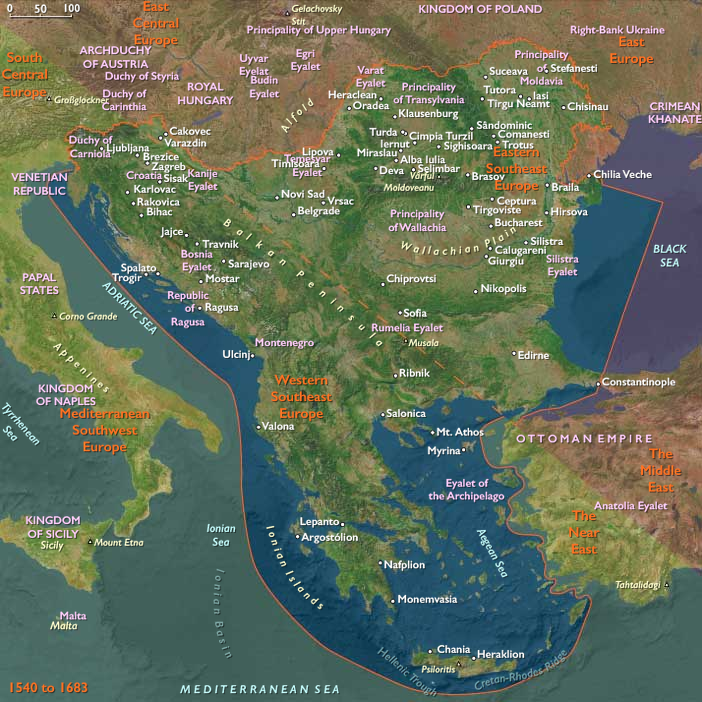
The French, apparently chastened by their failed relief effort and the loss of so valuable a warship, had abandoned Candia in August, leaving Captain General Francesco Morosini, the commander of Venetian forces, with only thirty-six hundred fit men and scant supplies to defend the fortress.
He, therefore, accepts terms and surrenders on September 27, 1669, to Grand Vizier Ahmed Köprülü.
However, his surrender without first receiving authorization to do so from the Venetian Senate is to make Morosini a controversial figure in Venice for some years afterward.
A peace treaty leaves most of Crete in Turkish hands.
As part of the surrender terms, all Christians are allowed to leave Candia with whatever they can carry while Venice retains possession of Gramvousa, Souda and Spinalonga, fortified islands that shield natural harbors where Venetian ships can stop during their voyages to the eastern Mediterranean.
Fazil Ahmed Pasa’ conquest of Candia, ending a siege of twenty-eight months—possibly the longest siege in history—and thus terminating a long and dangerous war with Venice, wins him unparalleled prestige.
Venice, a ruling force in the eastern Mediterranean for about five hundred years, now has little effective power here.
Following the loss of Candia, the the Venetians will somewhat offset their defeat by expanding their holdings in Dalmatia.