Leopold II, Holy Roman Emperor
King of the Romans (King in Germany)
Years: 1747 - 1792
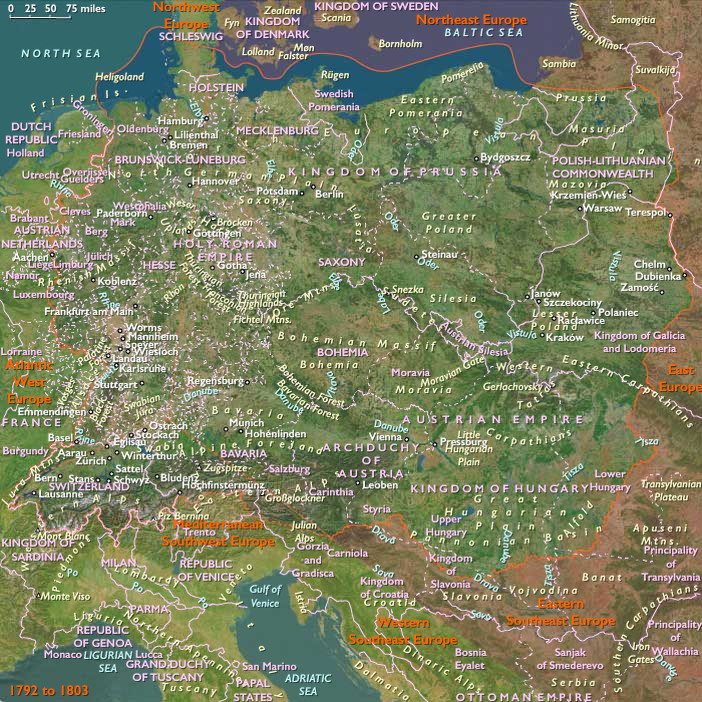
Leopold II (5 May 1747 – 1 March 1792), born Peter Leopold Joseph Anton Joachim Pius Gotthard, is Holy Roman Emperor and King of Hungary and Bohemia from 1790 to 1792, Archduke of Austria and Grand Duke of Tuscany from 1765 to 1790.
He is a son of Emperor Francis I and his wife, Empress Maria Theresa.
Leopold is a moderate proponent of enlightened absolutism.


Related Events
Filter results
Showing 10 events out of 49 total
The enlightened rule of Maria-Theresa and Joseph II plays a leading role in the development of a modern Czech nation, but one that is full of contradictions.
On the one hand, the policy of centralization whittles down further any vestiges of a separate Bohemian Kingdom and results in the Germanization of the imperial administration and nobility.
On the other hand, by removing the worst features of the Counter-Reformation and by introducing social and educational reforms, these rulers provide the basis for economic progress and the opportunity for social mobility.
The consequences for Bohemia are of widespread significance.
The nobility turns its attention to industrial enterprise.
Many of the nobles sublet their lands and invest their profits in the development of textile, coal, and glass manufacture.
Czech peasants, free to leave the land, move to cities and manufacturing centers.
Urban areas, formerly populated by Germans, become increasingly Czech in character.
The sons of Czech peasants are sent to school; some attend the university, and a new Czech intellectual elite emerges.
During this same period the population of Bohemia nearly quadruples, and a similar increase occurs in Moravia, but in response to pressures from the nobility, Joseph's successor, Leopold II (1790-92), abrogates many of Joseph's edicts and restores certain feudal obligations. (Serfdom will not be completely abolished until 1848.)
Enlightened rule destroys the few remaining vestiges of the Bohemian Kingdom.
The dismantling of Bohemian institutions and the dominance of the German language seems to threaten the very existence of the Czech nation.
Yet, enlightened rule also provides new educational and economic opportunities for the Czech people.
Inadvertently, the enlightened monarchs have helped set the stage for a Czech national revival.
The ideological rigidity with which Joseph II has carried out his reforms has also weakened the Habsburg Dynasty by provoking social unrest and, in Hungary and Belgium, rebellion.
When Joseph dies in 1790, his brother, Leopold II (r. 1790-92), has to reverse many of the reforms and offer new concessions to restore order.
To get Prussian support for the military action that reestablishes Habsburg authority in Belgium in 1790, Leopold foreswears further Austrian territorial gains at Turkish expense.
He also confirms Hungary's right not to be absorbed into a centralized empire, but to be ruled by him as king of Hungary according to its own administration and laws.
In exchange, the Hungarian nobility ends their rebellion.
The reforms introduced by Joseph II from 1780 to 1790 expose ethnic and linguistic rivalries.
Among other things, Joseph brings the empire under strict central control and decrees that German replace Latin as the official language of the empire.
This decree enrages the Hungarians, who reject Germanization and fight to make their language, Magyar, the official language of Hungary.
The Croats, fearing both Germanization and Magyarization, defend Latin.
Hungary is on the verge of rebellion when Joseph dies in 1790.
Joseph's successor, Leopold II, abandons centralization and Germanization when he signs laws ensuring Hungary's status as an independent kingdom under an Austrian king.
The next Austrian emperor, Francis I, will stifle Hungarian political development for almost four decades, during which Magyarization will not be an issue.
Joseph's successor, Leopold II (1790-92), recognizes Hungary again as a separate country under a Habsburg king and reestablishes Croatia and Transylvania as separate territorial entities.
In 1791 the Diet passes Law X, which stresses Hungary's status as an independent kingdom ruled only by a king legally crowned according to Hungarian laws.
Law X will become the basis for demands by Hungarian reformers for statehood in the period from 1825 to 1849.
New laws again require approval of both the Habsburg king and the Diet, and Latin is restored as the official language.
The peasant reforms remain in effect, however, and Protestants remain equal before the law.
Leopold dies in March 1792 just as the French Revolution is about to degenerate into the Reign of Terror and send shock waves through the royal houses of Europe.
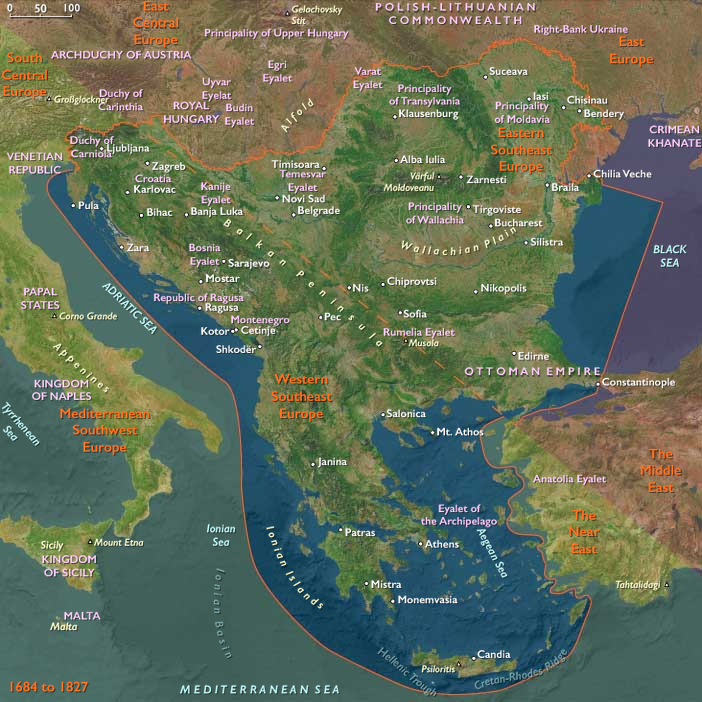
Eastern Southeast Europe (1780–1791 CE): Enlightened Reforms, National Awakening, and Rising Nationalism
Settlement and Migration Patterns
Persistent Importance of Border Communities
The strategic importance of border communities continued, particularly in areas such as the Austrian Military Frontier, where Serbs and other groups persisted in their roles as military settlers and frontier guards, protecting the Habsburg domains from potential Ottoman incursions.
Economic and Social Developments
Joseph II's Enlightened Reforms
Emperor Joseph II, influenced by Enlightenment principles, initiated sweeping reforms aimed at alleviating feudal burdens and modernizing administrative structures. His policies, such as serf emancipation and centralization of governance, sought to improve peasant conditions but often met fierce resistance from local nobles and clergy, particularly in Transylvania and Hungary.
Transylvanian Serf Revolt (1784)
Transylvanian serfs, inspired by Joseph II's promises of reform, revolted under the leadership of Vasile Ursu Nicola Horea in 1784. Although initially successful in challenging feudal abuses, the rebellion was harshly suppressed, resulting in severe punishments for its leaders. Despite this, Joseph implemented some reforms to mitigate the serfs' grievances, though resistance from the nobility limited their effectiveness.
Cultural and Artistic Developments
Cultural Awakening and Romanian Nationalism
The era witnessed a burgeoning Romanian national consciousness, significantly fostered by the Uniate Church. Transylvanian Uniate priests, educated in Rome and Vienna, promoted Romanian cultural identity through educational institutions, literary works, and religious texts. The Uniate seat in Blaj emerged as a vibrant center of Romanian culture.
Bulgarian Literary and Educational Revival
Sofronii Vrachanski (Stoyko Vladislavov), a Bulgarian cleric and scholar, actively promoted Bulgarian education and literature. His writings, influenced by Enlightenment ideals, significantly advanced Bulgarian national consciousness, particularly through the popularization of secular texts and the widespread dissemination of Father Paisi of Hilendar's seminal Slav-Bulgarian History.
Intellectual and Religious Developments
Enlightenment Influence and National Identity
Enlightenment ideals strongly influenced regional intellectuals, promoting reformist and nationalist sentiments. Romanian bishops petitioned Emperor Leopold II in 1791 for civil rights and political recognition based on their historical claims of Roman ancestry and indigenous status. Although largely unsuccessful politically, their efforts intensified nationalist awareness among Romanians.
Religious Tolerance and Orthodox Rights
Joseph II enacted policies promoting religious tolerance, granting civil rights to Orthodox Christians, although full religious equality was not fully realized. This policy shift represented a significant departure from earlier religious intolerance, influencing regional dynamics, particularly in Transylvania.
Political Dynamics and Regional Rivalries
Resistance to Centralization
Joseph II’s centralization efforts provoked strong opposition among Hungarian nobles, Catholic clergy, and other regional elites. The imposition of German as the official administrative language further fueled nationalist reactions, prompting widespread resistance and ultimately forcing Joseph to rescind some of his reforms.
Nationalist Movements and Diplomatic Complexities
Nationalist sentiments became increasingly pronounced in response to imperial centralization and forced assimilation policies. Hungarian calls for unification and Magyarization triggered defensive nationalist reactions among Romanians and other minorities, complicating diplomatic and internal political affairs within the Habsburg dominions.
Key Historical Events and Developments
-
Joseph II's enlightened reforms, including serf emancipation and religious tolerance.
-
The Transylvanian serf revolt of 1784, brutally suppressed but influential in prompting limited reforms.
-
Emergence of Romanian and Bulgarian nationalist movements, significantly influenced by Enlightenment ideas and religious institutions.
Long-Term Consequences and Historical Significance
The period from 1780 to 1791 CE marked a critical juncture characterized by Enlightenment-driven reforms, growing nationalist awareness, and significant social upheaval. Joseph II's reforms, though partially reversed, set precedents for future modernization and political transformation. The rising nationalist sentiments among Romanians and Bulgarians laid essential foundations for subsequent independence movements and shaped the region's evolving identity within the broader context of Eastern Southeast European history.
Joseph II's Germanization decree triggers a chain reaction of national movements throughout the empire.
Hungarians appeal for unification of Hungary and Transylvania and Magyarization of minority peoples.
Threatened by both Germanization and Magyarization, the Romanians and other minority nations experience a cultural awakening.
In 1791 two Romanian bishops—one Orthodox, the other Uniate—petition Emperor Leopold II (1790-92) to grant Romanians political and civil rights, to place Orthodox and Uniate clergy on an equal footing, and to apportion a share of government posts for Romanian appointees; the bishops support their petition by arguing that Romanians are descendants of the Romans and the aboriginal inhabitants of Transylvania.
The emperor restores Transylvania as a territorial entity and orders the Transylvanian Diet to consider the petition.
The Diet, however, decides only to allow Orthodox believers to practice their faith; the deputies deny the Orthodox Church recognition and refuse to give Romanians equal political standing beside the other Transylvanian nations.
Atlantic West Europe (1780–1791): Revolutionary Tensions, Economic Strains, and the Prelude to Upheaval
Between 1780 and 1791, Atlantic West Europe—comprising northern France, the Low Countries (modern Belgium, Netherlands, Luxembourg), and the Atlantic-facing and English Channel coastal regions—stood at a historic turning point. Marked by intensified revolutionary fervor, deepening economic pressures, Enlightenment-inspired critiques of established authority, and escalating social tensions, this era directly precipitated monumental political transformations, most notably the French Revolution of 1789.
Political and Administrative Developments
Rising Tensions and Prelude to Revolution in France
-
Under Louis XVI (r.1774–1792), France grappled with mounting fiscal crises, notably due to debts accumulated from aiding the American Revolution (1775–1783). Ministers, including Jacques Necker and Charles Alexandre de Calonne, attempted fiscal reforms but faced vehement resistance from aristocratic and clerical elites.
-
The convening of the Estates-General (1789)—France’s legislative body, dormant since 1614—was a response to the fiscal impasse but quickly evolved into a political catalyst, igniting revolutionary demands for constitutional governance, equal representation, and the dismantling of feudal privileges.
Revolt and Reform in the Austrian Netherlands
-
Under Emperor Joseph II (r.1780–1790), extensive Enlightenment-inspired reforms sought centralization, religious tolerance, and reduced ecclesiastical influence, sparking widespread unrest in the Austrian Netherlands (Belgium).
-
The Brabant Revolution (1789–1790) emerged as a regional revolt against Austrian centralization, establishing a short-lived United States of Belgium (1790), which briefly asserted local autonomy before Habsburg control was re-established under Leopold II (r.1790–1792).
Dutch Republic: Patriotic Movement and Foreign Intervention
-
In the Dutch Republic, the Patriotic Revolution (1780–1787)—driven by progressive political societies demanding republican reforms and reduced monarchical influence—challenged traditional Orangist dominance.
-
The revolution ended with Prussian military intervention (1787), reinstating Orangist authority, yet profoundly altering Dutch political culture and laying foundations for future republican reforms.
Economic Developments: Prosperity, Crisis, and Transition
Maritime Trade Prosperity and Vulnerability
-
Atlantic trade remained prosperous, notably benefiting ports such as Bordeaux, Nantes, and Amsterdam through vibrant commerce in wine, textiles, sugar, and colonial commodities. However, increasing competition from Britain, financial volatility, and trade disruptions from ongoing conflicts gradually eroded economic stability.
-
Dutch maritime trade and finance faced growing pressure from British naval power, while Antwerp and Brussels, despite regional unrest, experienced continued economic resilience through sustained commercial activities.
Agricultural Crisis and Food Scarcity
-
Severe agricultural disruptions, particularly the devastating harvest failures of 1787–1789, led to widespread food scarcity, rising bread prices, and intensified rural hardship across northern France and Belgium. These conditions inflamed social unrest, fueling popular grievances against feudal structures and aristocratic privileges.
-
Economic desperation among rural populations accelerated rural-urban migration, exacerbating urban poverty and intensifying political radicalization in Paris, Brussels, Lille, and other cities.
Intellectual and Cultural Developments
Enlightenment Radicalism and Revolutionary Ideals
-
Enlightenment thought reached its revolutionary peak. Radical ideas about equality, liberty, secular governance, and human rights—advanced by figures like Voltaire, Rousseau, Condorcet, and radical journalist Camille Desmoulins—inspired widespread calls for political and social reform.
-
Revolutionary ideals proliferated rapidly through pamphlets, journals, and political clubs in urban centers, deeply influencing popular consciousness and intensifying demands for change.
Scientific and Educational Advancements
-
Significant advances continued in science and education, exemplified by the vibrant intellectual life at institutions such as the University of Leiden and Paris’s scientific academies, contributing to Enlightenment rationalism and empirical inquiry.
-
New public education initiatives, promoted by revolutionary ideals, fostered expanded literacy and political awareness among urban middle classes, artisans, and broader populations.
Religious and Social Developments
Secularization and the Decline of Ecclesiastical Authority
-
Enlightenment critiques continued undermining traditional religious authority, promoting secularism and anticlerical attitudes, particularly among urban populations in Paris, Amsterdam, and Brussels.
-
Joseph II’s reforms in Belgium further attempted to curtail clerical privileges, inciting strong resistance but also advancing the principle of state sovereignty over church authority.
Social Crisis and Revolutionary Mobilization
-
Deepening economic disparities and increasing taxation inflamed social tensions among peasants, urban artisans, and middle-class intellectuals across northern France and the Low Countries, fueling revolutionary mobilization.
-
Revolutionary clubs, salons, and public assemblies proliferated, especially in Paris, Brussels, and Amsterdam, creating potent environments for political radicalization and activism.
Cultural and Artistic Flourishing
Neoclassical Dominance and Revolutionary Art
-
Neoclassicism thrived, reflecting Enlightenment ideals of rationality, republican virtue, and civic morality. Artists such as Jacques-Louis David, whose politically charged works (Oath of the Horatii, 1784) symbolized revolutionary ideals, profoundly influenced public sentiment.
-
Architectural and urban planning developments, exemplified in Paris and Brussels, emphasized rational planning, classical aesthetics, and civic utility, reflecting broader Enlightenment ideals.
Literary Innovation and Revolutionary Expression
-
Literary output surged, characterized by revolutionary fervor. Writings of political thinkers and journalists proliferated, significantly shaping revolutionary discourse and spreading revolutionary consciousness among literate and semi-literate populations.
-
In theater, plays critical of aristocratic privilege and advocating republican values captivated urban audiences, reinforcing revolutionary ideology.
Urban and Social Transformations
Urban Expansion and Revolutionary Epicenters
-
Urban centers like Paris, Brussels, and Amsterdam became crucibles of revolutionary ideas and actions. Rising urban poverty and dissatisfaction over social inequalities intensified revolutionary activism, public demonstrations, and political organization.
-
Paris notably emerged as the epicenter of revolutionary mobilization, culminating in major political events such as the storming of the Bastille (July 14, 1789), which symbolically ended feudal absolutism and initiated revolutionary governance.
Social Mobility and Revolutionary Agitation
-
Increasingly influential urban middle classes, merchants, and intellectuals, combined with disenfranchised artisans and urban poor, constituted crucial revolutionary constituencies. Their mobilization significantly undermined traditional social hierarchies, fostering new social dynamics and revolutionary ideals of meritocracy, equality, and political representation.
Legacy and Historical Significance
The period 1780–1791 decisively shaped the historical trajectory of Atlantic West Europe:
-
Politically, the era witnessed revolutionary tensions erupting into open revolt, profoundly altering traditional governance structures and heralding republican ideals.
-
Economically, crises, vulnerabilities, and agricultural disruptions intensified social tensions, directly fueling revolutionary fervor.
-
Intellectually, revolutionary Enlightenment ideas reached their zenith, fundamentally reshaping political ideologies, social attitudes, and cultural expressions.
-
Socially and culturally, the mobilization of urban populations, strengthened by Enlightenment ideals and revolutionary rhetoric, established potent models of civic activism, political organization, and public participation.
Ultimately, these decisive years set the stage for transformative revolutionary upheavals, dramatically reshaping Atlantic West Europe’s political, social, and cultural landscapes, and profoundly influencing subsequent European history.
Torture is also banned.
This makes his country the first state to abolish the death penalty.
November 30 is therefore commemorated today by three hundred cities around the world, as Cities for Life Day.
His ecclesiastical policy, which disturbs the deeply rooted convictions of his people and brings him into collision with the Pope, is not successful.
He is unable to secularize the property of the religious houses or to put the clergy entirely under the control of the lay power.
The Romanians and other minority nations in the Habsburg domains, threatened by both Germanization and Magyarization, are meanwhile experiencing a cultural awakening.