Leopold VI
Duke of Austria
Years: 1176 - 1230
Leopold VI (German: Luitpold, 1176 – 28 July 1230), known as Leopold the Glorious (German: Luitpold der Glorreiche), is the Duke of Austria from 1198 and the Duke of Styria from 1194 to his death in 1230.
He is a member of the House of Babenberg.
Related Events
Filter results
Showing 10 events out of 21 total
East Central Europe (1204–1215 CE): Andrew II’s Hungarian Ascendancy, Bohemian Royal Consolidation under Ottokar I, Polish Regional Power under Henry the Bearded, and Austria’s Stability under Leopold VI
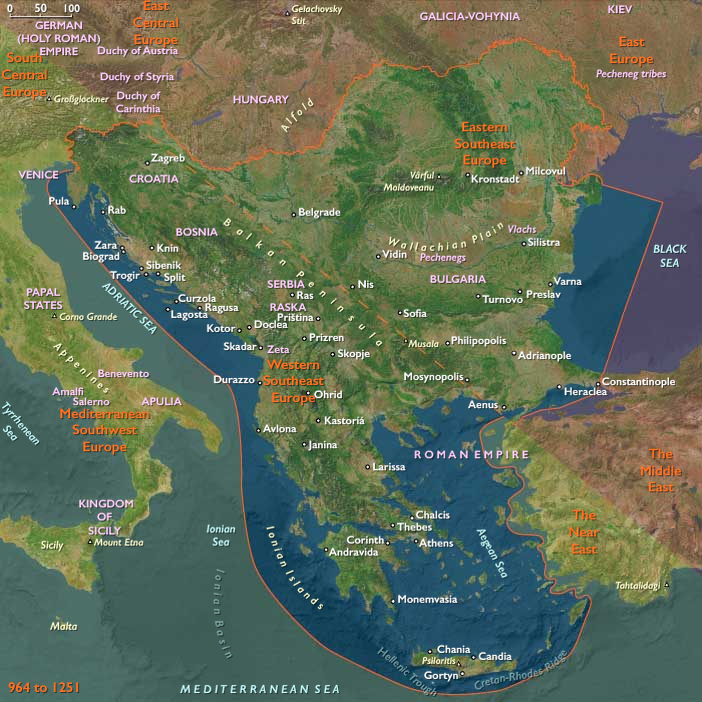
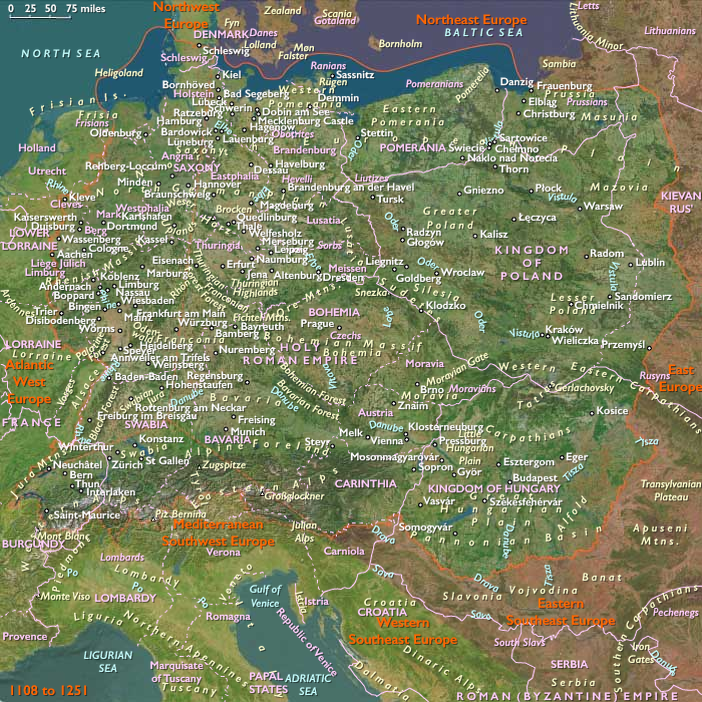
Between 1204 and 1215 CE, East Central Europe—including modern-day Poland, Czechia, Slovakia, Hungary, and eastern regions of Germany and Austria east of 10°E and north of the defined southeastern boundary—experienced significant political realignments, territorial consolidation, and cultural developments. Hungary entered a vibrant era under King Andrew II, Bohemia solidified Přemyslid royal authority under Ottokar I, Poland’s fragmentation continued but saw growing regional strength under Henry the Bearded in Silesia, and Austria prospered under Leopold VI of the Babenberg dynasty. These developments significantly influenced regional stability, economic expansion, and cultural flourishing.
Political and Military Developments
Hungarian Stability and Expansion under Andrew II
-
In 1205, following King Emeric’s death, his brother Andrew II (r. 1205–1235) ascended Hungary’s throne, ushering in a politically active and culturally vibrant reign. Andrew pursued ambitious foreign and domestic policies, seeking greater political influence across East Central Europe and actively engaging in Crusades.
-
His governance significantly strengthened Hungary’s regional standing, despite occasional internal disputes and aristocratic challenges.
Bohemian Royal Authority Strengthened under Ottokar I
-
King Ottokar I Přemysl (r. 1197–1230) reinforced royal authority, stabilizing Bohemia after previous dynastic conflicts. His strong leadership earned recognition of hereditary royal status from the Holy Roman Empire in the Golden Bull of Sicily (1212), enhancing Přemyslid autonomy and political prestige.
-
Ottokar’s reign marked significant administrative reform, territorial consolidation, and increased Bohemian political influence within imperial affairs.
Polish Fragmentation and Silesian Power under Henry the Bearded
-
Poland’s political fragmentation persisted with principalities operating autonomously. The most prominent was Silesia under Duke Henry I the Bearded (r. 1201–1238), who consolidated power, enhanced economic prosperity, and fostered diplomatic alliances.
-
Henry’s leadership elevated Silesia as the strongest of Poland’s regional duchies, significantly influencing broader Polish and Central European politics.
Austrian Stability and Prosperity under Leopold VI
-
Duke Leopold VI of Austria (r. 1198–1230) ensured political stability, territorial security, and economic prosperity within Austria. His rule strengthened urban centers, fortified regional influence, and reinforced Austria’s prominence in the Holy Roman Empire.
-
Leopold VI actively supported crusading efforts, fostering diplomatic relations across Europe and enhancing Austria’s international prestige.
Imperial Authority under Otto IV and Frederick II
-
The period featured contested imperial succession between Otto IV (r. 1198–1215) and Frederick II (r. 1212–1250), affecting regional politics. East Central European rulers navigated shifting imperial alliances, notably Bohemia under Ottokar I, whose support for Frederick II strengthened his position and royal autonomy.
Economic and Technological Developments
Prosperous Regional Economies and Expanded Trade
-
Economic prosperity continued through robust trade networks connecting Baltic, Western Europe, and Mediterranean markets. Major urban centers—Prague, Vienna, Esztergom, Kraków, and Wrocław—thrived commercially, becoming vital hubs of regional trade.
Agricultural Innovations and Population Growth
-
Agricultural productivity increased due to widespread adoption of advanced techniques, such as improved plows, crop rotation, and land management practices, supporting significant urbanization and population expansion.
Cultural and Artistic Developments
Hungarian Cultural and Artistic Flourishing under Andrew II
-
Andrew II patronized extensive ecclesiastical foundations, artistic endeavors, and intellectual developments, greatly enhancing Hungarian cultural life. Manuscript production, ecclesiastical architecture, and scholarly activities flourished, influenced by Western European and Byzantine traditions.
Bohemian Intellectual and Cultural Revival under Ottokar I
-
Bohemia’s cultural prominence significantly increased, particularly in Prague, driven by royal patronage of monastic scholarship, manuscript illumination, and architectural projects. Prague became an influential cultural and intellectual center within Central Europe.
Silesian Cultural and Economic Vitality under Henry the Bearded
-
Duke Henry the Bearded fostered cultural and economic vitality in Silesia, promoting monasteries, urban development, and artistic patronage. His support solidified Silesia’s role as a prominent cultural and commercial region within fragmented Poland.
Settlement and Urban Development
Urban Expansion in Hungary under Andrew II
-
Hungarian urban centers, notably Esztergom and Buda, expanded significantly, benefiting from improved fortifications, administrative organization, and flourishing commerce. This urban development reflected Andrew’s effective governance and economic policies.
Bohemian Town Consolidation and Growth
-
Under Ottokar I, Prague and other Bohemian urban centers experienced notable growth, infrastructure improvements, and commercial expansion. Prague’s prominence as a regional economic and administrative center was significantly enhanced.
Austrian Urban Prosperity and Infrastructure Development
-
Austria’s towns, particularly Vienna, experienced considerable prosperity under Leopold VI, supported by infrastructure enhancements, fortified settlements, and growing regional trade connections, reinforcing Austria’s economic strength and political influence.
Social and Religious Developments
Expansion and Strengthening of Ecclesiastical Structures
-
Ecclesiastical institutions expanded significantly, shaping regional governance, education, and cultural identities. Monasteries and bishoprics played critical roles in societal cohesion, intellectual development, and cultural continuity across East Central Europe.
Dynastic and Aristocratic Governance Structures
-
Aristocratic authority and dynastic leadership remained pivotal. Hungarian royal strength under Andrew II, Přemyslid consolidation in Bohemia, Austrian stability under Leopold VI, and Silesian prominence under Henry the Bearded emphasized the critical role of nobility and dynastic influence in regional governance.
Long-Term Consequences and Historical Significance
The era 1204–1215 CE represented a decisive period of regional consolidation and political realignment in East Central Europe. Andrew II’s reign solidified Hungarian regional prominence, Ottokar I secured lasting Přemyslid royal authority and autonomy in Bohemia, Henry the Bearded elevated Silesia within fragmented Poland, and Austria prospered under Leopold VI’s strong rule. These developments significantly shaped regional political identities, economic patterns, and cultural traditions, profoundly influencing East Central Europe’s medieval trajectory and future historical developments.
King Emeric's five-year-old son, crowned on August 26, 1204, while his dying father was still alive, had in June 1205 upon his father's death of acceded to the Hungarian throne as Ladislaus III.
With the coronation, Emeric had wanted to ensure his son's succession to the throne.
Emeric had made his brother, Duke Andrew, who had rebelled against the king several times, promise that he would protect the child and help him in the governance until he became an adult.
Andrew, promising this, had been released from prison and is appointed as regent during the minority of his nephew.
The following year Andrew deposes Ladislaus and takes the throne as Andrew II.
The Dowager Queen, Constance of Aragon, escapes with her son to Vienna to Leopold VI, Duke of Austria, but Ladislaus soon dies there on May 7.
The former Regent and now King Andrew II of Hungary takes the body of his nephew and buries him in the Royal Crypt of Székesfehérvár.
Duke Leopold sends Constance back to Aragon.
East Central Europe (1216–1227 CE): Golden Bull of Hungary, Bohemian Consolidation, Polish Regional Rivalries, and Babenberg Influence in Austria
Between 1216 and 1227 CE, East Central Europe—encompassing modern-day Poland, Czechia, Slovakia, Hungary, and the eastern regions of Germany and Austria east of 10°E and north of the defined southeastern boundary—witnessed pivotal political and institutional developments. Hungary under Andrew II saw profound social and political change through the Golden Bull of 1222, Bohemia further solidified royal authority under Ottokar I Přemysl, Polish territories experienced intensified regional rivalry, and Austria flourished culturally and politically under Duke Leopold VI of the Babenberg dynasty. Collectively, these events significantly shaped regional governance, social structures, and cultural dynamics.
Political and Military Developments
Hungary’s Golden Bull and Aristocratic Power under Andrew II
-
In 1222, King Andrew II (r. 1205–1235) issued the Golden Bull of Hungary, a landmark charter limiting royal power, guaranteeing noble privileges, and establishing foundational political rights. This document significantly reshaped Hungarian governance by solidifying aristocratic authority and curbing royal absolutism, echoing England’s Magna Carta (1215).
-
Andrew’s rule, though marked by occasional internal conflict, significantly expanded Hungarian regional influence, notably in frontier regions such as Transylvania and along the Adriatic coast.
Consolidation of Bohemian Royal Authority under Ottokar I
-
Under Ottokar I Přemysl (r. 1197–1230), Bohemia saw significant political stability and institutional development. The Golden Bull of Sicily (1212) continued to define his reign, confirming hereditary royal authority and enhancing Přemyslid autonomy within the Holy Roman Empire.
-
Ottokar’s effective governance and diplomatic skill solidified Bohemian territorial integrity and political stability, elevating Prague as a crucial regional political and cultural hub.
Intensified Polish Regional Rivalries and Silesian Strength
-
Poland remained deeply fragmented, with autonomous Piast duchies increasingly competing for dominance. Henry I the Bearded of Silesia (r. 1201–1238) emerged prominently, expanding influence over neighboring territories and elevating Silesia as a major power center within fragmented Poland.
-
Despite Henry’s successes, regional rivalry and persistent dynastic disputes among Polish duchies continued to limit centralized royal authority.
Austria’s Continued Prosperity under Leopold VI
-
Duke Leopold VI of Austria (r. 1198–1230) maintained stability, prosperity, and cultural vibrancy within Austria. His reign was characterized by effective administration, territorial security, economic flourishing, and active participation in European crusading politics.
-
Leopold significantly strengthened Austria’s territorial integrity, enhancing Vienna’s political prominence within East Central Europe.
Imperial Influence of Frederick II
-
Emperor Frederick II (r. 1212–1250) expanded his political influence across East Central Europe, notably affecting Bohemia, Hungary, and Austria. Regional rulers navigated shifting alliances, with imperial relations significantly impacting regional stability and governance.
Economic and Technological Developments
Regional Economic Expansion and Commercial Vitality
-
East Central Europe experienced robust economic expansion driven by thriving trade networks connecting Baltic, Mediterranean, Byzantine, and Western European markets. Major urban centers, including Prague, Vienna, Esztergom, Kraków, and Wrocław, flourished as prosperous trade hubs.
Agricultural Productivity and Technological Advancements
-
Continued adoption of advanced agricultural techniques—improved plowing methods, systematic crop rotation, and enhanced livestock management—significantly increased productivity, supporting urbanization, population growth, and economic prosperity.
Cultural and Artistic Developments
Cultural Flourishing in Hungary under Andrew II
-
Andrew II strongly supported ecclesiastical and cultural institutions, fostering extensive manuscript production, architectural projects, and scholarly activities. The artistic and intellectual vibrancy of Hungary notably increased, influenced by Western European and Byzantine traditions.
Bohemian Cultural and Ecclesiastical Vitality under Ottokar I
-
Bohemia, particularly Prague, experienced a cultural revival through royal patronage of monasteries, manuscript illumination, architectural development, and scholarly activities, establishing it as a significant intellectual and cultural center.
Silesian Cultural and Artistic Prominence under Henry the Bearded
-
Silesia under Henry I the Bearded emerged as a leading cultural center within fragmented Poland, marked by substantial monastic foundations, artistic patronage, manuscript production, and urban development, significantly influencing broader Polish culture.
Settlement and Urban Development
Hungarian Urban Growth under Andrew II
-
Hungarian towns such as Esztergom, Székesfehérvár, and Buda continued to expand significantly, supported by stable governance, fortified infrastructure, thriving commerce, and active royal patronage.
Bohemian Urban Consolidation and Expansion
-
Under Ottokar I, Prague and other Bohemian cities saw significant infrastructure improvements, commercial expansion, and strengthened administrative structures, reinforcing their roles as vital regional economic and political hubs.
Austrian Urban Prosperity under Leopold VI
-
Austria’s urban centers, notably Vienna, flourished economically and politically under Leopold VI’s effective governance, enhanced fortifications, administrative efficiency, and expanded trade networks, significantly influencing regional economic stability.
Social and Religious Developments
Ecclesiastical Institutional Expansion and Influence
-
The region experienced extensive ecclesiastical institutional growth, shaping social organization, governance, and education. Monasteries, bishoprics, and religious orders played central roles in regional cultural continuity, intellectual development, and societal cohesion.
Aristocratic Dominance and Dynastic Governance
-
Aristocratic power continued to influence governance significantly. The Golden Bull in Hungary explicitly strengthened noble rights and power. Bohemia under Ottokar, Austria under Leopold, and Silesia under Henry highlighted the pivotal role of dynastic and aristocratic leadership in regional governance structures.
Long-Term Consequences and Historical Significance
The era 1216–1227 CE significantly influenced East Central Europe’s political institutions, economic prosperity, and cultural vitality. Hungary’s Golden Bull of 1222 established lasting legal precedents that profoundly shaped Hungarian politics. Bohemia’s consolidation under Ottokar I, Silesia’s regional prominence under Henry the Bearded amid persistent Polish fragmentation, and Austria’s stable prosperity under Leopold VI significantly impacted regional stability, governance, and identity. Collectively, these developments formed enduring foundations for the political, economic, and cultural landscapes characterizing East Central Europe throughout the subsequent medieval period.
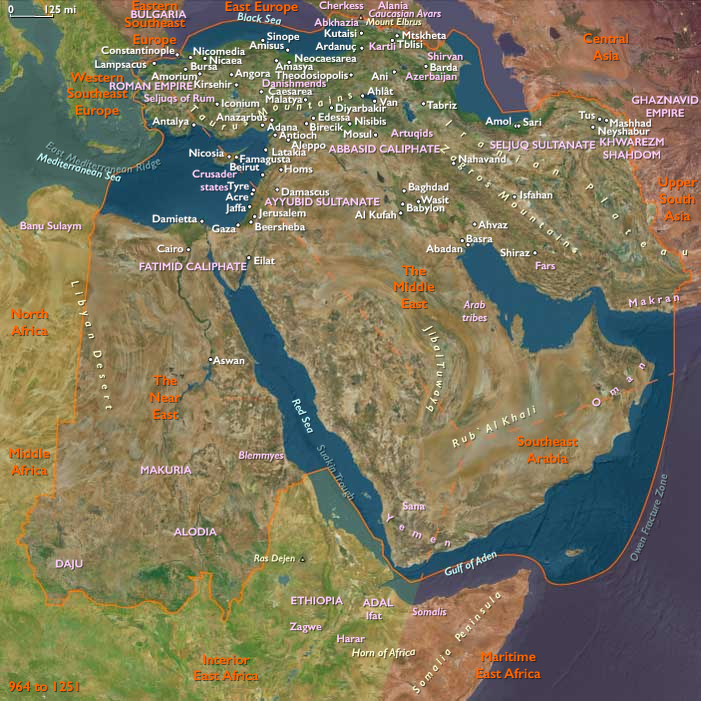
The Fifth Crusade is an attempt to take back Jerusalem and the rest of the Holy Land by first conquering the powerful Ayyubid state in Egypt.
Pope Honorius III organizes crusading armies led by Leopold VI of Austria and Andrew II of Hungary, and a foray against Jerusalem ultimately leaves the city in Muslim hands.
A German army led by the preacher Oliver of Cologne and a mixed army of Dutch, Flemish and Frisian soldiers led by William I, Count of Holland arrives later in 1218.
In order to attack Damietta in Egypt, they ally with the Seljuq Sultanate of Rûm in Anatolia, whose forces attack the Ayyubids in Syria in an attempt to free the crusaders from fighting on two fronts.
The crusaders, after occupying the port of Damietta, in July of 1221 march south towards Cairo, but are turned back after their dwindling supplies lead to a forced retreat.
A nighttime attack by Sultan Al-Kamil results in a great number of crusader losses and eventually in the surrender of the army.
Al-Kamil agrees to an eight-year peace agreement with Europe.
Pope Innocent III, having since 1208 planned a crusade in order to destroy the Ayyubid Empire and to recapture Jerusalem, had in April 1213 issued the papal bull Quia maior, calling all of Christendom to join a new crusade.
This had been followed in 1215 by another papal bull, the Ad Liberandam.
Innocent had in 1215 summoned the Fourth Lateran Council, where, along with the Latin Patriarch of Jerusalem, Raoul of Merencourt, he had discussed the recovery of the Holy Land, among other church business.
Pope Innocent wants it to be led by the papacy, as the First Crusade should have been, in order to avoid the mistakes of the Fourth Crusade, which had been taken over by the Venetians.
Innocent plans for the crusaders to meet in 1216 at Brindisi and to ensure that the crusaders will have ships and weapons prohibits trade with the Muslims.
Every crusader will receive an indulgence, including those who simply help pay the expenses of a crusader, but do not go on crusade themselves.
The message of the crusade had been preached in France by Robert of Courçon; however, unlike other Crusades, not many French knights have joined, as they are already fighting the Albigensian Crusade against the heretical Cathar sect in southern France.
Oliver of Cologne had preached the crusade in Germany, and King Frederick II of Sicily, a Hohenstaufen and grandson of Frederick I Barbarossa, twice crowned king of the Germans, had in 1215 attempted to join.
Frederick was the last monarch Innocent wanted to join the movement, as he had challenged the Papacy (and would do so in the years to come).
Innocent dies, however, in 1216.
Honorius III, who succeeds Innocent on July 28, immediately activates Innocent's plan to restore the kingdom of Jerusalem, organizing crusading armies led by King Andrew II of Hungary and duke Leopold VI of Austria.
Andrew and his troops, having embarked on August 23, 1217, in Spalato, had been transported by the Venetian fleet, the largest European fleet in the era.
They land on October 9 on Cyprus, whence they sail to Acre and join John of Brienne, ruler of the Kingdom of Jerusalem, Hugh I of Cyprus, and Prince Bohemond IV of Antioch to fight against the Ayyubids in Syria.
Jerusalem’s walls and fortifications are demolished to prevent the Christians from being able to defend the city, if they do manage reach it and take it.
Muslims flee the city, fearing a repeat of the bloodbath of the First Crusade in 1099.
The well-mounted army of Andrew II of Hungary on November 10 defeats Sultan Al-Adil I at Bethsaida on the Jordan River.
Muslim forces retreat in their fortresses and towns.
The catapults and trebuchets do not arrive in time, so Andrew’s assaults on the fortresses of the Lebanon and on Mount Tabor are fruitless.
Andrew afterwards spends his time collecting alleged relics.
King Andrew II is very sick, and, having fulfilled his Crusader vow. decides to return to Hungary.
He takes his troops northward, departing the Holy Land on January 18, 1218.
Bohemond and Hugh also return home.
Frederick II, a former pupil of Pope Honorius, evades his crusading vow because of a complex papal-imperial dispute over Sicily.
The king opposes Honorius for perpetuating Innocent's desire to bring Sicily under the rule of the papacy.
Thus, the first contingents of the Fifth Crusade had left without Frederick.
Nor have they accomplished anything significant until the arrival of a Frisian fleet with more German crusaders enables a force to set out for Egypt in May 1218 under the leadership of John of Brienne.
An attack on Egypt has been in the planning since the time of the Third Crusade, not as the objective of permanent conquest but as a strike at the heart of Ayyubid power in Egypt and a bargaining point for the recovery of Jerusalem.