
Louis Le Prince
French artist and the inventor of an early motion picture camera
1841 CE to 1890 CE
Louis Aimé Augustin Le Prince (French, August 28, 1841 – vanished September 16, 1890) is a French artist and the inventor of an early motion picture camera, the first person to shoot a moving picture sequence using a single lens camera and a strip of (paper) film.
Although some have credited him as the "Father of Cinematography", his work does not influence the commercial development of cinema—owing at least in part to the great secrecy surrounding it.
A Frenchman who also works in the United Kingdom and the United States, Le Prince's motion-picture experiments culminate in 1888 in the city of Leeds, England.
In October of that year, he films moving-picture sequences of Roundhay Garden, Leeds Bridge, and his brother playing the accordion, using his single-lens camera and Eastman's paper negative film.
This work may have been slightly in advance of the inventions of contemporaneous moving-picture pioneers such as William Friese-Greene and Wordsworth Donisthorpe, and years in advance of that of Auguste and Louis Lumière, and William Kennedy Dickson (who does the moving image work for Thomas Edison).
Le Prince is never able to perform a planned public demonstration in the US because he mysteriously vanishes; he is last known to be boarding a train on September 16, 1890.
The reason for his disappearance is not known and his family and supporters invent a series of conspiracy theories, including: a murder set up by Edison, secret homosexuality, intentional disappearing in order to start a new life, and a murder by his brother over their mother's will.
No evidence exists for any of these and the most likely explanation remains that he committed suicide, overcome by the shame of heavy debts and the failure of his experiments.
In 2004, a French police archive is found to contain a photograph of a drowned man bearing a strong resemblance to Le Prince who was discovered in the Seine in Paris just after the time of his disappearance.
At the start of 1890, the Edison workers had begun experimenting with using a strip of celluloid film to capture moving images. The first public results of these experiments were shown in May 1891, but Le Prince's widow and son, Adolphe, are keen to advance Louis' cause as the inventor of cinematography.
In 1898, Adolphe appears as a witness for the defense in a court case brought by Edison against the American Mutoscope Company.
This suit claims that Edison is the first and sole inventor of cinematography, and thus entitled to royalties for the use of the process.
Adolphe Le Prince is involved in the case but is not allowed to present his father's two cameras as evidence and eventually the court rules in favor of Edison.
Edison then reissues his patents and succeeds in controlling the US film industry for many years.
World
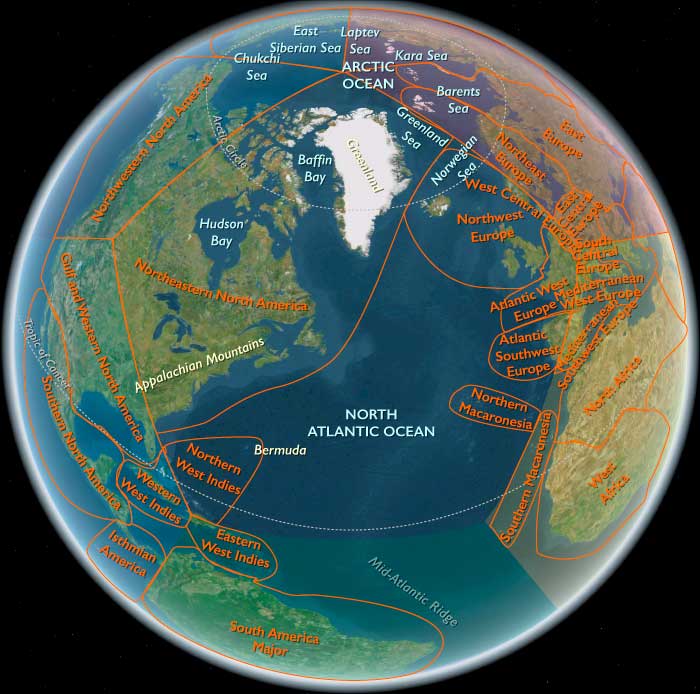
The Atlantic Lands
View →Related Events
Showing 1 events out of 1 total
Louis Le Prince films the first motion picture on October 14, 1888: Roundhay Garden Scene in Roundhay, Leeds, West Yorkshire, England, two seconds and eighteen frames in length (followed by his movie Leeds Bridge).