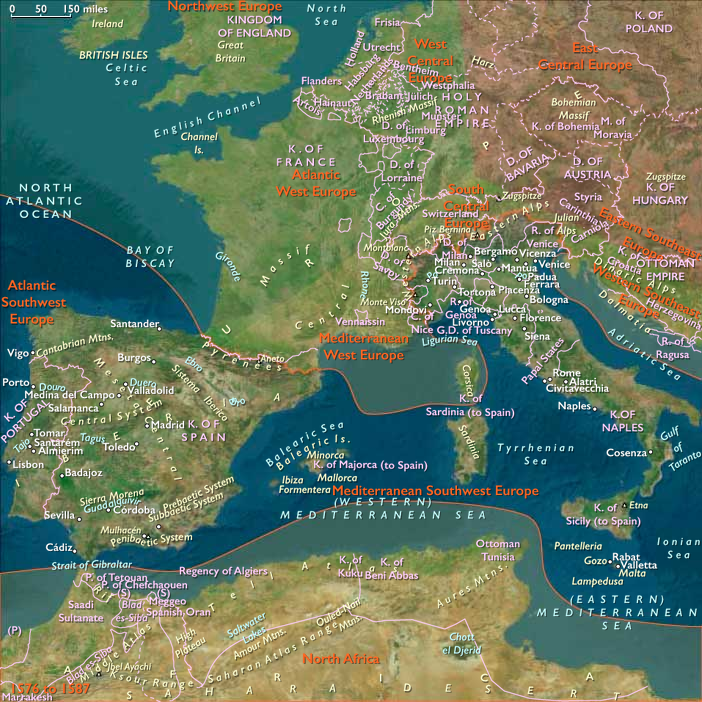
Luis de Morales, a Spanish Mannerist painter who may have studied with the Flemish painter Hernando Sturmio in Badajoz, has worked in Badajoz from 1546, leaving on occasional commissions but making his home there all his life.
Summoned by King Philip II of Spain to help in the decoration of El Escorial, he had painted a Christ Carrying the Cross that did not please the king and had been removed to the Church of San Jerónimo, Madrid.
Influenced, especially in his early work, by Raphael Sanzio and the Lombard school of Leonardo, he is called by his contemporaries "The Divine Morales", because of his skill and the shocking realism of his paintings, and because of the spirituality transmitted by all his work.
His emotional religious paintings greatly appeal to the Spanish populace.
Morales always works on panels, often depicting such subjects as Ecce Homo, Pietá, and The Virgin and Child.
Perhaps the best known of these panels are twenty on the life of Christ, painted for the Church of Arroyo del Puerco from 1563 to 1568.
All of his paintings are marked by their Leonardesque composition, detailed execution, and anguished asceticism.