Matei Basarab
Voivode of Wallachia
Years: 1588 - 1654
Matei Basarab (1588, Brâncoveni, Olt—April 9, 1654, Bucharest) is a Wallachian Voivode (Prince) between 1632 and 1654.


Related Events
Filter results
Showing 9 events out of 9 total
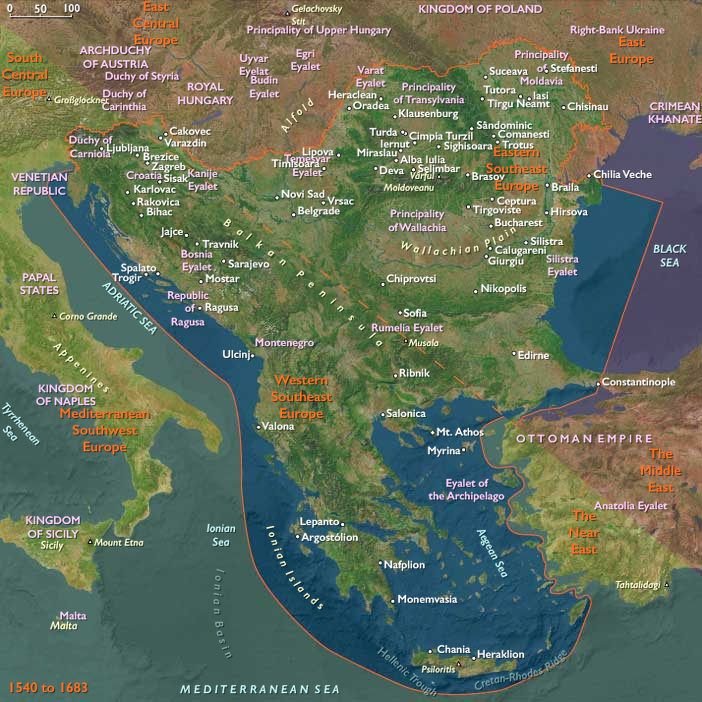
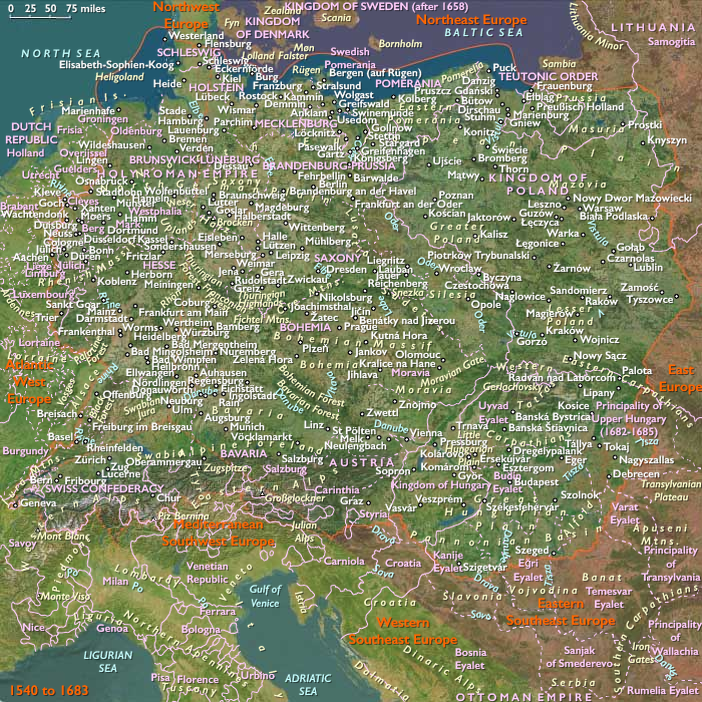
Eastern Southeast Europe (1540–1683 CE): Ottoman Consolidation, Cultural Resilience, and Emerging National Identities
Settlement and Migration Patterns
Ottoman Settlement Policies
From 1540 to 1683, the Ottoman Empire pursued active demographic policies aimed at consolidating political control in the Balkans. Muslim populations from Anatolia were systematically settled in key regions such as Bulgaria, Thrace, and along the Danube, reinforcing Ottoman administrative presence and altering local demographics.
Persistence of Rural Communities
Despite these policies, rural communities, especially in regions of Bulgaria, Serbia, Wallachia, and Moldavia, maintained strong local identities and traditional cultures. Isolation, strong community structures, and religious institutions enabled these populations to retain a high degree of cultural autonomy, preserving a distinct identity within the larger Ottoman context.
Political Dynamics and Regional Rivalries
Administrative Centralization and Expansion (1540–1580)
During the reigns of Suleiman the Magnificent (until 1566) and his successors, the Ottomans significantly expanded and strengthened their administrative structures in the Balkans. Provincial administration through sanjaks and eyalets was consolidated, enforcing Ottoman rule through appointed pashas. This period also saw notable Ottoman victories, expanding their influence deeper into the Balkans.
Regional Resistance and Fragmentation (1580–1620)
By the late sixteenth century, local resistance emerged notably in Wallachia, under leaders like Michael the Brave (1593–1601). Michael temporarily unified Wallachia, Moldavia, and Transylvania (1599–1600), sparking early Romanian national consciousness. However, his alliance with the Habsburgs and conflicts with local nobility limited lasting political unity.
Internal Rivalries and Ottoman Decline (1620–1683)
Internal rivalries, exemplified by the conflicts between Wallachian prince Matei Basarab and Moldavian prince Vasile Lupu (1630s–1650s), weakened regional principalities. This coincided with increasing political corruption and administrative inefficiencies within the Ottoman system, resulting in growing dissatisfaction and vulnerability to external threats, particularly from the Habsburg Monarchy.
Economic and Technological Developments
Strengthened Trade Networks (1540–1600)
Economic activity thrived initially under stable Ottoman administration. Improved infrastructure, such as roads, bridges, caravanserais, and trade routes linking Constantinople and cities like Philippopolis (Plovdiv), fostered regional prosperity. Trade networks integrated Eastern Southeast Europe into broader Ottoman and Mediterranean economies.
Economic Strains and Agricultural Decline (1600–1683)
From the early seventeenth century onward, increased taxation, administrative corruption, and continuous warfare led to economic hardship, particularly in rural areas. Agricultural productivity declined, causing social distress and weakening local economies. Nevertheless, select towns like Chiprovtsi sustained artisanal crafts and commerce, supporting limited regional economic stability.
Cultural and Artistic Developments
Ottoman Cultural Patronage and Architectural Flourishing
The Ottomans significantly influenced regional culture through architectural projects, including mosques, medreses (educational institutions), caravanserais, and public buildings. Artistic expressions often blended Byzantine traditions with Islamic motifs, creating unique regional styles that continue to characterize Balkan cultural heritage.
Preservation and Revival of Local Traditions
Concurrent with Ottoman cultural policies, local populations actively preserved traditional folk customs, languages, and religious practices. Towns and villages, often isolated from direct Ottoman oversight, became repositories of Bulgarian, Serbian, and Romanian culture. Orthodox monasteries, such as the Agapia Monastery (built 1642–1647), served as vital cultural and educational centers.
Social and Religious Developments
Religious Autonomy and Diversity
Under the Ottoman millet system, significant religious autonomy was granted to Christian and Jewish communities. However, religious tensions persisted, particularly concerning forced conversions, Islamic settlement policies, and discrimination against Orthodox communities in certain regions, notably in Transylvania under Protestant dominance.
Emergence of Religious and National Identities
The sixteenth and seventeenth centuries saw growing connections between religious identity and emerging national consciousness, especially among Orthodox populations in Bulgaria, Serbia, and the Romanian principalities. The efforts of Franciscan missionaries promoting the Counter-Reformation also had an impact in certain Catholic enclaves.
Key Historical Events and Developments
-
1541: Ottoman administrative reforms solidify control over Balkan territories.
-
1571: Transylvanian Diet's landmark edict guaranteeing religious freedom for Catholics, Lutherans, Calvinists, and Unitarians (excluding Orthodox Christians).
-
1599–1600: Michael the Brave temporarily unites Wallachia, Moldavia, and Transylvania, fostering early Romanian nationalism.
-
1600–1630: Emergence of hajduk (bandit/outlaw) movements in Serbia and Bulgaria, symbolizing localized resistance to Ottoman authority.
-
1632–1654: Rule of Wallachian prince Matei Basarab and Moldavian prince Vasile Lupu, cultural patrons who fostered early modern literary and cultural revival despite political rivalries.
-
1640s–1660s: Catholic Bulgarian noble Petar Parchevich conducts diplomatic missions to seek Western support for Bulgarian liberation from Ottoman rule.
-
1670s–1683: Increased military preparations by Ottomans lead to intensified demographic pressures and set the stage for the Siege of Vienna (1683), marking the beginning of significant Ottoman retreat in Europe.
Long-Term Consequences and Historical Significance
The period 1540 to 1683 represented a critical phase in Eastern Southeast Europe's history, characterized by sustained Ottoman administrative consolidation, economic transformations, cultural resilience, and the gradual emergence of proto-national identities. While initial Ottoman rule brought stability and economic prosperity, later periods saw increased strain, internal division, and external threats. The impending Ottoman defeat at the Siege of Vienna (1683) ultimately marked a turning point, heralding the gradual decline of Ottoman power and the rise of local and national aspirations in Eastern Southeast Europe.
Eastern Southeast Europe (1624–1635 CE): Declining Ottoman Influence and Internal Rivalries
Settlement and Migration Patterns
Socioeconomic Transformation in Wallachia and Moldavia
Between 1624 and 1635 CE, significant socioeconomic changes reshaped Wallachia and Moldavia. Previous land grants made by princes to loyal boyars (nobles) in exchange for military service had depleted available land, prompting the nobility to encroach upon peasant holdings. This shift exacerbated serfdom, intensified poverty among rural populations, and created an intermediary class of impoverished minor nobles. Political instability intensified as aspiring princes required substantial funds to secure their positions from Ottoman authorities, further burdening the peasants.
Political Dynamics and Regional Rivalries
Ascension of Matei Basarab in Wallachia (1632)
In 1632, Matei Basarab became the prince of Wallachia, representing the last prominent member of the principality’s predominant ruling family. His rule marked an attempt to stabilize Wallachia amidst growing political and economic challenges, including escalating internal conflicts among competing boyar factions.
Rivalry with Moldavia under Vasile Lupu (1634)
Vasile Lupu, of Albanian descent, ascended to Moldavia’s throne in 1634, intensifying rivalry with Wallachia’s Matei Basarab. Although both rulers were enlightened patrons of religion and the arts—establishing printing presses and publishing religious books and legal codes—their mutual ambitions drained resources and weakened political coherence in both principalities during a critical period of declining Ottoman authority.
Economic and Technological Developments
Rural Economic Struggles
Peasant populations suffered economically due to increased taxation, land loss, and growing obligations to boyar landholders. As serfdom became widespread, rural economic activity stagnated, while the financial obligations of securing political authority from the Porte further strained both Wallachian and Moldavian treasuries.
Cultural and Artistic Developments
Patronage under Matei Basarab and Vasile Lupu
Both Matei Basarab and Vasile Lupu provided significant cultural patronage. They sponsored religious institutions, supported the establishment of printing presses, and facilitated the publication of religious literature and legal codes, contributing to a brief yet vibrant cultural and intellectual revival within their respective territories.
Social and Religious Developments
Increased Serfdom and Rural Hardship
The expansion of serfdom deeply affected the social structure, reducing the freedoms and economic opportunities of rural communities. Peasant life grew increasingly difficult under heavy taxation, strict feudal obligations, and land encroachment by ambitious boyars.
Dissemination of Western Political Ideas in Bulgaria
As central Ottoman authority weakened, local despotism intensified in Bulgaria. Many Bulgarians, particularly those in urban and trading centers along the Danube, began to embrace progressive Western political ideas brought through trade and travel routes. These new ideas gradually seeded discontent with Ottoman rule, fueling aspirations for autonomy and reform.
Key Historical Events and Developments
-
1632: Matei Basarab ascends to power in Wallachia, marking an effort to restore political stability amidst internal rivalry.
-
1634: Vasile Lupu becomes Prince of Moldavia, sparking significant rivalry with Wallachia and leading to internal resource exhaustion.
-
Early 1630s: Increasing exposure to Western political concepts in Bulgaria due to growing discontent with declining Ottoman administration and rising local corruption.
Long-Term Consequences and Historical Significance
The period from 1624 to 1635 CE marked significant political instability and socioeconomic changes in Wallachia and Moldavia, exacerbated by the competing ambitions of regional rulers. Simultaneously, increasing serfdom and rural hardship intensified social tensions, while growing exposure to Western political ideals in Bulgaria set the stage for later national awakenings. These developments collectively weakened Ottoman influence, laid the groundwork for future political and cultural transformations, and shaped emerging national consciousness throughout Eastern Southeast Europe.
The distribution of land in Wallachia and Moldavia had changed dramatically during the brief tenure of Michael the Brave and the early years of Turkish suzerainty.
Wallachian and Moldavian princes over the years have made land grants to loyal boyars in exchange for military service so that by the seventeenth century hardly any land is left.
Boyars in search of wealth have begun encroaching on peasant land and their military allegiance to the prince weakens.
As a result, serfdom has spread, successful boyars become more courtiers than warriors, and an intermediary class of impoverished lesser nobles develops.
Would-be princes are forced to raise enormous sums to bribe their way to power, and peasant life grows more miserable as taxes and exactions increase.
Any prince wishing to improve the peasants' lot risks a financial shortfall that could enable rivals to out-bribe him at the Porte and usurp his position.
Matei Basarab becomes in 1632 the last of Wallachia's predominant family to take the throne.
Vasile Lupu, of Albanian descent, becomes prince of Moldavia in 1634.
The jealousies and ambitions of Matei Basarab and Vasile sap the strength of both the Wallachian and Moldavian principalities at a time when the Porte's power has begun to wane.
Both Matei and Vasile are enlightened rulers, who provide liberal endowments to religion and the arts, establish printing presses, and publish religious books and legal codes.
Eastern Southeast Europe (1636–1647 CE): Internal Rivalries, Cultural Flourishing, and Shifting Alliances
Settlement and Migration Patterns
Shifts in Ottoman Administration in Bulgaria
Between 1636 and 1647 CE, the Ottoman Empire strategically withdrew administrative oversight from parts of northwestern Bulgaria due to military preoccupations elsewhere—particularly their conflict with Venice over Crete. Regions such as Chiprovtsi, previously important for guarding Balkan passes and ore extraction, retained significant autonomy under the Christian Bulgarian aristocracy. These areas, historically outside direct Ottoman administration, experienced a unique cultural and political evolution during this period.
Political Dynamics and Regional Rivalries
Matei Basarab and Vasile Lupu: Rivalry and Conflict
The rivalry between Matei Basarab of Wallachia (1632–1654) and Vasile Lupu of Moldavia (1634–1653) deeply affected both principalities. Vasile Lupu, coveting the wealthier Wallachian throne, launched an invasion against Matei Basarab in the early 1640s. However, Wallachian forces decisively defeated the Moldavian army, significantly undermining Vasile's political authority. Following this defeat, Moldavian boyars capitalized on Vasile's weakened position to remove him from power.
Bulgarian Diplomatic Efforts and Western Alliances
In Bulgarian lands, a pro-Western noble circle in Chiprovtsi emerged, advocating for Catholicism as a means of securing Western support to restore Bulgarian sovereignty. Prominent Bulgarian Catholic diplomat Petar Parchevich undertook extensive diplomatic efforts (1630–1645), traveling alongside notable compatriots Petar Bogdan and Franchesko Soymirovich to the courts of key European powers. They met with Austrian Emperor Ferdinand II, Polish-Lithuanian kings Sigismund III Vasa and Władysław IV Vasa, and Wallachian Voivode Matei Basarab, seeking military and diplomatic backing against Ottoman control.
Economic and Technological Developments
Regional Economic Resilience and Autonomy
Chiprovtsi’s importance as an ore-mining region and its semi-autonomous status continued to support localized economic activity despite reduced Ottoman oversight. This autonomy facilitated local trade and enabled the region to cultivate economic links with Western and Central Europe, thus enhancing its strategic value during Ottoman military withdrawals.
Cultural and Artistic Developments
Patronage of Arts and Religion under Matei Basarab and Vasile Lupu
Both Matei Basarab and Vasile Lupu emerged as enlightened rulers and generous cultural patrons despite their political rivalry. They significantly advanced religious, literary, and legal scholarship by establishing printing presses and promoting religious publications. Vasile Lupu notably sponsored the construction of the Agapia Monastery (1642–1647) near Neamț, highlighting his investment in Moldavia’s cultural and religious life.
Social and Religious Developments
Bulgarian Catholic Movement and Western Engagement
The Catholic nobility of Chiprovtsi actively promoted religious and political alliances with the Catholic West to counter Ottoman domination. This period witnessed increased interactions between Bulgarian Catholic elites and influential European monarchies, reflecting broader shifts toward Western political and religious ideas as potential pathways for Bulgarian national revival.
Intensified Serfdom and Social Tensions
In Wallachia and Moldavia, intensified serfdom and increased economic burdens on peasants led to persistent social tensions. Boyars continued encroaching on peasant land, diminishing the rural population's welfare and increasing class disparities, further complicating internal stability in both principalities.
Key Historical Events and Developments
-
1630–1645: Petar Parchevich’s diplomatic campaign seeks Western support for Bulgarian autonomy.
-
Early 1640s: Vasile Lupu unsuccessfully attacks Wallachia; Matei Basarab secures a decisive victory.
-
1642–1647: Construction of Agapia Monastery under Vasile Lupu’s patronage.
-
1647: Ottoman military withdrawals from northwestern Bulgaria amid the ongoing war with Venice for Crete, significantly increasing regional autonomy.
Long-Term Consequences and Historical Significance
The period from 1636 to 1647 CE was defined by internal rivalries, strategic Ottoman withdrawals, and the emergence of pro-Western political movements within Bulgaria. The cultural patronage of Matei Basarab and Vasile Lupu contributed substantially to regional intellectual and religious life, while their rivalry underscored vulnerabilities within Wallachia and Moldavia. Concurrently, Bulgarian diplomatic overtures toward Western Europe illustrated evolving political strategies to address Ottoman domination. These developments profoundly influenced the socio-political dynamics and national consciousness in Eastern Southeast Europe, shaping future regional trajectories.
Matei Basarab (r. 1632-54) becomes the last of Walachia's predominant family to take the throne; two years later, Vasile Lupu (1634-53), a man of Albanian descent, becomes prince of Moldavia.
The jealousies and ambitions of Matei and Vasile sap the strength of both principalities at a time when the Porte's power begins to wane.
Coveting the richer Walachian throne, Vasile attacks Matei, but the latter's forces rout the Moldavians, and a group of Moldavian boyars ousts Vasile.
Both Matei and Vasile are enlightened rulers, who provide liberal endowments to religion and the arts, establish printing presses, and publish religious books and legal codes.
Eastern Southeast Europe (1648–1659 CE): Intensifying Conflicts, Social Unrest, and Cultural Developments
Settlement and Migration Patterns
Increased Regional Autonomy
From 1648 to 1659, Eastern Southeast Europe witnessed continued fluctuations in Ottoman administrative control. Regions such as northwestern Bulgaria, including the strategically significant town of Chiprovtsi, maintained substantial autonomy due to Ottoman military preoccupations elsewhere. The resulting local stability encouraged modest population growth and facilitated internal migration as communities sought refuge from more heavily taxed or disrupted areas.
Political Dynamics and Regional Rivalries
Ongoing Rivalry Between Wallachia and Moldavia
Tensions between the principalities of Wallachia and Moldavia persisted, rooted in the earlier conflicts between Wallachian prince Matei Basarab (1632–1654) and Moldavian voivode Vasile Lupu (1634–1653). Although Lupu had been ousted in 1653, both principalities continued to experience internal political strife, leaving them vulnerable to external interference and Ottoman exploitation.
Bulgarian Diplomatic Efforts Continue
Bulgarian Catholic nobles, especially around Chiprovtsi, continued their diplomatic initiatives to secure Western support against Ottoman domination. Efforts initiated earlier by diplomats like Petar Parchevich and Petar Bogdan influenced local and regional attitudes, although concrete military or diplomatic assistance from the West remained limited.
Economic and Technological Developments
Continued Economic Resilience
Economic activity in semi-autonomous regions like Chiprovtsi continued steadily due to reduced Ottoman oversight, particularly in mining, metallurgy, and local trade. Despite external instability, these regions maintained economic vitality through strategic trading partnerships, especially along Danube trade routes connecting them to Central and Western Europe.
Cultural and Artistic Developments
Patronage of Religious and Cultural Institutions
Local rulers in Wallachia and Moldavia continued their support of religious and cultural institutions, reinforcing Orthodox Christianity and Romanian cultural identity. Religious centers, monasteries, and educational institutions flourished under continued patronage, reinforcing regional cultural coherence and identity.
Social and Religious Developments
Hajduk Activities and Social Unrest
Social unrest and dissatisfaction with Ottoman rule continued to manifest through the actions of local outlaw groups known as hajduci. These bands, often seen as both freedom fighters and bandits, maintained resistance against local Ottoman authorities, reflecting deepening social and economic grievances. Their exploits were increasingly celebrated in local folklore, reinforcing national identity.
Religious and Cultural Autonomy
Orthodox Christian communities, particularly in isolated rural areas, preserved their religious and cultural traditions despite external pressures. The Ottoman millet system continued to provide some protection, allowing these communities to maintain autonomy in internal religious affairs.
Key Historical Events and Developments
-
1653: End of Vasile Lupu’s rule in Moldavia leads to political reorganization and continued instability.
-
1650s: Intensified hajduk activities highlight social and economic unrest in Bulgaria, Serbia, and Romanian principalities.
-
Continued diplomatic efforts from Bulgarian Catholic nobles toward Western Europe.
Long-Term Consequences and Historical Significance
The period from 1648 to 1659 CE was characterized by ongoing political rivalries, local autonomy due to Ottoman distractions, intensified social unrest, and persistent cultural and religious patronage. These developments solidified regional identities, intensified national consciousness, and set the stage for greater social and political challenges to Ottoman rule in subsequent decades.
Petar Parchevich, a Bulgarian Catholic bishop and diplomat, had campaigned for Bulgarian independence in 1630-45.
Wallachia’s prince Matei Basarab sends messengers to Chirovitsi to promise Parchevich and his co-conspirators a 20,000-strong army to support the anti-Ottoman uprising planned by the Bulgarian Catholic notables.
However, King Wladyslaw IV Vasa of the Polish-Lithuanian Commonwealth, who shares with the Ottomans joint suzerainty over Moldavia and Wallachia, dies on May 20, 1648 and the notables call off the revolt.
Moldavia’s Prince Vasile Lupu, coveting the richer Wallachian throne, attacks Basarab, but the latter's forces rout the Moldavians, and in 1654 a group of Moldavian boyars ousts Vasile.