
Maximilien Luce
French Neo-impressionist printmaker and painter, and an anarchist
1858 CE to 1941 CE
Maximilien Luce (March 13, 1858 – February 6, 1941) is a French Neo-impressionist artist.
A printmaker, painter, and anarchist, Luce is best known for his pointillist canvases.
He grows up in the working class Montparnasse district, and becomes a painter of landscapes and urban scenes that frequently emphasize the activities of people at work.
He is a member of the Groupe de Lagny with Léo Gausson, Émile-Gustave Cavallo-Péduzzi and Lucien Pissarro.
World
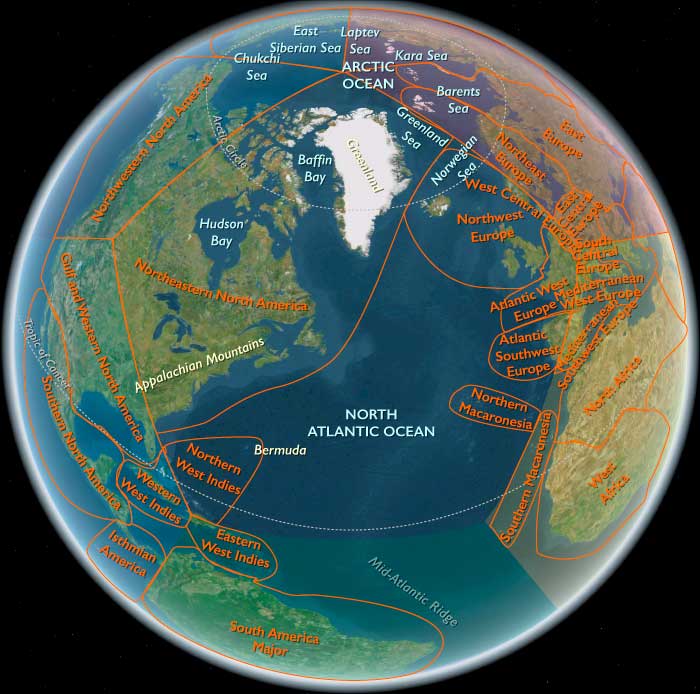
The Atlantic Lands
View →Related Events
Showing 2 events out of 2 total
Artists not backed by the official Académie de peinture et de sculpture in charge of the exhibits at the annual Salon, or without support supplied by actual political constellations, had little chance to advance during the Second Empire.
From year to year the number of artists working in Paris, the number of artists submitting works to the official Salon and the number of works refused by the jury increased, but neither the Second Empire nor the Third Republic had found an answer to this situation.
For years, the artists had counted on official support.
In 1884, finally, the artists begin to organize themselves, and a "Group of independent artists" is authorized by the Ministry of Fine Arts to arrange an exhibition, while the City of Paris agrees to supply rooms for the presentation.
So, from May 15 through July 15, the first "free" exhibition of contemporary art shows more than five thousand works by more than four hundred artists.
Paul Signac, not yet twenty-one, helps found the Salon des Artistes Indépendants, an association “with neither jury nor prizes,” in 1884.
Here, he meets Seurat, whom he initiates into the broken-color technique of Impressionism.
Other founding members of the Société des Artistes Indépendants, which will accept the work of any artist who wishes to participate in its annual Salon, include Camille Pissarro, Henri-Edmond Cross, Albert Dubois-Pillet, Maximilien Luce, and Théo Van Rysselberghe.
The group's first show, held in the pavilion of the city of Paris, includes paintings by Odilon Redon, Paul Cézanne, Paul Gauguin, Henri de Toulouse-Lautrec, Vincent van Gogh, Cross, Seurat, and Signac.
Signac had given up the study of architecture for painting when he was eighteen, and, through Armand Guillaumin, had became a convert to the coloristic principles of Impressionism.