Miloš Obrenović
Prince of Serbia
Years: 1780 - 1860
Miloš Obrenović (Anglicised: Milosh Obrenovich; born Miloš Teodorović) (18 March 1780 [7 March o.s.]
– 26 September 1860) is Prince of Serbia from 1815 to 1839, and again from 1858 to 1860.
He participates in the First Serbian Uprising, led Serbs in the Second Serbian Uprising, and founds the House of Obrenović.
Under his rule, Serbia becomes an autonomous duchy within the Ottoman Empire.
He is credited with starting the process of reestablishing Serbian statehood, as well as shaping the domestic and foreign policies of the modern Serbian state.
Prince Miloš rules autocratically, permanently refusing to share power.
During his rule, he is the richest man in Serbia and one of the richest in the Balkans.
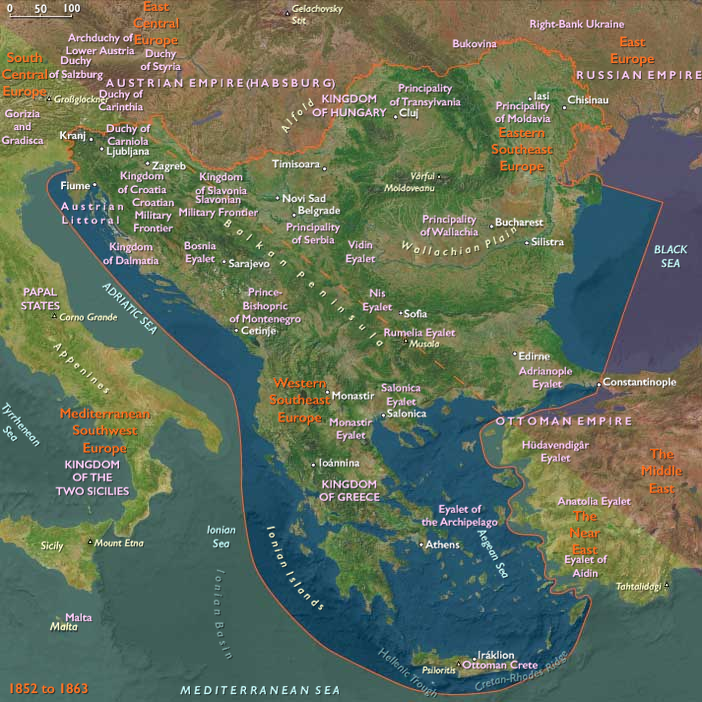
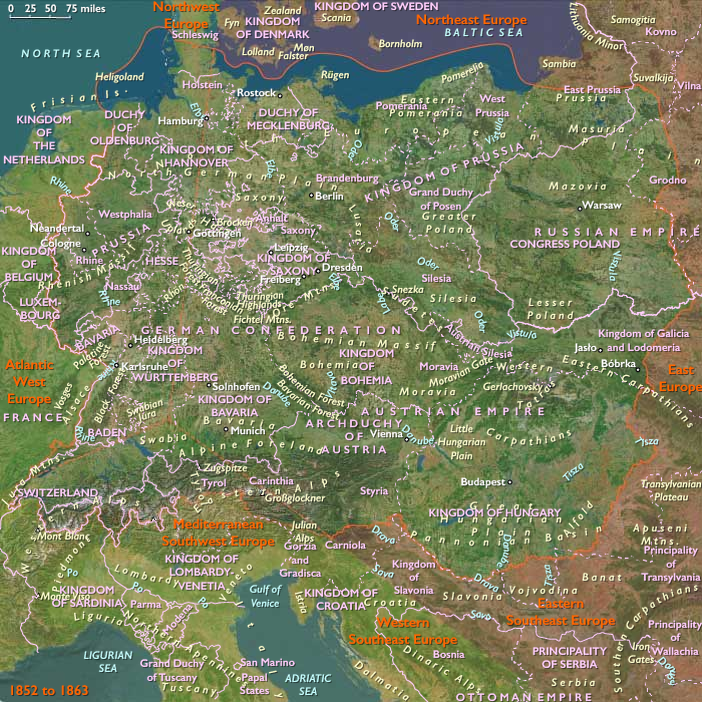
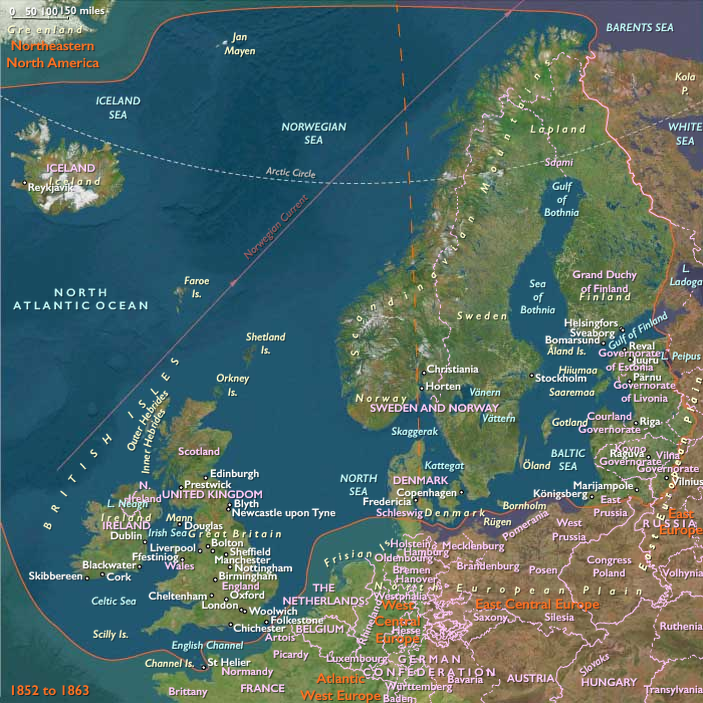
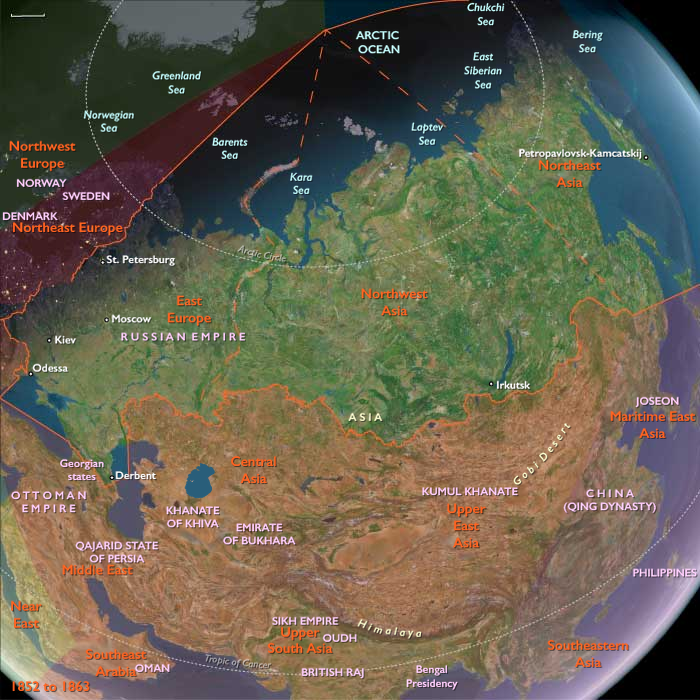
Related Events
Filter results
Showing 10 events out of 14 total
Russia supports the Serbs, and the sultan grant them limited autonomy, but internal discord weakens the government of Karadjordje, and the French invasion of Russia in 1812 prevents the tsar from protecting the Serbs.
In 1813 the Turks attack rebel areas.
Karadjordje flees to Hungary; then Turkish, Bosnian, and Albanian troops plunder Serbian villages.
The atrocities sparked a second Serbian uprising in 1815 that wins autonomy under Turkish control for some regions.
The corrupt rebel leader Milos Obrenovic (1817-39) has Karadjordje murdered and his head sent to the sultan to signal Serbian loyalty.
Eastern Southeast Europe (1804–1815 CE): Uprisings, Russian Influence, and Nationalist Movements
Settlement and Migration Patterns
Serbian Refugees and Resettlements
In response to Ottoman reprisals during Serbian uprisings, large numbers of Serbs fled into neighboring territories, particularly Austrian-held southern Hungary and Slavonia, contributing to demographic shifts and creating new communities that bolstered nationalist sentiments.
Economic and Social Developments
Ottoman Exploitation and Russian Occupation
Russian forces occupied the Danubian Principalities (Wallachia and Moldavia) in 1806, subjecting the Romanian peasants to forced requisitions, severe labor obligations, and threats of exile to Siberia. This harsh treatment fostered an enduring Romanian mistrust of Russia, which significantly influenced Romanian attitudes toward foreign intervention.
Social and Economic Disruption in Serbia
The Serbian uprisings of 1804 and 1815 severely disrupted local economies and societies. Ottoman reprisals and violence exacerbated social instability, prompting mass migrations, population displacement, and economic hardship throughout the region.
Cultural and Artistic Developments
Serbian Epic Traditions
The uprisings led by Karadjordje Petrovic and Milos Obrenovic entered Serbian national memory and epic traditions, profoundly influencing Serbian cultural identity. Heroic stories of resistance and struggle against Ottoman rule became central themes in Serbian literature and folklore.
Intellectual and Religious Developments
Bulgarian Support for Serbian and Greek Revolts
Bulgarian intellectuals, notably influenced by figures like Sofronii Vrachanski, provided ideological support and participated actively in neighboring nationalist revolts, including the Serbian uprisings of 1804 and 1815. These connections fostered regional solidarity among Orthodox Christian populations under Ottoman rule.
Increased Russian Influence
Russia's significant presence in the Balkans, underscored by the Peace of Bucharest (1812), reinforced Russian claims of protection over Orthodox Christian populations. However, Russia's policies and heavy-handed occupation of the principalities led to skepticism and cautious attitudes among local populations, notably Romanians.
Political Dynamics and Regional Rivalries
Serbian Uprisings and Autonomy
The Serbian uprisings against Ottoman rule, beginning in 1804 under Karadjordje Petrovic, marked the start of sustained nationalist resistance. Despite setbacks and Turkish reprisals, including Karadjordje's assassination orchestrated by rival Milos Obrenovic, the Serbs achieved limited autonomy, reshaping political power dynamics in the region.
Ottoman Decline and European Intervention
The continuing decline of the Ottoman Empire, labeled by European powers as "The Sick Man of Europe," increased geopolitical tensions in the region. Russian ambitions in the Balkans provoked diplomatic interventions from Western European powers, especially France and Britain, who sought to maintain a strategic balance in Europe by preserving Ottoman territorial integrity.
Key Historical Events and Developments
-
Serbian uprisings (1804 and 1815) led by Karadjordje Petrovic and Milos Obrenovic.
-
Russian occupation of the Danubian Principalities and subsequent Treaty of Bucharest (1812).
-
Increased skepticism of Russian intentions among Romanians following harsh occupation practices.
Long-Term Consequences and Historical Significance
The period from 1804 to 1815 CE significantly shaped nationalist movements across Eastern Southeast Europe. The Serbian revolts set a precedent for Balkan independence struggles, influencing neighboring populations and intensifying diplomatic tensions. Russia's ambiguous role deepened regional complexities, profoundly shaping future diplomatic and nationalist developments in the Balkans.
The Ottoman empire has long tried to crush the rise of nationalism among its Serbian subjects, who are virtual bond-slaves of their Turkish controlled lands.
The Serbs also detest the tyrannical rule of the Janissaries, the elite corps of the Turkish army, in the Pashalik (province) of Belgrad The dahis, leaders of the Jannisary troops that had had taken power in the Pashalik in defiance of the Sultan, fear that the Sultan will make use of the Serbian nobility to oust them.
To forestall this, on February 4, 1804, Ilija Birčanin, a Serbian knez (usually translated into English either as prince or, less commonly, as duke) and the Serb chieftain Aleksa Nenadović are brought by the dahis before a large crowd of Christian and Muslim onlookers in the village of Valjevo, near Belgrade, where Nenadovic is publicly accused of conspiring with Austrians against the sultan.
The two are then publicly decapitated and their bodies dumped in an open meadow by the Kolubara River, causing the residents to panic and flee.
According to contemporary sources from Valjevo, the decapitated heads of the murdered men were put on some sort of a public display in the central square to serve as an example to those who might plot against the rule of the dahis.
Thus incident, known as the Slaughter of the Knezes, sparks the First Serbian Uprising of the Serbian Revolution, which will ultimately lead to the liberation of Serbia in 1817.
Russian influence in Serbia threatens to become paramount in 1808, when the State Council gives Serbia its first constitution and declares Karadjordje the “first and supreme Serbian hereditary leader”, with whom Milos Teodorivic quarrels.
Internal discord has weakened the government of Karadjordje, the French invasion of Russia in 1812 had prevented the tsar from protecting the Serbs, and the peace of Bucharest leaves Serbia with little more than paper guarantees of autonomy.
The sultan, his powerful forces freed, invades Serbia from three sides, and by the end of 1813, all opposition is crushed.
Karadjordje, sick with typhus and broken in spirit, flees to Hungary; Turkish, Bosnian, and Albanian troops plunder Serbian villages.
Milos Teodorovic, the son of Višnja Gojković (died 1817) and her second husband, Teodor Mihailović (died 1802), a poor peasant from Montenegro, was born in the village of Dobrinja, near Požega, in the Užice district.
Miloš is the eldest of three boys born to the couple; Jovan (1787–1850) and Jevrem (1790–1881).
His mother had been married previously to Obren Martinović (died 1777), and they had had three children: Stana (born 1773), Jakov (1767–1817) and Milan (1770-16 December 1810).
As a youth, Milos had been a servant in the family of Akso Ječmenica, an affluent cattle trader from Zlatibor.
After working for his half brother Milan Obrenovic, he had joined Karadjordje in his rebellion in 1804.
The following year, Milos had been appointed a commander in the rebel forces, but after his half brother was killed in 1810, possibly by Karadjordje, he took the surname Obrenovic and assumed an enmity toward Karadjordje.
When Karadjordje flees, Milos remains in Serbia, and the Turks appoints him knez (prince) of three central Serb districts.
Turkish atrocities spark a second Serbian uprising on April 24, 1815, directed by Milos Obrenovic.
Many Bulgarians in areas adjacent to Serbia fight beside the Serbs in the campaigns of 1815, as in those of 1804.
The rebellion is successful, resulting in autonomy under Turkish control for some regions by the year's end.
The corrupt Serbian rebel leader Milos Obrenovic regards the exiled rebel leader Karadjordje as an enemy and has not permitted his return to Serbia.
Karadjordje, after living for a time in Russia, where he had been well received, has secretly returns to Serbia, hoping to organize an uprising against the Turks in alliance with Greek patriots.
Fearing the presence of such a dangerous rival, Milos has him murdered in his sleep on July 13 (July 25, New Style), 1817, at Radovanje.
To ingratiate himself with the sultan, he sends the slain man's head to Constantinople.
The assassination initiates a vendetta between the rival dynasties descending from the two leaders that will plunge Serbia into bloodshed for more than a century.
Eastern Southeast Europe (1828–1839 CE): National Revival, Diplomatic Realignments, and Emerging Autonomies
Settlement and Migration Patterns
Russian Occupation and Romanian Autonomy
During the Russo-Turkish War of 1828–1829, Russia again invaded the Danubian Principalities of Wallachia and Moldavia, resulting in the Treaty of Adrianople (1829). This treaty established Russian occupation until the Ottomans fully paid an indemnity, allowed native Romanian princes elected for life, and introduced independent national administration under Russian protection. Although nominally still under Ottoman suzerainty, these principalities enjoyed increased autonomy with Russia's diplomatic oversight.
Economic and Social Developments
Economic Hardship in Wallachia
The Danubian Principalities experienced severe economic hardship, notably described by a traveler in 1835 who found Wallachia devoid of manor houses, bridges, windmills, inns, or even basic furniture and utensils in peasant homes. This economic stagnation was exacerbated by administrative mismanagement and heavy taxation.
Cultural and Artistic Developments
Bulgarian National Revival
Throughout the 1830s, the Bulgarian national revival accelerated, driven by intensified cultural and literary activities within monasteries and rural communities. Bulgarian national consciousness strengthened significantly, influenced by the broader Christian resistance against Ottoman rule and intellectual exchanges facilitated through the Danube trade and cultural links with Russia.
Croatian-Hungarian Linguistic and Cultural Conflict
The Croatian-Hungarian language conflict reemerged in the 1830s amid Hungarian efforts to assert linguistic and political dominance. Croatian intellectuals, influenced by French education, began promoting Croatian language and culture vigorously, advocating for the creation of a Slavic kingdom within the Austrian Empire.
Intellectual and Religious Developments
Ottoman Tanzimat Reforms
In 1839, the Ottoman Empire initiated the Tanzimat (Reorganization) reforms, aiming to stabilize the empire by curbing regional autonomy, modernizing the military, establishing Turkish-language schools, and promoting loyalty to the empire through an Islamic education system. These reforms significantly impacted governance and social structures in the Balkan territories.
Political Dynamics and Regional Rivalries
Greek Independence and its Regional Impact
The establishment of an independent Greek kingdom following the Greek War of Independence (1821–1832)reshaped Balkan political dynamics, influencing nationalist aspirations throughout Eastern Southeast Europe. The subsequent treaties not only secured Greek autonomy but also confirmed increased autonomy for the Danubian Principalities, guaranteed Russian oversight, and maintained European access to strategic waterways like the Danube and Turkish straits.
Serbian Autonomy and Internal Struggles
By 1830, the Ottoman Empire formally recognized Serbia as a hereditary principality under Turkish suzerainty, appointing Miloš Obrenović as prince. This recognition included autonomy for the Serbian Orthodox Church and reinforced Russia’s protective role over Serbian affairs. Despite economic growth and educational advancements under Miloš, Serbian political life was marred by internal corruption, family rivalries, and external diplomatic interventions, culminating in a constitution imposed by the Ottoman authorities in 1838 to limit princely power.
Russian Diplomatic Dominance
Russian diplomatic and military influence became predominant in Wallachia and Moldavia, particularly through the actions of Count Pavel Kiselev, who improved local governance, public health, education, and legal systems. The Reglement Organique, the first constitutional document of the principalities, was drafted under his oversight, securing Russian diplomatic control by safeguarding the privileges of the Romanian boyars.
Key Historical Events and Developments
-
The Russo-Turkish War (1828–1829) and the resulting Treaty of Adrianople established Russian oversight in Wallachia and Moldavia.
-
The Greek War of Independence concluded in 1832, significantly influencing Balkan nationalist movements.
-
Implementation of the Tanzimat reforms (1839) by the Ottoman Empire to modernize and stabilize its territories.
-
Recognition of Serbian autonomy by the Ottoman Empire in 1830, initiating modern Serbian statehood.
Long-Term Consequences and Historical Significance
The period from 1828 to 1839 was critical in reshaping Eastern Southeast Europe's geopolitical landscape, fueling nationalist aspirations and redefining diplomatic relationships. Russian diplomatic influence and Ottoman reform attempts laid foundational structures for future independence movements and state-building throughout the region.
The Ottoman Empire recognizes Serbia as a principality under Turkish control, with Miloš Obrenović as hereditary prince, in 1830.
The sultan also grants the Serbian Orthodox Church autonomy and reaffirms Russia's right to protect Serbia.
Poor administration, corruption, and a bloody rivalry between the Karadordjevic and Obrenovic clans ma Serbian political life from its beginning.
After the sultan begins allowing foreign governments to send diplomats to Serbia in the 1830s, foreign intervention further complicates the situation.
Despite these obstacles and his autocratic manner, however, Milos Obrenovic stimulates trade, opens schools, and guides development of peasant lands.
He abdicates in 1838 when Turkey imposes a constitution to limit his powers.
The quest for Serbian independence had begun during the Serbian national revolution (1804-1817), the easternmost bourgeois revolutions in the nineteenth-century world, and is to last for several decades.
During the First Serbian Uprising led by Karadjordje Petrovic, Serbia had been independent for almost a decade before the Ottoman army was able to reoccupy the country.
Shortly after this, the Second Serbian Uprising had begun.
Led by Milos Obrenovic, it had ended in 1815 with a compromise between the Serbian revolutionary army and the Ottoman authorities.
The famous German historian Leopold von Ranke had published his book The Serbian revolution in 1829).
Following the Convention of Ackerman (1828), the Treaty of Adrianople (1829) and finally, the Hatt-i Sharif of 1830, the Sublime Porte recognizes Serbia as a principality under Turkish control, with Milos Obrenovic as hereditary prince.
Ottoman Sultan Mahmud II also grants the Serbian Church autonomy and reaffirms the Russian right to protect Serbia.