The Middle East: 177–166 BCE
The Sixth Syrian War and the Ascendancy of Roman Influence
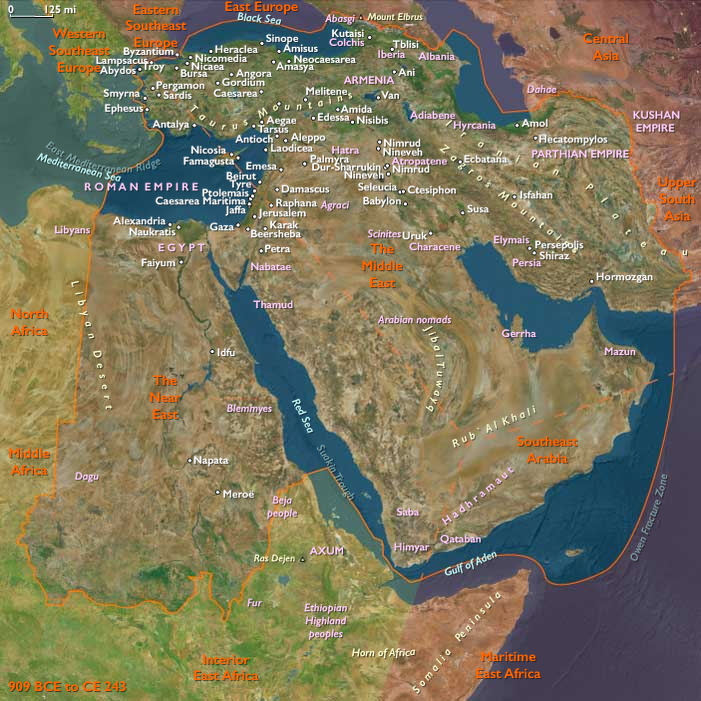
The era from 177 to 166 BCE is marked by the turbulent events of the Sixth Syrian War, a critical confrontation between the Seleucid Empire under Antiochus IV Epiphanes and Ptolemaic Egypt. The causes of this war are somewhat obscure, but the immediate provocation arises in 170 BCE when the two regents of Egypt's young king Ptolemy VI Philometor, Eulaeus and Lenaeus, declare war against the Seleucids.
Initially successful, Antiochus swiftly captures strategic positions, notably the fortress city of Pelusium. Realizing the disastrous course of their strategy, the Egyptians depose the original regents, replacing them with Comanus and Cineas, who seek peace negotiations. Antiochus exploits the turmoil by taking Ptolemy VI, his nephew, under his guardianship and effectively assumes control over Egypt. The people of Alexandria, however, reject this arrangement and proclaim Ptolemy VIII Physcon as the sole ruler.
Antiochus responds by besieging Alexandria, but unable to sever its supply lines, he withdraws by the end of 169 BCE. In his absence, reconciliation occurs between Ptolemy VI and his brother, undermining Antiochus' position and prompting a renewed Seleucid invasion. Facing imminent conquest, the Egyptians appeal to Rome, marking a critical turning point.
In 168 BCE, Roman envoy Gaius Popilius Laenas confronts Antiochus near Alexandria. In a dramatic scene at Eleusis, Popilius famously draws a circle around Antiochus, demanding a decision on the Roman Senate’s ultimatum—immediate withdrawal from Egypt and Cyprus. Antiochus, cornered by Rome's authority, concedes, marking the event remembered as the "Day of Eleusis," effectively ending Seleucid ambitions in Egypt.
This era also sees the continued consolidation of the Parthian kingdom under Phraates I, who expands Parthian control beyond the Gates of Alexander and captures strategic locations like Apamea Ragiana. The groundwork laid during his reign paves the way for the extensive territorial expansion that will soon be realized by his successor, Mithridates I.
Thus, the era 177–166 BCE signifies the waning of Seleucid power, the consolidation of Roman authority in Mediterranean geopolitics, and the rising prominence of Parthia, reshaping the geopolitical landscape of the Middle East significantly.