
Pierre-Joseph Pelletier
French chemist
1788 CE to 1842 CE
Pierre-Joseph Pelletier (22 March 1788 – 19 July 1842) is a French chemist who does notable research on vegetable alkaloids, and is the co-discoverer of quinine and strychnine.
World
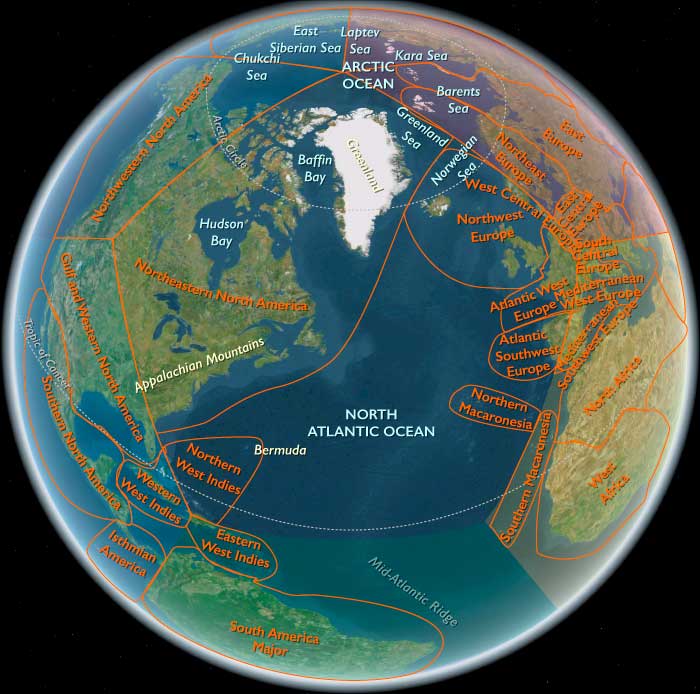
The Atlantic Lands
View →Related Events
Showing 8 events out of 8 total
Pierre Joseph Pelletier, a French chemist and pharmacist who in 1817 becomes the first to isolate chlorophyll, continues to research natural products such as alkaloids and gum resins.
He discovers emetine in the same year.
Joseph Bienaimé Caventou, a professor at the École de Pharmacie (School of Pharmacy) in Paris, collaborates with Pelletier in a Parisian laboratory located behind an apothecary.
He is a pioneer in the use of mild solvents to isolate a number of active ingredients from plants, making a study of alkaloids from vegetables.
Pierre-Joseph Pelletier discovers both strychnine and crotonic acid, so named because it was erroneously thought to be a saponification product of croton oil, in 1818.
Pierre-Joseph Pelletier discovers brucine and veratrine in 1819.
Pierre-Joseph Pelletier discovers ambrein, cinchonine, and quinine in 1820.
Pierre-Joseph Pelletier discovers caffeine in 1821.
Caventou and Pelletier had isolated strychnine in 1818 and Brucine in 1819, both from Nux vomica.
In 1820, the pair had isolated cinchonine and quinine, the active anti-malarial ingredient in the bark of cinchona tree. (Quinine sulfate will later prove to be an important remedy for the disease malaria.)
Neither of the partners had chosen to patent their discovery of this compound, releasing it for all to use.
In 1821, they had isolated caffeine, and in 1823 they discover nitrogen in alkaloid compounds.
Other compounds they have isolated include colchicine (1820) and veratrine.
French geologist and archaeologist Jules Desnoyers introduces the term Quaternary ("fourth") in 1829 to address sediments of France's Seine Basin that seem clearly to be younger than Tertiary Period rocks.
The term Quaternary, originally meant to describe the heterogeneous assemblage of rocks essentially corresponding to the Miocene, Pliocene, Pleistocene, and Recent epochs of modern usage, had first been proposed in 1759 by Giovanni Arduino, known as the “father of Italian Geology”, for alluvial deposits in the Po river valley in northern Italy.
French chemist Pierre Joseph Pelletier, who has conducted notable research work on vegetable alkaloids, and the co-discoverer of quinine and strychnine, discovers aricine in 1829.
Pierre-Joseph Pelletier discovers toluene, an aromatic hydrocarbon that will eventually see wide use as an industrial feedstock and as a solvent, in 1837-38.
The French chemist has conducted notable research work on vegetable alkaloids, becoming the co-discoverer of quinine in 1817 and strychnine in 1818, had in 1832 discovered narceine.