Pope Leo X
head of the Catholic Church
Years: 1475 - 1521
Pope Leo X (December 11, 1475 – December 1, 1521) was Pope from 1513 to his death in 1521.
He is the last non-priest to be elected Pope.
He is known primarily for the sale of indulgences to reconstruct St. Peter's Basilica and his challenging of Martin Luther's 95 Theses.
He is the second son of Lorenzo de' Medici, the most famous ruler of the Florentine Republic, and Clarice Orsini.
His cousin, Giulio di Giuliano de' Medici, will later succeed him as Pope Clement VII (1523–34).
Related Events
Filter results
Showing 10 events out of 85 total
Pope Innocent VIII had had two illegitimate children born before he entered the clergy "towards whom his nepotism had been as lavish as it was shameless."
In 1487, he married his elder son Franceschetto Cybo to Maddalena de' Medici, the daughter of Lorenzo de' Medici, who in return had obtained the cardinal's hat for his thirteen-year-old son Giovanni, later Pope Leo X.
His daughter Teodorina Cybo married Gerardo Usodimare and had a daughter.
Savonarola has chastised him for his worldly ambitions.
In Rome, Pope Innocent has had built for summer use the Belvedere of the Vatican, on an unarticulated slope above the Vatican Palace, which his successor will turn into the Cortile del Belvedere.
In season, he hunts at Castello della Magliana, which he has enlarged.
Constantly confronted with a depleted treasury, he has resorted to the objectionable expedient of creating new offices and granting them to the highest bidders.
The fall of Granada in January 1492 had been celebrated in the Vatican and Innocent had granted Ferdinand II of Aragon the epithet "Catholic Majesty."
In Black Africans in Renaissance Europe (N. H Minnich, Thomas Foster Earle, K. J. P. Lowe; Cambridge University Press, 2005) Minnich notes on page 281 that the position of Renaissance popes towards slavery, a common institution in contemporary cultures, varied.
Minnich states that those who allowed the slave trade did so in the hope of gaining converts to Christianity.
In the case of Innocent, he permits trade with Barbary merchants in which foodstuffs are given in exchange for slaves who could then be converted to Christianity.
King Ferdinand of Aragon has give Innocent one hundred Moorish slaves who the pope has shared out with favored Cardinals.
The slaves of Innocent are called "moro", meaning "dark-skinned man", in contrast to negro slaves who are called "moro nero".
Innocent in July 1492 falls into a fever.
He is said to have been given the world's first blood transfusion by his Jewish physician Giacomo di San Genesio, who had had him drink the blood of three ten-year-old boys.
The boys subsequently died.
The evidence for this story, however, is unreliable and may have been motivated by anti-Jewish sentiments.
Innocent VIII himself dies on the 25th of July.
A mysterious inscription on his tomb in Saint Peter in Rome states: “Nel tempo del suo Pontificato, la gloria della scoperta di un nuovo mondo” (transl. "During his Pontificate, the glory of the discovery of a new world.").
The fact is that he died seven days before the departure of Christopher Columbus for his supposedly first voyage over the Atlantic, raising speculations that Columbus actually traveled before the known date and rediscovered the Americas for the Europeans before the supposed date of October 12, 1492.
The Italian historian Ruggero Marino, in his book "Cristoforo Colombo e il Papa tradito" (transl. "Christopher Columbus and the betrayed Pope") became convinced of this after having studied Columbus's papers for over twenty-five years.
Early Life and Background of Desiderius Erasmus (1460s–1492)
The renowned humanist scholar Desiderius Erasmus was born on October 28 in the late 1460s, most likely in Rotterdam; however, historian Renier Snooy (1478–1537) suggests that his birthplace may have been Gouda. While the exact year of Erasmus's birth remains debated among historians, the consensus places it around 1466. Named after Saint Erasmus, the scholar spent only his early childhood in Rotterdam, leaving at four years old and never returning.
Information regarding Erasmus's family and formative years is primarily derived from fragmented references in his later writings. Erasmus was born out of wedlock; his parents were never legally married. His father, Gerard, served as a Catholic priest and curate in Gouda. Little is known of his mother beyond her name, Margaretha Rogerius (the Latinized form of the Dutch surname "Rutgers"), who was the daughter of a physician from Zevenbergen and may have been Gerard's housekeeper. Erasmus himself viewed the circumstances of his birth as a blemish, leading him later in life to obscure and downplay these details.
Education and Early Intellectual Development
Despite his uncertain beginnings, Erasmus received the finest education available to young men of his era, primarily in monastic or semi-monastic settings. At age nine, Erasmus and his elder brother, Peter, attended one of the Netherlands' premier Latin schools located in Deventer, associated with the clergy of the Lebuïnuskerk (St. Lebuin's Church). Some earlier biographies suggest that the institution may have been operated by the Brethren of the Common Life. Under the influential leadership of the school's headmaster, Alexander Hegius, Erasmus encountered a groundbreaking curriculum that included Greek instruction, marking the first time Greek was taught below university level in Europe. Erasmus’s foundational studies here also emphasized cultivating a personal relationship with God, although he notably resisted the strict discipline enforced by his educators.
This educational journey was abruptly interrupted in 1483, when a devastating plague struck Deventer, claiming the life of his mother, who had relocated there to support her sons.
Monastic Life, Personal Relationships, and Early Career
Following these personal setbacks, Erasmus entered the monastic life. Around age twenty-five, he was ordained a Catholic priest after studying at the monastery of Stein. Despite this, Erasmus scarcely practiced active priesthood, and throughout his life, he vociferously critiqued certain aspects of religious orders, particularly their perceived excesses and rigidness.
While at Stein, Erasmus developed a strong emotional attachment to a fellow canon named Servatius Rogerus. This relationship, described in passionate terms in Erasmus's correspondence, later became a sensitive aspect of his biography. Another potentially controversial episode occurred during his time as a tutor for Thomas Grey, from which Erasmus was dismissed abruptly—though without any explicit public allegations against him. In later life, Erasmus sought to distance himself from these earlier incidents through explicit condemnations of homosexuality and advocacy of marital sexuality in his published writings.
Dispensation and Humanist Career
In 1492, due to poverty of health and his passion for humanistic scholarship, Erasmus obtained a temporary dispensation from his monastic vows while remaining ordained as a priest. This allowed him to leave Stein to pursue scholarly endeavors. The dispensation, a rare privilege at the time, was later made permanent by Pope Leo X. Thus, Erasmus transitioned from monastic life to a distinguished career as a scholar, launching his remarkable ascent as one of the most influential figures of the European Renaissance.
Erasmus at the University of Paris (1495)
In 1495, with the consent and financial support of Bishop Henry of Cambrai, Erasmus enrolled at the University of Paris, specifically at the Collège de Montaigu. The institution, under the austere leadership of the ascetic scholar Jan Standonck, was renowned as a hub of reformist zeal. Erasmus, however, soon found himself dissatisfied with Standonck's stringent and rigorous methods, expressing his discontent openly.
At this time, the University of Paris represented the pinnacle of Scholastic learning but was simultaneously beginning to feel the transformative influence of Renaissance humanism. Erasmus himself played a notable role in this shift, forming a close friendship with the Italian humanist Publio Fausto Andrelini, a distinguished poet and the university's "professor of humanity." This friendship with Andrelini further deepened Erasmus’s engagement with humanist ideals and literature, shaping his intellectual trajectory profoundly.
Ramon de Cardona marches into Tuscany at the Pope's request, smashes Florentine resistance, overthrows the Republic, and installs Giuliano de' Medici as ruler of the city.
Machiavelli is deprived of office in September 1512 when the Medici, led by Lorenzo il Magnifico's grandson, Lorenzo, effect a Habsburg-assisted return to govern Florence under a veiled despotism.
Lorenzo's uncle Giovanni will guide the government the first year until he is elected pope as Leo X and leaves for Rome.
On the subject of territory, however, fundamental disagreements quickly arise.
Piero de' Medici's younger brother Giovanni, a cardinal, has used his influence with Pope Julius II to bring the family back to positions of power.
When the Medici return to Florence in 1512-13, the Jews return also.
The Medici accuse Machiavelli of conspiracy against them and have him imprisoned.
Despite having been subjected to torture ("with the rope", where the prisoner is hanged from his bound wrists, from the back, forcing the arms to bear the body's weight, thus dislocating the shoulders), he denies involvement and is released after three weeks.
Pope Julius II dies on February 21, 1513.
His successor, the second son of Lorenzo de'Medici, called Giovanni, had been made a cardinal in his boyhood and become head of his family before he was thirty.
A pious man, he assumes the papacy at thirty-eight as Leo X.
He continues his predecessor’s great artistic projects and patronage of Raphael, but initiates little new work.
Leonardo accompanies Pope Leo X's brother, Giuliano de'Medici, to Rome, where he stays on, increasingly absorbed in theoretical research.
Pietro Bembo had resided between 1506 and 1512 in Urbino, and it was here that Bembo had begun to write his most influential work, a prose treatise on writing poetry in Italian, Prose della volgar lingua, although it will not be published until much later.
Bembo also accompanies Giulio de' Medici to Rome, where he is soon after appointed Latin secretary to the Pope.
Raphael is employed, while in Rome, not only by Popes Julius and Leo but also by a number of private patrons, particularly the Sienese banker, Agostino Chigi.
In Chigi's suburban residence (now known as the Villa Farnesina), Raphael executes, in 1513, a wall fresco of the sea nymph Galatea, classical in theme as well as style.
Titian, however, refuses an invitation to become painter to the papal court.
A French army of ten thousand, commanded by Louis de la Trémoille, crosses the Alps and advances on Milan in late May 1513; at the same time, Bartolomeo d'Alviano and the Venetian army march west from Padua.
The unpopularity of Maximilian Sforza, who is seen by the Milanese as a puppet of his Swiss mercenaries, enables the French to move through Lombardy with little resistance; Trémoille seizes Milan.
The remaining Swiss withdraw to Novara.
The Swiss may have intended to annex part (or all) of Milan to the Swiss Confederation.
Novara, about forty kilometers west of Milan, is the second most important city of the Milanese duchy.
The French are surprised at their camp there on June 6 by a Swiss relief army of some thirteen thousand troops, who have come to relieve their forces in the town.
The German Landsknecht mercenaries of the French, pike-armed like the Swiss, are able to form up into heavy squares, and the French are able to deploy some of their artillery.
Despite this, the Swiss onslaught, sweeping in from multiple directions due to forced marches which achieve encirclement of the French camp, take the French guns, push back the Landsknecht infantry regiments, and destroy the Landsknecht squares.
Caught off guard, the French heavy cavalry, their decisive arm, is unable to properly deploy, and plays little role in the fight.
The battle is particularly bloody, with five thousand casualties (other sources state up to ten thousand) on the French side, and moderate losses for the Swiss pikemen, mostly suffered from the French artillery as the Swiss move into the attack.
Seven hundred men are killed in three minutes by heavy artillery fire.
Additionally, after the battle, the Swiss execute the hundreds of German mercenaries they have captured who had fought for the French.
The Swiss also capture twenty-two French guns with their carriages.
The defeat forces Louis XII to withdraw from Milan and Italy in general, and leads to the temporary restoration of Duke Maximilian Sforza, although he is widely regarded to be the puppet of his Swiss mercenaries and "allies", who hold real military power in Milan.
Swiss Victory at Novara and the Retreat to Dijon (1513)
In 1513, the Swiss infantry decisively defeated the French army at the Battle of Novara, marking a turning point in the War of the League of Cambrai and severely weakening France’s strategic position in Northern Italy. Despite their victory, the Swiss forces could not effectively pursue and destroy the retreating French due to their notable lack of cavalry units, limiting their ability to exploit their battlefield success fully.
Nevertheless, several determined contingents of Swiss mercenaries pursued the retreating French forces deep into French territory, eventually reaching Dijon. The pursuit ended only after French commanders negotiated a substantial monetary settlement to persuade the Swiss to withdraw peacefully from France.
Strategic and Military Consequences
The French defeat at Novara inaugurated a period of severe military setbacks for the French alliance. The battle revealed France’s vulnerability against disciplined Swiss infantry tactics, altering perceptions of battlefield supremacy in early 16th-century Europe. More broadly, this defeat significantly reduced French territorial ambitions and influence in Northern Italy, emboldening France’s rivals, especially the Swiss, the Papacy, and the Holy League coalition.
Geopolitical Significance and Legacy
The outcome at Novara reshaped the strategic landscape of the Italian Wars. France’s failure there demonstrated limitations in their military organization, prompting strategic reassessments that influenced subsequent military reforms. It also confirmed the Swiss infantry as an elite fighting force in Europe, solidifying their military reputation.
The resulting decline of French influence encouraged rival European powers—especially the Habsburgs and Papal States—to intensify efforts to reshape the balance of power in Italy. The broader impact of Novara was thus to perpetuate warfare, diplomatic realignments, and territorial struggles that continued to influence European geopolitics for decades.
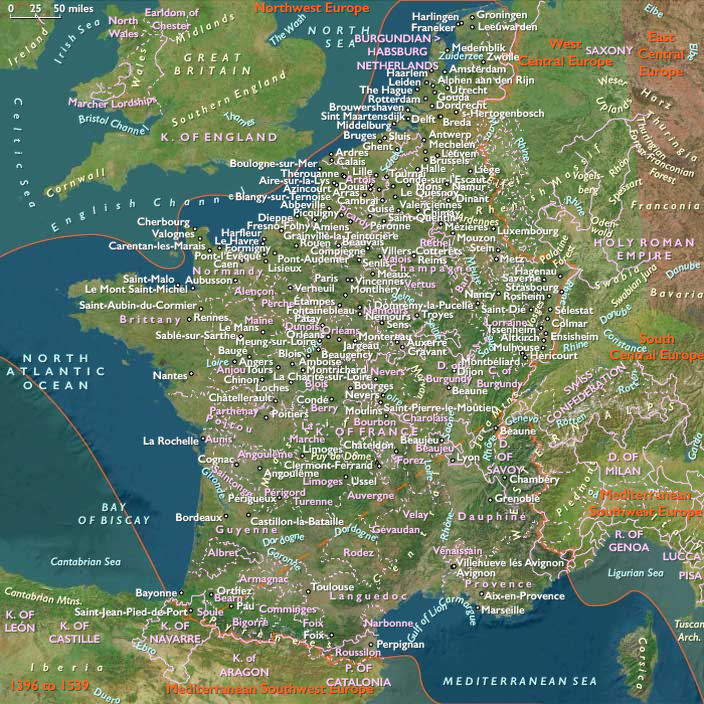
enry VIII's Expedition to Calais and the March Toward Thérouanne (June 1513)
In May and June 1513, English forces under King Henry VIII began gathering in strength at Calais, marking the onset of Henry’s ambitious military campaign against France. Initially commanded by George Talbot, Earl of Shrewsbury, appointed Lieutenant-General on May 12, the English army grew steadily as noblemen and their retainers arrived, meticulously recorded in the contemporary Chronicle of Calais from June 6 onward.
Organization and Command Structure
The English force assembled was substantial and diverse. Shrewsbury commanded the vanguard, numbering around eight thousand men, while Charles Somerset, Lord Herbert, oversaw the rearguard comprising about six thousand troops. King Henry himself arrived at Calais with the main force—approximately eleven thousand soldiers—on June 30, 1513, dramatically reinforcing morale and underscoring the seriousness of the expedition.
The organization of Henry’s army reflected a sophisticated combination of troop types and military innovations. The assembled force included cavalry, artillery units, disciplined infantry formations, English longbowmen equipped with specially hardened steel-tipped arrows capable of penetrating contemporary armor, and notably, a contingent of eight hundred German mercenaries marching prominently ahead of the king, reflecting the continental military practices and alliances of the period.
The provisioning and administration of Henry's troops were coordinated by the rising political figure Cardinal Thomas Wolsey, acting as the King's Almoner, a position crucial in securing logistical and financial resources for the army.
Governance in England During Henry’s Absence
As Henry departed for the campaign, he appointed his queen, Catherine of Aragon, as Rectrix et Gubernatrix("Rector and Governor") to administer England and Wales in his stead. Catherine's temporary rule during Henry’s absence across the Channel highlighted both the King's trust in her leadership capabilities and the political significance attached to this military venture.
Strategic Goals and Implications
Henry’s primary strategic goal was to capture the fortified town of Thérouanne, a key defensive and logistical point in northern France. Its fall would significantly bolster English presence in continental Europe and challenge French influence directly. The size, organization, and symbolic weight of Henry’s personally led army underscored his determination to establish England as a central European military power, aligning closely with broader Holy League objectives.
Consequences and Legacy
Henry VIII’s personal presence at Calais and subsequent march toward Thérouanne marked an ambitious step in England's ongoing struggle for prominence in European politics and warfare. The 1513 campaign, though mixed in outcomes, demonstrated Henry’s military ambitions, showcasing emerging military technologies and tactical innovations, and profoundly shaping England’s diplomatic and military trajectory throughout the sixteenth century.